 Bellingham Siding
 Siding Replacement Built for Cordata's Climate
Cordata sits on the north side of Bellingham, in a part of Whatcom County where the weather doesn't do anything halfway. Homes here deal with salt-tinged marine air rolling in off the Sound, driving rain that comes at the wall sideways during a fall storm, and a moss season that can stretch from October clear through April under the tree cover common in this area. Siding in Cordata isn't just a cosmetic layer — it's the thing standing between your framing and a climate that actively works to break materials down. When it's time to replace siding on a Cordata home, the job needs to be built for exactly these conditions, not treated like a generic re-side.
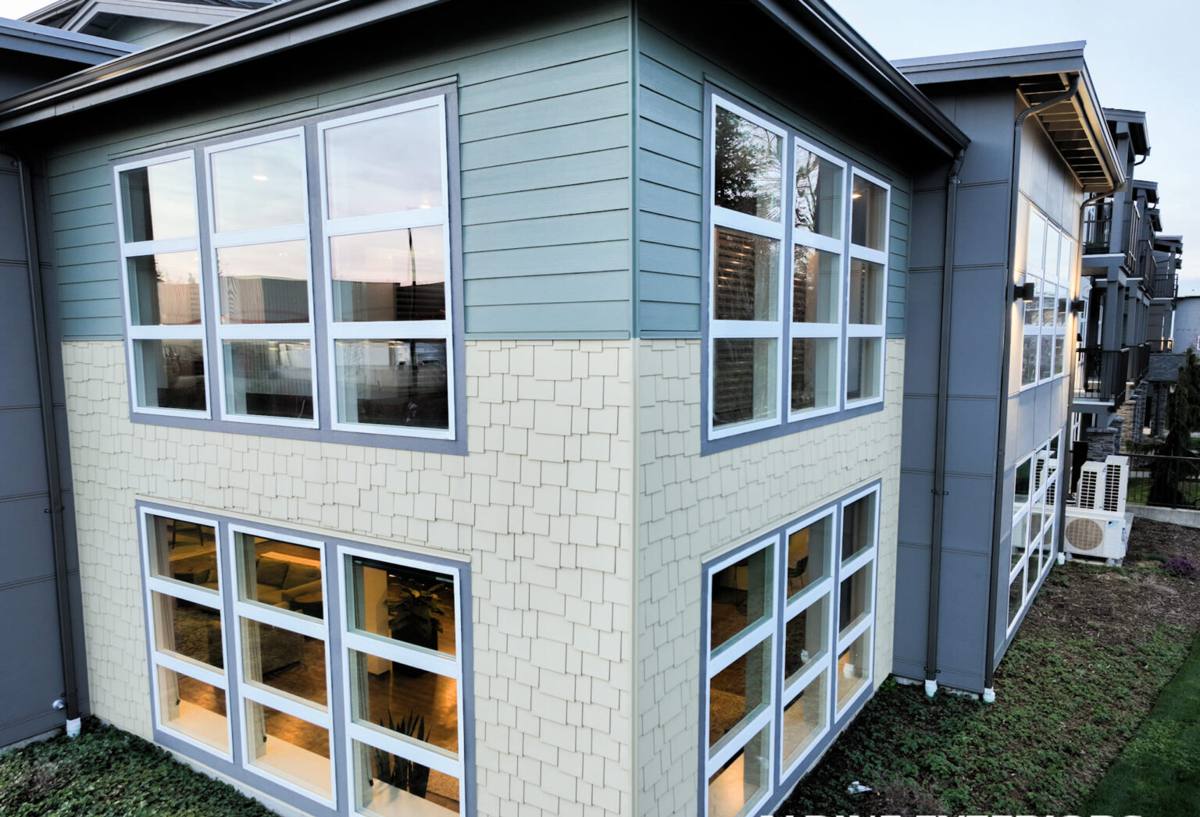
What Salt Air, Driving Rain, and Moss Season Do to Siding
Every material reacts differently to this climate, and the reactions add up over years, not weeks. Understanding the mechanism matters because it tells you what a replacement actually has to solve for.
Salt Air and Corrosion
Bellingham's proximity to Puget Sound means airborne salt is a constant, low-level presence, even blocks inland. Salt accelerates corrosion in exposed fasteners, staples, and untreated metal flashing. A siding job that uses the wrong fastener material, or skips corrosion-resistant flashing at penetrations, will show rust streaks and failing hardware years before the siding itself would otherwise need attention.
Wind-Driven Rain
Rain that falls straight down is easy to shed. Rain that's being pushed horizontally by wind finds every gap, lap, and seam in a wall assembly and tries to get behind the siding. Without a properly lapped weather-resistive barrier, correctly flashed penetrations, and tight, consistent reveals, wind-driven rain works its way behind the cladding and into sheathing — where damage happens out of sight until it's a much bigger problem.
Extended Moss Season
Shade, moisture, and mild temperatures are exactly what moss and algae need to thrive, and Cordata's tree cover and marine humidity give them a long runway. Moss holds moisture against a wall surface far longer than open air would, which is bad news for any siding material that isn't dimensionally stable or that relies on a surface coating rather than a factory-cured finish.
Signs a Cordata Home Is Ready for New Siding
Most homeowners don't wake up one day and decide they need new siding — it's a slow accumulation of small signals. Here's what we look for, and what you can check yourself before calling anyone out:
- Persistent moss or dark algae staining that comes back within a season of cleaning
- Soft, spongy spots when you press on siding, especially near the bottom courses and around windows
- Visible cupping, warping, or separation at the seams of wood-based or engineered wood siding
- Paint that's peeling, bubbling, or chalking heavily rather than just fading
- Rust streaking below nail heads or metal trim
- Gaps opening up at butt joints, corners, or where siding meets trim
- Rising heating bills with no other explanation — often a sign moisture has degraded insulation behind the wall
- Visible rot or delamination at the bottom edge of boards or panels
Any one of these can be a minor repair. Several at once, especially on a home more than 15-20 years old, usually means the whole wall assembly is due for a look.
What a Correct Siding Replacement Actually Involves
A siding replacement is only as good as what's underneath it. Cutting corners on the parts you can't see is the single biggest reason siding fails early in a climate like this one.
Tear-Off and Sheathing Inspection
Old siding comes off first, and the sheathing underneath gets inspected board by board. Any rot, delamination, or soft spots get cut out and replaced before anything new goes up. Skipping this step and siding over hidden damage just seals the problem inside the wall.
Weather-Resistive Barrier and Flashing
A new weather-resistive barrier goes on correctly lapped, shingle-style, so water is always directed outward and down. Flashing gets installed at every window, door, and penetration — and around here, kickout flashing where a roofline meets a wall is not optional. It's one of the most common missed details in lower-quality work, and it's exactly where wind-driven rain does the most damage.
Rainscreen Detailing
For a climate that sees this much driving rain and extended damp periods, a drainage gap behind the siding — a rainscreen — gives any moisture that does get past the cladding a path to drain and dry out instead of sitting against the sheathing. It's a detail that costs a little more up front and pays for itself many times over in a house that stays dry.
Fastening and Finish
Fasteners need to be corrosion-resistant and installed to the manufacturer's spacing and depth specs — over-driven or under-driven nails are a leading cause of premature siding failure. Reveals need to be consistent, and joints need to be handled the way the manufacturer actually engineered them to be handled, not just caulked over as a shortcut.
Why We Install Only James Hardie Fiber Cement
We standardized on James Hardie fiber cement siding for every home we work on, including Cordata, and it comes down to how the product behaves in exactly the conditions described above. Fiber cement is non-combustible, dimensionally stable, and doesn't feed the kind of surface moss growth that thrives on wood-based products. Hardie's ColorPlus factory finish is baked on and warranted separately from the substrate, which matters in a climate where UV, salt air, and constant moisture cycling all work together to break down field-applied paint faster than most homeowners expect. Hardie also engineers specific product lines — including HZ5 formulations — for regions with heavier moisture exposure, which is a meaningfully better starting point for a Cordata wall than a general-purpose siding product never designed with Pacific Northwest conditions in mind. We don't install vinyl, LP SmartSide, Cemplank, Allura, primed spruce, or cedar, not because those products have no merit anywhere, but because we've made a professional call that fiber cement — installed correctly — gives Cordata homeowners the best long-term outcome for the money.
Our Cordata Siding Replacement Process, Step by Step
- On-site inspection and estimate. We walk the exterior, check for the warning signs above, and give you a straight assessment of what's actually going on with your walls — not just a number.
- Tear-off and sheathing assessment. Old siding comes off, sheathing gets inspected, and any necessary repairs are scoped and priced before we move forward.
- Weather barrier, flashing, and rainscreen installation. This is the layer that does the real work of keeping your home dry, and it's where we spend the time other crews rush past.
- Hardie siding installation to manufacturer spec. Correct fastening, reveals, and joint treatment, following James Hardie's published installation requirements — which is also what keeps the manufacturer's warranty intact.
- Trim, caulking, and paint touch-up at the specific joints Hardie's system calls for — not a blanket caulk-everything approach.
- Site cleanup and final walkthrough so you can see the finished work and ask questions before we call the job done.
- Warranty registration so your coverage is on file and transferable if you sell the home.
What Affects the Cost of Your Project
Every home is different, but the same handful of factors drive most of the variation in price. Knowing them ahead of time makes for a much more useful conversation when you get an estimate.
| Cost Factor | Why It Matters |
|---|---|
| Home size and number of stories | More square footage and taller walls mean more material, labor, and equipment (lifts/staging) time |
| Condition of existing sheathing | Hidden rot found during tear-off adds repair scope that can't be fully known until the old siding is off |
| Complexity of the exterior | Dormers, bump-outs, and multiple rooflines mean more flashing detail and cutting, which adds labor |
| Siding profile and color | Lap width, shingle-style panels, and factory ColorPlus finishes vary in material cost |
| Trim and accessory work | Fascia, soffit, and window trim replaced at the same time affects total scope but often saves money versus doing it later |
| Access and site conditions | Tight lots, landscaping, or limited staging area can add time for careful protection and material staging |
Life After Installation: Maintenance in a Wet, Salty Climate
Fiber cement siding installed correctly is genuinely low-maintenance, but "low" isn't "none." In a climate that pushes moss and salt exposure as hard as this one does, a periodic rinse-down keeps organic growth from getting a foothold, and an annual walk-around to check caulking at trim joints and flashing at penetrations catches small issues while they're still small. Because ColorPlus finish is factory-applied and warranted, you're not signing up for a repaint cycle the way you would with field-painted wood or fiber cement — but keeping gutters clear and downspouts directed away from the wall still matters just as much as it does with any siding, since most siding failures start with water that had somewhere to sit rather than somewhere to go.
Why Local Experience in Cordata Matters
A crew that already works in Cordata and the rest of Bellingham knows what this specific stretch of Whatcom County throws at a house — the tree-shaded lots that hold moisture longer, the wind patterns off the water that drive rain into walls at odd angles, and the permitting and inspection process for this jurisdiction. That familiarity shows up in small decisions on site: where kickout flashing actually needs to go given a home's specific roof-to-wall intersections, which elevations need extra attention because they face the weather, and how to sequence a tear-off around a Pacific Northwest forecast instead of fighting it. It also means a shorter response time if something needs a follow-up look after the job is done, rather than waiting on a crew that has to travel in from somewhere else.
If your Cordata home is showing any of the signs above, or you're just trying to understand your options before old siding forces the decision, we're glad to take a look. Estimates are free, there's no pressure, and you'll get a straight answer about what your home actually needs — use the form below to get started.