 Bellingham Siding
 Siding in Cordata Has a Specific Job to Do
Cordata sits in north Bellingham, close enough to Bellingham Bay and the Salish Sea that homes here deal with a version of coastal weather even without waterfront views. Moist marine air moves inland easily, tree cover across the neighborhood keeps north- and shade-facing walls damp for long stretches, and Pacific storm systems bring the kind of driving, wind-pushed rain that gets up under loose trim rather than just running down a wall. None of that is dramatic on any single day. It's the cumulative effect over years that separates siding that was installed correctly from siding that wasn't.
Whatcom County's climate doesn't destroy siding quickly. It's patient. Small gaps in flashing, caulk joints that were never meant to carry structural water resistance, or panels installed too close to grade or a roofline will hold moisture just long enough, just often enough, to cause slow damage that shows up as soft trim, peeling paint, or moss creeping up from the bottom courses. A fiber cement system installed to spec is built to shrug off exactly this kind of slow, repeated exposure.
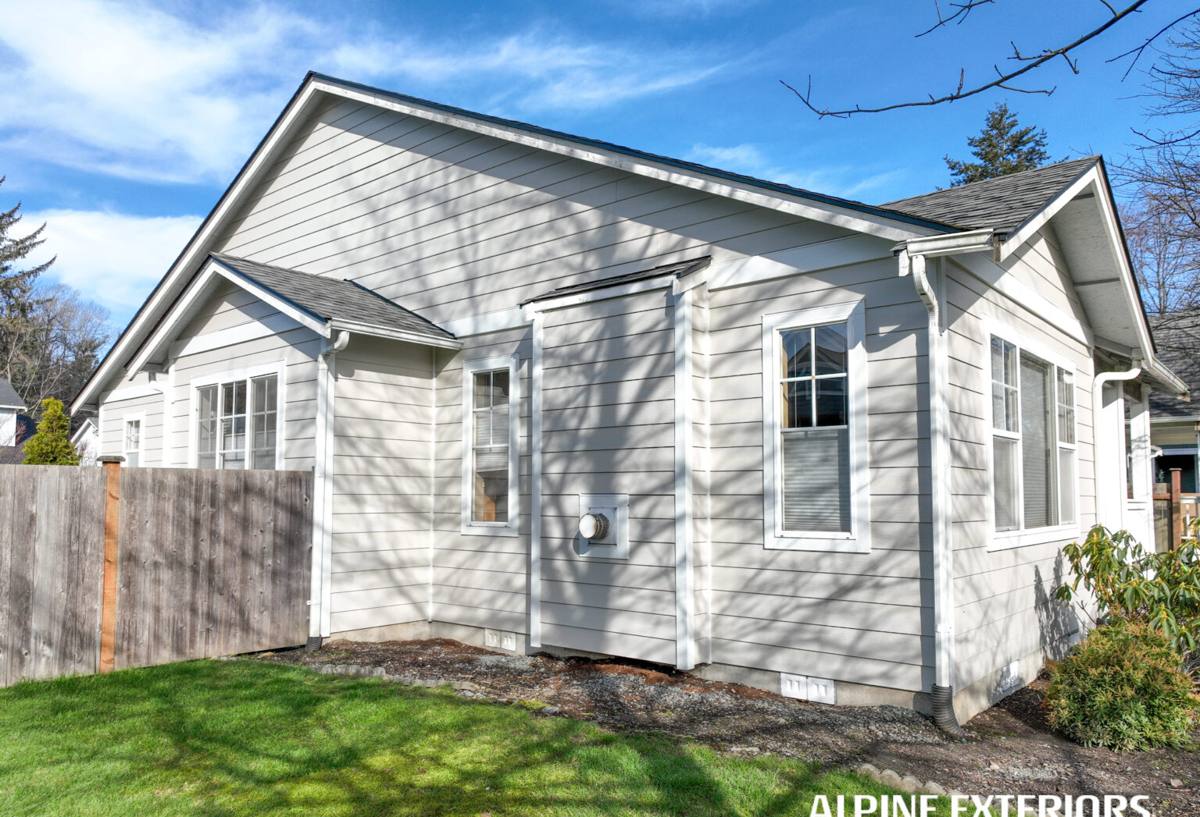
Why Fiber Cement Is the Right Material for This Neighborhood
It Doesn't Feed Moss and Algae the Way Wood Does
Cordata's mix of mature trees and shaded lots means a long moss season — longer than sunnier parts of Whatcom County. Wood siding and wood-based composite products give moss and algae organic material to root into, especially at seams, laps, and anywhere moisture sits. Fiber cement is an inorganic material. Moss and algae can still grow on its surface if a wall stays damp and shaded long enough, but they aren't feeding on the siding itself, and a factory-applied finish resists the staining that makes moss growth look so much worse on painted wood.
It Holds Up to Wind-Driven Rain
Fiber cement is dense and dimensionally stable — it doesn't swell, cup, or warp the way wood can when it takes on repeated moisture from driving rain. That stability matters most at the details: butt joints, corners, and window and door trim, which is where most real-world siding failures actually start, regardless of the material on the flat wall sections.
It's Non-Combustible
Fiber cement is a non-combustible material, which is a genuine advantage in wildfire-adjacent seasons and simply a sound long-term choice for a durable exterior, independent of the moss and rain conversation.
What a Correct Fiber Cement Job Actually Involves
Fiber cement's reputation is only as good as the installation behind it. The material is engineered to perform for decades, but that performance depends entirely on details that are invisible once the job is finished — which is exactly why homeowners should understand what "done right" looks like before hiring anyone.
- Correct clearances from grade, roofing, decks, and other hard surfaces so panels never sit in standing water or splash-back
- Weather-resistant barrier installed and lapped correctly behind the siding, not just stapled on as an afterthought
- Flashing at every window, door, and horizontal transition — the single most common place moisture problems actually start
- Manufacturer-specified fastener type, spacing, and placement, not just "close enough"
- Properly sized gaps at butt joints and trim, caulked with a sealant rated for the application — not relied on as the primary water barrier
- Factory-finished (ColorPlus) panels handled and cut with the right blades to protect the finish and control silica dust
Skipping any one of these doesn't usually cause an immediate, visible problem. It causes a slow one — which is worse, because it's already behind the wall by the time it's noticed.
Our Process on Cordata Projects
1. On-Site Assessment
We walk the exterior, check the existing siding and trim condition, look at grade clearances, roofline transitions, and any areas with visible moss, staining, or soft wood — the kind of thing that's common on north-facing and tree-shaded walls throughout this part of Bellingham.
2. Tear-Off and Substrate Check
Old siding comes off and we inspect the sheathing underneath. This is the point where hidden moisture damage from a previous installation — if any exists — gets found and addressed, rather than covered back up.
3. Weather Barrier and Flashing
A correctly lapped weather-resistant barrier goes on first, followed by flashing at every penetration and transition point. This step matters more than the siding itself for long-term water management.
4. Installation to Manufacturer Spec
Panels, fasteners, and joints go in following James Hardie's published installation requirements — the same requirements that back the product warranty. We don't treat these as suggestions.
5. Final Walkthrough
We review the finished exterior with the homeowner, including care and maintenance basics specific to a Whatcom County climate.
Fiber Cement Compared to Other Siding Materials
| Material | Moisture Behavior | Moss/Algae Resistance | Typical Lifespan |
|---|---|---|---|
| James Hardie Fiber Cement | Dimensionally stable; doesn't swell or rot | Inorganic material; factory finish resists staining | 30+ years with correct install and basic upkeep |
| Cedar / Wood | Absorbs moisture; prone to swelling, checking, rot | Organic surface feeds moss and algae growth | Highly maintenance-dependent |
| Vinyl | Doesn't rot but can warp, crack in cold, trap moisture behind panels | Moderate; grows moss/mildew in shaded, damp areas | Variable; UV and impact-sensitive over time |
| Primed Wood Composites | Performance depends heavily on edge sealing and paint maintenance | Vulnerable if edges or seams are exposed | Shorter without diligent maintenance |
We install James Hardie exclusively. We don't offer vinyl, LP SmartSide, primed wood, or other fiber cement brands, because we'd rather stand behind one system we know performs correctly in this climate than split our expertise — and our warranty backing — across several.
Cost Factors for a Cordata Siding Project
| Factor | Why It Affects Cost |
|---|---|
| Tear-off complexity | Multiple layers of old siding or extensive trim work adds labor |
| Substrate condition | Rotted sheathing found during tear-off needs repair before new siding goes on |
| Home size and wall complexity | More corners, gables, and trim details mean more cutting and detail work |
| Siding profile and finish | Lap width, texture, and ColorPlus color selection affect material cost |
| Access and site conditions | Trees, slopes, and tight lot lines common in Cordata can affect staging and labor time |
We give a firm, itemized quote after the on-site assessment — not a phone estimate — because tear-off surprises are common enough on older homes that a number given without seeing the wall isn't a reliable one.
Signs a Cordata Home May Need New Siding
- Moss or algae staining that returns quickly after cleaning, especially on shaded walls
- Soft or spongy spots when pressing on wood siding or trim
- Paint that's peeling, bubbling, or failing faster than expected
- Visible gaps, warping, or cupping in existing siding panels
- Water stains or discoloration on interior walls near exterior corners or windows
- Siding that's simply original to an older home and has never been replaced
Why Hiring a Crew That Already Works This Area Matters
A crew that regularly works Bellingham and north Whatcom County neighborhoods like Cordata already knows which wall orientations hold moss the longest, how much clearance actually matters given local rainfall patterns, and what the City of Bellingham's permitting process requires before work starts. That's not something a crew visiting from outside the region picks up on the first job. It shows up in the small decisions — where extra flashing gets added, which trim details get extra attention — that a spec sheet alone doesn't cover.
It also matters for follow-up. A local crew is easy to reach if a question comes up two or three years after installation, and stands behind both the workmanship and the manufacturer warranty without a homeowner having to chase down someone who's since moved on to other regions.
Maintenance After Installation
Fiber cement is low-maintenance, not no-maintenance. In Cordata's climate, that means an occasional gentle rinse to keep moss and organic buildup from establishing on shaded walls, a yearly look at caulk joints around windows and trim, and prompt attention if a joint ever looks open or a panel looks disturbed. Beyond that, ColorPlus finishes are engineered to hold their color for years without repainting, which is a real time and cost savings compared to painted wood siding in a climate this wet.
If your Cordata home's siding is showing its age, or you're planning ahead rather than reacting to a problem, we're happy to take a look and walk you through what we'd recommend. Reach out for a free, no-pressure estimate using the form below.