 Bellingham Siding
 Why Cordata Roofs Wear Differently Than Roofs Inland
Cordata sits in north Bellingham, close enough to Bellingham Bay and the Salish Sea that salt-laden air is a constant, low-grade presence on every exterior surface — including the roof. Add Whatcom County's long wet season, frequent driving rain off the water, and a moss season that can stretch from fall through spring, and you get a roofing environment that punishes shortcuts. A shingle roof that would hold up fine in a dry inland climate can start showing granule loss, moss colonization, and soft decking within a few years here if it wasn't installed with this specific climate in mind.
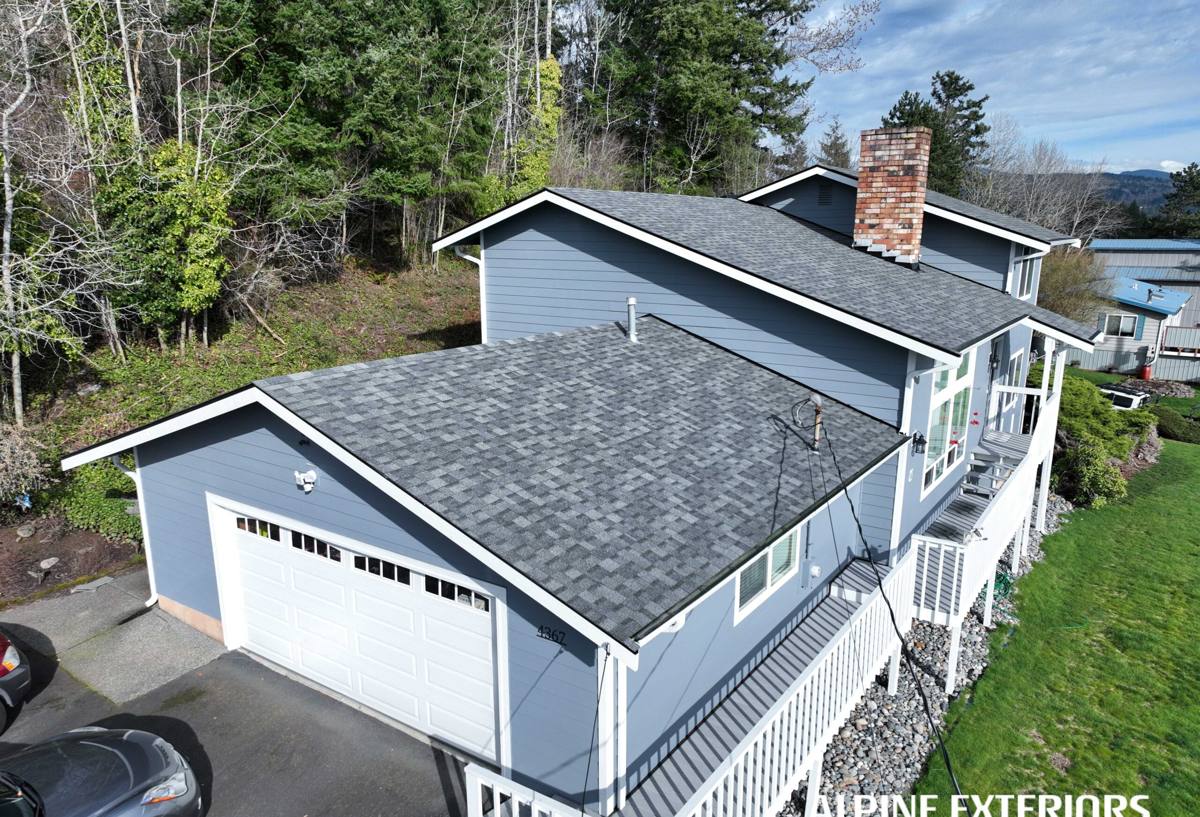
This page is about one thing: asphalt shingle roofing done right for Cordata homes. Not a generic roofing overview — the details that actually matter for a roof that has to survive Bellingham's weather for the next 20-30 years.
What Cordata's Climate Actually Does to a Roof
Driving Rain
Wind-driven rain off the water doesn't just fall straight down — it pushes sideways under shingle tabs, around flashing, and into any gap a rushed installation leaves behind. In this climate, flashing detail and underlayment coverage matter more than the shingle brand printed on the wrapper.
Moss and Algae
Whatcom County's mild, wet winters are ideal moss-growing conditions. Moss holds moisture against the shingle surface long after the rest of the roof has dried out, which accelerates granule loss and, left unchecked, can lift shingle edges and let water track underneath. Algae streaking is a related but separate issue — it's cosmetic on its own, but it signals a roof surface that stays damp longer than it should.
Salt Air
Salt air is harder on exposed metal than on the shingles themselves. Flashing, drip edge, roofing nails, and vent hoods all corrode faster this close to the bay, which is why fastener and flashing material choice deserves as much attention as the shingle selection.
What a Correct Asphalt Shingle Installation Involves
Asphalt shingle roofing looks simple from the ground, but the parts nobody sees are what determine whether it lasts. A correct installation for this climate includes:
- Ice-and-water shield at eaves, valleys, and around every penetration — not just at code-minimum locations, but anywhere driving rain is likely to find a seam
- Synthetic underlayment across the full deck, properly lapped, as the roof's real waterproofing layer beneath the shingles
- Balanced attic ventilation — intake at the eaves and exhaust at the ridge, sized to the attic volume, so moisture from daily living doesn't condense against the underside of the deck
- Corrosion-resistant flashing and fasteners at valleys, chimneys, skylights, and wall transitions — chosen for salt-air durability, not just up-front cost
- Correct nailing pattern — enough nails, in the manufacturer's specified zone, driven flush (not overdriven or underdriven) so the shingle seals properly and holds through Whatcom County's winter windstorms
- Starter strip and hip/ridge shingles matched to the field shingle, not generic cut-down pieces, so the roof's most vulnerable edges get full-strength material
Any one of these done wrong shortens the roof's life. Underlayment gaps show up as ceiling stains two winters later. Poor ventilation shows up as premature shingle curling or attic mold. Skipping the ice-and-water shield at a valley shows up as a slow leak that's already rotted the decking by the time it's visible.
Choosing the Right Shingle for This Climate
Not every shingle marketed as "premium" is the right fit for a marine climate with a long moss season. The features that actually earn their keep in Cordata are algae-resistant granules (usually copper-infused), a wind rating that matches Whatcom County's exposure, and a nailing zone wide enough to forgive minor field variation without sacrificing seal strength.
| Shingle Type | Typical Lifespan Here | Best Fit For |
|---|---|---|
| 3-tab (standard) | 15-20 years | Budget re-roofs, rental properties, simple roof lines |
| Architectural / dimensional | 25-30 years | Most Cordata homes — better wind resistance and appearance |
| Algae-resistant architectural | 25-30 years, slower to streak | Homes with heavy tree cover or shaded, moisture-prone slopes |
| Premium / designer | 30+ years | Steep-slope or highly visible roofs where appearance and longevity both matter |
For most Cordata houses, a mid-to-upper architectural shingle with algae-resistant granules is the sweet spot: enough wind rating for coastal gusts, enough granule protection to slow moss and algae, and a manufacturer warranty structure that actually matches how long the shingle is expected to perform in this climate.
Moss Management: Prevention Beats Removal
Moss is manageable if it's planned for during installation and kept up with afterward. A few things make the biggest difference:
- Zinc or copper strips near the ridge, which release trace metal ions with every rainfall that inhibit moss growth down-slope
- Keeping overhanging branches trimmed back so shaded, damp sections of roof get more sun and airflow
- Gentle, low-pressure moss removal on a schedule — never pressure washing, which strips granules and shortens shingle life faster than the moss itself would
- Clearing debris from valleys and gutters before the wet season, since trapped organic matter is what gives moss spores a place to take hold in the first place
Homeowners who skip moss prevention during installation often end up paying for it twice — once in accelerated shingle wear, and again in professional moss removal a few years earlier than should've been necessary.
Ventilation: The Part of the Roof You Never See
In a climate this wet, attic ventilation isn't optional. Warm, moist air from inside the house rises into the attic year-round, and without a proper intake-to-exhaust airflow path, that moisture condenses on the underside of the roof deck. Over a few seasons that shows up as premature shingle deterioration from below, sagging insulation, and in the worst cases, rot in the decking itself — the exact opposite of what a new roof is supposed to buy you. Any re-roof on a Cordata home should include a ventilation check, not just a shingle swap.
Our Process
- On-site inspection — we look at the whole system: decking condition, existing ventilation, flashing points, and moss/algae history, not just the shingle surface
- Written estimate — clear scope, materials, and pricing before any work starts, no surprise add-ons mid-project
- Tear-off and deck check — old roofing removed, decking inspected and any soft or rotted sections replaced before anything new goes down
- Underlayment and flashing — ice-and-water shield, synthetic underlayment, and corrosion-resistant flashing installed to the standard described above
- Shingle installation — correct nailing pattern, matched starter and ridge components, ventilation tied in
- Cleanup and magnetic sweep — job site and yard cleared of debris and stray fasteners
- Final walkthrough — we go over the finished roof and warranty paperwork with you before calling the job done
Signs Your Cordata Roof Needs Attention Now
- Granules collecting in gutters or at downspout outlets
- Shingle edges curling, cupping, or lifting
- Visible moss growth, especially on north-facing or shaded slopes
- Dark streaking that doesn't wash off with light rain
- Daylight visible through the attic roof deck, or damp insulation
- Missing or damaged shingles after a windstorm
- A roof approaching or past 20 years old with no major work done
Any one of these on its own may not be urgent. Several together, or any sign paired with an active leak, is worth a professional look before the next wet season sets in.
Why Local Experience in Cordata Matters
A roofing crew that regularly works in and around Bellingham knows what a Cordata roof is actually up against — the wind exposure this close to the water, how far the moss season really runs in Whatcom County, and which flashing and fastener choices hold up against salt air instead of just meeting code minimums on paper. That's different from a general contractor working from a one-size-fits-all spec sheet. It shows up in decisions like where extra ice-and-water shield goes, whether zinc strips are worth including, and how ventilation is sized for a house built to this region's construction patterns — details that don't show up in a brochure but do show up in how the roof performs ten winters from now.
Cost Factors to Expect
| Factor | Why It Affects Price |
|---|---|
| Roof size and pitch | Steeper roofs take longer and require more safety setup |
| Number of valleys, penetrations, and flashing points | Each one needs individual flashing and ice-and-water shield work |
| Existing deck condition | Rotted or soft decking found at tear-off adds material and labor |
| Shingle class chosen | 3-tab vs. architectural vs. premium changes material cost directly |
| Ventilation upgrades needed | Adding proper intake/exhaust venting where none existed adds scope |
| Moss prevention features | Zinc/copper strips are a small add during installation, more involved after the fact |
We won't quote a number without seeing the roof — anyone who does is guessing. What we can promise is a written estimate that breaks down exactly what's included, so you're comparing real scope, not just a bottom-line figure.
If your Cordata home is due for a new roof, showing early wear, or you just want an honest read on how many years it has left, we're happy to take a look. Reach out for a free, no-pressure estimate using the form below.