 Bellingham Siding
 Why Happy Valley Decks Wear Differently
Happy Valley sits close enough to Bellingham Bay that salt-carrying air is a real factor in how exterior materials hold up here, and it's shaded and green enough that moss, moisture, and damp ground are just part of the yard for most of the year. Add Whatcom County's long run of driving rain from fall through spring, and you have a climate that's genuinely harder on a deck than the climate most decking products are marketed for. Composite handles all of this well when it's built correctly for these conditions — not built the generic way a crew from a drier region might default to.
Salt Air Off the Bay
Airborne salt doesn't rot composite boards the way it can corrode bare metal fasteners or accelerate rust on cheap hardware, but it does mean every metal component in the build — screws, joist hangers, structural connectors — needs to be rated for it. We've seen decks elsewhere in the Bellingham area where the boards still look fine but the hidden hardware underneath is failing years ahead of schedule because a builder used standard interior-grade fasteners to save a few dollars.
Driving Rain and Standing Water
Rain that comes in sideways off Bellingham Bay finds every gap in flashing, every low spot in a ledger board attachment, and every place where water can pool instead of shed. On a deck, that means the substructure and the flashing details matter more than the decking material itself. A composite board on top of a poorly flashed ledger will still let water into the house.
A Long Moss Season
Between the tree cover common in this neighborhood and the extended damp season, moss and algae get a long runway to establish themselves on any shaded or low-airflow surface. Composite doesn't feed mold and rot the way wood fibers do, but moss and algae will still grow on the surface film of any decking material if there's standing moisture and no sunlight or airflow to dry it out. Board spacing and layout have to account for that from the start.
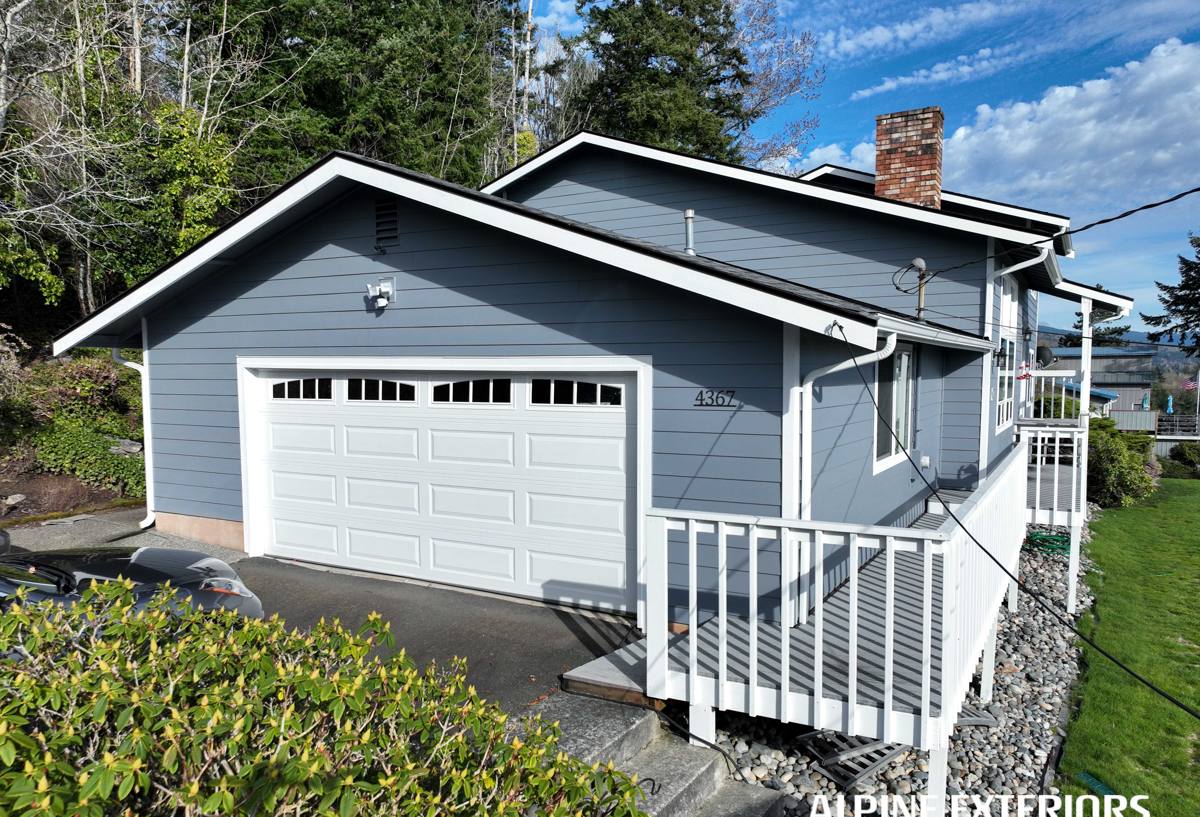
What a Correct Composite Deck Build Requires Here
The composite boards get most of the attention, but they're the last thing installed and the least likely part of the job to fail. What actually determines whether a deck holds up in Happy Valley's climate is everything underneath and behind the decking.
The Substructure Comes First
Joists, beams, and posts need to be sized and spaced for composite's slightly different span ratings than wood decking, and in a wet climate we lean toward pressure-treated or naturally durable framing lumber with proper ground clearance rather than cutting that clearance close. Standing water or wicking moisture at the base of a post is where rot starts, composite deck or not.
Flashing and Ledger Attachment
Where the deck attaches to the house is the single most important detail on the whole job. We flash the ledger board properly, slope it to shed water away from the house, and never rely on caulk alone to keep water out of that connection. This is the detail that causes the most expensive repairs down the road when it's skipped, because the damage happens inside the wall where you can't see it until it's serious.
Fastening and Board Spacing
We use hidden fastener systems rated for coastal, high-moisture use, and we set board gapping to allow for composite's normal thermal expansion and contraction while still giving water and debris a path to drain through rather than collect on top of the joists. Gapping that's too tight traps moisture and organic debris — the exact combination that grows moss and algae fastest.
Composite vs. Other Decking Materials
Homeowners in Happy Valley usually compare composite against natural wood or PVC before deciding. Here's an honest look at the trade-offs, based on how each material actually behaves in this specific climate rather than in general.
| Material | How It Handles This Climate | Maintenance | Typical Lifespan Here |
|---|---|---|---|
| Wood (cedar, pressure-treated) | Needs consistent sealing to resist the region's rain and moss; shows weathering fastest in shaded, damp spots | Annual cleaning and re-sealing or staining | 10-15 years with upkeep |
| Composite | Resists moisture absorption and won't rot; surface can still host moss or algae if not cleaned occasionally | Periodic washing, no sealing or staining required | 25-30+ years, backed by manufacturer warranty |
| PVC / Cellular | Fully moisture-resistant but can look and feel less natural; more expensive upfront | Low; occasional washing | 25-30+ years |
For most Happy Valley homeowners, composite lands in a practical middle ground: it doesn't demand the yearly upkeep wood requires in this rain, and it costs less than most PVC systems while still holding up to the salt air and moisture this neighborhood sees.
Our Process, Start to Finish
- On-site assessment: We look at the ledger connection, existing framing (if any), drainage patterns in the yard, sun and shade exposure, and how exposed the property is to bay-facing weather.
- Structural plan: We size framing, footings, and beams to code and to composite's span requirements, not generic wood-deck assumptions.
- Material selection: We walk through board options, colors, and price points based on your home's exposure and your maintenance preferences.
- Flashing and framing: This is where the durability of the whole project gets decided, so we don't rush it.
- Decking, fascia, and railing installation: Hidden fasteners, proper gapping, and coastal-rated hardware throughout.
- Final walkthrough: We cover basic care for your specific board choice and answer questions before we consider the job done.
Choosing the Right Composite Board for This Climate
Capped vs. Uncapped
Capped composite boards have a protective outer shell that resists moisture absorption and staining better than uncapped boards, which is worth the difference in a climate with this much rain. We generally steer Happy Valley homeowners toward capped products for that reason, especially on any deck with shaded or low-airflow sections.
Color and Heat
Darker composite colors show less dirt and moss staining but absorb more heat in direct sun; lighter colors run cooler but can show organic staining sooner in shaded, damp areas. We'll talk through which trade-off fits your specific yard's sun exposure.
Board Profile and Grain
A grooved-edge profile paired with hidden fasteners gives a cleaner look and a more consistent drainage gap than face-screwed boards, which matters more here than in a dry climate because that gap is doing real work keeping water and debris moving through instead of sitting on the joists.
What Drives the Cost
We don't publish fixed prices because every deck is different, but these are the factors that actually move the number for a composite deck project in this area.
| Factor | Why It Matters |
|---|---|
| Deck size and shape | More square footage and more corners or curves both add material and labor |
| Existing substructure condition | A full tear-off and rebuild costs more than decking installed over sound, code-compliant framing |
| Height and footings | Elevated decks need engineered footings and often stairs, both adding cost |
| Railing style | Composite, cable, and metal railing systems price very differently |
| Board tier | Uncapped composite costs less upfront than premium capped boards, with a trade-off in maintenance and warranty coverage |
| Site access | Tight side-yard access or a sloped lot can add labor time |
The honest range runs from a modest single-level replacement to a much larger figure for an elevated multi-level deck with built-in railings and stairs. We'll give you real numbers once we've seen the site.
Keeping a Happy Valley Composite Deck Looking Right
Composite is genuinely low-maintenance, but "low" isn't "none" in this climate. A short seasonal routine keeps a deck looking like new for the life of the warranty.
- Sweep debris off the boards regularly, especially in fall when leaf litter collects in shaded corners
- Rinse or lightly scrub the surface a couple of times a year to prevent moss and algae from getting established
- Keep gutters and downspouts near the deck clear so runoff isn't dumping extra water onto or under the boards
- Check that furniture and planters aren't sitting in one spot long enough to trap moisture underneath
- Have the substructure and ledger flashing inspected every few years, since that's the part hidden from view
Why Hire a Crew That Already Works in Happy Valley
A lot of decking problems we get called to fix weren't caused by bad composite boards — they were caused by a build that ignored the realities of this specific climate. Flashing details that work fine in a dry inland town fail here. Fastener grades that are fine well inland corrode faster this close to Bellingham Bay. Board gapping that's adequate in a sunny, open yard traps moisture in the shaded, tree-covered lots common in this neighborhood.
Working in Whatcom County day in and day out means we're not guessing at how a deck needs to be built here — we're applying what we've already seen hold up, and what we've seen fail, on homes with the same exposure yours has.
If you're weighing composite decking for a Happy Valley home, we're happy to walk the site, talk through material and layout options honestly, and put together a free, no-pressure estimate — just fill out the form below.