 Bellingham Siding
 Windows Built for Columbia's Weather, Not Just Its Views
Columbia sits close enough to Bellingham Bay that salt air is a real factor in how windows age here, not just a talking point. Add in the driving rain that comes off the water most falls and winters, plus the long stretch of gray, damp months that let moss and algae take hold on anything that stays wet, and you've got a climate that's genuinely hard on window assemblies — especially the frame, the flashing, and the seal around the glass. A window that's rated fine for a dry inland climate can still fail early here if it wasn't installed with this specific exposure in mind.
When we install windows in Columbia, we're not just setting glass in a hole. We're managing water. That's the whole job, really: keep bulk water out, let any moisture that does get behind the trim find a way back out, and make sure the frame and the wall assembly around it stay dry over the long run. Get that wrong and you don't see it for a year or two — then you see rot, soft trim, or a musty smell that traces back to a window opening that was never properly flashed.
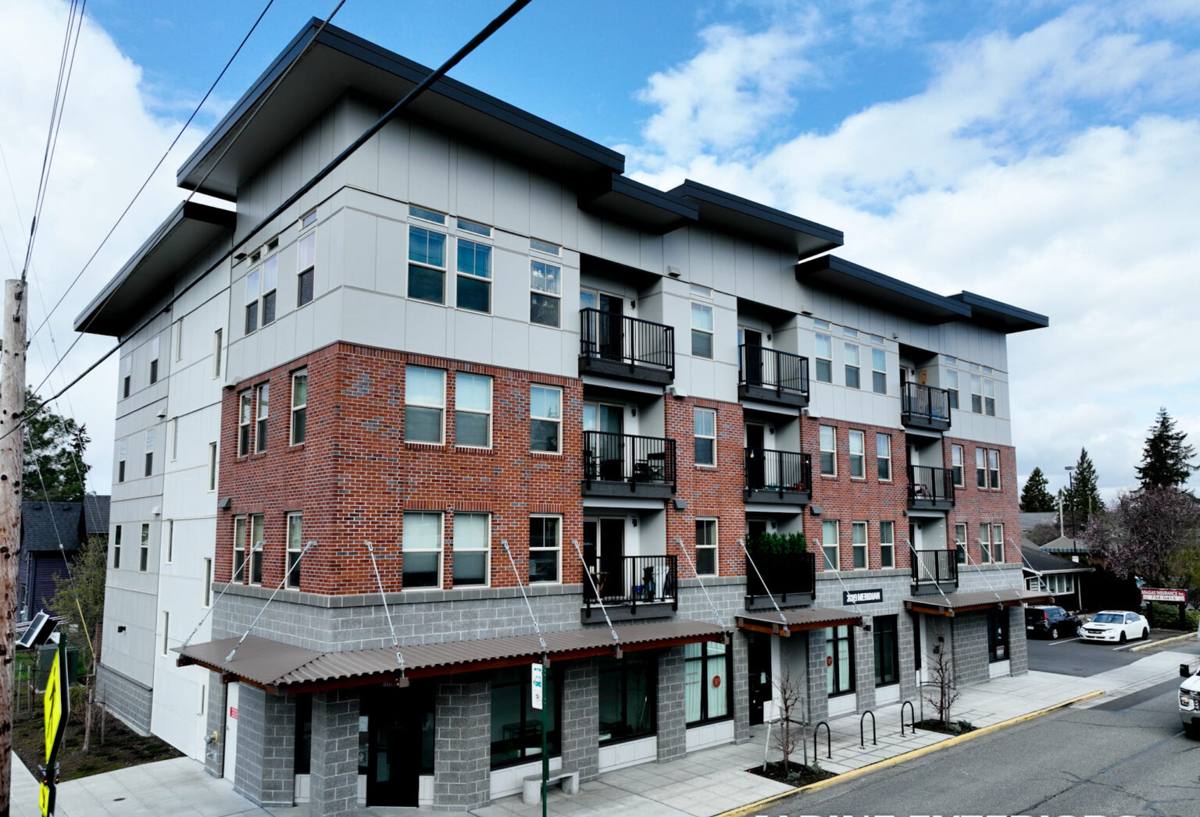
What Salt Air, Rain, and Moss Actually Do to Windows
Salt air
Being near the bay means airborne salt settles on exterior surfaces, including window frames and hardware. Over years, salt exposure accelerates corrosion on lower-grade fasteners, hinges, and metal cladding, and it can dull or pit finishes that aren't rated for coastal exposure. This is one reason we're particular about hardware and fastener specs on jobs this close to the water.
Driving rain
Wind-driven rain doesn't just fall on a window — it gets pushed sideways into every gap, seam, and reveal. A window that's only sealed at the surface (caulk around the trim, nothing more) will eventually let water past that first line of defense. The fix isn't more caulk; it's proper flashing behind the trim and a drainage path built into the installation, so any water that gets past the surface has somewhere to go besides your wall cavity.
Moss and algae season
Whatcom County's long damp stretch, roughly October through April most years, keeps north-facing and shaded surfaces wet for weeks at a time. That's exactly the condition moss and algae need to take hold. On windows, this shows up as green or black growth on sills, in corners of the frame, and on trim boards that don't get sun or airflow. It's mostly cosmetic on the frame itself, but the moisture that feeds that growth is the same moisture that can work its way into poorly sealed joints.
What a Correct Window Installation Involves
A lot of window problems in this area trace back to installation shortcuts, not the window product itself. Here's what we consider non-negotiable on every job:
- Removing old windows carefully and inspecting the rough opening and sill for existing rot or water damage before anything new goes in
- Repairing or replacing any damaged framing, sheathing, or sill material — never installing a new window over a compromised opening
- Installing a sloped sill pan so any water that reaches the sill drains outward, not into the wall
- Flashing the opening in the correct sequence (sill, jambs, then head) so water is always shed downward and outward, shingle-style
- Integrating the window flashing with the house's weather-resistive barrier, not just taping over gaps
- Setting the window level, plumb, and square, with proper shimming so it operates smoothly and doesn't stress the frame
- Insulating the gap around the frame without over-packing it, which can bow the frame and cause operational issues
- Sealing the interior and exterior with the right sealant in the right locations — not sealing everything, which can trap moisture instead of letting it drain
Skip any one of these steps and the window can look fine for a while. The failures that show up later — soft trim, staining on interior sills, fogged glass from a failed seal — usually trace back to one of these steps being rushed or skipped.
Signs a Columbia Home's Windows Need Attention
Because Whatcom County's climate accelerates certain kinds of wear, it's worth knowing what to watch for rather than waiting for an obvious failure:
- Drafts or a cold spot near the window even when it's fully closed and latched
- Condensation between the panes, which means the seal has failed and the insulating gas has escaped
- Wood trim or sills that feel soft, spongy, or show dark staining
- Difficulty opening, closing, or latching a window that used to operate smoothly
- Visible gaps, cracked caulk, or daylight around the frame from outside
- Persistent moss or algae buildup on sills or trim that keeps returning after cleaning
- A musty smell near a window opening, which can indicate trapped moisture behind the wall
Any one of these on its own isn't necessarily an emergency, but they're worth a look before the next wet season starts.
Replacement vs. Repair: How We Help You Decide
Not every window problem means full replacement. A failed seal, damaged weatherstripping, or a hardware issue can sometimes be fixed without pulling the whole unit. But if the frame itself has taken on water damage, or the flashing behind the trim was never done correctly to begin with, patching the surface won't solve the underlying issue — it'll just delay the next round of damage.
| Situation | Repair Usually Sufficient | Replacement Recommended |
|---|---|---|
| Foggy glass, dry frame | Yes — glass unit swap | No |
| Sticking or hard to latch | Yes — hardware or track adjustment | No |
| Soft or rotted sill/frame | No | Yes |
| Persistent leaking during driving rain | Sometimes — depends on flashing condition | Often, if flashing was never correct |
| Old single-pane or poorly performing unit | No | Yes |
| Cosmetic moss/algae on trim only | Cleaning, not repair | No |
We'll tell you honestly which category your situation falls into. If a repair will genuinely hold up through another wet season, we'll say so — replacement isn't always the right call just because it's the more profitable one for us.
Our Process for Window Installation Jobs in Columbia
1. On-site assessment
We look at each opening individually — sun exposure, wind exposure, existing water damage, and how the current windows were originally installed. This tells us what we're really dealing with before we quote anything.
2. Product selection based on exposure
Not every window needs the same spec. A window on the side of the house that catches direct driving rain off the bay gets treated differently than one tucked under an eave on a sheltered wall. We'll walk you through the practical trade-offs — frame material, glass package, hardware finish — based on where each window actually sits, not a one-size-fits-all recommendation.
3. Removal and opening prep
Old units come out carefully, and we inspect and repair the opening before anything new goes in. This is the step that gets skipped most often on lower-quality jobs, and it's the one most responsible for early failures.
4. Installation and flashing
Sill pan, sequenced flashing, integration with the house wrap, proper shimming and sealing — every step from the checklist above, every time.
5. Final check and walkthrough
We test operation on every window, check seals, and walk you through anything you should know about maintenance for your specific product and exposure.
Frame Material Considerations for This Climate
Frame material matters more here than in a drier climate, because the frame is what's absorbing years of salt air and moisture cycling. We'll talk through the honest maintenance trade-offs of each option with you rather than pushing a single product:
- Vinyl — low maintenance and good moisture resistance, though quality varies significantly between manufacturers
- Fiberglass — dimensionally stable and holds up well to temperature and moisture swings, typically a higher upfront cost
- Wood-clad — attractive interior look but requires more attention to keep exterior cladding sealed against this climate's moisture
- Aluminum — durable but a poor insulator and more prone to condensation issues in our damp, cool climate unless thermally broken
Why Local Installation Experience Matters
Window installation instructions from a manufacturer are written for a generic climate. They don't account for the fact that a wall in Columbia might stay damp for days after a storm rolls in off the water, or that north-facing trim here grows moss in a way it simply wouldn't in a drier part of the state. A crew that's worked windows throughout Bellingham and Whatcom County knows which walls take the worst of the driving rain, which openings tend to have hidden water damage from decades-old flashing mistakes, and which product specs actually hold up here versus which ones just look good on paper. That local pattern recognition is what keeps a window installation from becoming a callback in two years.
Get a Free, No-Pressure Estimate
If you're dealing with drafty, foggy, or hard-to-operate windows in Columbia, or you're just planning ahead before the next wet season, we're happy to take a look and give you an honest assessment — no pressure, no upsell. Use the form below to request a free estimate.