 Bellingham Siding
 Siding Repair in Columbia: Built for What Bellingham Throws at It
Homes in Bellingham's Columbia neighborhood sit close enough to the water and the weather patterns off Bellingham Bay that siding takes a harder hit here than it would further inland. Salt-tinged air, wind-driven rain off the Sound, and a moss season that stretches through most of the wet months all work against exterior siding year-round. A repair that would hold up fine in a drier climate can fail fast here if it's not matched to what this neighborhood actually deals with.
That's the difference between a patch job and a real repair. Anyone can caulk a crack or swap a warped board. Doing it right in Whatcom County means understanding why the damage happened in the first place, what's happening behind the siding, and how to make sure the fix survives the next several wet seasons instead of failing again in a year or two.
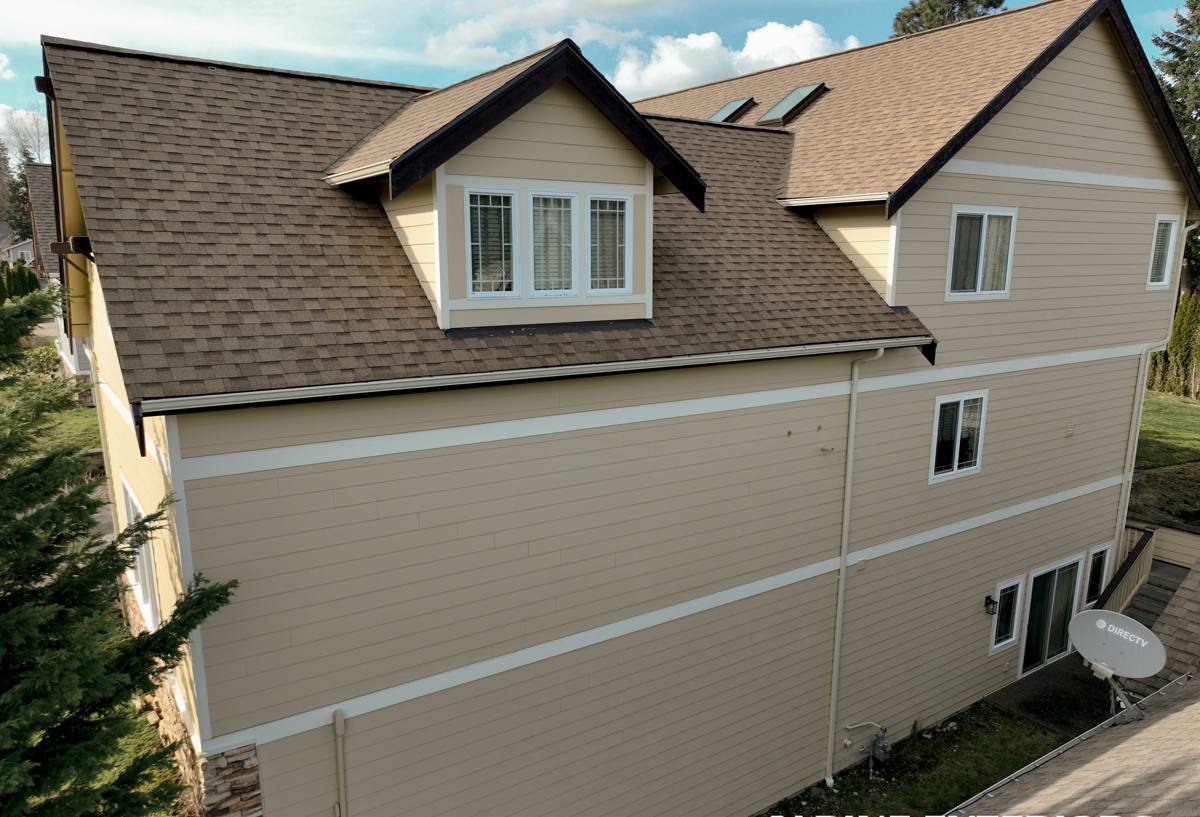
Signs a Columbia Home Needs Siding Repair, Not Just a Repaint
Paint and caulk can hide problems for a while, but they don't fix them. If you're seeing any of the following on your home's exterior, the siding itself — not just the finish — needs attention:
- Soft, spongy, or crumbling spots when you press on the siding, especially near the bottom edges or around windows and doors
- Visible cracking, splitting, or buckling in individual boards or panels
- Persistent moss or dark streaking that keeps coming back within weeks of cleaning
- Peeling or bubbling paint that returns quickly even after a fresh coat
- Gaps opening up at seams, corners, or trim where caulk has failed
- A musty smell near exterior walls, or discoloration on interior drywall along an outside wall
Any one of these on its own might be minor. Several together, especially on the sides of the house that take the most weather, usually means moisture has been getting behind the siding for a while.
What a Correct Siding Repair Actually Involves
Diagnosing the Cause, Not Just the Symptom
Replacing a damaged board without figuring out why it failed is how the same spot ends up damaged again in a year or two. A proper repair starts with pulling back the failed section and checking the house wrap, flashing, and framing underneath. Driving rain finds its way in through gaps that are often invisible from the outside — a missing kick-out flashing above a roofline, a butt joint that was never properly sealed, or trim that was installed tight against the siding with no drainage path. If that root cause isn't addressed, new siding over the same bad detail just buys a little time.
Matching Materials and Finish
Repairs also need to match what's already on the house — not just in color, but in material behavior. Patching a fiber cement wall with a different product, or mixing finishes that expand and contract at different rates, creates new seams that are prone to cracking and uneven weathering. Getting this right matters more in a climate like Bellingham's, where the repaired section needs to perform identically to the surrounding siding through repeated wet-dry and freeze-thaw cycles, not just look right on install day.
Repair or Replace? A Straight Answer
Not every siding problem needs a full replacement, and not every problem should be patched. The right call depends on how much of the wall is affected, what's causing the damage, and how old the existing siding is. Here's how we generally think about it:
| Situation | Usually Repair | Usually Replace |
|---|---|---|
| Damage is isolated to one or two boards/panels | Yes | No |
| Moisture damage found behind multiple areas of the wall | No | Yes |
| Siding is under 10 years old and otherwise sound | Yes | No |
| Existing material is failing due to the product itself, not one bad install detail | No | Yes |
| Damage is cosmetic (impact dent, minor crack) with no moisture intrusion | Yes | No |
| Recurring moss, staining, or paint failure across most of the exterior | No | Yes |
We'll always tell you honestly which side of that line your home falls on. A targeted repair is the right answer far more often than a full tear-off — but when the underlying material or original installation is the real problem, patching it just delays a bigger repair bill down the road.
Why We Repair — and Rebuild — With James Hardie Fiber Cement
When a repair calls for new siding material, we use James Hardie fiber cement exclusively. We don't install vinyl, LP SmartSide, cedar, primed spruce, or other fiber cement brands, and that's a deliberate standard, not a sales pitch. Fiber cement doesn't rot, doesn't feed moss and mildew the way wood-based products can, and doesn't warp or buckle the way vinyl does when it's exposed to repeated soaking and drying. In a climate with Bellingham's rain totals and moss pressure, that difference shows up in how long a repair actually lasts.
James Hardie's ColorPlus factory finish is baked on under controlled conditions, which means a repaired section can be matched more consistently than field-painted alternatives, and it holds color and resists the streaking and fading that recurs on unprotected finishes near salt air. Hardie also engineers its HZ5 product line specifically for the wetter climate zones of the Pacific Northwest, which is the version we use on Whatcom County homes. It's backed by a strong, transferable manufacturer warranty — but that warranty only holds up if the repair is done to spec, which is exactly why we don't cut corners on flashing, fastening, and clearances just to close out a repair job quickly.
Our Siding Repair Process for Columbia Homes
We approach every repair call in Columbia the same methodical way:
- Inspection: We look at the damaged area and the surrounding wall, not just the spot you called about — hidden moisture rarely stays confined to one board.
- Moisture check: Where there's any sign of water intrusion, we open up the area to check the house wrap, flashing, and sheathing before closing anything back up.
- Root-cause fix: We correct the flashing, sealant, or drainage detail that let moisture in, not just the visible damage.
- Material match: We source and cut replacement James Hardie material to match the existing profile, exposure, and color as closely as the situation allows.
- Proper fastening and clearances: Repairs are installed to the same manufacturer specs as new construction — correct fastener spacing, ground clearance, and joint treatment — so the fix performs like the rest of the wall.
- Final walk-through: We show you what we found, what we fixed, and what to keep an eye on going forward.
Moss, Mildew, and Salt Air Between Repairs
Even correctly repaired siding needs some seasonal attention in this climate. Moss and algae growth is one of the most common reasons we get repair calls in Bellingham neighborhoods with mature tree cover and consistent shade — moisture sits on and against the siding longer than it does on a sun-exposed wall, and organic growth takes hold in that time. A soft wash on a regular schedule, keeping gutters clear so runoff isn't sheeting down the siding, and trimming back vegetation that keeps a wall shaded and damp all go a long way toward preventing the next repair call. Homes closer to the bay also benefit from an occasional rinse to clear salt residue, which can otherwise accelerate wear on caulking and fasteners over time.
Why Hiring a Crew That Already Works in Columbia Matters
Siding repair is detail work, and the details that matter change by neighborhood. A crew that regularly works in Columbia and similar Bellingham neighborhoods already knows how local wind and rain exposure tends to hit different sides of a house, how much moss pressure to expect under mature tree canopy, and which installation shortcuts from years past tend to cause problems down the road in this specific climate. That local pattern recognition is what separates a repair that solves the problem from one that just covers it up for a season.
It also means a faster, more accurate first visit — less time spent explaining the neighborhood's quirks, more time spent actually diagnosing your home's siding.
If you're seeing damage, staining, or soft spots on your Columbia home's siding, we're happy to take a look. Reach out for a free, no-pressure estimate — we'll tell you honestly whether it's a repair or something bigger, and what it would take to fix it right.