 Bellingham Siding
 Blaine's Waterfront Exposure Asks More of a Siding Job
Blaine sits at the northern edge of Whatcom County, close enough to Semiahmoo Bay and Drayton Harbor that salt-laden air reaches most homes in town, not just the ones facing the water. Add in wind-driven rain that comes ashore sideways off the strait and a moss season that can run most of the calendar year on shaded walls, and you have one of the harder climates in the county to keep a home's exterior looking and performing the way it should. Fiber cement siding is the material we've found actually holds up to that combination, and this page is about what that looks like specifically for a Blaine home — not siding in general, but the products, install details, and maintenance realities that matter here.
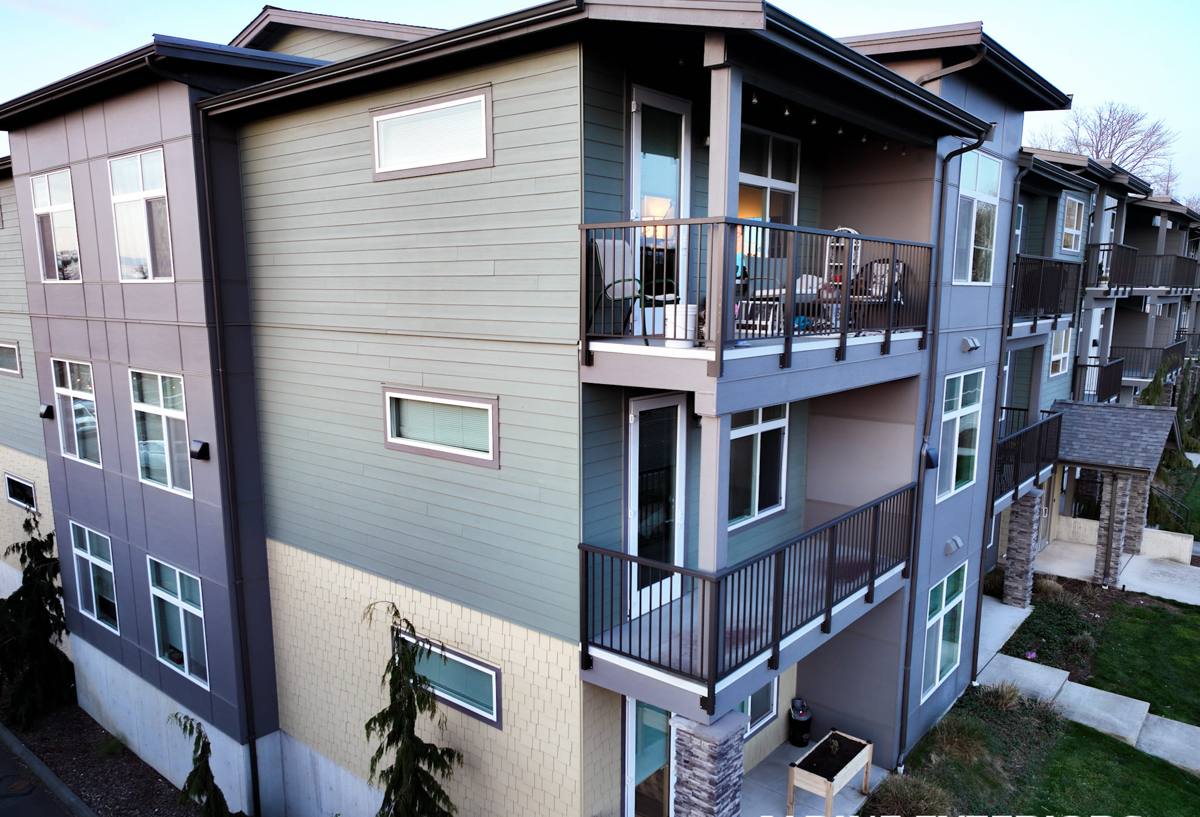
Why Fiber Cement Is the Right Call for This Climate
Salt Air and Corrosion
Salt in the air doesn't just affect the metal parts you can see. It works continuously on fasteners, flashing, and any exposed trim, and it breaks down lower-grade paints and coatings faster than a dry inland climate would. Fiber cement itself doesn't corrode — it's a cement-based composite, not a metal or wood product — but the hardware and finish holding it to the house still have to be chosen with that salt exposure in mind.
Wind-Driven Rain
Storms coming off the water rarely drop straight down in Blaine. Wind pushes rain sideways into lap joints, trim seams, and anywhere two building materials meet, which is a harder test than the same rainfall total falling calmly. A material that resists water absorption, paired with lapped and flashed details that actually account for sideways-moving water, is what keeps that rain out of the wall assembly instead of behind it.
A Long Moss Season
Mild temperatures and near-constant dampness give moss and mildew a long growing season on shaded and north-facing walls, and any siding material with surface porosity gives them something to grip. Fiber cement's dense composition and factory finish leave less for algae and moss to take hold of than a porous or absorbent surface would, though no exterior surface is entirely immune once shade and moisture are constant enough.
Fiber cement doesn't handle these three problems by accident. It's a dense composite of cement, sand, and cellulose fiber that doesn't swell, rot, or supply the organic material that mold and moss need to spread the way wood-based products can. That's the baseline reason it's the only siding material we install, in Blaine or anywhere else in this climate.
The James Hardie Product System We Use in Blaine
"Fiber cement" isn't one product — James Hardie makes several, and choosing the right one for each part of a house matters as much as choosing fiber cement in the first place.
- HardiePlank lap siding: The primary field siding on most homes, available in a few surface textures so it can read as a clean modern finish or mimic traditional wood lap siding.
- HardiePanel vertical siding: Used for board-and-batten looks and vertical accent sections, common on gables and modern-style facades.
- HardieShingle siding: A shingle-profile product for accent areas or full shingle-style exteriors, giving a traditional coastal look without the upkeep a real wood shingle would need in this climate.
- HardieTrim boards: Fiber cement trim for corners, window and door surrounds, and fascia, so the trim ages at the same rate and with the same resistance as the field siding instead of becoming the first thing that fails.
All of it can be specified in Hardie's ColorPlus factory finish, which cures the color onto the board under controlled conditions before it ever reaches the site. That matters more in Blaine than in a drier climate, because a factory-applied finish resists the fading, chalking, and moisture intrusion at the coating level that a field-applied paint job wears down against faster under sustained salt air and humidity.
What Correct Installation Looks Like Here
Buying the right siding is half the job. The other half is installing it the way Hardie's own specifications call for, and in a coastal town like Blaine, skipping or shortcutting those details shows up faster than it would somewhere drier.
Drainage and Clearance
A rain screen gap behind the siding gives any moisture that gets past the surface a path to drain and evaporate instead of sitting against the sheathing. Correct clearance from grade, roof lines, and decks or patios matters more here too, since standing water and splash-back are more common in a town that gets this much rain over the course of a year.
Fasteners and Flashing
Fastener type and spacing follow Hardie's spec for a reason, and in a salt-air environment corrosion-resistant fasteners aren't optional — a fastener that starts rusting can telegraph a stain through the siding and eventually loosen its hold. Flashing at every seam, window, and penetration needs to be lapped so it sheds water downward and outward, especially on walls that catch wind-driven rain directly.
Joints and Sealant
Butt joints and trim transitions are where water finds its way behind siding first if they're rushed. We flash and seal these per spec rather than relying on caulk alone to do the job, because caulk is a maintenance item that will eventually need attention — the underlying flashing detail is what actually keeps water out over the long run.
- Rain screen gap installed behind the siding for drainage
- Corrosion-resistant fasteners at the correct spacing and depth
- Minimum clearance maintained from grade, roofline, and horizontal surfaces
- House wrap and flashing lapped correctly at every seam and penetration
- Butt joints and trim transitions flashed, not just caulked
- Manufacturer-specified finish touch-up on any field-cut edges
Our Process for a Blaine Fiber Cement Project
We start by looking at the existing wall, not just the surface siding. If we're re-siding an older home, that means checking for moisture damage behind the current material before pricing anything, since a wall that's been holding water for years can need sheathing or framing repair before new siding goes on top of it. From there we walk through product and profile selection — lap versus panel versus shingle, texture, and color — based on the style of the house and what will actually perform best given that wall's sun and wind exposure. Installation follows Hardie's spec on fastening, flashing, and clearance without shortcuts, and we do a final walkthrough with the homeowner before calling the job finished.
Repair or Full Replacement
Not every fiber cement issue in Blaine means a full tear-off. Impact damage, a cracked panel, or trim that's come loose can often be repaired and color-matched into existing Hardie siding. But if moisture has been tracking behind the wall for a while, or the existing siding is a different, older material that's reached the end of its service life, patching it usually just delays a bigger job. We'll tell you plainly which situation you're actually in before recommending either path.
Fiber Cement Compared to Other Siding Options in Blaine's Climate
| Material | Salt Air / Corrosion | Moisture & Moss Resistance | Maintenance | Typical Lifespan |
|---|---|---|---|---|
| James Hardie fiber cement | Composite core doesn't corrode; factory finish holds up well | Dense, low-porosity surface resists moss and rot | Occasional rinsing and caulk checks | Multiple decades with correct install |
| Vinyl | Doesn't corrode, but can warp or crack under UV and cold snaps | Can trap moisture behind panels if house wrap isn't detailed carefully | Low, but damage often means full panel replacement | Varies widely by grade and installation |
| Cedar / primed spruce | Natural material, no metal corrosion concern | Absorbs moisture; prone to moss, rot, and warping without upkeep | Regular painting or sealing required | Shorter without consistent maintenance |
| LP SmartSide (engineered wood) | Resin-treated strand core, sensitive at cut edges and fasteners | More moisture-sensitive than fiber cement in sustained wet climates | Moderate; edge sealing and paint upkeep matter | Depends heavily on installation and climate exposure |
This is why we standardized on one system instead of offering a menu of options. Vinyl, cedar, primed spruce, and engineered wood products all have a place in the market, and other contractors install them well. We made a professional decision that in a climate this consistently wet and salt-exposed, fiber cement done correctly gives Blaine homeowners the best balance of appearance, durability, and long-term maintenance cost — which is also why we don't install LP SmartSide, vinyl, Cemplank, Allura, primed spruce, or cedar ourselves.
Living With Fiber Cement Siding in a Salt-Air, Moss-Prone Climate
Fiber cement is genuinely low-maintenance compared to wood-based sidings, but "low-maintenance" in Blaine still means a little seasonal attention, not none at all.
- Rinse siding periodically to clear salt residue and airborne grime, especially on walls facing the water
- Keep gutters clear so overflow doesn't run down the wall face and feed moss growth
- Trim back shrubs and branches that keep a wall shaded and damp longer than the rest of the house
- Check caulking at trim and joints every year or two and re-seal any that's cracked or pulled away
- Address moss or mildew growth early with a gentle wash rather than pressure that can damage the finish
- Have fastener heads and flashing looked at periodically, since corrosion here starts small and stays hidden longest
None of this is heavy upkeep. It's the difference between a fiber cement job that reaches its full service life and one that starts showing problems years earlier because small maintenance items got ignored in a climate that doesn't forgive neglect the way a drier one would.
Why a Crew That Already Works Blaine Matters
A contractor who installs fiber cement siding across Whatcom County's coastal towns regularly has seen how salt air, wind-driven rain, and moss actually behave on real houses over years, not just how the product performs on a spec sheet. That experience shapes decisions on install day that a crew unfamiliar with this specific exposure might not think to prioritize — which walls need extra flashing attention, where drainage details matter most, and which fastener and sealant choices are worth the additional time. Blaine's position on the water isn't identical to more sheltered inland parts of the county, and a fiber cement installation built for that exposure looks different from one built to a generic regional standard.
If you're considering fiber cement siding for a Blaine home, we're glad to take a look and give you a straightforward, no-pressure assessment of what your house actually needs. Reach out using the form below to schedule a free estimate.