 Bellingham Siding
 Why Birchwood Siding Wears Differently Than Siding Inland
Birchwood sits close enough to the water and to Bellingham's marine weather pattern that its homes take on a specific kind of punishment. Salt-laden air corrodes fasteners and finishes faster than it does twenty miles inland. Driving rain, pushed sideways by wind off the bay, finds every gap in flashing and trim that a calmer climate would never expose. And Whatcom County's long, wet moss season keeps north-facing walls and anything shaded by trees damp for months at a stretch, which is exactly the environment moss, algae, and rot organisms need to take hold.
None of that means Birchwood homes need exotic materials. It means they need siding and installation detailing that were actually built for wet, coastal, temperate climates — not products designed for drier regions and hoped into service here. We replace siding in Birchwood on a regular basis, and the failures we see when we tear off old siding almost always trace back to the same three things: water getting behind the cladding, fasteners or trim that couldn't hold up to the salt air, and moisture sitting against the wall long enough for moss and rot to set in.
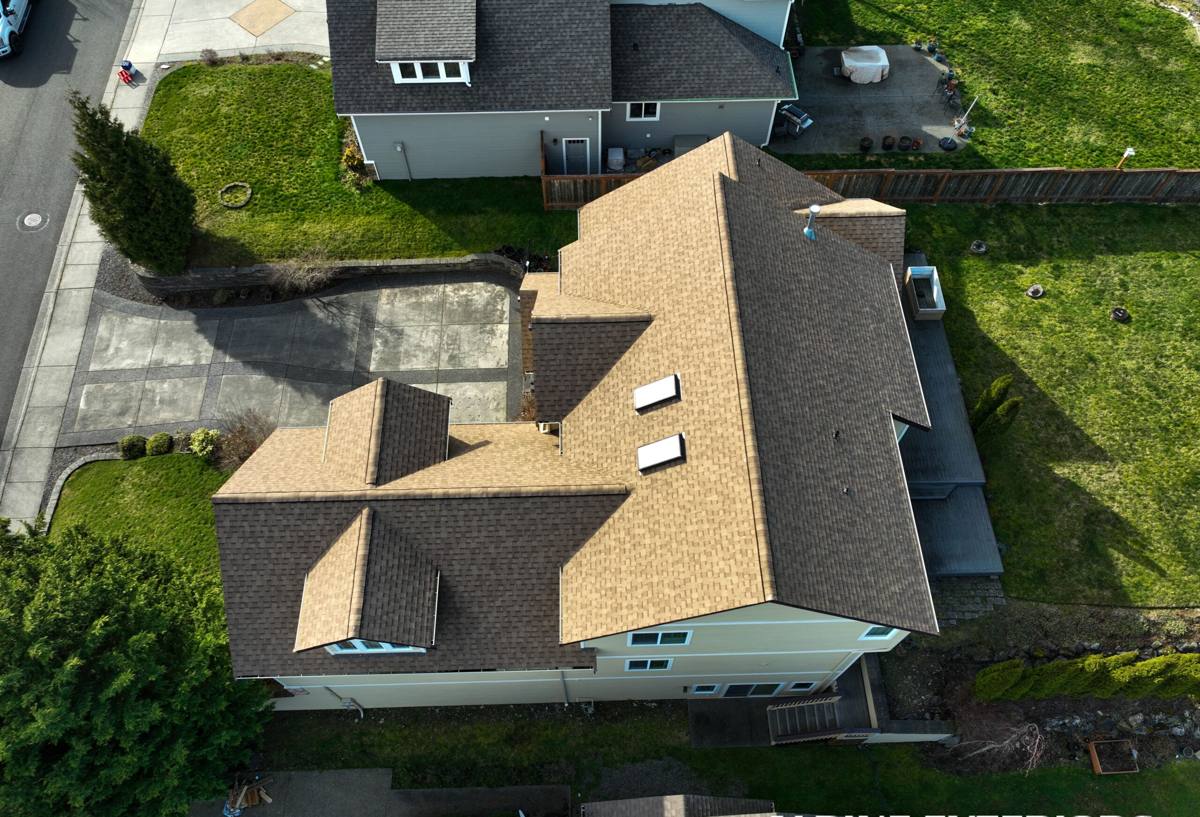
Signs a Birchwood Home Is Due for Siding Replacement
Most siding doesn't fail all at once — it tells you first. Here's what we look for, and what you can check yourself before calling anyone out.
- Soft or spongy spots when you press on the siding, especially near the bottom courses or below windows
- Persistent moss, algae, or dark streaking that comes back within weeks of cleaning
- Paint that's peeling, bubbling, or chalking faster than a normal repaint cycle would explain
- Visible gaps, warping, or cupping in boards, particularly on the north and west sides of the house
- Rusted or discolored nail heads bleeding through the paint
- Rising energy bills with no other explanation — often a sign water has degraded the wall assembly behind the siding
- Siding that's simply reached the end of its practical service life, especially older cedar, hardboard, or early-generation vinyl
Any one of these on its own might just need attention. Several together, especially combined with visible moss or soft board, usually means the water-resistive barrier behind the siding has been compromised and full replacement — not another round of caulk and paint — is the honest recommendation.
What a Correct Siding Replacement Actually Involves
Siding replacement done right is mostly about what happens before the new boards ever go up. In a climate like Whatcom County's, cutting corners on the parts nobody sees is where premature failures come from.
Tear-off and inspection
We remove the old siding down to the sheathing and inspect for rot, soft spots, and any water damage that's already occurred. This is the point where hidden problems — often years in the making — get caught and repaired before they're sealed back up behind new siding.
Water-resistive barrier and flashing
A new weather-resistive barrier goes on correctly lapped, shingle-style, so water is always directed outward and down. Flashing at windows, doors, roof lines, and any wall penetration gets detailed to shed water, not trap it. This is the single most important step for a house exposed to driving rain, and it's the step that's easiest to rush.
Installation to manufacturer spec
Correct fastener spacing, proper clearance from grade and roof lines, and factory-specified gaps at joints and trim all matter more here than in a drier climate, because any deviation gives moisture a place to collect. We install James Hardie fiber cement to the manufacturer's published specifications — not a modified version of them — because that's what keeps the transferable warranty intact and the wall assembly performing as designed.
Trim, caulking, and finish details
The last stage is trim, corner details, and sealing at penetrations — done with materials and methods rated for sustained coastal moisture exposure, not generic hardware-store caulk that fails in a couple of seasons.
Why We Install Only James Hardie Fiber Cement
We don't install vinyl, LP SmartSide, primed spruce, cedar, or other fiber cement brands like Cemplank or Allura. That's a deliberate standard, not a lack of options. Each of those products has legitimate strengths, but each also has a real-world trade-off — moisture sensitivity, installation tolerance, long-term maintenance burden, or warranty structure — that we've watched cause problems on homes in this climate specifically.
James Hardie fiber cement is non-combustible, holds paint and factory-applied ColorPlus finishes far longer than wood-based products, and doesn't absorb water the way engineered wood or cedar can. Hardie also engineers specific product lines (HZ5, HZ10) for different climate zones, which matters in a region that swings between saturated winters and dry summers. It's not a fad choice for us — it's the product that, installed correctly, holds up best to exactly what Birchwood throws at siding: salt air, sideways rain, and months of damp shade.
Comparing Common Siding Options for This Climate
| Material | Moisture Behavior | Maintenance | Our Position |
|---|---|---|---|
| Vinyl | Can warp, crack in cold snaps; seams allow water intrusion behind panels | Low, but limited color life and repair options | Not installed |
| LP SmartSide / engineered wood | Wood-based core is vulnerable if the finish is ever breached | Moderate; edge sealing is critical and easy to miss | Not installed |
| Cedar / primed spruce | Natural wood; absorbs moisture, prone to rot without diligent upkeep | High; repainting and sealing on a recurring cycle | Not installed |
| Other fiber cement (Cemplank, Allura) | Similar base material to Hardie, but different finish systems and warranty terms | Moderate | Not installed |
| James Hardie fiber cement | Engineered for wet climates; resists moisture, non-combustible | Low; factory finish holds up for years | What we install |
Choosing the Right Hardie Line and Color for a Birchwood Home
James Hardie's HZ5 product line is built for the kind of freeze-thaw and moisture cycling the Pacific Northwest sees, and it's what we spec for Bellingham-area homes, Birchwood included. Within that, homeowners typically choose between lap siding (the traditional horizontal board look), panel siding for a more modern or accent treatment, and shingle-style siding for a more textured, traditional appearance. ColorPlus factory finishes come pre-baked onto the board in a range of colors that hold their tone far longer than field-applied paint, which matters on a house that's going to sit in salt air and rain for the next several decades.
We'll walk through which profile and color fit the home's style and the surrounding neighborhood character during the estimate — there's no single right answer, but there is a wrong one if moisture behavior gets ignored in favor of looks alone.
Our Process, Start to Finish
- Free on-site estimate — we inspect the existing siding, look for signs of hidden water damage, and give you a straight assessment of whether repair or full replacement makes sense.
- Detailed scope and quote — product line, color, trim details, and a clear price, with no vague allowances.
- Tear-off and sheathing inspection — old siding removed, substrate checked and repaired as needed.
- Water-resistive barrier and flashing installation — done to shed water correctly at every penetration.
- Hardie siding installation — installed to manufacturer specification to keep the warranty valid.
- Trim, caulking, and final inspection — including a walkthrough with you before we consider the job finished.
- Cleanup — job site cleared of debris, old materials hauled off.
What Drives the Cost of Siding Replacement
| Factor | Why It Matters |
|---|---|
| Home size and wall complexity | More corners, gables, and dormers mean more cutting, trim, and labor |
| Extent of hidden damage | Rotten sheathing found during tear-off adds repair work before new siding can go on |
| Siding profile chosen | Lap, panel, and shingle-style Hardie products differ in material and labor cost |
| Trim and detail work | Custom trim, corner treatments, and accent details add time and material |
| Access and site conditions | Tight lots, slopes, or landscaping close to the house can slow the work |
We give real numbers during the estimate, not a range pulled out of thin air — every Birchwood property is a little different, and the quote should reflect the actual house, not a generic average.
Why a Crew That Already Works Birchwood Matters
Siding installation is detail work, and the details that matter shift with the climate. A crew that mainly works drier inland regions may not instinctively over-build the flashing at a window head or think twice about clearance at grade — habits that are second nature to a crew that installs siding in Whatcom County's rain and salt air every week. Familiarity with local permitting, typical Bellingham-area wall construction, and how fast moss reclaims a shaded wall all shape how we detail a job before the first board goes up.
It also means we're not guessing at how James Hardie performs here — we're installing it on homes exposed to the same salt air and driving rain year after year, and we see how it holds up over time.
Maintaining Your New Siding
Hardie fiber cement is low-maintenance, not no-maintenance. A yearly rinse to keep organic growth from establishing, prompt attention to any caulking that separates at trim joints, and keeping gutters clear so water isn't sheeting down the wall will keep a correctly installed system performing for decades. None of that is heavy upkeep — it's the difference between siding that ages gracefully in this climate and siding that fights it the whole way.
If your Birchwood home is showing any of the signs above, or you're just planning ahead, we're happy to take a look and give you a straight, no-pressure assessment. The estimate is free, and there's no obligation — fill out the form below to get started.