 Bellingham Siding
 Windows in Birch Bay Take a Different Kind of Beating
Birch Bay sits right on the water, and that changes what a window has to survive. Homes a few miles inland in Bellingham deal with plenty of rain, but they don't get the same steady salt spray coming off the bay, and they're not sitting as exposed to wind pulling straight off open water. If you've owned a place out here for more than a few winters, you've probably already noticed it: hardware that corrodes faster than it should, aluminum frames that pit and dull, wood sills that hold moisture longer than they would somewhere more sheltered, and seals that give out before their rated lifespan. None of that is a defect in your house. It's just what waterfront and near-waterfront exposure does to building materials over time.
Window replacement in this setting isn't just a cosmetic upgrade or an energy-bill fix, though it's usually both of those too. It's about putting in a window system, flashing detail, and hardware package that's actually built for what Birch Bay throws at it, installed by people who understand why that matters before the first window ever comes out of its packaging.
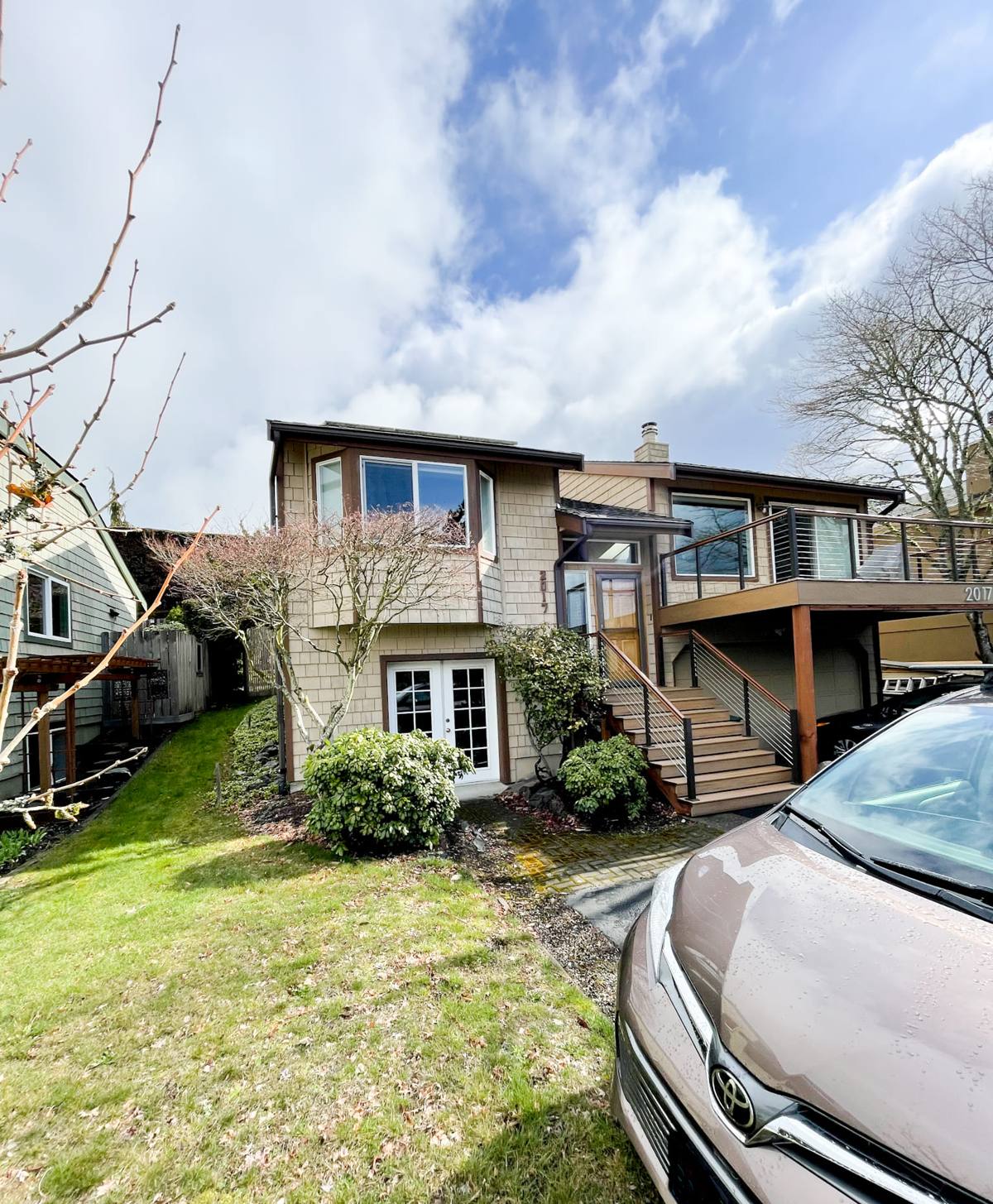
What Salt Air, Driving Rain, and Moss Season Actually Do to a Window
Salt Air and Hardware
Salt-laden air accelerates corrosion on anything metal — hinges, locks, balance systems, screws, and cheaper aluminum cladding. Once corrosion starts on a lock mechanism or a balance arm, the window stops operating smoothly long before the glass or frame itself fails. That's usually the first sign a Birch Bay homeowner notices: a window that used to open easily now sticks, or a lock that used to click shut now needs to be forced.
Driving Rain and Water Intrusion
Wind-driven rain off the bay doesn't fall straight down — it gets pushed sideways into the wall, which means it tests every seam, sill, and flashing detail a window has. A window that would perform fine in a calm inland yard can leak in a wind-driven storm if the flashing and sill pan underneath it aren't installed correctly. Most of the water damage we find during a replacement isn't from the glass unit failing — it's from water getting behind the frame through a gap in the flashing and rotting the sheathing or framing before anyone noticed a problem inside.
Moss and Prolonged Dampness
Whatcom County's long wet season means moss and algae get a real foothold on anything that stays damp — north-facing walls, shaded sills, and window trim that doesn't dry out between rains. On wood-framed or wood-trimmed windows, that sustained dampness is what leads to soft spots, paint failure, and eventually rot. It's slow, and it's easy to miss until a sill or jamb is already compromised.
What a Correct Window Replacement Involves Out Here
A window replacement done right in a coastal-exposure spot like Birch Bay isn't just "old window out, new window in." The details that don't show up in a sales brochure are the ones that determine whether the new window lasts 20+ years or starts failing in five.
- Full inspection of the opening. Before anything goes in, we check the sheathing, framing, and sill for hidden water damage or soft wood from the old window's flashing history. If there's rot, it gets addressed before the new window goes in — not covered up.
- Correct flashing sequence. Sill pan flashing, jamb flashing, and head flashing installed in the right shingle-lap order so water is always directed out and down, never trapped behind the window.
- Sill pan with a positive slope and drainage path. This is the single biggest factor in whether wind-driven rain that does get past the exterior stays out of your wall cavity or ends up on your subfloor.
- Corrosion-resistant hardware. Locks, hinges, and balance systems rated for coastal or high-moisture exposure, not the standard-grade hardware that's fine 20 miles inland but won't hold up a quarter mile from saltwater.
- Proper sealant selection and application. The right sealant for the substrate and exposure, applied so it sheds water instead of holding it against the frame.
- Interior and exterior trim sealed and finished so moisture can't wick into the wall assembly from either side.
Choosing Window Materials for a Bay-Exposed Home
There's no single "best" window material for every situation — it depends on your home's exposure, your maintenance appetite, and your budget. Here's how the common options actually perform in this kind of setting, based on how they hold up over time, not marketing claims.
| Material | How It Handles Salt Air & Moisture | Maintenance | Typical Trade-Off |
|---|---|---|---|
| Vinyl | Doesn't corrode; good moisture resistance | Low | Frame can look/feel less premium; color options more limited |
| Fiberglass | Very stable in moisture and temperature swings; low corrosion risk | Low | Higher upfront cost than vinyl |
| Wood (clad exterior) | Good if the exterior cladding is intact; wood core still vulnerable if seals fail | Moderate to high | More sensitive to installation quality near the coast |
| Aluminum | Prone to pitting and corrosion in salt air without a marine-grade finish | Moderate | We generally steer clients away from standard aluminum this close to the bay |
For most Birch Bay homes, we lean toward vinyl or fiberglass for the balance of durability and upkeep — not because other materials are bad products, but because they ask less of the homeowner over the next 15-20 years in this specific exposure. Wood-clad windows can absolutely work here, but they demand more attentive maintenance and a very clean installation, since any gap in the cladding or seal gives moisture a way to reach the wood core.
Energy Performance Matters Here Too
Whatcom County winters aren't brutal by national standards, but the combination of wind exposure and persistent dampness makes drafty or poorly sealed windows noticeably worse to live with than the same window would be in a calmer inland spot. Old single-pane or early double-pane windows in a wind-exposed Birch Bay home often show cold drafts, condensation between panes, and higher heating bills specifically because wind pressure is finding every gap in the old seals. A properly installed, well-sealed replacement window addresses both problems at once — comfort and the water-intrusion risk — because good weatherproofing and good energy performance come from the same careful installation work.
Signs It's Time to Replace, Not Repair
- Fogging or moisture between the panes of a double-pane window — the seal has failed and can't be fixed, only replaced
- Locks, hinges, or cranks that are corroded, seized, or require force to operate
- Visible soft or discolored wood at the sill, jamb, or trim
- Persistent drafts even with the window fully latched
- Paint or finish failing repeatedly in the same spot despite touch-ups
- Noticeable moss or algae growth on the frame or sill that keeps coming back
- Difficulty opening or closing that's gotten worse over a season or two
A window with one or two of these issues might be a candidate for repair. Multiple issues on the same window, especially combined with any sign of wood damage, usually means replacement is the more cost-effective path — repeated repairs on a failing frame rarely pay off compared to putting in a window built for the exposure.
Our Process for a Birch Bay Job
- On-site assessment. We look at each window's exposure, current condition, and any signs of water damage around the opening — not just the glass and frame themselves.
- Honest recommendation. We'll tell you plainly which windows need full replacement, which could reasonably wait, and which materials make sense for that specific wall's exposure to wind and salt spray.
- Clear written estimate covering materials, labor, flashing and sill work, and disposal of the old windows — no vague allowances.
- Careful removal and opening inspection. We don't just pull the old window and jam a new one in the same hole — we check what's behind it first.
- Correct installation sequence — sill pan, flashing, window, sealant, trim — done in the order that actually keeps water out long-term.
- Final walkthrough where every window is tested for smooth operation and a tight seal before we consider the job finished.
Why It Matters to Hire a Crew That Already Works Birch Bay
Window replacement isn't a specialty unique to the coast — plenty of contractors can hang a window correctly in a calm, sheltered location. What's different about Birch Bay is that mistakes here don't show up right away. A flashing detail that's slightly off might not leak in a light rain, but it will leak in a wind-driven storm coming off the bay, and by the time you see a stain on your interior wall, water may have already been getting into the framing for a season or more.
A crew that regularly works this stretch of Whatcom County has already seen what generic installation practices miss out here — where wind-driven rain actually hits hardest on a given elevation, which hardware holds up and which corrodes within a few years, and how much slope a sill pan really needs when the storms roll straight in off open water. That's not something you get from a general install checklist; it's something you get from doing the work in this exact environment, repeatedly, and paying attention to how it holds up.
What This Typically Costs
Window replacement pricing depends on the number of windows, size, material, and how much flashing or sheathing repair is needed once we open the wall. As a broad range, expect standard vinyl or fiberglass replacement windows to run from the low thousands per window installed, with premium materials, larger sizes, or added structural repair pushing that higher. We'll give you an exact number in writing after the on-site assessment — we don't quote sight unseen, because the condition behind the old window matters as much as the window itself.
If you're dealing with drafty, corroded, or failing windows on a Birch Bay home, we're happy to come take a look and give you a straight, no-pressure estimate. There's a form right below this to get that scheduled.