 Bellingham Siding
 Why Birch Bay's Shoreline Climate Is Hard on Siding
Birch Bay sits right on the water along Whatcom County's coast, and that location is a mixed blessing for the homes there. The same waterfront setting that makes the neighborhood desirable also puts a steady, low-grade stress on exterior siding that inland Bellingham homes simply don't deal with in the same way. Salt-laden air moves off the bay and settles on every exterior surface, wind-driven rain gets pushed sideways into laps, corners, and trim joints instead of just falling straight down, and the mix of shade, moisture, and mild temperatures gives moss and algae a long growing season with almost no dry-out period to slow them down.
None of this is dramatic on its own. It's cumulative. A siding product or installation detail that would perform fine for twenty years in a drier, more sheltered part of Whatcom County can start showing problems in half that time on a Birch Bay lot facing the water. That's the standard we build to on every job here — not the standard for an average house, but the standard for a house that spends its life a short walk from salt water.
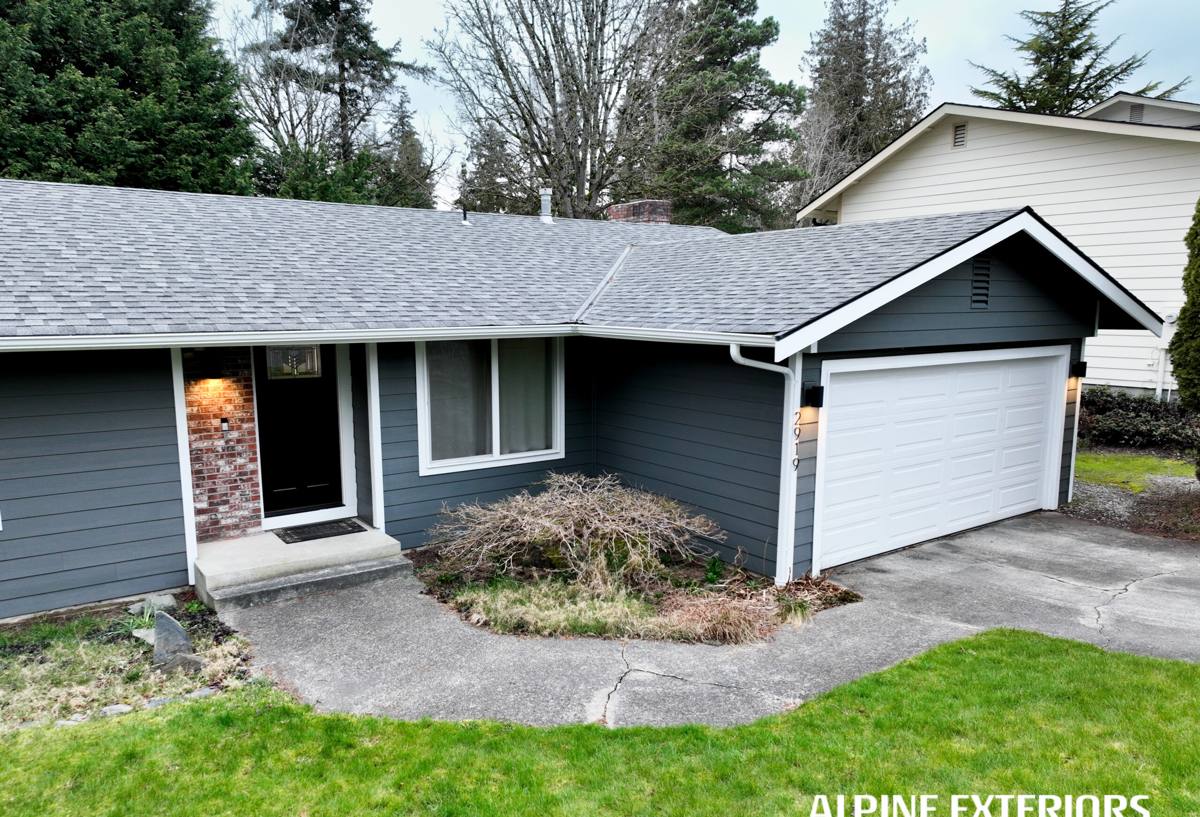
What Correct Siding Installation Actually Involves
Siding installation is often talked about like it's mostly a cosmetic job — pick a color, nail up some boards. On a Birch Bay home, the parts nobody sees after the job is done are the parts that determine whether the siding lasts. Get these wrong and even a good product will fail early; get them right and you've built in decades of protection regardless of weather.
Weather-Resistive Barrier and Flashing
Every wall needs a continuous weather-resistive barrier behind the siding, lapped correctly so water always drains outward and down, never inward. Windows, doors, and any wall penetration need properly integrated flashing — and on a home exposed to wind-driven rain off the bay, that flashing detail matters more than it would on a sheltered inland lot. Kick-out flashing where a roofline meets a wall is a small detail that's easy to skip and is one of the most common sources of hidden rot when it's missed.
Fastening and Hardware
Salt air corrodes standard fasteners faster than most homeowners expect. We use corrosion-resistant fastening hardware suited to a marine-influenced environment, and we follow the manufacturer's fastening pattern and clearances exactly rather than approximating — proper fastening is part of what keeps a warranty valid.
Clearances and Drainage
Siding needs the ground and hardscaping clearance the manufacturer specifies, and it benefits from a drainage gap behind it so any moisture that does get past the outer layer can escape instead of sitting against the wall assembly. On a lot with persistent dampness and shade, that drainage detail is the difference between siding that dries out between rain events and siding that never really does.
Why We Standardized on James Hardie Fiber Cement
We install James Hardie fiber cement siding exclusively. That's not a marketing preference — it's a decision we made after weighing how different siding materials actually hold up in a Pacific Northwest coastal climate over decades, not just in the first few years.
Fiber cement is a mix of cement, sand, and cellulose fiber. It doesn't have an organic wood component to rot, and it isn't a plastic product that expands and contracts sharply with temperature swings. It's non-combustible, which matters increasingly to insurers and homeowners alike. James Hardie's ColorPlus finish is baked on in a factory-controlled process rather than field-applied, which gives it more consistent fade and wear resistance than a site-painted finish — an advantage in an environment where UV, salt, and moisture are all working on the finish at once. And Hardie engineers specific product lines, like their HZ5 line, for regions with exactly this kind of weather exposure.
None of that means fiber cement is maintenance-free — no siding is. It means that when it's installed correctly, it holds its finish, its shape, and its structure through the conditions Birch Bay actually sees, better than the alternatives we used to install before we made fiber cement our only offering.
Why We Don't Install Vinyl, LP SmartSide, or Cedar Here
We get asked about these regularly, and homeowners deserve a straight answer rather than a sales pitch against them. Each of these products does some things well — we simply concluded, after years in this trade, that the trade-offs weren't ones we wanted to put our name behind on a Birch Bay home.
Vinyl siding is inexpensive and low-maintenance in mild, sheltered conditions. But it's a plastic product that expands and contracts more than fiber cement with temperature swings, its seams and panels rely on overlap rather than a monolithic surface, and in direct wind-driven exposure it doesn't hold up the same way over the long run. It also can't be painted a darker color without risk of warping, which limits homeowners later on.
LP SmartSide is an engineered wood-strand product, and modern engineered wood is a real improvement over raw lumber siding — it's treated and resin-bonded to resist moisture better than plain wood. But it's still an OSB-based substrate at its core. If a caulk joint fails, a fastener backs out, or a flashing detail is off, moisture intrusion on a wood-strand product behaves differently — and worse — than it does on a cement-based product, especially in a climate that stays damp as long as Whatcom County's does.
Cedar and primed spruce are genuinely attractive materials, and there's a reason they were used on Pacific Northwest homes for generations. But they're organic materials in a climate built to break organic materials down: constant moisture, shade, and moss growth. They need ongoing refinishing to keep protecting the wood underneath, and skipping a cycle in a place like Birch Bay catches up with a homeowner faster than it would somewhere drier.
We're not telling homeowners these products are junk — plenty of houses around Whatcom County wear them. We're telling you why, after weighing moisture behavior, maintenance burden, and long-term performance on shoreline properties specifically, we chose to only install one product system.
How the Options Compare in a Birch Bay Environment
| Material | Salt Air & Moisture Behavior | Moss & Algae Resistance | Typical Maintenance Cycle |
|---|---|---|---|
| James Hardie fiber cement | Non-combustible, cement-based — doesn't rot or corrode from salt exposure | Factory finish resists staining better than raw organic materials | Occasional wash; repaint only if ever needed, often decades out |
| Vinyl | Doesn't rot, but can become brittle and stressed under repeated wind-driven exposure | Can trap moisture behind panels where it's not visible | Regular washing; panels can crack and need spot replacement |
| LP SmartSide (engineered wood) | Better than raw wood, but still vulnerable if any seal point fails | Moderate — depends heavily on maintained caulking and paint | Periodic inspection of joints and touch-up paint |
| Cedar / primed spruce | Organic material — most exposed to rot in constant damp conditions | Needs active treatment to resist moss and mildew staining | Refinishing every few years to stay protected |
Our Installation Process for Birch Bay Homes
Assessment First
We start with a walk-through of the exterior, not just a measurement. On waterfront and near-waterfront lots, it's common to find moisture damage behind existing siding that isn't visible until it's opened up — soft sheathing near ground level, deteriorated house wrap, or rot around old flashing details that were never quite right. We check for that before quoting the job, so the number you get reflects the actual condition of the wall, not just the finish coat.
Tear-Off and Prep
Most jobs call for a full tear-off to bare sheathing so the weather-resistive barrier and flashing can be installed correctly from scratch, rather than layered over old material that may already be compromised. Any damaged sheathing gets replaced before a single piece of siding goes up.
Installation
Siding goes on following James Hardie's fastening and clearance specifications exactly, with attention to the details that matter most in this climate — flashing at every penetration, proper drainage behind the cladding, and corrosion-resistant hardware throughout.
Final Walkthrough
We finish with a walkthrough so you can see the work directly and ask questions before we consider the job done.
What Drives the Cost of a Birch Bay Siding Job
Every home is different, so we won't quote a number without seeing the house — but these are the factors that typically move the price up or down:
| Factor | Why It Matters |
|---|---|
| Home size and number of stories | More wall area and taller elevations both add material and labor time |
| Condition of existing sheathing | Hidden moisture damage found during tear-off requires repair before siding can go on |
| Trim and architectural detail | Homes with more corners, dormers, and trim work take longer to fit and finish correctly |
| Color and accessory selection | ColorPlus factory finishes and trim accessories vary in cost by product line |
| Site access | Waterfront and hillside lots can add setup and material-handling time |
What to Ask Before Hiring a Siding Contractor in Birch Bay
Not every contractor working in Whatcom County has real experience with the specific conditions a shoreline home faces. Before you hire anyone, it's worth asking:
- Have you installed siding on homes in Birch Bay or other waterfront areas of Whatcom County before?
- What weather-resistive barrier and flashing details do you use, and can you explain why?
- What fastening hardware do you use, and is it rated for a marine-influenced environment?
- Do you inspect and repair sheathing before installing new siding, or install over existing material?
- Is your crew certified to install the specific product you're proposing, and what warranty actually transfers to me as the homeowner?
- Will I get a walkthrough at the end of the job to review the work before it's considered complete?
A contractor who's worked this stretch of coast before should be able to answer all of these without hesitation — and should be explaining these details to you before you ask, not just after.
A Crew That Already Knows This Coastline
Bellingham Siding Company works throughout Whatcom County, and Birch Bay's waterfront conditions are part of what we plan for on every job in that area — not something we learn on your house. Hiring a crew that already understands salt air exposure, wind-driven rain, and the region's long moss season means fewer surprises during the job and a better chance the siding performs the way it's supposed to for decades, not just for the first few winters.
If you're planning a siding project on your Birch Bay home, we're happy to walk the exterior with you, take an honest look at its condition, and put together a free, no-pressure estimate — no obligation, just a clear picture of what your home actually needs.