 Bellingham Siding
 Why Birch Bay Windows Take More Punishment Than Most
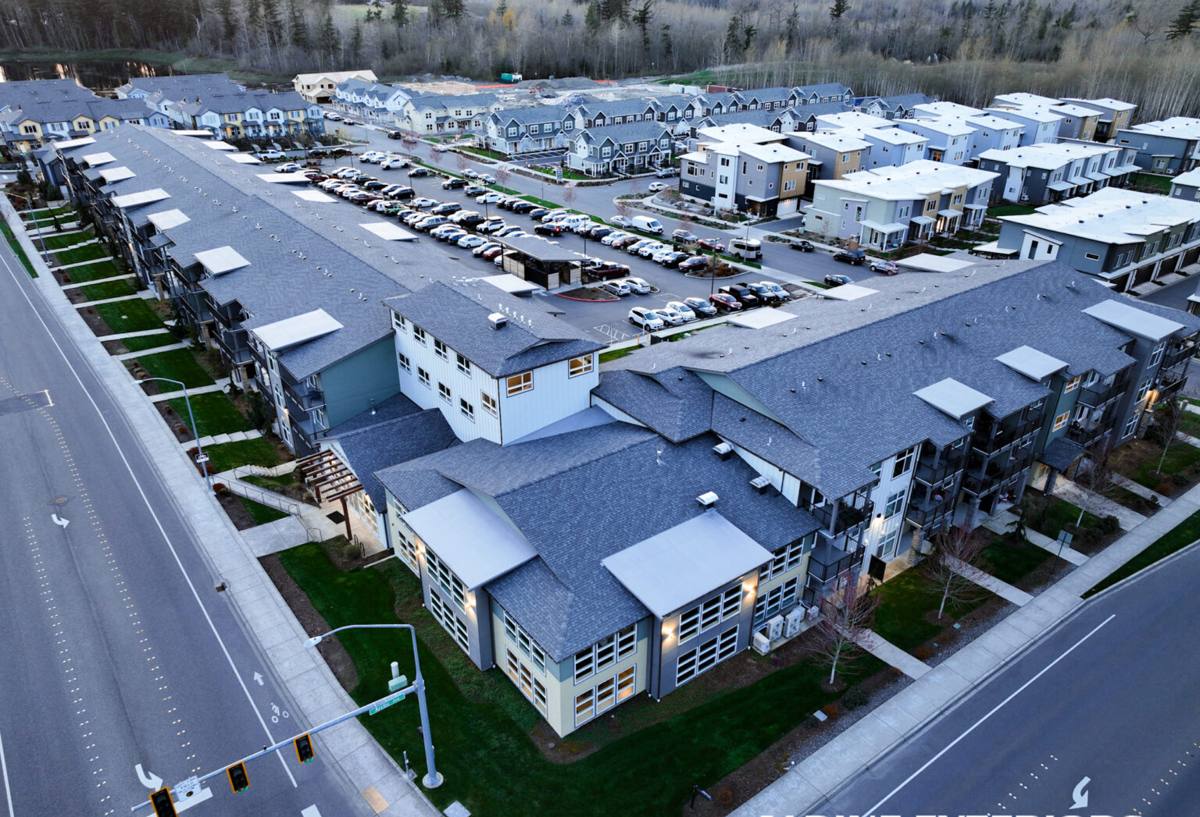
Birch Bay sits right on the water, and that changes what a window has to survive year to year. Salt-laden air off the bay works on aluminum hardware, screen frames, and unprotected fasteners faster than it would a few miles inland. Add Whatcom County's pattern of driving, wind-pushed rain — not just straight-down rain, but rain forced sideways into any gap in the flashing — and you've got a climate that finds every weak point in a window installation within a few winters. Then there's the long stretch of damp, low-light months every fall through spring that keeps everything outdoors wet longer than it dries, which is exactly the environment moss, mildew, and slow wood rot need to take hold.
None of this means Birch Bay is a bad place to own windows. It means the products and the installation details matter more here than they would in a drier, more sheltered part of the county. A window that's rated fine for general Pacific Northwest use can still underperform on a waterfront or near-waterfront lot if it wasn't chosen and installed with salt exposure and wind-driven rain specifically in mind.
What "Custom" Actually Means for This Coastline
We use "custom" for two different but related situations, and it's worth knowing which one applies to your house:
Non-Standard Openings
Many Birch Bay homes were built or added onto over several decades, and rough openings don't always match today's standard window sizes. Custom-sized units are built to fit your actual opening rather than forcing your opening to fit a stock size — which matters a lot for weathertightness, because ill-fitting units get packed with extra sealant and shims instead of a clean, engineered fit.
Replacement in an Older Coastal Envelope
Older coastal homes often have wall assemblies, siding, and trim details that predate modern weather-resistive barrier practices. Replacing a window here isn't just swapping glass and frame — it's an opportunity (and sometimes a requirement) to correct flashing and drainage details that were never built to today's standard, before the new window goes back in.
Material Choices for Salt Air and Wind-Driven Rain
Every window material handles this coastal combination a little differently. There's no single "best" answer — it depends on your budget, your exposure to direct salt air, and how much upkeep you're willing to do.
| Frame Material | Salt Air / Corrosion Behavior | Maintenance | Typical Lifespan |
|---|---|---|---|
| Vinyl | Won't corrode; UV and salt exposure can cause slow fading/chalking over many years | Low — occasional cleaning | 20–30+ years |
| Fiberglass | Very stable in salt air and temperature swings; dimensionally tight seals hold up well | Low | 30+ years |
| Wood-clad | Cladding protects exterior face, but any breach lets moisture into wood core — higher risk near salt spray | Moderate to high — watch cladding seams and interior wood finish | 20–30 years with upkeep |
| Aluminum | Most vulnerable to salt-driven corrosion of frames and hardware unless marine-grade/coated | Moderate — hardware and finish need monitoring | Varies widely with coating quality |
Hardware matters as much as frame material. Locks, hinges, and balance mechanisms take direct salt exposure on operable windows, so we specify corrosion-resistant hardware on Birch Bay jobs even when a homeowner's chosen frame material would otherwise come with standard hardware.
Where Moss and Moisture Actually Cause Problems
Moss doesn't grow on window glass, but it — and the general dampness that goes with a long moss season — does show up on wood trim, sills, and any horizontal or shaded surface around a window opening that stays wet. Left alone, that moisture holds against caulk joints and trim, which is how small paint failures turn into soft wood underneath. A correct window install accounts for this by making sure water sheds away from the frame instead of sitting against it, and by using trim and sealant details that don't trap moisture against wood.
Weep holes — the small drainage openings at the bottom of a window frame that let condensation and wind-driven rain escape instead of pooling inside the frame track — need to stay clear. On a shaded, damp lot they can silt up or moss over faster than on a sunnier site, so we check and clear them as a standard part of any install and point them out to homeowners as a five-minute seasonal check.
The Installation Details That Actually Prevent Rot
Almost every window failure we get called out to fix in coastal Whatcom County traces back to flashing and sealing, not the window unit itself. A quality window installed with sloppy flashing will fail years before a modest window installed correctly.
- Sill pan flashing that directs any water intrusion back outside, not into the wall cavity
- Proper shingle-lap sequencing of flashing tape with the house's weather-resistive barrier — water always has to be directed downward and outward, never trapped
- Backer rod and sealant sized correctly for the joint, not just caulk smeared over a gap
- Corrosion-resistant fasteners rated for coastal/high-moisture exposure
- Shimming that supports the frame square and plumb without blocking drainage paths
- Interior air sealing so warm, moist indoor air doesn't condense inside the wall around the window
- Weep holes left clear and functional at final inspection
Every one of those is invisible once trim goes back on. That's exactly why it's worth asking a contractor to walk you through their flashing sequence before work starts, not after.
How We Approach a Birch Bay Job
1. On-Site Assessment
We look at existing window condition, framing, and any signs of past water intrusion — soft trim, stained sheathing, or failed caulk joints — before recommending anything.
2. Material and Size Selection
We talk through frame material trade-offs against your specific exposure (direct waterfront versus set back from the shoreline), your maintenance appetite, and your budget, and confirm custom sizing where the opening calls for it.
3. Removal and Opening Prep
Old units come out carefully so we can inspect the rough opening and sheathing underneath — this is often the only chance to catch and correct hidden moisture damage before it's covered again.
4. Flashing and Installation
New flashing is integrated with your home's weather barrier following manufacturer and code sequencing, the unit is set square and shimmed, and sealant is applied at the right joints — not everywhere, which can actually trap moisture.
5. Interior and Exterior Finish
Trim, sealant, and paint or stain are finished to match your home, with attention to horizontal surfaces most exposed to standing moisture.
6. Walkthrough
We show you operation, weep hole locations, and what a normal seasonal check looks like before we call the job done.
What Drives the Cost
Costs vary by project, but the main factors on a Birch Bay custom window job are consistent:
| Factor | Why It Matters |
|---|---|
| Frame material | Fiberglass and higher-end vinyl cost more upfront than basic vinyl but often cost less over the window's life in a salt-air environment |
| Custom sizing | Non-standard openings require built-to-order units rather than stock sizes |
| Extent of flashing/opening repair | Hidden moisture damage found during removal adds scope but prevents a repeat failure |
| Number and type of openings | Fixed picture windows differ in cost and installation complexity from operable casement or double-hung units |
| Trim and finish work | Matching existing exterior trim profiles and paint/stain adds labor beyond the window unit itself |
Why a Crew That Already Works Birch Bay Matters
A contractor who works this stretch of Whatcom County regularly already knows which frame materials and hardware hold up on direct-waterfront lots versus set-back lots, has a flashing sequence that's proven against wind-driven rain from this direction, and isn't guessing about how much upkeep a given wood or clad product will actually need here. That local track record is worth asking about directly — a straightforward contractor will walk you through their process and material reasoning without hedging.
- Ask what corrosion-resistant hardware options they use on coastal jobs, specifically
- Ask them to describe their flashing sequence in plain terms, not just "we seal everything"
- Ask how they handle a rough opening if they find hidden water damage during removal
- Ask about warranty coverage on both the window product and their installation labor separately
- Ask for a written scope before work starts, not a verbal estimate only
Get a Straight Answer for Your House
Every Birch Bay property sits a little differently relative to wind and salt exposure, and that affects what we'd actually recommend for material and installation approach. If you're dealing with drafty, foggy, or hard-to-operate windows — or planning ahead for a remodel — we're glad to take a look and give you a straightforward, no-pressure estimate using the form below.