 Bellingham Siding
 Storm Damage Roof Repair for Barkley Homes
Barkley sits close enough to Bellingham Bay that homes here take a different kind of weather beating than roofs further inland in Whatcom County. It's not usually the dramatic stuff — hail is rare this far into the Pacific Northwest, and tornadoes aren't part of the local risk picture. What Barkley roofs actually deal with is a steady grind: wind gusting off the water, driving rain that finds every weak seam, and a moss season that runs longer here than in most parts of the country. Storm damage in this neighborhood is often quieter than a wind event that rips shingles off in dramatic fashion — it's water working its way in through a spot that's been compromised for months, finally showing up as a stain on a ceiling after the latest system rolls through.
This page covers what storm damage roof repair actually means for a Barkley home, what a correct repair involves, and how we handle the job from first call to final walk-through.
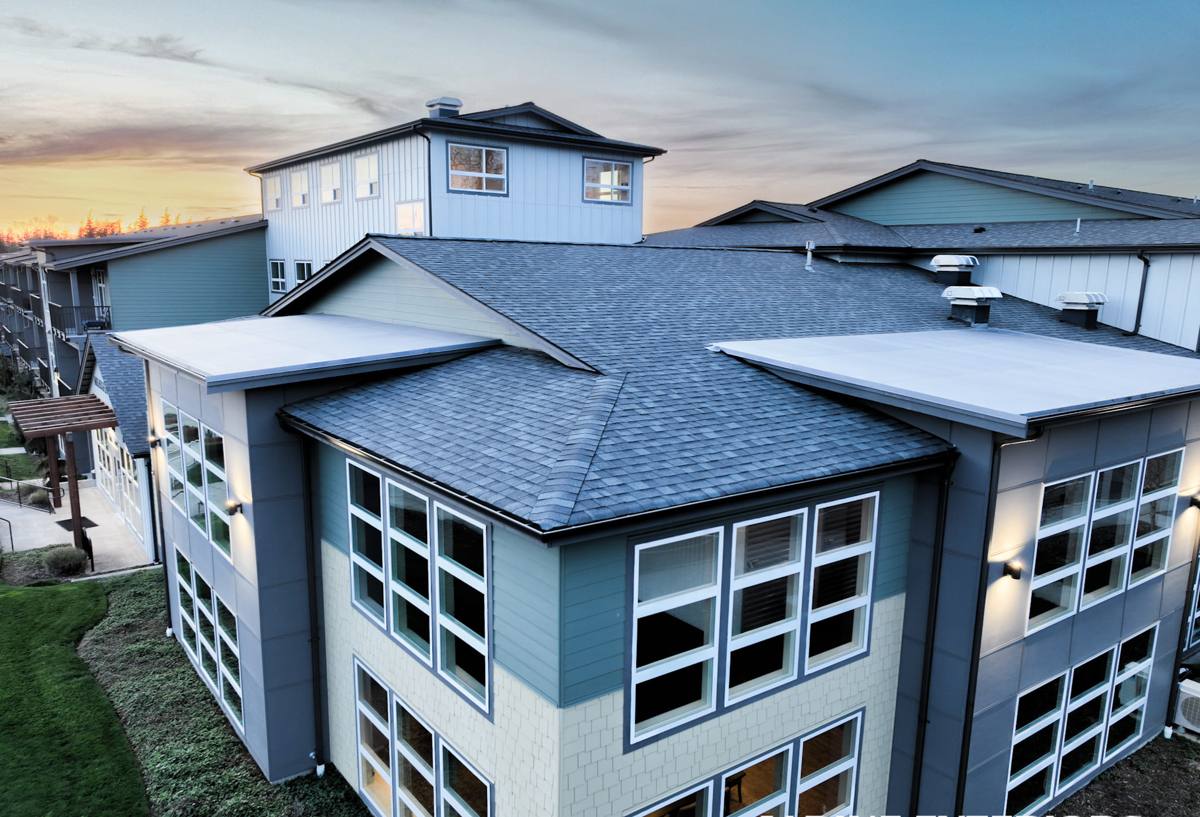
Why Bellingham's Climate Makes This Different
Whatcom County gets a lot of rain, but it's the combination of factors that wears on a roof here, not any single one:
- Salt air: Proximity to Bellingham Bay means airborne salt accelerates corrosion on exposed metal — flashing, fasteners, and vent caps age faster here than they would 30 miles inland.
- Driving rain: Storms off the water often come in sideways rather than straight down. Wind-driven rain finds gaps at flashing, ridge caps, and penetrations that would stay dry in a calmer downpour.
- A long moss season: Mild, wet winters and shaded lots common in Barkley give moss months to establish itself. Moss holds moisture against shingles and can lift edges, which turns a minor storm into an entry point for water.
- Wind exposure: Barkley's mix of mature trees and more open, developed lots means some homes get real wind loading during winter storms, while others mainly deal with falling limbs and debris.
None of this means a Barkley roof needs anything exotic. It means the repair has to account for moisture and corrosion, not just patch a hole and move on.
What Counts as Storm Damage
Storm damage isn't always obvious from the ground. Some of what we see after wind and heavy rain events in this area:
Visible damage
- Shingles torn, creased, or blown off entirely
- Lifted or cracked ridge caps
- Damaged or missing flashing around chimneys, skylights, and vents
- Debris punctures from branches or blown objects
- Gutters pulled loose or clogged in a way that's backing water up under the roof edge
Damage that hides until it's a problem
- Underlayment tears beneath shingles that still look intact from the ground
- Nail pops and seal failures from repeated wind uplift, without any shingles actually missing
- Moss-lifted shingle edges that let water track sideways under the surface layer
- Slow leaks at flashing joints that only show up during a hard, wind-driven rain
This is the category that matters most for a Barkley home. A roof can look fine after a storm and still have a compromised seal that lets water in during the next system — which is exactly why a proper post-storm inspection looks past the parts you can see from the driveway.
What a Correct Storm Damage Repair Involves
Inspection first, repair second
We don't quote a repair off a photo or a guess. A correct job starts with getting on the roof (or using a close visual and moisture check where access is limited) to trace the actual path water is taking, not just patch the spot where a stain appeared on the ceiling. Water travels — a stain in a bedroom doesn't always mean the damage is directly above it.
Matching materials, not improvising
A repair should use materials compatible with what's already on the roof — matching shingle profile and weight where possible, and flashing metal that won't set up galvanic corrosion against what's already installed. In a salt-air environment like Barkley, mismatched metals at a repair joint can start corroding faster than the surrounding roof, which just creates a new failure point a few years down the line.
Addressing the cause, not just the symptom
If moss contributed to the failure, a repair that doesn't also address moss growth and drainage around that section is a temporary fix. We treat the underlying condition — clearing moss, correcting a drainage issue, or resealing a flashing detail that was never quite right — as part of the repair, not a separate upsell.
Sealing for the next storm, not just this one
Given how often Whatcom County sees back-to-back weather systems in fall and winter, a repair needs to be weathertight before the next front arrives, not just cosmetically closed up. That includes proper fastening, correct underlayment lap, and flashing that's actually tucked and sealed rather than caulked over as a shortcut.
Repair or Replace? How We Help You Decide
Not every storm-damaged roof needs a full replacement, and not every roof is a good candidate for another round of patching. The honest answer depends on the roof's age, how widespread the damage is, and what shape the roof was in before the storm hit.
| Factor | Leans toward repair | Leans toward replacement |
|---|---|---|
| Roof age | Under roughly 12-15 years, otherwise sound | Nearing or past expected lifespan for its material |
| Extent of damage | Isolated to one section or a few spots | Widespread across multiple slopes |
| Prior condition | Was in good shape before the storm | Already showing granule loss, brittle shingles, or prior repairs stacking up |
| Underlayment/decking | Dry and intact beneath the damaged area | Signs of rot, soft decking, or repeated water intrusion |
| Moss history | Minor, manageable moss presence | Heavy, longstanding moss with shingle degradation underneath |
We'll tell you honestly which side of that line your roof falls on. If a repair is the right call, we won't push a replacement — and if the damage is extensive enough that a repair would just be delaying the inevitable, we'll say that too, along with why.
Our Process, Start to Finish
- Contact and initial assessment: Tell us what you're seeing — a leak, missing shingles, storm debris — and roughly when the damage occurred.
- On-site inspection: We examine the roof directly, tracing water paths rather than assuming the damage is only where it's visible from inside.
- Written estimate: A clear scope of work and cost range before anything starts, including whether we recommend repair or replacement and why.
- Temporary protection if needed: If there's active leaking or an open section, we can get it weathertight on a temporary basis while the full repair is scheduled, especially if another storm system is on the way.
- Repair work: Matched materials, correct flashing and underlayment technique, and attention to whatever caused the failure in the first place — not just the visible hole.
- Cleanup and walk-through: Debris cleared, work areas checked, and a final look at the repair with you before we call it done.
Insurance Claims: What to Know
Many storm damage repairs in Barkley are at least partially covered by homeowners insurance, depending on the policy and cause of loss. We can document the damage with photos and a written scope that supports a claim, and we're glad to talk through what we're seeing with your adjuster. What we won't do is inflate a scope to chase a bigger payout or tell you a roof needs replacing when a repair would genuinely do the job — our estimate reflects what the roof actually needs, and that's what goes to your insurer too.
A few things worth knowing going in:
- Document damage with photos as soon as it's safe to do so, before any temporary repairs change what's visible.
- Most policies have a claim filing window — check yours rather than assuming there's no rush.
- An adjuster's initial estimate isn't always the final word; a contractor's documented scope can support a supplement if the damage is more extensive than first assessed.
Why a Crew That Knows Barkley Matters
A roof repair crew that already works in this part of Bellingham knows which details actually matter here — that flashing near the bay side of the county corrodes faster, that moss isn't a cosmetic issue but a moisture problem waiting to happen, and that a repair has to hold up against sideways rain, not just rain falling straight down. That's not something you get from a general handyman or a crew that mainly works drier inland climates. It shows up in which fasteners get used, how flashing gets lapped, and whether moss and drainage get addressed as part of the fix instead of ignored until the next call.
A Quick Checklist Before Your Next Storm
- Walk the yard after a storm and note any granules in gutters or downspouts — that's shingle wear, not dirt.
- Check for daylight or water stains in the attic if you have access, especially after wind-driven rain.
- Look at ridge caps and roof edges from the ground with binoculars rather than climbing up yourself.
- Note any moss buildup, especially on north-facing or shaded slopes common in Barkley's tree-covered lots.
- Don't ignore a small stain — trace it before it becomes a bigger repair.
- Keep a record of storm dates and any damage you notice, in case you need it for an insurance claim later.
If a recent storm has left you with damage, a leak, or just a nagging feeling that something's not right up there, we're happy to take a look. Reach out for a free, no-pressure estimate using the form below — we'll tell you honestly what we find and what it would take to fix it right.