 Bellingham Siding
 Deck Building for Barkley Homes
Barkley sits close enough to Bellingham Bay and the surrounding wooded terrain that decks here take a specific kind of beating. It isn't one big storm that wrecks a deck in this part of Whatcom County — it's the slow, steady combination of salt-tinged air, long stretches of driving rain, and shaded, moss-prone ground that never fully dries out between October and May. A deck built without that reality in mind will look fine for a year or two and then start showing problems: soft spots, black staining, slippery boards, and hardware that rusts faster than it should.
We build and repair decks throughout Bellingham, and Barkley's mix of newer construction and mature, tree-shaded lots means we see both ends of the spectrum — decks that were built too fast during a dry season and are already failing, and older decks that were solid once but were never maintained for this climate. This page covers what actually matters when you're building or replacing a deck in this neighborhood, not generic decking advice that ignores where you live.
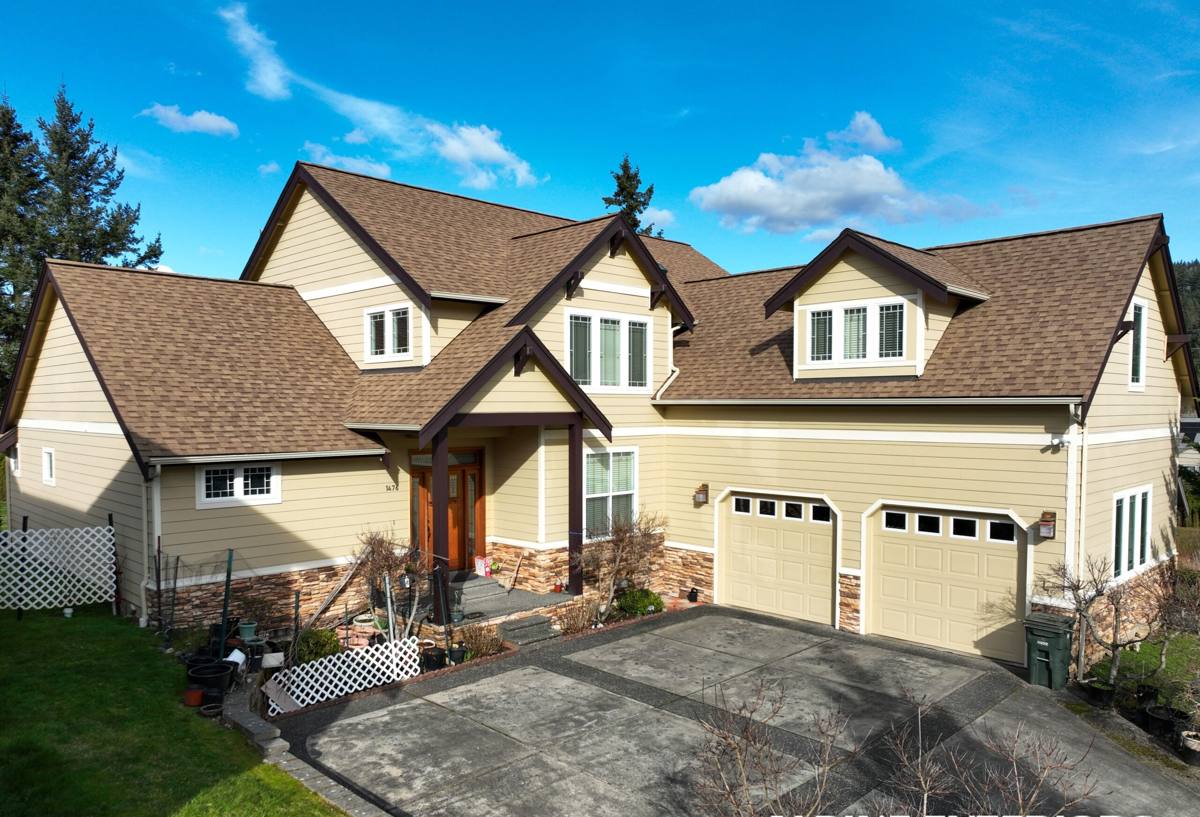
What Bellingham's Climate Does to a Deck Over Time
Whatcom County's marine climate is mild, which is part of why people like living here — but mild and dry are not the same thing. A few specific stresses show up again and again on decks around Barkley:
- Driving rain that gets pushed sideways by wind off the bay, soaking vertical surfaces like railings, fascia boards, and the house wall behind the deck ledger — areas a lot of builders treat as low-risk.
- Extended moss and algae season on shaded decking, especially under tree canopy or on the north side of a house, where boards can stay damp for weeks at a time.
- Salt-influenced air near the water that accelerates corrosion on fasteners, hinges, and any hardware that isn't rated for it.
- Freeze-thaw cycling in winter — not extreme cold, but enough freezing and thawing to stress footings and any wood that's already holding moisture.
None of this means decks don't belong here. It means the materials, fasteners, and framing details have to be chosen for this specific climate rather than a national-average one.
Choosing Decking Material for This Climate
There isn't one "best" decking material for every homeowner — it depends on budget, how much upkeep you're willing to do, and how much shade the deck gets. Here's an honest comparison of the options we install most often in this area.
| Material | Moisture Behavior Here | Maintenance | Typical Lifespan |
|---|---|---|---|
| Pressure-treated fir/pine | Resists rot when properly sealed; end grain and cut edges need re-treating | Annual cleaning and re-staining or sealing | 15-20 years with upkeep |
| Cedar | Naturally rot- and insect-resistant, but softer and can gray or streak in constant damp shade | Periodic cleaning and oiling to hold color and shed water | 15-25 years with upkeep |
| Composite (capped) | Doesn't absorb water or feed rot; sheds moss and algae more easily off a hard cap surface | Occasional washing, no sealing or staining | 25-30+ years |
We don't push one product on every job. On a sunny, open lot, cedar can perform beautifully for decades if it's maintained. On a shaded, damp Barkley lot where a deck rarely gets direct sun, we're more likely to recommend a capped composite specifically because it won't hold moisture the way wood does in that kind of exposure — that's a maintenance and moisture-behavior call, not a knock on wood decking in general.
A Note on Cheap Composite
Not all composite is equal. Older or uncapped composite boards can absorb moisture at the core and are more prone to staining and mold in a climate like this. When we spec composite, we're specifying capped boards designed for wet climates, not the cheapest board on the shelf.
The Structural Details That Actually Determine Deck Lifespan
The decking surface is what you see, but the framing underneath is what determines whether the deck is still solid in fifteen years. In a climate this wet, a few details matter more here than they would in a drier region.
Ledger Board Flashing
The ledger board — where the deck attaches to your house — is the single most common failure point on decks in wet climates. If it isn't properly flashed to shed water away from the house framing, water gets trapped between the ledger and the wall, and rot sets in where you can't see it until it's serious. We flash every ledger connection with that in mind, not as an afterthought.
Footings Set Below Frost Depth
Footings need to be set below the local frost line so seasonal freeze-thaw doesn't heave or shift them over time. It's a code requirement, but it's also just good practice in a climate that does freeze and thaw repeatedly through the winter, even if it doesn't get bitterly cold.
Joist Spacing and Airflow
Tighter joist spacing under composite decking, proper blocking, and enough clearance under the deck for air to move all reduce how long moisture sits against the framing after a rain. A deck built low to damp ground with no airflow underneath is one of the fastest ways to shorten its life here.
Fasteners and Hardware
We use corrosion-resistant, code-rated fasteners and structural hardware throughout — hangers, post bases, and screws that are rated for treated lumber and coastal-influenced air. Cutting corners on hardware is invisible on installation day and expensive to fix later.
Permits and Code Requirements
Most new decks and significant deck rebuilds require a permit, and inspections typically check footings, framing, and guardrails before the decking goes down and again once it's complete. Requirements can vary depending on deck height, whether it's attached to the house, and other site specifics, so we confirm what applies to your project rather than assuming.
A few things that consistently come up on deck permits in this area:
- Guardrails are generally required once a deck reaches a certain height above grade, with a minimum guardrail height.
- Baluster spacing has a maximum gap to prevent a small child from passing through.
- Stair rise, run, and handrail requirements apply to any deck with steps.
- Ledger attachment and footing depth are inspected points, not just design choices.
Handling permits correctly the first time avoids the worst outcome: a deck that has to be partially torn apart because it failed inspection after the fact.
How We Approach a Deck Project
Our process is the same whether it's a full rebuild or new construction:
- On-site assessment. We look at sun exposure, shade, drainage, tree cover, and how the deck ties into the house — all of which shape material and framing recommendations.
- Design and material selection. We walk through the tradeoffs honestly, including maintenance expectations, so you're choosing based on how you actually want to live with the deck, not just the upfront price.
- Permitting. We handle the permit application and coordinate inspections so nothing gets built out of sequence.
- Construction. Footings, framing, ledger flashing, and decking are installed in that order, with attention to the details above at every stage.
- Final walkthrough. We go over the finished deck with you, including basic care specific to the material you chose.
Keeping Moss and Algae Off a New Deck
Even a well-built deck needs some seasonal attention in this climate. A short, realistic maintenance routine goes a long way toward protecting the investment:
- Sweep debris and leaf litter off the deck regularly, especially in fall — trapped organic matter holds moisture and feeds moss growth.
- Rinse or lightly clean shaded areas more often than sun-exposed areas, since they dry out slower.
- Re-seal or re-stain wood decking on the schedule the product calls for — skipping a year in this climate matters more than it would somewhere drier.
- Keep gutters and downspouts near the deck clear so runoff isn't dumping extra water onto or under the structure.
- Trim back overhanging branches where possible to get more sun and airflow onto shaded sections.
Why a Crew That Already Works Barkley Makes a Difference
A deck builder who works around Bellingham regularly already knows how shaded, tree-covered lots in and around Barkley behave differently than an open lot across town — which framing details need extra attention, how drainage typically runs on this kind of terrain, and what the local permitting process expects. That familiarity shows up in fewer surprises during construction and a deck that's built for the conditions it will actually sit in, not a generic spec sheet.
Get a Free, No-Pressure Estimate
If you're planning a new deck or replacing one that's showing its age, we're happy to come take a look, walk you through material options for your specific lot, and put together a straightforward estimate — no pressure, no obligation. The form below is the fastest way to get started.