 Bellingham Siding
 Decking in Barkley: A Different Set of Problems Than a Dry Climate
Barkley sits inside Bellingham, which means any deck built here has to survive the same weather pattern the rest of Whatcom County deals with: long stretches of steady rain, humid air off the Puget Sound region, and a mossy, shaded understory that never fully dries out from October through May. A deck design that works fine in Spokane or Boise will fail early here — not because the framing is weak, but because it was never built to shed water and resist moss the way this climate demands.
We build and repair decks throughout Bellingham, and Barkley jobs come with their own quirks: a mix of newer construction and older homes, mature tree cover on many lots, and drainage patterns that vary a lot from one yard to the next. A deck that ignores those conditions might look fine for a year or two, then start showing soft spots, black staining, or a ledger board that's holding moisture against the house.
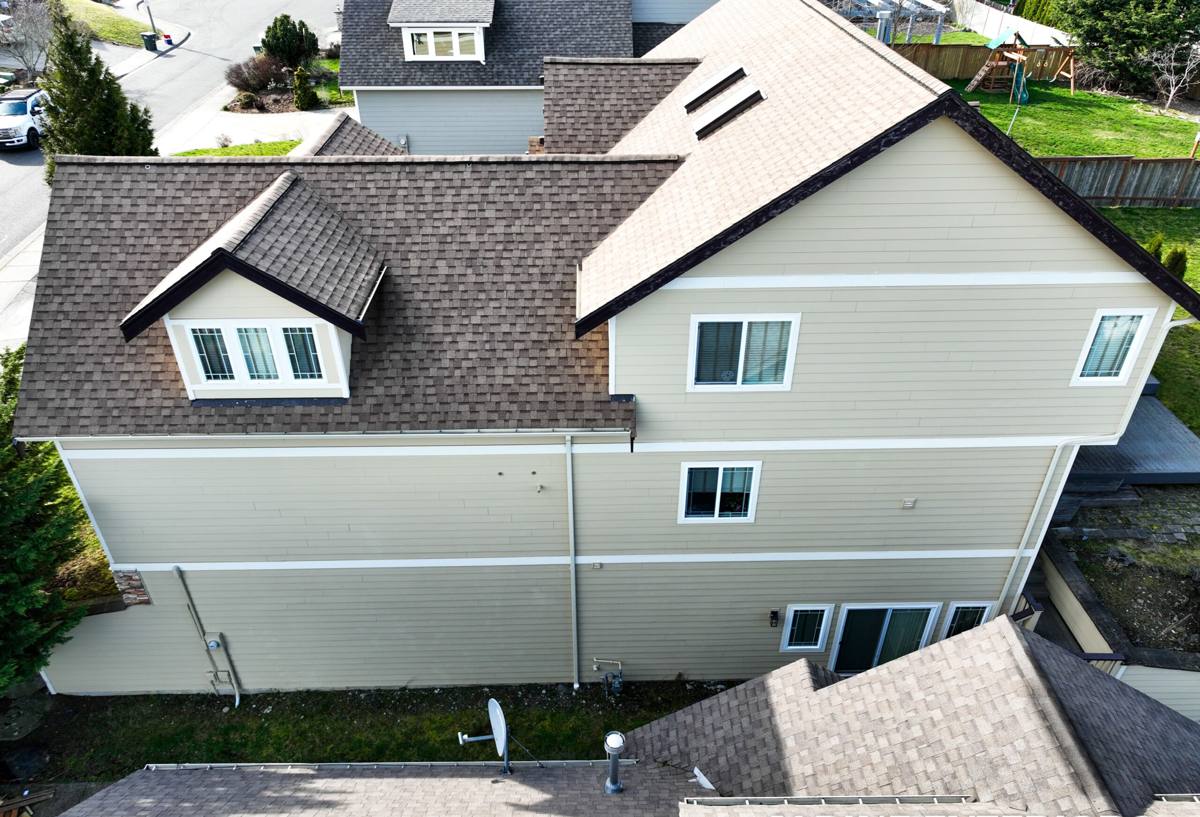
What Bellingham's Climate Actually Does to a Deck
Three things drive almost every deck failure we see in this area:
- Driving rain — wind-driven rain gets pushed sideways under railings, into fastener holes, and behind ledger boards, not just straight down onto the surface.
- Salt-laden air — Bellingham's proximity to the bay means metal hardware, screws, and connectors corrode faster than they would inland. Cheap fasteners rust, stain the decking around them, and eventually lose their holding strength.
- A long moss season — shaded, north-facing, and tree-covered lots (common around Barkley) stay damp for months at a time, which is exactly what moss and algae need to take hold on decking, stair treads, and railing tops.
None of these are exotic problems. They're just the reason a deck built for this region needs different details than one built somewhere dry — better flashing, better fasteners, and a decking material chosen with eyes open about how it handles moisture.
What a Correctly Built Deck Needs Here
Ledger Attachment and Flashing
Where the deck attaches to the house is the single most common failure point we find on older decks in this area. If the ledger board isn't properly flashed — with flashing that actually sheds water away from the house rather than trapping it against the rim joist — moisture works its way behind the siding over years. That's a siding and structural problem, not just a deck problem, and it's expensive to fix once it's been happening unnoticed.
Fasteners and Hardware
Given the salt air this region gets, we use stainless steel or heavily coated, corrosion-rated fasteners and structural connectors rather than the cheapest hardware on the shelf. It costs more up front and saves you from rust streaks and weakened joints ten years down the road.
Framing and Footings
Footings need to be sized and set to your soil conditions and local frost depth, and framing needs real airflow underneath — decks built low to damp, shaded ground without ventilation are where we see the worst rot and the most moss creep. Joist tape over the framing lumber is a small added cost that meaningfully slows down moisture intrusion at every fastener penetration.
Drainage Underneath
If the deck sits over a patio, walkway, or anywhere you don't want water dripping through, the substructure needs a real drainage system under the decking boards — not just gaps and hope. This matters more here than in drier climates simply because of how much rain this area gets in a normal year.
Choosing a Decking Material for a Barkley Lot
There's no single "best" decking material — it depends on how much sun your lot gets, how much maintenance you want to do, and your budget. Here's how the common options actually perform in this climate:
| Material | Moisture & Moss Behavior | Maintenance | Typical Lifespan Here |
|---|---|---|---|
| Cedar | Naturally rot-resistant but still absorbs moisture; needs airflow to avoid staining and moss on shaded sections | Annual cleaning, periodic sealing/staining | 15–20 years with upkeep |
| Pressure-treated fir/pine | Treated against rot but grain still holds water; prone to splintering and moss on damp, shaded boards | Regular cleaning, sealing every 1–2 years | 15–20 years with upkeep |
| Capped composite | Doesn't absorb water or rot; can still grow surface algae/moss film in constant shade if not cleaned | Occasional washing, no sealing or staining | 25–30+ years |
| PVC decking | Fully moisture-resistant, most consistent performance in wet, shaded spots | Lowest — occasional rinse | 25–30+ years |
We're honest with clients about the trade-offs: wood costs less upfront but asks for real annual maintenance in a climate that doesn't give you many dry weekends. Composite and PVC cost more initially but hold up better in the shaded, moss-prone conditions common around Barkley's mature landscaping. Neither is "wrong" — it's about matching the material to how much maintenance you actually want to do.
Design Choices That Matter More Here Than Elsewhere
A few design decisions make a bigger difference in this climate than they would somewhere drier:
- Board orientation and gapping — proper spacing lets water and debris pass through instead of pooling, which slows moss growth significantly.
- Overhang and roof coverage — even a small covered section extends the life of the decking directly beneath it and gives you usable outdoor space on the rainy days that make up most of the year here.
- Sun exposure — if trees keep parts of your lot shaded most of the day, that section will always be more moss-prone regardless of material, and it's worth planning cleaning access accordingly.
- Stair and railing details — these get walked on wet and touched constantly, so slip resistance and corrosion-resistant hardware matter more than on the open deck field.
Permits and Code Requirements
Most attached decks in Bellingham and unincorporated Whatcom County require a building permit, and the requirements cover things like footing depth, guardrail height, stair geometry, and ledger attachment. Requirements can vary depending on your specific property and whether the deck is attached or freestanding, so we don't guess — we handle the permit application and inspections as part of the job rather than leaving that on the homeowner's plate.
Skipping permits on a deck is a common shortcut with cheaper contractors, and it can come back to bite you at resale or during an insurance claim. We'd rather build it right and on the record.
Our Process for a Barkley Deck Project
- Free on-site estimate — we look at your lot's drainage, sun exposure, and existing structure (if replacing a deck) before recommending anything.
- Design and material selection — we walk through the trade-offs between wood and composite/PVC honestly, based on your budget and how much upkeep you want.
- Permitting — we prepare and submit what's needed and schedule inspections.
- Demo and framing — including proper ledger flashing, footings, and joist protection from day one.
- Decking, railing, and finish work — installed to the manufacturer's fastening specs, not shortcuts.
- Final walkthrough — we go over basic care so the deck actually reaches its expected lifespan in this climate.
What Affects the Price of a Custom Deck
| Factor | Why It Moves the Price |
|---|---|
| Size and footprint | More square footage means more framing, footings, and decking material |
| Height off grade | Taller decks need more substantial framing, stairs, and guardrail structure |
| Decking material | Wood costs less upfront; composite/PVC cost more but reduce long-term maintenance |
| Site access | Sloped, tree-covered, or tight-access lots (common around Barkley) take more labor to build on |
| Railing and stair details | Cable rail, glass panels, and custom stair layouts add cost over standard railing |
| Roof or cover addition | Adding partial cover extends usability in our rainy season but adds structural cost |
Signs an Existing Deck Needs Attention
If you're not building new but wondering whether your current deck needs repair or replacement, watch for:
- Soft or spongy spots when you walk across the boards
- Dark staining or moss buildup that comes back quickly after cleaning
- Rust streaks below screw heads or connector hardware
- Gaps or movement where the deck meets the house
- Railings or stairs that feel loose or flex under weight
- Visible daylight or rot at the ledger board or rim joist
Any of these are worth a look before they turn into a structural or siding repair rather than a deck repair.
Why Hire a Crew That Already Works in Barkley
A deck built by someone unfamiliar with this area's rain patterns, permitting process, and moss-prone conditions is more likely to need early repairs. We already know what Bellingham and Whatcom County inspectors look for, we know which fastener and flashing details actually hold up here, and we're not learning that on your project. That local familiarity shows up in fewer surprises during the build and a deck that's still solid well past year ten.
If you're planning a new deck, replacing an aging one, or just want an honest opinion on what your current deck needs, we're happy to take a look. Reach out for a free, no-pressure estimate — the form below gets you started.