 Bellingham Siding
 Roofing in Barkley: A Different Set of Conditions
Barkley sits close enough to Bellingham Bay and the surrounding wetlands that homes here deal with a specific combination of weather stress most inland neighborhoods don't see in the same intensity: salt-tinged marine air, long stretches of driving rain off the water, and a moss season that can run from fall through spring. None of these things individually is unusual for Whatcom County. Together, on the same roof, year after year, they wear down shingles faster than a generic "Pacific Northwest roof" conversation usually accounts for.
This page is about one job in one area: asphalt shingle roofing for Barkley homes. Not a general roofing overview, and not a sales pitch for a specific brand — just what actually holds up here, what a correctly done job includes, and what to watch for on a roof that's already been through a few of Bellingham's wet winters.
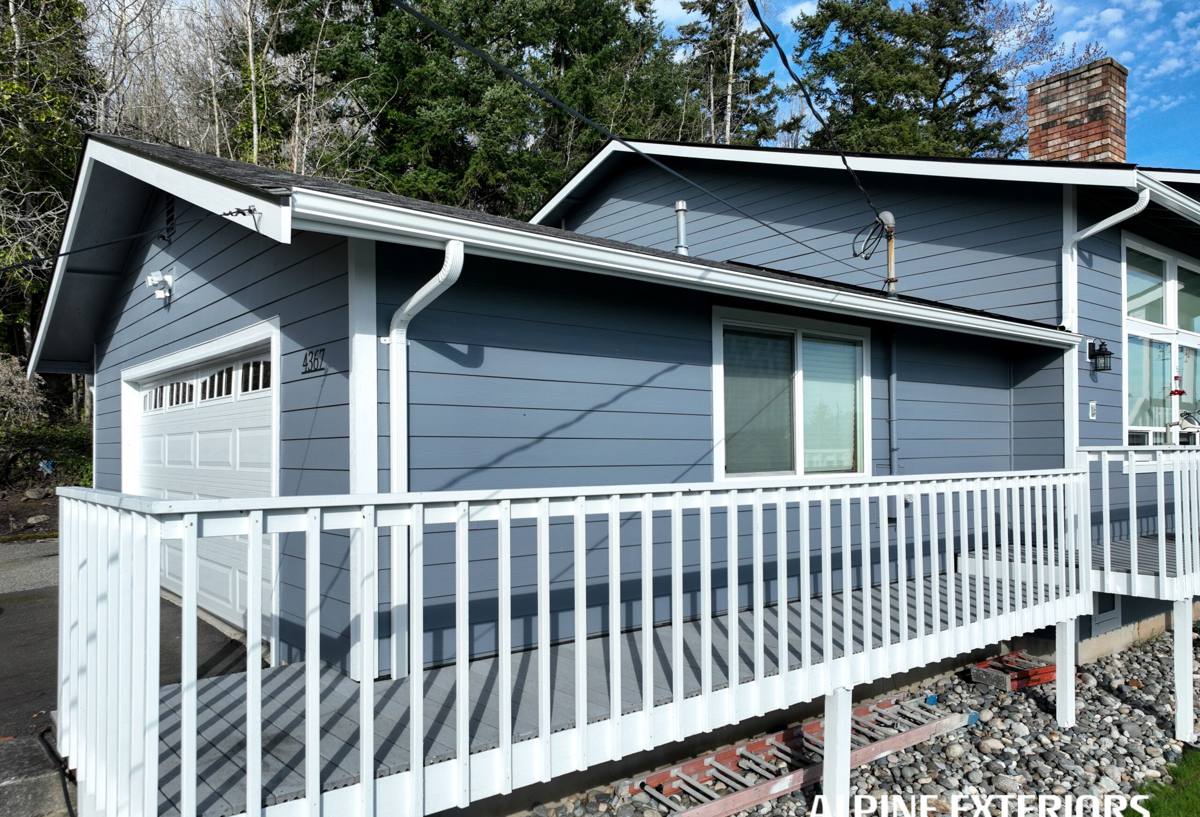
What Barkley's Climate Actually Does to a Shingle Roof
Salt Air and Metal Fatigue
Homes closer to the water pick up airborne salt that settles on roofing metal — flashing, drip edge, nail heads, and vent stacks. Over years, that accelerates corrosion on lower-grade fasteners and thin-gauge flashing well before the shingles themselves are due for replacement. A roof can look fine from the ground while its metal components are quietly failing underneath.
Driving Rain and Wind-Driven Water
Bellingham's storms don't always come straight down. Wind off the bay pushes rain sideways and up under shingle edges, valleys, and anywhere the underlayment or flashing detail is even slightly off. A roof that would be fine in a calmer climate can leak here simply because the water is being forced at an angle the original install wasn't sealed for.
Moss, Shade, and Slow-Drying Roof Sections
Whatcom County's tree cover and long damp season give moss and algae a real foothold, especially on north-facing slopes and shaded sections that never fully dry out between rain events. Moss doesn't just look bad — it holds moisture against the shingle surface, works its way under tabs, and lifts granules loose over time. On an older roof, moss growth is often the first visible sign that the shingle's protective layer is breaking down.
What a Correct Asphalt Shingle Job Includes Here
A shingle roof is a system, not just a layer of shingles. In Barkley's conditions, skipping any one part of that system is where roofs fail early.
- Ice-and-water shield at eaves, valleys, and around penetrations — the areas most exposed to wind-driven rain and ice damming during cold snaps
- Synthetic underlayment rated for the moisture exposure this area sees, not just a minimum-code layer
- Corrosion-resistant flashing and fasteners around chimneys, skylights, and vent stacks, sized for salt-air exposure rather than standard inland spec
- Proper valley treatment — closed-cut or metal-lined, done to actually shed high-volume rain instead of just meeting code minimum
- Balanced attic ventilation so heat and moisture escape instead of condensing under the deck
- Algae-resistant shingle granules on shaded or north-facing slopes where moss and streaking are most likely
Any one of these done wrong won't necessarily show up in year one. It shows up in year five or seven, usually as a leak that seems to come from nowhere because the visible shingles still look fine.
Signs a Barkley Roof Needs Attention
Because moss and salt-air corrosion work slowly, a lot of homeowners wait too long simply because nothing dramatic has happened yet. Worth checking for:
- Moss or dark streaking concentrated on north-facing or shaded slopes
- Granules collecting in gutters or at downspout outlets
- Shingle edges that look curled, cupped, or lifted, especially after a windy storm
- Rust staining around vent stacks, flashing, or nail heads
- Soft spots or discoloration on interior ceilings near exterior walls
- Daylight visible through the attic deck at eaves or ridge
- A roof that's 15-20+ years old and has never had a full inspection
None of these automatically means a full replacement is needed — some are repair-scope issues. But they're all worth a real inspection rather than a guess from the ground.
Choosing the Right Shingle for This Climate
Not every asphalt shingle product is built the same way, and in a moss-prone, salt-exposed area like Barkley, the differences matter more than they would somewhere drier and more sheltered.
| Shingle Type | Wind Rating | Algae/Moss Resistance | Typical Lifespan Here | Best Fit |
|---|---|---|---|---|
| 3-tab (standard) | Lower | Basic unless treated | 15-20 years | Budget-driven projects, less exposed roof lines |
| Architectural / dimensional | Higher | Usually includes algae-resistant granules | 25-30 years | Most Barkley homes — best balance of cost and durability |
| Premium / designer | Highest | Enhanced algae resistance, heavier mat | 30+ years | Exposed, wind-heavy, or heavily shaded lots |
We don't push homeowners toward the most expensive option by default. On a well-ventilated, moderately exposed roof, a good architectural shingle with algae-resistant granules is usually the right call. Premium products earn their price on roofs with heavy shade, steep pitch, or direct wind exposure off the bay — situations where the extra durability actually gets used.
Color and Moss Visibility
Lighter shingle colors show moss and algae streaking faster and more visibly than mid-to-dark tones. It's a minor factor compared to the roofing system underneath, but worth knowing if you're choosing between two colors you like equally.
Our Installation Process
1. On-Site Inspection and Honest Scope
We walk the roof, check the decking condition, ventilation, flashing, and any problem areas — not just the shingle surface. If a section only needs repair, we say so. If the decking has soft spots from long-term moisture, that gets flagged before any shingle goes down, not discovered after.
2. Tear-Off and Deck Check
Old material comes off down to the deck so we can actually see what's underneath — rot, old nail patterns, and any prior repair shortcuts get addressed rather than covered over.
3. Underlayment and Water-Entry Details
Ice-and-water shield at eaves and valleys, synthetic underlayment across the field, and flashing detail sized for the wind-driven rain this area sees. This is the part of the job that actually determines whether the roof leaks in ten years, and it's invisible once the shingles are on.
4. Shingle Installation
Installed to manufacturer spec for nail placement and exposure — a detail that directly affects wind rating and warranty validity, and one that's easy to rush on a crew that isn't used to this area's wind patterns.
5. Ventilation and Final Walkthrough
Intake and exhaust ventilation checked and balanced, all penetrations sealed and verified, and a walkthrough so you know what was done and why.
Ventilation: The Part Nobody Sees But Everyone Should Ask About
Attic ventilation gets overlooked because it's invisible from the street, but in Whatcom County's damp climate it's one of the biggest factors in how long a shingle roof actually lasts. Poor ventilation traps heat and moisture under the deck, which shortens shingle life from underneath — the exact opposite direction most homeowners are watching. It also contributes to ice damming during cold snaps and can accelerate rot in the decking itself. Any full re-roof is a chance to correct ventilation that wasn't right to begin with.
Maintenance That Actually Matters in Barkley
A well-installed shingle roof still needs some upkeep in this climate, particularly around moss:
- Keep gutters clear so water isn't backing up under the shingle edge
- Have shaded or north-facing slopes checked for moss growth every year or two
- Avoid pressure washing shingles — it strips granules and shortens shingle life; moss treatment and gentle removal methods are the right approach
- Trim back overhanging branches where practical to reduce shade and debris buildup
- Have flashing and vent stack seals checked periodically, especially on homes closer to the water where corrosion moves faster
Why a Crew That Already Works Barkley Matters
A roofing job spec'd for a drier inland climate — standard-grade flashing, minimum-code underlayment, no real attention to ventilation — can look identical to a properly built one on install day. The difference shows up years later, in the form of the exact problems this page describes: corroded metal, moss-driven granule loss, and leaks that trace back to details that were never built for Bellingham's rain and wind patterns in the first place. Working in this area regularly means we're not guessing at what holds up here — we're building to what we've already seen fail and correcting for it up front.
If your Barkley roof is showing moss, granule loss, aging flashing, or you just want a straight answer on where it stands, we're glad to take a look. Reach out for a free, no-pressure estimate using the form below.