 Bellingham Siding
 Storm Damage Roof Repair for York Homes in Bellingham
York is one of Bellingham's older, established neighborhoods, and that means a lot of roofs in the area have already been through decades of Pacific Northwest weather. When a windstorm comes through Whatcom County, or a heavy winter system stalls over Bellingham Bay for a few days straight, it's the roof that takes the first hit. Storm damage roof repair isn't just about patching a leak after the fact — it's about understanding how wind, rain, and moisture actually move across a roof, and fixing the problem at the layer where it started, not just where the water finally showed up inside the house.
This page covers what storm damage repair looks like specifically for homes in and around York: what our climate does to roofing systems here, what a repair should actually include, and why working with a crew that already knows this neighborhood's housing stock matters more than most homeowners expect.
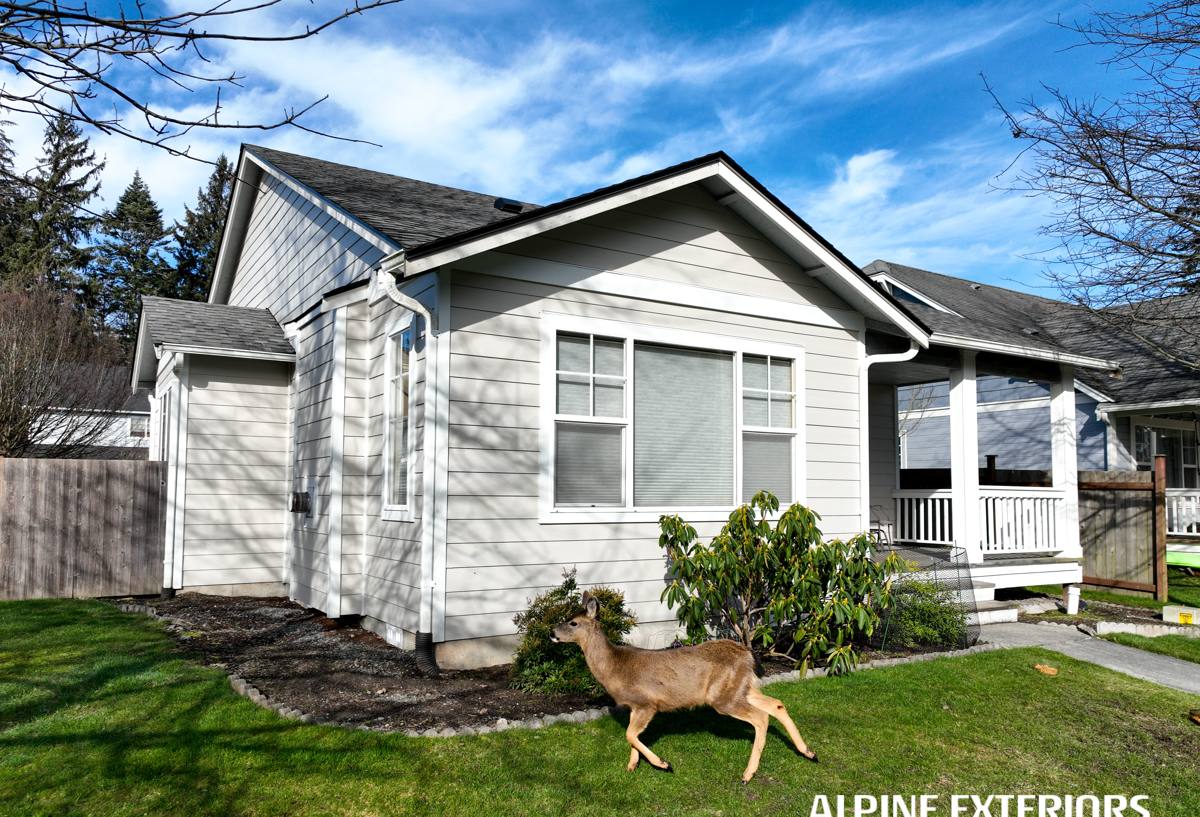
What Bellingham Weather Actually Does to a Roof
Wind and Driving Rain
Storms coming off the Strait of Georgia and Puget Sound tend to bring rain sideways rather than straight down. That matters, because most roofing systems are designed to shed water moving downhill — not water being driven uphill under a shingle tab or sideways past a flashing lap. Driving rain finds the smallest gaps: a lifted shingle edge, a nail that's backed out a sixteenth of an inch, a flashing seam that's opened up from years of expansion and contraction. None of these gaps are dramatic on their own, but during a multi-day storm they add up to real water intrusion.
Salt Air and Corrosion
Homes closer to Bellingham Bay deal with a slow, steady corrosion problem that inland homes don't. Salt-laden air accelerates rust on exposed fasteners, flashing, and metal roof edges. A nail head or a piece of step flashing that would last decades in a dry inland climate can start showing surface corrosion much sooner here. Once a fastener starts to rust, it loses holding power, and that's exactly the kind of small failure that turns a minor storm into a real leak.
A Long Moss Season
Whatcom County's mild, wet climate means moss has a very long growing season compared to most of the country. On roofs shaded by mature trees — common throughout York's older residential lots — moss and moisture-holding debris can sit on shingles for months at a time. Moss doesn't just look bad; it holds water against the roofing material, lifts shingle edges as it grows, and gives wind something to grab onto during a storm. A roof with heavy moss buildup is simply more vulnerable when a storm hits, because the wind has more leverage against material that's already been lifted and softened.
Signs of Storm Damage Worth Taking Seriously
Some storm damage is obvious. Most of it isn't. Homeowners in York often notice a stain on a ceiling weeks or months after the storm that actually caused it, because water can travel sideways along a rafter or sheathing seam before it ever drips through drywall. Here's what actually points to storm damage, ranked roughly from most to least obvious:
- Missing shingles or visibly lifted shingle tabs after a windstorm
- Granules collecting in gutters or at the base of downspouts
- Bent, creased, or missing flashing around chimneys, vents, and roof-to-wall transitions
- Soft spots or slight sagging when walking a roof (only a trained eye should be doing this)
- Water stains on interior ceilings, especially near exterior walls or below valleys
- Debris — branches, moss clumps, needles — packed into valleys or against roof penetrations
- Daylight visible through the attic at roof boards, seen from inside during a daytime inspection
The first four are things a homeowner can often spot from the ground or a ladder. The last three usually require someone who knows what a healthy attic and roof deck look like, which is part of why a proper inspection matters more than a quick glance from the driveway.
What a Correct Storm Damage Repair Actually Involves
A rushed storm repair often stops at the visible symptom: a missing shingle gets replaced, a bit of sealant gets smeared over a flashing gap, and the job is called done. That approach tends to fail again in the next storm, because it never addressed why the damage happened in the first place. A correct repair works backward from the water's actual path:
1. Confirm the Source, Not Just the Symptom
Interior water stains don't always sit directly below the roof failure. Water can enter at a flashing seam, run along the underside of the decking, and drip somewhere else entirely. A correct repair traces the path before opening anything up.
2. Check the Decking, Not Just the Shingles
If water has been getting into a spot for any length of time, the roof decking underneath may be soft, delaminated, or rotted. Replacing shingles over compromised decking just guarantees another failure. Any honest storm repair includes checking the deck at the repair area, not just the surface material.
3. Match Flashing Details to the Original System
Flashing at chimneys, skylights, walls, and valleys has to be layered correctly with the surrounding roofing material — step flashing under siding courses, counter-flashing lapped correctly over base flashing, and so on. A repair that just caulks over a flashing gap instead of correcting the layering will leak again once the sealant ages, which doesn't take long in this climate.
4. Match Materials Reasonably
On an older roof, an exact shingle match may not be possible if the original product has been discontinued. A correct repair uses a close match in profile and color and places new material where it will blend as well as possible, rather than pretending an exact match exists when it doesn't.
Roofing Materials Common in York and How Storms Affect Them
York's mix of older and newer homes means we see a range of roofing materials on storm calls. Each one fails differently, and that changes what a correct repair looks like.
| Material | Typical Storm Vulnerability | Repair Consideration |
|---|---|---|
| Asphalt composition shingle | Wind lift at tabs, granule loss, cracking with age | Widely available match options; check decking beneath damaged area |
| Cedar shake or shingle | Splitting, moss retention, accelerated wear in shaded areas | Requires matching wood exposure and spacing; moss removal often needed first |
| Metal roofing or metal flashing details | Fastener backout, seam separation, salt-air corrosion | Fastener replacement with corrosion-resistant hardware; reseal seams correctly |
| Built-up or low-slope membrane (additions, porches) | Ponding water, seam lifting in wind | Seam and flashing repair specific to the membrane type; not a shingle-style patch |
Knowing which material is on a roof — and how it was originally installed — matters as much as knowing the storm caused the damage. A repair approach that works on a composition shingle roof can actually make things worse on a cedar or membrane roof if it's applied the wrong way.
Our Storm Damage Repair Process
- Inspection. We look at the roof, the attic, and the interior damage together, not just the spot where water showed up. This is where we confirm whether decking, insulation, or framing was affected.
- Honest scope. We tell you what actually needs repair versus what's cosmetic or can reasonably wait, and we explain why — no upsell to a full replacement when a targeted repair will genuinely hold.
- Documentation. If you're planning to file an insurance claim, we document the damage clearly enough to support that process.
- Repair. We correct the actual failure point — decking, flashing, fasteners, or shingle course — using materials suited to what's already on the roof, not a generic patch.
- Weatherproofing check. Before we consider the job finished, we confirm water sheds correctly across the repaired area under normal conditions, not just that it looks patched.
Insurance Claims and Storm Damage
Many storm repairs in Whatcom County end up going through homeowners insurance, especially after a named windstorm or a widely reported weather event. A few honest points on this: insurance adjusters aren't roofers, and they don't always catch secondary damage like a compromised deck or a flashing detail that's about to fail even if it hasn't leaked yet. Clear photo documentation and a written scope from an inspection help support a claim, but we won't tell you a repair is storm-related when it's actually ordinary wear — that kind of exaggeration can jeopardize a legitimate claim and isn't something we do. If damage is genuinely tied to a storm event, we'll document it plainly and let the facts carry the claim.
Why a Crew That Already Works in York Makes a Difference
Roofing problems in York tend to share some common threads: mature tree canopy that feeds moss growth, a mix of roof ages and materials from different building eras, and proximity to the bay that accelerates fastener corrosion. A crew that regularly works this specific area already has a feel for which flashing details tend to fail first on homes of a certain era, and which repair approaches actually hold up through a full Whatcom County winter rather than just looking finished on a dry afternoon. That local pattern recognition shortens the inspection, sharpens the diagnosis, and avoids repairs that address the wrong problem.
Post-Storm Roof Checklist for York Homeowners
After any significant windstorm or heavy rain event, a quick check can catch a small problem before it becomes a ceiling repair. From the ground or a safe vantage point, look for:
- Shingles, shakes, or debris on the ground or in gutters that weren't there before
- Visible gaps, lifted edges, or discoloration on roof slopes
- Sagging or pooling at gutters and downspout connections
- New water stains, bubbling paint, or musty smell in upper rooms or the attic
- Moss or debris buildup concentrated in valleys, around chimneys, or against vents
- Loose or missing flashing around any roof penetration
None of this replaces a proper inspection, but catching one of these signs early is often the difference between a targeted repair and a much larger one.
Get a Free, No-Pressure Estimate
If a recent storm has you wondering about a stain, a missing shingle, or just wanting a second opinion before winter sets in, we're happy to take a look. Use the form below to request a free estimate for storm damage roof repair in York — no pressure, no upsell, just a straight assessment of what your roof actually needs.