 Bellingham Siding
 Building New in Silver Beach? Your Windows Need to Be Right the First Time
New construction gives you one real shot at getting window installation right. Once siding, trim, and interior finishes go on, correcting a bad flashing job or an undersized window means tearing into finished work. In Silver Beach and the rest of Bellingham, that stakes get higher because of what the climate throws at a house year-round: long stretches of wind-driven rain off the water, persistent marine humidity, and a moss and algae season that can run eight months or more. Windows installed correctly the first time shrug this off for decades. Windows installed with shortcuts start showing problems — soft trim, fogged glass, staining, drafts — inside of a few winters.
This page is about one job done right: new-construction window installation for homes going up or being framed out in Silver Beach, from a crew that already knows this neighborhood's builders, inspectors, and building conditions.
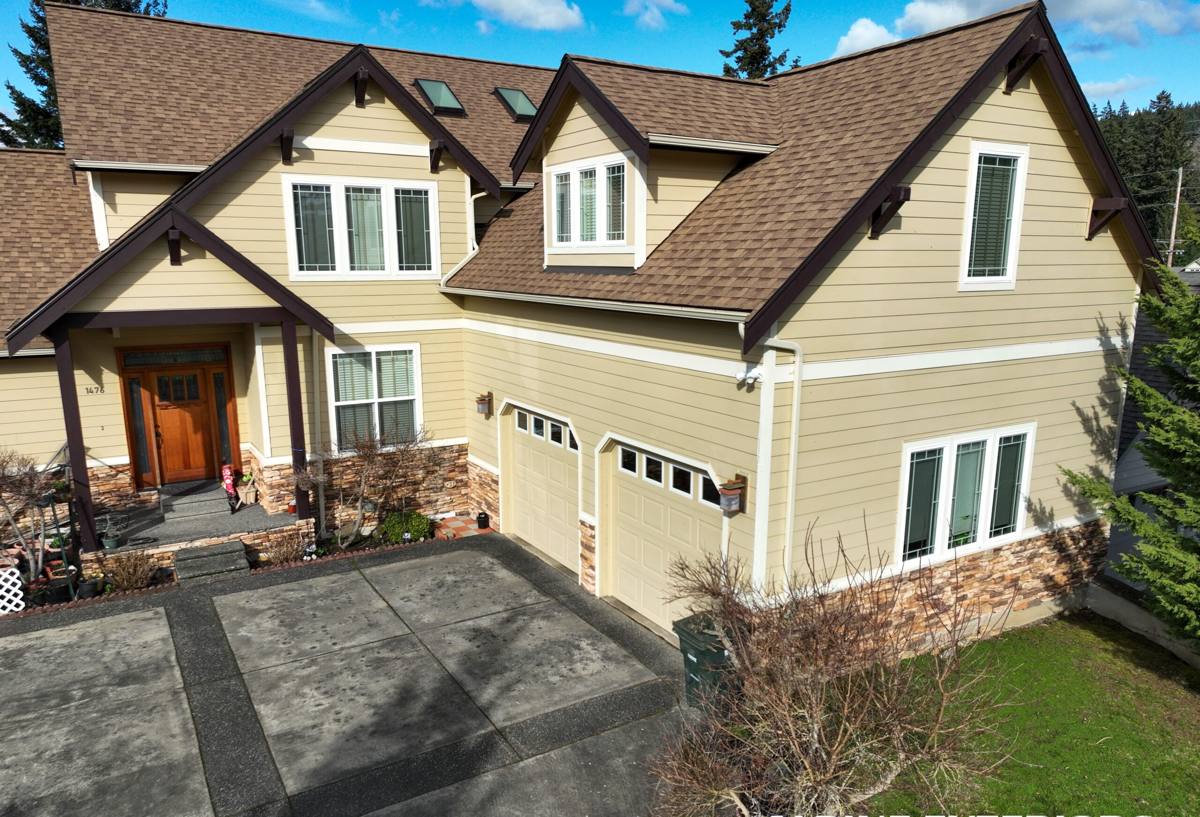
New-Construction Windows vs. Replacement Windows — Why It's Not the Same Job
A lot of homeowners assume "installing a window" is the same task whether the house is new or 30 years old. It isn't, and the difference matters for how the window performs long-term.
New-construction (nail fin) windows
These have a flange around the perimeter that gets fastened directly to the wall sheathing before siding goes on. Because the wall is open — no siding, sometimes no housewrap yet — the installer has full access to integrate the window into the drainage plane correctly: sill pan flashing, weather-resistive barrier laps, and flange sealing all happen in the right order, from the ground up.
Replacement (pocket) windows
These fit into an existing frame with the siding left in place. They're the right tool for a remodel, but they rely on the existing opening being sound, and they can't be integrated into the wall's water management the same way. New construction is the easier job to get right — but only if the crew treats it that way instead of rushing the flange-and-caulk approach.
What a Correct Installation Actually Involves
In a climate that sees sustained wind-driven rain, the sequence and materials matter more than they would in a drier region. A correct new-construction window install, in order, looks like this:
- Rough opening checked for level, plumb, and square before the window ever shows up on site
- Sill pan flashing installed with a slight back-dam and outward slope, so any water that gets past the window drains out, not into the wall
- Weather-resistive barrier (housewrap) integrated in proper shingle-lap order — bottom flange over the WRB, side and top flanges under it, so water always flows down and over, never behind
- Window set, shimmed at the correct load points, and checked for square before fastening — an out-of-square window strains the sash and wears out seals early
- Flange fastened per the manufacturer's schedule, not "close enough" spacing
- Backer rod and sealant at the interior air seal, plus insulation in the shim gaps — this is the difference between a window that's watertight and one that's also draft-free
- Exterior trim and flashing details finished so nothing sheds water back toward the window head
Skip the sill pan or reverse the flashing lap order, and the window can look perfect for years while quietly rotting the framing behind it. This is the single most common failure we find when we're called to fix someone else's new-construction work.
Choosing Window Materials for a Marine Climate
Whatcom County's combination of salt-tinged marine air, near-constant moisture, and moss growth on shaded elevations narrows the field of window frame materials worth using. Here's how the common options hold up:
| Frame Material | How It Handles This Climate | Maintenance |
|---|---|---|
| Vinyl | Good moisture resistance, no corrosion risk; performance depends heavily on welded-corner quality | Low — occasional cleaning |
| Fiberglass | Excellent — dimensionally stable in temperature swings, resists moisture and won't corrode in salt air | Low |
| Aluminum-clad wood | Strong look and performance, but the wood interior needs the cladding and seals to stay intact — a compromised seal lets moisture reach the wood | Moderate — watch seal integrity |
| Bare aluminum | Prone to condensation and, in salt-influenced air, surface corrosion on hardware and finish over time | Higher — we generally steer new-construction clients away from this for street-facing or water-exposed elevations |
We don't push one brand or material on every job — the right choice depends on your elevation, budget, and how exposed the wall is to prevailing weather. What we won't do is install a frame material that we know struggles in this climate just because it's cheaper up front, without being upfront about that trade-off first.
Performance Ratings That Actually Matter Here
Window spec sheets list a lot of numbers. In Bellingham, three matter most:
- U-factor — lower is better for heat retention; Washington's energy code sets minimums for new construction, and coastal Whatcom County's mild-but-damp winters make this a real comfort factor, not just a compliance checkbox
- Design Pressure (DP) rating — this tells you how much wind and water pressure a window is engineered to resist. On elevations that catch the brunt of storms rolling off the water, a higher DP-rated window earns its keep
- SHGC (Solar Heat Gain Coefficient) — less critical here than in sunnier climates, but still worth matching to your home's orientation, especially on south- and west-facing glass
Every window installed on new construction in Bellingham has to meet current Washington State Energy Code minimums, and the local building department will check U-factor compliance at inspection. We size and spec windows to clear that bar comfortably, not just barely.
Our Process, From Framing to Final Trim
New-construction window work happens in a specific window in the build schedule, and timing matters:
- Plan review and takeoff — we confirm rough opening sizes against the window schedule before anything is ordered, catching mismatches while they're still cheap to fix
- Pre-install walkthrough — checking that openings are framed square and that WRB is either ready to be integrated or already in place, depending on the framer's sequence
- Flashing and set — sill pans, WRB integration, and window setting as described above
- Air seal and insulation — interior sealing and shim-gap insulation before drywall closes the wall up for good
- Exterior trim tie-in — coordinating with siding and trim crews so water management continues seamlessly from window to wall cladding
- Final inspection walk — every unit checked for square, smooth operation, and a clean seal before we call it done
Because moisture problems in this climate often don't show up for a year or two, we treat step 3 — the flashing sequence — as non-negotiable, even when a schedule is tight.
Why Hiring a Crew That Already Works Silver Beach Matters
Silver Beach lots vary — some are tucked among mature trees with heavy shade and slower drying, others sit more exposed to wind. A crew that's worked this neighborhood before knows which elevations need extra attention to flashing and drainage, has a working relationship with the same building inspectors who'll sign off on your project, and isn't learning Whatcom County's permitting and energy code requirements on your dime. That familiarity shows up in fewer surprises during inspection and fewer callbacks after move-in.
Cost Factors to Expect
Every new-construction project is different, but the line items that move the price are consistent:
| Factor | Why It Affects Cost |
|---|---|
| Window count and size | Larger openings and more units mean more material and labor hours |
| Frame material | Vinyl, fiberglass, and clad-wood carry different material costs; fiberglass and clad-wood run higher than standard vinyl |
| Performance rating | Higher DP ratings and better U-factors cost more but pay back in durability and comfort here |
| Wall height and access | Second-story or hard-to-access openings take more time and equipment |
| Site coordination | Working around a tight framing schedule can add scheduling complexity, though rarely direct cost |
We'll always walk through these factors with you and your builder before quoting, so there are no surprises when the estimate lands.
Quick Checklist Before You Order Windows
- Confirm rough openings match the window schedule, not just the plan set
- Verify U-factor and DP rating meet or beat Washington State Energy Code minimums for your zone
- Decide frame material per elevation — don't default to one material for the whole house without considering exposure
- Confirm who's responsible for sill pan flashing and WRB integration — window crew, framer, or siding crew — so nothing falls through the cracks between trades
- Schedule window installation to align with WRB completion, not before or long after
If you're framing a new home in Silver Beach or working with a builder who needs a window subcontractor who won't cut corners on flashing, we're happy to take a look at your plans and walk the site. Estimates are free, and there's no pressure — just a straight answer on what your project needs.