 Bellingham Siding
 Metal Roofing in York: Built for What Bellingham Weather Actually Does
York is one of Bellingham's older, established neighborhoods, and a lot of its homes are due for a roofing decision that will outlast the next one by decades. Metal roofing has become a popular answer here, and for good reason. Between Bellingham Bay's salt air, the long stretch of driving rain we get from fall through spring, and the moss season that seems to start earlier every year, a roof in York has to handle a specific combination of stresses that a generic "roof replacement" conversation doesn't fully address. This page is about that specific combination, and what it actually takes to install a metal roof correctly for a York home.
We're not going to tell you metal roofing is right for every house or every budget. It isn't. But when it fits, it solves several problems at once that asphalt shingles in this climate never fully solve, and we want York homeowners to understand exactly why before they commit.
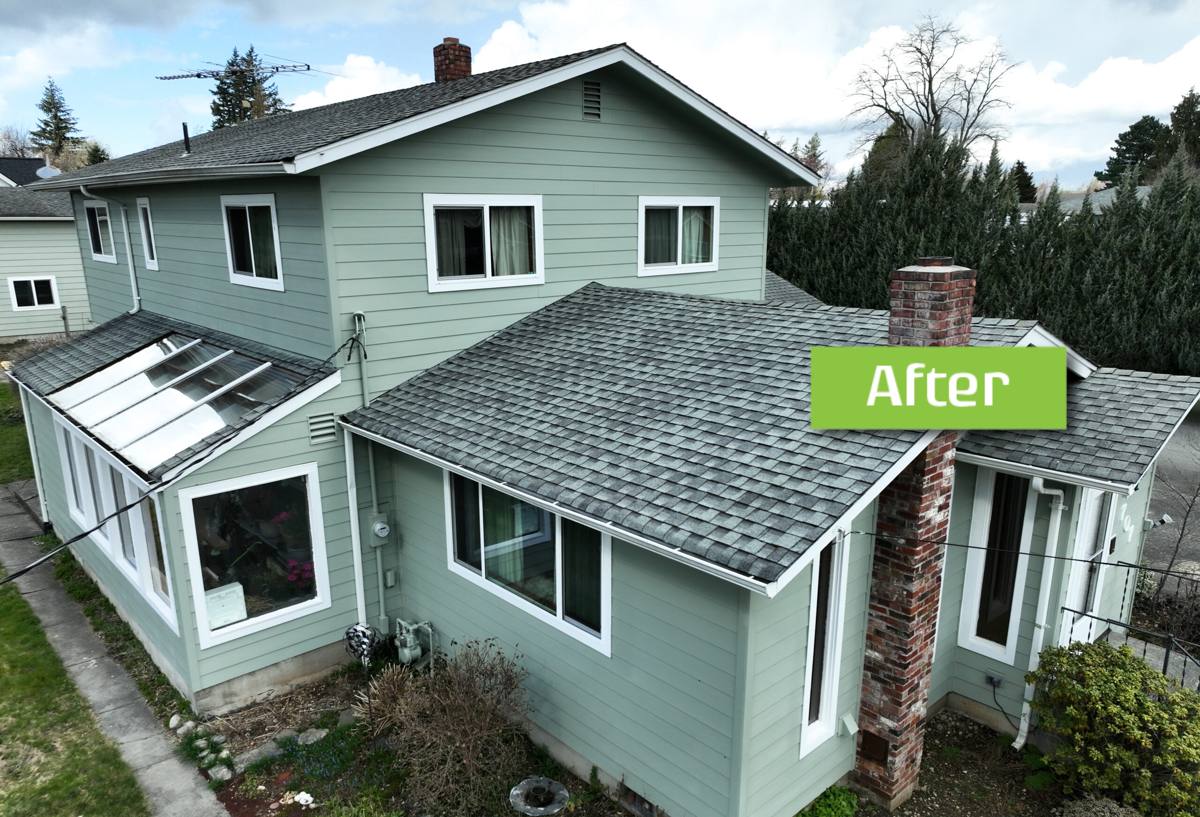
What Whatcom County Weather Does to a Roof
Three conditions define roofing performance in York, and they interact with each other more than most homeowners realize.
Salt Air Off Bellingham Bay
Proximity to the water means airborne salt and moisture settle on every exterior surface, including the roof. Over years, salt exposure accelerates corrosion on unprotected metal fasteners and flashing, and it degrades the granule coating on asphalt shingles faster than it would inland. Any metal roofing system installed in York needs coatings and fastener specifications chosen with that exposure in mind, not generic hardware pulled off a shelf.
Driving Rain
Bellingham doesn't just get a lot of rain, it gets a lot of wind-driven rain, which behaves very differently than a straight vertical downpour. Wind-driven rain finds its way under laps, around fasteners, and into any seam that wasn't detailed correctly. A roof that would shed water fine in a calm climate can leak in York if the underlayment, flashing, and panel overlap weren't built for lateral water pressure.
Moss Season
Shade, moisture, and mild temperatures give moss a long growing window here, often eight months or more. Moss holds water against a roof surface, works into seams, and on organic roofing materials it can lift edges and trap moisture against the deck. Metal doesn't give moss the same foothold that shingles or wood do, which is one of the bigger reasons York homeowners look at metal in the first place.
None of these three factors is unique to York on its own. What's specific to this neighborhood is getting all three at once, on homes that in many cases have roof framing and ventilation original to when the house was built.
Standing Seam vs. Exposed Fastener: Choosing the Right System
"Metal roofing" isn't one product. The two main categories homeowners in York choose between are standing seam and exposed-fastener (often called ribbed or corrugated) panels, and the difference matters a lot in a wet, salty climate.
| Feature | Standing Seam | Exposed Fastener |
|---|---|---|
| How panels attach | Concealed clips under raised seams, no exposed screws | Screws driven through the panel face into the deck or purlins |
| Water resistance | Very high; seams are mechanically locked or interlocked | Good, but relies on screw gaskets that wear over time |
| Maintenance | Minimal; no fasteners to re-seat | Gaskets and screws should be checked periodically |
| Typical lifespan | 40-plus years with correct install | 25-40 years, often tied to fastener condition |
| Upfront cost | Higher | Lower |
| Best fit | Long-term ownership, coastal exposure, low-slope sections | Budget-conscious projects, outbuildings, steeper simple roofs |
In a neighborhood with salt air and driving rain, we lean toward recommending standing seam wherever the budget allows, because there are no exposed fasteners for salt to work on over time. Exposed-fastener panels aren't a bad choice, but they need their gaskets and screws inspected on a schedule, since that's the first thing to fail in coastal exposure. We'll walk through both options honestly for your specific roof rather than push one system regardless of fit.
What a Correct Metal Roof Installation Actually Involves
A metal roof is only as good as what's underneath it and around its edges. Panels get the attention, but most leaks and premature failures trace back to details most homeowners never see.
Underlayment
Metal roofs need a high-temperature-rated synthetic or self-adhered underlayment, not the felt paper sometimes used under shingles. This layer is the backup system if wind-driven rain ever gets past the panel seams, and it matters more in York's climate than in drier regions.
Flashing and Penetrations
Every valley, chimney, vent pipe, and wall transition needs flashing detailed specifically for metal panel profiles. Generic flashing details borrowed from shingle work don't seal correctly against standing seam or ribbed panels, and this is where a lot of leaks on poorly installed metal roofs actually originate.
Fastening and Panel Layout
Panel overlap, fastener spacing, and clip placement all need to account for wind-driven rain direction and thermal expansion. Metal panels expand and contract with temperature swings, and fastening systems that don't allow for that movement eventually work loose or oil-can (develop a wavy appearance).
Ventilation
Older York homes sometimes have attic or roof-deck ventilation that was adequate for the original roofing but not ideal for metal. Proper ventilation controls condensation on the underside of the panels and helps the roof deck dry out between rain events, which matters given how long our wet season runs.
Our Process for York Metal Roofing Projects
- On-site assessment — We inspect the existing roof deck, ventilation, flashing points, and any moss or moisture damage before recommending a system.
- System recommendation — Standing seam or exposed fastener, panel gauge, and coating are selected based on your roof's exposure, slope, and budget, not a one-size answer.
- Deck and structure check — We confirm the deck is sound and ventilation is adequate; metal roofing shows problems in the substrate that shingles can sometimes hide.
- Underlayment and flashing installation — This is where most of the long-term performance is decided, and we don't rush it.
- Panel installation — Panels are installed with attention to overlap direction, fastening pattern, and thermal movement allowance.
- Final walkthrough — We review the completed roof with you, including what routine maintenance looks like going forward.
Maintaining a Metal Roof Through Whatcom County's Wet Season
Metal roofing is genuinely low-maintenance compared to shingles, but "low-maintenance" doesn't mean "no maintenance," especially with our moss season and salt exposure. A short annual routine goes a long way:
- Clear debris and needles from valleys and around penetrations before the fall rains start
- Check gutters and downspouts are clear so water isn't backing up under drip edges
- Look for moss or algae buildup in shaded areas and treat it early rather than letting it establish
- Inspect exposed fasteners (if applicable) for loose screws or worn gaskets
- Confirm attic or roof-deck ventilation isn't blocked by insulation or debris
- Have flashing around chimneys, skylights, and walls visually checked after major wind events
Most of this is a once-a-year, half-hour task, or something we can handle as part of a maintenance visit if you'd rather not get on the roof yourself.
What Metal Roofing Costs to Consider in York
Metal roofing costs more upfront than asphalt shingles, and the total depends on several factors specific to your home and site.
| Factor | Why It Affects Cost |
|---|---|
| Panel system | Standing seam runs higher than exposed-fastener due to material and labor for concealed clips |
| Roof complexity | Multiple valleys, dormers, and penetrations mean more flashing labor and material |
| Deck condition | Any deck repair or added ventilation is additional scope beyond the panel install |
| Coating and gauge | Heavier gauge steel and marine-grade coatings cost more but hold up better to salt exposure |
| Tear-off and disposal | Removing existing shingles or old metal adds labor and disposal cost |
| Access and pitch | Steep or hard-to-access roofs require more setup and safety equipment |
We give every York homeowner a specific, itemized quote after seeing the roof in person. We won't estimate off a phone call, because the factors above genuinely change the number, and generic square-footage pricing you might see online doesn't account for your roof's actual condition or complexity.
Why a Local Crew That Already Works York Matters
A roof crew that works across Bellingham and Whatcom County regularly sees how salt air, moss, and driving rain actually play out on real roofs over years, not just at installation. That experience shapes decisions a first-time or out-of-area installer might not think to make, like which flashing details hold up best in this specific exposure, or where moss tends to establish first on a given roof orientation. It also means we're not learning the neighborhood's housing stock, climate patterns, or common roof configurations on your project. When something needs a follow-up visit, whether it's a maintenance check or a question a year after install, we're a short drive away, not a company that moved on after the job.
Get a Straight Answer for Your Roof
If you're weighing metal roofing for your York home, we're glad to take a look and give you a straightforward assessment of what your roof actually needs, what it would cost, and whether metal is the right fit for your situation. There's no pressure and no obligation. Use the form below to request a free estimate, and we'll get back to you to schedule a time to come take a look.