 Bellingham Siding
 Windows in Lynden Face a Different Kind of Wear
Lynden sits inland from Bellingham Bay, out in the Nooksack River valley farmland that defines this part of Whatcom County. That distance from the water means direct salt air isn't the constant factor here that it is for homes closer to the coast — but don't mistake that for an easy climate. Lynden trades salt spray for something almost as hard on windows: long stretches of humid valley air, driving rain that comes in sideways off winter storms, and a moss season that runs longer than most homeowners realize because the surrounding fields and tree lines keep the air damp well after the rain stops.
That combination attacks windows in a specific way. Wood sashes and frames absorb moisture and swell, then dry and shrink, over and over through the wet season. Old aluminum frames conduct cold straight through, so you get condensation pooling on the inside sash in January. Seals that were fine ten or fifteen years ago start letting fogging build up between panes. None of this is dramatic — it's slow, and that's exactly why so many Lynden homes end up with windows that "still work" but are quietly costing their owners money in heat loss, condensation damage, and drafts.
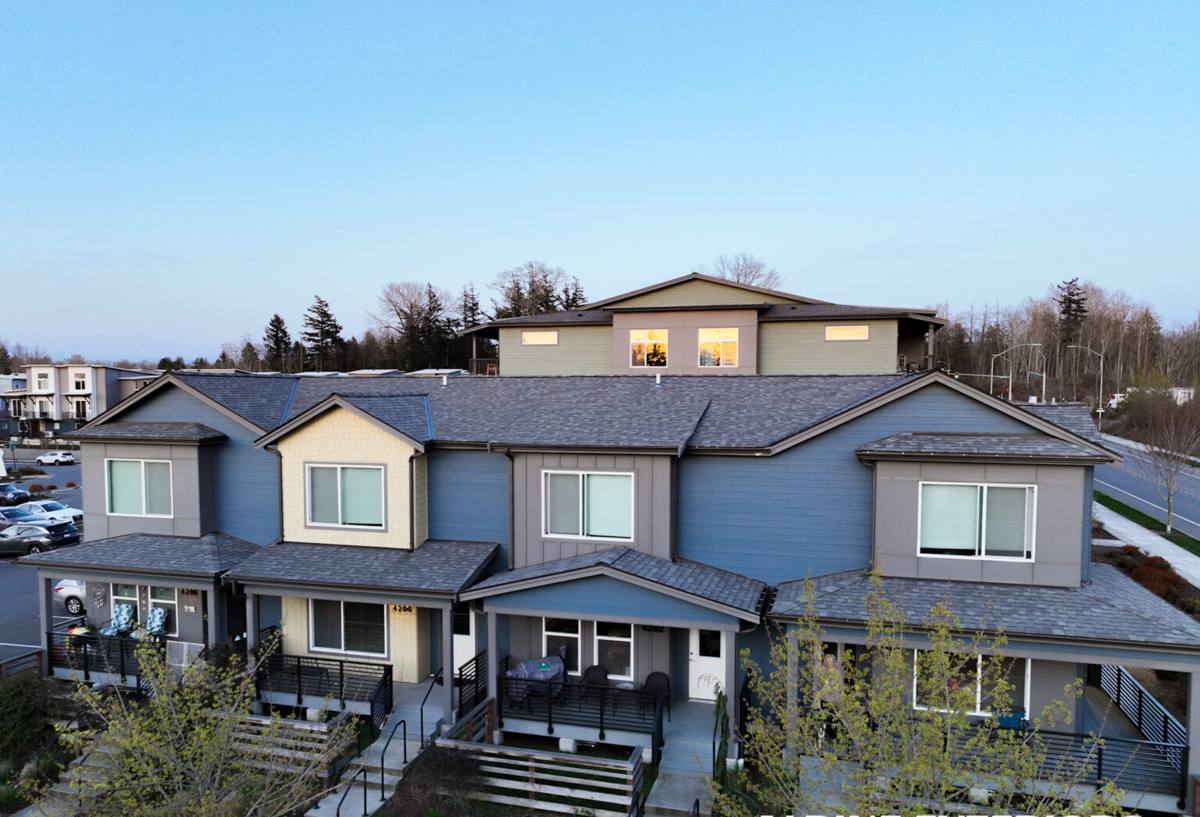
Signs a Lynden Home Actually Needs Replacement
Not every old window needs to go. Some just need better weatherstripping or a re-glaze. Here's what actually points to full replacement rather than a repair:
- Fog or haze between the panes of a double-pane window — the seal has failed and it can't be fixed, only replaced
- Wood frames that are soft, discolored, or show bubbling paint near the bottom corners, where water sits longest
- Windows that are difficult to open, won't stay open, or have visibly warped out of square
- Cold air you can feel at the frame edge even when the window is fully latched
- Visible daylight or drafts around the frame from outside on a windy day
- Condensation forming on the inside glass regularly through fall and winter, not just on the coldest mornings
If you're only seeing one or two of these on a handful of windows, a room-by-room replacement plan often makes more sense than doing the whole house at once — and it's a perfectly reasonable way to budget the work.
What a Correct Window Replacement Job Actually Involves
The window itself is maybe half the job. The other half — the part that determines whether it performs for twenty years or fails in five — is how it's installed. In a climate that gets sustained driving rain, the flashing and moisture management around the window opening matters as much as the window's own rating.
The details that matter most
A correct install starts with removing the old unit and inspecting the rough opening for hidden rot before anything new goes in — this is where a lot of shortcut installs fail, because covering up existing water damage instead of fixing it just traps the problem behind a new window. From there, proper flashing tape and a sloped sill pan direct water away from the sheathing, the window gets shimmed and leveled so it's square (not just "close enough"), and the gap between the frame and the rough opening gets insulated and sealed with a product built for that job, not just caulk smeared around the trim.
Why this matters more here than in a dry climate
In a place that gets steady rain for months at a stretch, a poorly flashed window doesn't fail right away. It fails two or three winters later, when water that's been getting behind the trim finally rots the framing underneath. By then the fix isn't "replace a window" — it's "replace a window and rebuild part of the wall." Doing it right the first time is cheaper every time.
Choosing the Right Window for This Climate
There's no single "best" window material — there's a best fit for your home, your budget, and how much upkeep you want to take on. Here's how the common options actually compare for a wet, humid Whatcom County climate:
| Frame Material | Moisture Behavior | Maintenance | Typical Fit |
|---|---|---|---|
| Vinyl | Won't rot or absorb water; performs consistently in wet climates | Low — occasional cleaning, no painting | Most homes; best value for performance |
| Fiberglass | Very stable in moisture and temperature swings; minimal expansion/contraction | Low to moderate | Homes wanting a higher-end feel and longer service life |
| Wood (clad exterior) | Interior wood look with a protective exterior shell resists direct weather exposure | Moderate — exterior clad is low-upkeep, interior wood still needs occasional attention | Historic-style or high-end interiors where the wood look matters |
| Aluminum | Conducts cold, prone to interior condensation in our winters unless thermally broken | Low | Best reserved for specific architectural needs, not general home replacement |
For most Lynden homes — whether that's a farmhouse-style property or a newer subdivision build — vinyl or fiberglass with a good Low-E, argon-filled dual-pane unit is the practical choice. We'll walk through what's actually right for your specific house rather than pushing one product for every job.
A Note on Glass
Low-E (low-emissivity) coatings and argon gas fill aren't marketing add-ons — they're the difference between a window that helps with your heating bill and one that doesn't. In a climate where you're running the heat for a good chunk of the year, that coating pays for itself over time by cutting the heat loss through the glass itself, not just the frame.
Our Process, Start to Finish
We keep this straightforward because window replacement shouldn't feel complicated for the homeowner, even though there's real skill in doing it correctly:
- Free on-site estimate — we look at your existing windows, note any signs of hidden water damage, and talk through what actually needs replacing versus what can wait
- Product selection — we help you weigh frame material, glass package, and style against your budget, without upselling you on features your home doesn't need
- Scheduling around the weather — we plan installs to minimize how long any opening is exposed, which matters in a region where a dry forecast window can close fast
- Removal and rough opening inspection — old units come out, and we check the framing underneath before anything new goes in
- Installation with proper flashing and sealing — sill pans, flashing tape, shimming, and insulation done to hold up against driving rain, not just look finished
- Final check and cleanup — we test operation, check seals, and clear the site before we call it done
What Affects the Cost
Every home is different, so we won't give you a number without seeing the job — but these are the factors that actually move the price up or down:
| Factor | Why It Matters |
|---|---|
| Number of windows and their size | Larger openings and whole-house jobs have different economies of scale than a single-room replacement |
| Frame material chosen | Vinyl, fiberglass, and clad-wood carry different material costs |
| Condition of the existing opening | Hidden rot or framing damage found during removal adds repair work before the new window can go in |
| Access and second-story work | Upper-floor windows and difficult access take more time and equipment |
| Trim and interior finish work | Matching existing interior trim or casing adds labor beyond the window swap itself |
A straightforward single-window replacement in an opening with no hidden damage is a modest job. A whole-house replacement with some rot repair built in is a bigger project — but it's also the kind of job where doing it once, correctly, saves you from paying twice.
Why a Crew That Already Works in Lynden Matters
Window replacement done wrong doesn't usually show up as a problem on day one — it shows up two winters later as a soft spot in the wall, or five years later as a seal failure that was never installed square to begin with. A crew that works this specific area regularly has already seen how Whatcom County's rain and humidity expose bad installs, because we're the ones who get called to fix them.
That local pattern-recognition matters for practical things too: knowing what building department requirements typically apply for window replacement in Whatcom County, being realistic about scheduling around our wetter months instead of promising a timeline that weather won't allow, and understanding that Lynden's mix of older farm-era homes and newer construction each come with their own quirks around rough opening sizes and trim details. That's the kind of thing you only learn by doing the work here, not by reading a spec sheet.
Keeping New Windows Performing Through the Wet Season
A correctly installed window is low-maintenance, but "low" isn't "none." A few habits go a long way in this climate:
- Wipe down sills after heavy rain if water is pooling there, rather than letting it sit
- Check weep holes on the exterior of vinyl and fiberglass frames periodically to make sure they're not blocked by debris or moss growth
- Inspect exterior caulking and sealant lines once a year, since even good sealant has a service life
- Keep nearby vegetation trimmed back so moisture and moss don't sit directly against the frame
- Address any new condensation between panes right away — it means a seal has failed, and it won't fix itself
Ready for a Straight Answer on Your Windows?
If you're not sure whether your Lynden home needs a full window replacement or just some targeted repairs, that's exactly the kind of question we're happy to answer in person, for free, with no pressure to sign anything on the spot. Use the form below to request an estimate and we'll take a look.