 Bellingham Siding
 Deck Building in Birchwood: Built for This Climate, Not Just This Season
Birchwood sits close enough to the water and the wet Cascade foothills that a deck here works a lot harder than a deck in a dry climate ever would. Salt-tinged air off Bellingham Bay, driving rain that comes in sideways more often than straight down, and a moss season that can stretch from October well into May all put steady pressure on any outdoor structure. A deck that looks fine the first summer can start showing soft spots, slick moss growth, or corroding hardware within a couple of wet seasons if it wasn't built with this specific climate in mind.
We build and repair decks for homeowners throughout Birchwood and the rest of Whatcom County, and the design decisions that matter most here aren't cosmetic — they're about water management, material selection, and fastener choice. This page walks through what a Birchwood deck actually needs, what a correct build involves, and how we handle the job from first visit to final walkthrough.
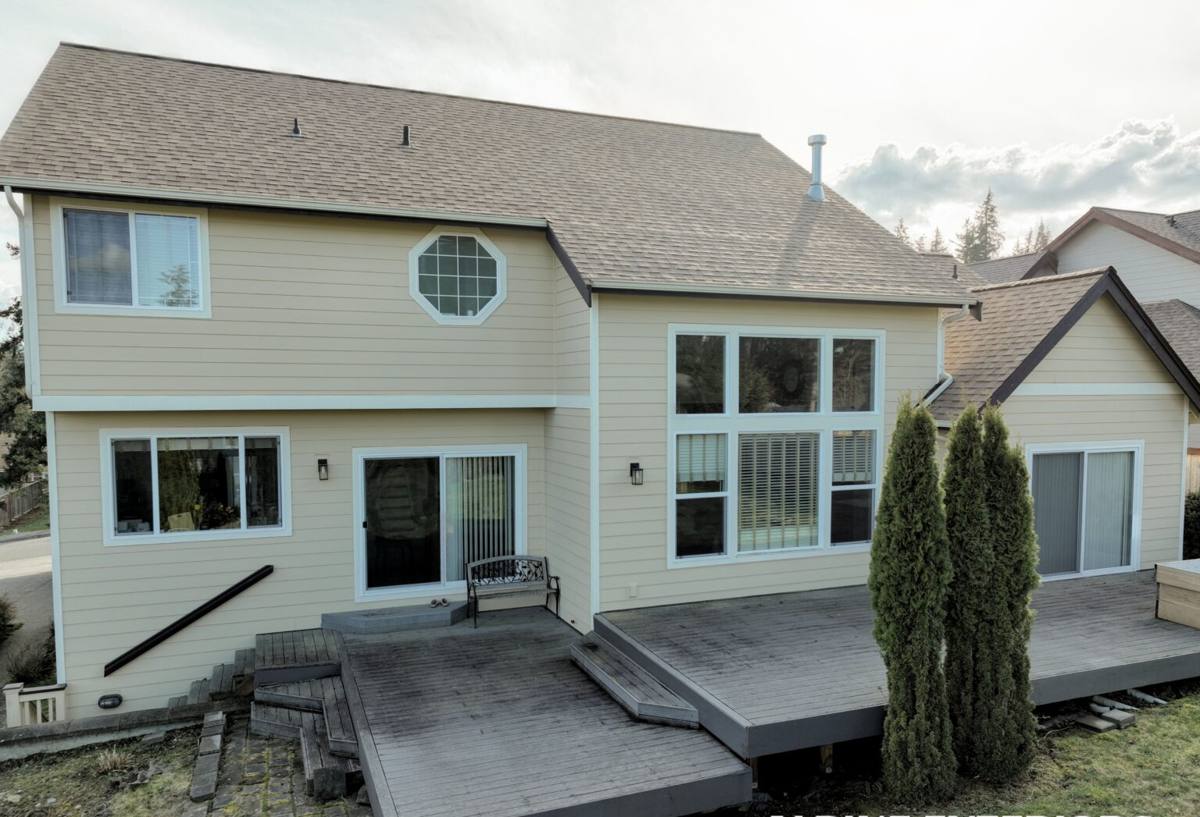
What Birchwood's Climate Actually Does to a Deck
Every region has its own failure patterns, and ours are pretty consistent:
- Standing moisture: Long stretches of drizzle and overcast days mean wood surfaces stay damp far longer than in drier climates, giving mold, mildew, and moss more time to take hold.
- Moss and algae growth: Shaded decks under fir and cedar canopy, or decks that face north, can develop a slick moss layer that's both a maintenance headache and a slip hazard.
- Salt-influenced air: Proximity to the bay means fasteners, brackets, and other exposed metal corrode faster than inland installations if the wrong grade of hardware is used.
- Freeze-thaw cycling: Whatcom County doesn't get deep freezes often, but the cycles we do get can work water into small cracks in framing or decking and expand them over time.
- Wind-driven rain: Rain rarely falls straight down here, which means ledger boards, railing posts, and any wood-to-wood connection point are more exposed to moisture intrusion than a simple rainfall chart would suggest.
None of this means a deck in Birchwood can't last decades — it means the details that get skipped in a rushed build (flashing, fastener grade, ventilation under the structure) are exactly the details that decide whether it does.
Choosing the Right Decking Material
There's no single "best" decking material — the right choice depends on how much upkeep you want to do, your budget, and how exposed the deck is to sun, shade, and moisture. Here's how the common options compare for a Birchwood property specifically.
| Material | How It Handles Our Climate | Maintenance Load | Relative Cost |
|---|---|---|---|
| Pressure-treated wood | Affordable and strong, but needs regular sealing to resist moss and rot in our wet months | High — annual cleaning/sealing recommended | Lower |
| Cedar | Naturally rot-resistant and handsome, but will gray and needs finish maintenance to keep that look | Moderate to high | Mid |
| Capped composite (e.g. TimberTech, Trex) | Excellent moisture and moss resistance thanks to the protective cap; doesn't absorb water like wood | Low — periodic washing | Mid to higher |
| PVC decking | Fully synthetic, essentially immune to rot and moisture absorption; performs well in constant damp shade | Low | Higher |
For decks that sit under tree cover or on the shadier, north-facing side of a home — common in parts of Birchwood — we lean toward recommending capped composite or PVC. The upfront cost is higher, but the maintenance burden in a climate that grows moss on almost anything left damp is dramatically lower. For decks in full sun with good airflow, a well-maintained wood deck can still be the right call, especially if you're comfortable with the annual upkeep.
Why We're Selective About Uncapped Composite
Older, uncapped composite products (common in early-generation composite decking) can absorb moisture at cut edges and fastener holes, which is a real liability in a climate this wet. Our standard is to use capped products or solid wood species with proper end-sealing, because it's a better long-term match for the amount of rain and shade this area gets — not because any one brand is bad, but because the moisture behavior of uncapped boards is simply a worse fit here.
What a Correct Deck Build Involves
A deck is only as good as what's underneath it. The visible decking boards get all the attention, but the framing, footings, and connections are what determine whether the deck is still solid in fifteen years.
Footings and Foundation
Whatcom County's soil can hold water well into the dry months in low-lying or shaded yards, which is exactly the kind of ground condition that punishes undersized or shallow footings. We size and set footings to local frost depth and soil conditions rather than defaulting to a one-size-fits-all spec, and we make sure post bases keep wood off standing water.
Ledger Attachment and Flashing
The ledger board — where the deck attaches to the house — is the single most common failure point on decks in wet climates. Water that gets behind an improperly flashed ledger can rot the house's rim joist before anyone notices from the outside. We flash every ledger connection properly and confirm the house's siding and water-resistive barrier integrate with it correctly, not just bolt the ledger on and move on.
Fasteners and Hardware
Given the salt-tinged air this close to the bay, we use corrosion-resistant, coated or stainless fasteners and connectors rated for exterior and ground-contact use. Cheaper, uncoated hardware is one of the most common causes of early streaking, staining, and structural weakening we see on decks that were built to save a few dollars on hardware.
Airflow Underneath
Decks built low to the ground or over damp, shaded soil need real ventilation underneath to keep joists and beams from sitting in trapped moisture. We plan clearance and airflow into the framing design rather than treating it as an afterthought.
Railings, Stairs, and Code Requirements
Guardrails, stair geometry, and baluster spacing aren't optional style choices — they're governed by the building code adopted in Whatcom County, and inspectors check them closely. Beyond meeting code minimums, we pay attention to a few things that matter specifically here:
- Railing post connections are engineered to resist lateral load, not just fastened decoratively — this is a common inspection failure point on DIY and rushed builds.
- Stair stringers and treads are sized and fastened to stay solid even when wet and used in low-light morning or evening conditions.
- Baluster and cable spacing meets guardrail code so the deck is safe for kids and pets, not just adults.
If your project requires a building permit, we handle that process and coordinate inspections so you're not left chasing paperwork or guessing whether your existing deck would even pass a current inspection.
How Our Process Works
- On-site visit: We look at your yard's grade, sun and shade exposure, existing structure (for repairs or rebuilds), and how the deck will connect to the house.
- Design and material selection: We walk through decking material, railing style, and layout options based on your budget and how much maintenance you want to take on long-term.
- Permitting: For projects that require it, we prepare and submit what's needed and schedule required inspections.
- Build: Footings and framing first, then decking, railings, and stairs — with flashing and fastener details handled at every connection point, not just the ones that show.
- Final walkthrough: We review the finished deck with you, including a plain-English rundown of what maintenance (if any) the material you chose will need.
Maintaining a Deck Through a Wet, Mossy Winter
Whatever material you choose, a little seasonal attention goes a long way in this climate. A simple maintenance rhythm for Birchwood conditions:
- Sweep leaves and debris off the deck regularly in fall — trapped wet leaves are one of the fastest ways to stain boards and feed moss growth.
- Clean the surface at least once a year with a deck-safe cleaner to knock back algae and moss before it gets established.
- Check and re-seal wood decking on the manufacturer's recommended schedule — don't wait until graying or cracking is visible.
- Keep gutters and downspouts clear so runoff isn't dumping extra water directly onto or under the deck.
- Inspect railings and stair connections annually for any looseness, especially after a hard windstorm.
- Clear moss from steps and walking surfaces promptly — it's one of the more common slip hazards we hear about from homeowners in shaded yards.
Why a Crew That Already Works Birchwood Makes a Difference
A deck builder who mainly works drier inland climates will make different (and sometimes wrong) assumptions about flashing, fastener grade, and footing depth. Working regularly in Bellingham and greater Whatcom County means we already know how this area's rain patterns, soil, and shade conditions treat outdoor structures — and we build accordingly from day one rather than learning it through a callback. We're also familiar with the local permitting and inspection process, which keeps projects moving instead of stalling on paperwork.
If you're planning a new deck or need an existing one repaired or replaced in Birchwood, we're happy to take a look and put together a straightforward, no-pressure estimate — just fill out the form below.