 Bellingham Siding
 Siding Built for Sunnyland's Specific Climate
Sunnyland is an established residential neighborhood in Bellingham, and like the rest of the city, it sits in a climate that is genuinely hard on exterior building materials. Homes here deal with three things at once, year-round: salt-tinged air carried in off Bellingham Bay, driving wind-blown rain that hits siding at an angle rather than falling straight down, and a moss and algae season that can stretch from fall through spring in Whatcom County's cool, damp conditions. Any one of those on its own is manageable. Together, over years, they expose the weak points in siding that was designed for a drier, milder climate.
Salt air accelerates corrosion on fasteners, trim, and any metal flashing that isn't properly rated or protected. Driving rain finds its way into any gap, seam, or nail hole that wasn't sealed and flashed correctly, and once moisture gets behind siding it often has nowhere to go. Moss and algae don't just look bad — a sustained layer of organic growth holds moisture against the surface of the siding for weeks at a time, which is exactly the condition that causes rot, paint failure, and swelling in materials that aren't built to handle it. A siding installation done right in Sunnyland has to account for all three from the start, not patch around them later.
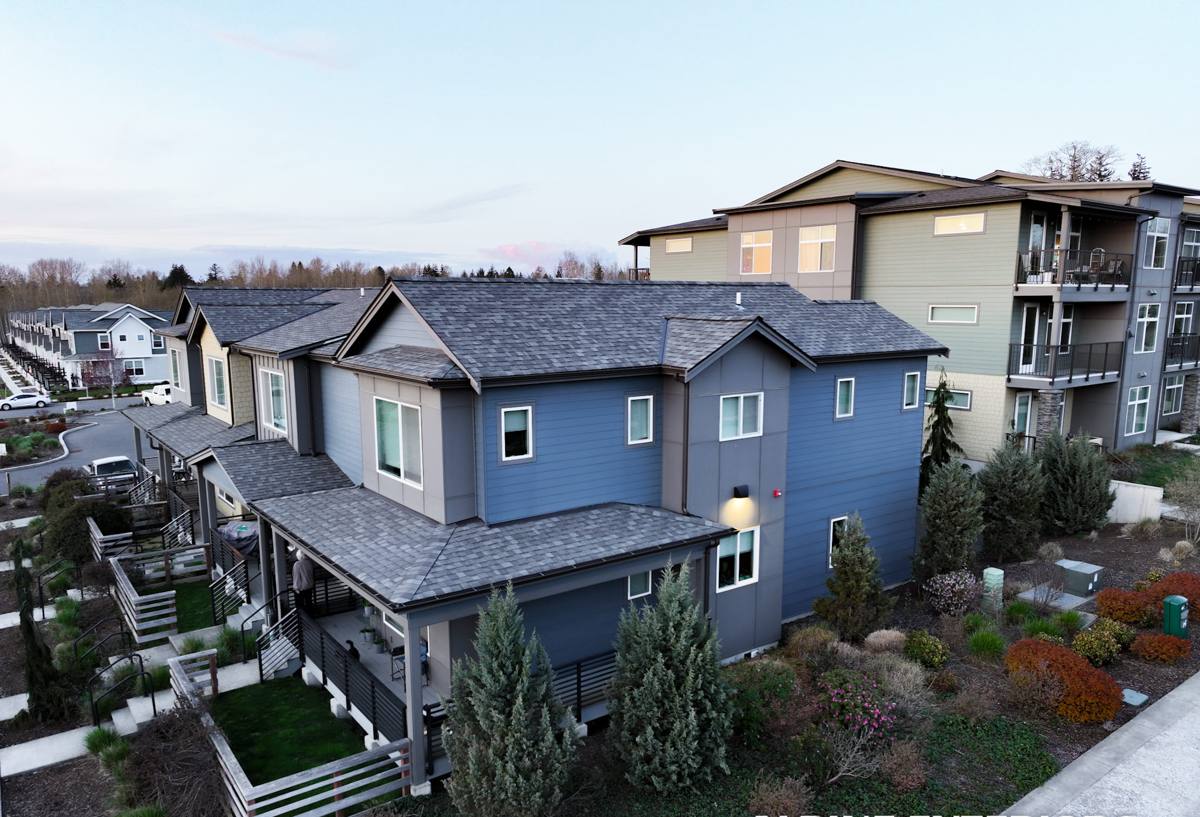
What a Correct Siding Installation Actually Involves
"Siding installation" sounds simple — remove the old material, put up the new material — but the parts that determine whether a job lasts fifteen years or fifty happen underneath and around the visible surface. A correct installation is a system, not just a covering.
The Weather-Resistive Barrier and Flashing
Before any siding panel goes up, the wall needs a continuous, properly lapped weather-resistive barrier (housewrap) underneath it. Every seam, every window and door opening, and every penetration — vents, hose bibs, light fixtures, electrical boxes — needs to be flashed so that any water that gets past the siding is directed back out, not into the wall cavity. In a climate with as much driving rain as Bellingham gets, this layer matters more than the siding itself. Skipping or rushing it is the single most common reason a siding job fails early, regardless of what brand of siding sits on top of it.
Fastening, Clearances, and Ventilation
Fiber cement siding has to be fastened at the correct spacing and depth — over-driven or under-driven nails both cause problems down the road, from cracking to water intrusion. Siding also needs proper clearance from grade, roofing, decks, and other horizontal surfaces so it isn't sitting in standing water or trapped moisture. And the wall assembly behind the siding needs a way to dry out — a drainage gap or rainscreen approach works with the local climate instead of fighting it, which matters in a neighborhood that sees as much sustained damp weather as Sunnyland does.
Why We Install Only James Hardie Fiber Cement Siding
We install one siding product on every home we work on in Bellingham, including Sunnyland: James Hardie fiber cement. That's a deliberate standard, not a limitation on our part. Fiber cement is dimensionally stable in a way that wood-based and vinyl products aren't — it doesn't expand and contract with humidity the way wood fiber composites do, and it doesn't soften or distort in heat and cold the way vinyl can. That stability matters directly here: a product that swells, warps, or gaps with the seasons is a product that gives salt air and driving rain a foothold.
Hardie's ColorPlus factory-applied finish is baked on under controlled conditions rather than field-painted, which gives it more consistent adhesion and better resistance to the coastal, moisture-heavy conditions common around Bellingham Bay. Hardie also engineers its HZ5 product line specifically for the Pacific Northwest's wetter climate zone, and backs installations with a strong transferable limited warranty when the work is done to their specification. We've standardized on it because, installed correctly, it holds up to exactly the combination of conditions Sunnyland homes face — without the maintenance burden or moisture vulnerability of the alternatives.
Our Installation Process for Sunnyland Homes
Every home is a little different, but the sequence we follow doesn't change, because each step protects the one after it.
- On-site assessment. We look at the existing siding, sheathing, and trim to understand what's underneath and whether there's any hidden moisture damage that needs addressing before new siding goes up.
- Tear-off and substrate check. Old siding comes off and we inspect the sheathing itself. Soft, rotted, or water-damaged sheathing gets repaired or replaced — covering it up with new siding just hides the problem.
- Weather-resistive barrier installation. A continuous, correctly lapped housewrap goes on, sealed at every seam.
- Flashing at every penetration. Windows, doors, vents, and any wall penetration get properly integrated flashing so water is directed outward, not inward.
- James Hardie siding installation. Panels or lap siding go up per manufacturer fastening specifications — correct nail spacing, depth, and clearances throughout.
- Trim, caulking, and touch-up finishing. Factory-finished panels get color-matched touch-up only where field-cut, keeping the ColorPlus finish's protection intact.
- Final walkthrough. We check clearances, seams, and finish work with you before calling the job complete.
Signs a Sunnyland Home May Need New Siding
Some warning signs are obvious; others hide in plain sight until they've been causing damage for a while. Worth checking for:
- Visible cracking, buckling, or warping in siding panels or boards
- Paint that's peeling, bubbling, or needs repainting more often than every few years
- Soft or spongy spots when you press on the siding, especially near the bottom courses
- Persistent moss or algae growth that returns quickly after cleaning
- Visible gaps at seams, corners, or around windows and doors
- Rising energy bills with no other explanation, which can point to a compromised weather barrier
- Musty smells or visible staining on interior walls that back up to exterior siding
Any one of these is worth a closer look. Several together usually mean the siding system — not just the surface — needs attention.
Siding Options: A Straight Comparison
Homeowners in Sunnyland often ask why we don't offer a lower-cost siding option alongside Hardie. Here's an honest look at how the common choices stack up against the conditions this neighborhood actually deals with.
| Siding Type | Behavior in Salt Air & Driving Rain | Moss/Algae Resistance | Typical Lifespan |
|---|---|---|---|
| Vinyl | Can warp or become brittle with temperature swings; seams are a water entry risk | Prone to algae staining, especially on shaded north sides | 15–25 years before visible degradation |
| Primed wood (spruce/cedar) | Absorbs moisture readily; needs consistent repainting to stay protected | High — organic material is more susceptible to moss and rot | 10–20 years depending on maintenance |
| LP SmartSide (engineered wood) | Better than raw wood, but wood-strand core is still moisture-sensitive at cut edges and seams | Moderate — requires diligent sealing and upkeep | 20–30 years with strict maintenance |
| James Hardie fiber cement | Dimensionally stable; non-combustible; engineered HZ5 line for wetter climates | Low — dense fiber cement surface resists moisture retention better than wood-based products | 30+ years, backed by a transferable warranty |
What Siding Installation Costs in Sunnyland
Every home is priced individually after an on-site look, but the factors that move the number are consistent. We won't quote a number without seeing the house, but here's what typically drives cost up or down.
| Factor | Why It Matters |
|---|---|
| Home size and wall complexity | More square footage and more corners, gables, and dormers mean more material and labor time |
| Condition of existing sheathing | Hidden rot or water damage found during tear-off adds repair scope before new siding can go on |
| Siding profile chosen | Lap siding, panel systems, and shingle-style Hardie products vary in material and installation time |
| Trim and detail work | Window and door surrounds, corner boards, and fascia detailing add labor |
| Accessibility | Multi-story sections, tight lot lines, or limited staging area can affect scheduling and labor |
Why Hiring a Crew That Already Works in Sunnyland Matters
A siding contractor who regularly works in this part of Bellingham has already seen how homes here age — which sides of a house take the worst of the driving rain, where moss builds up fastest, and which older homes tend to have sheathing issues hiding under original siding. That experience shows up in small decisions during the job: where to pay extra attention to flashing, how to detail trim around older window openings, and what to expect once tear-off starts. It also means we're familiar with Bellingham's permitting process and building requirements, so there are no surprises mid-project. A crew that only occasionally works this far north, or outside Whatcom County generally, is learning those lessons on your house instead of bringing them with them.
Caring for James Hardie Siding After Installation
Part of why we stand behind Hardie is that it asks relatively little of homeowners once it's installed correctly. It doesn't need repainting on the schedule that wood or primed products do, and the factory ColorPlus finish holds its color well against the coastal conditions Bellingham sees. That said, a little basic care goes a long way in this climate:
- Rinse siding periodically with a garden hose to keep salt residue and organic buildup from settling in
- Keep gutters clear so overflow doesn't run down the siding face repeatedly
- Trim back landscaping that keeps siding shaded and damp longer than the rest of the house
- Have caulking and trim checked every few years, since sealant is the one part of the system that wears out before the siding does
If your Sunnyland home's siding is showing wear, or you're planning ahead for a replacement, we're happy to take a look and walk you through what your house specifically needs — no pressure, no obligation. Use the form below to request a free estimate.