 Bellingham Siding
 Why Decks in the Puget Area Wear Out Faster Than the Manual Says
If you own a home in the Puget area near Bellingham, you already know your deck doesn't age the way a manufacturer's brochure promises. Whatcom County sits close enough to the water that salt-laden air reaches decking, fasteners, and framing long before most inland homeowners ever think about corrosion. Add in months of driving rain that finds every gap in a ledger board, and a moss season that can stretch from fall through spring, and you have a structure that's under constant low-grade attack. None of this means a deck is doomed — it means a deck built or replaced for this specific climate needs different choices than one built for a dry inland lot.
We work on decks in this area regularly, and the failures we see are predictable. They cluster around the same handful of causes: fasteners that were never rated for coastal exposure, decking laid tight with no drainage path, and ledger connections that let water track into the house framing instead of away from it. A correct replacement addresses all three, not just the parts that show.
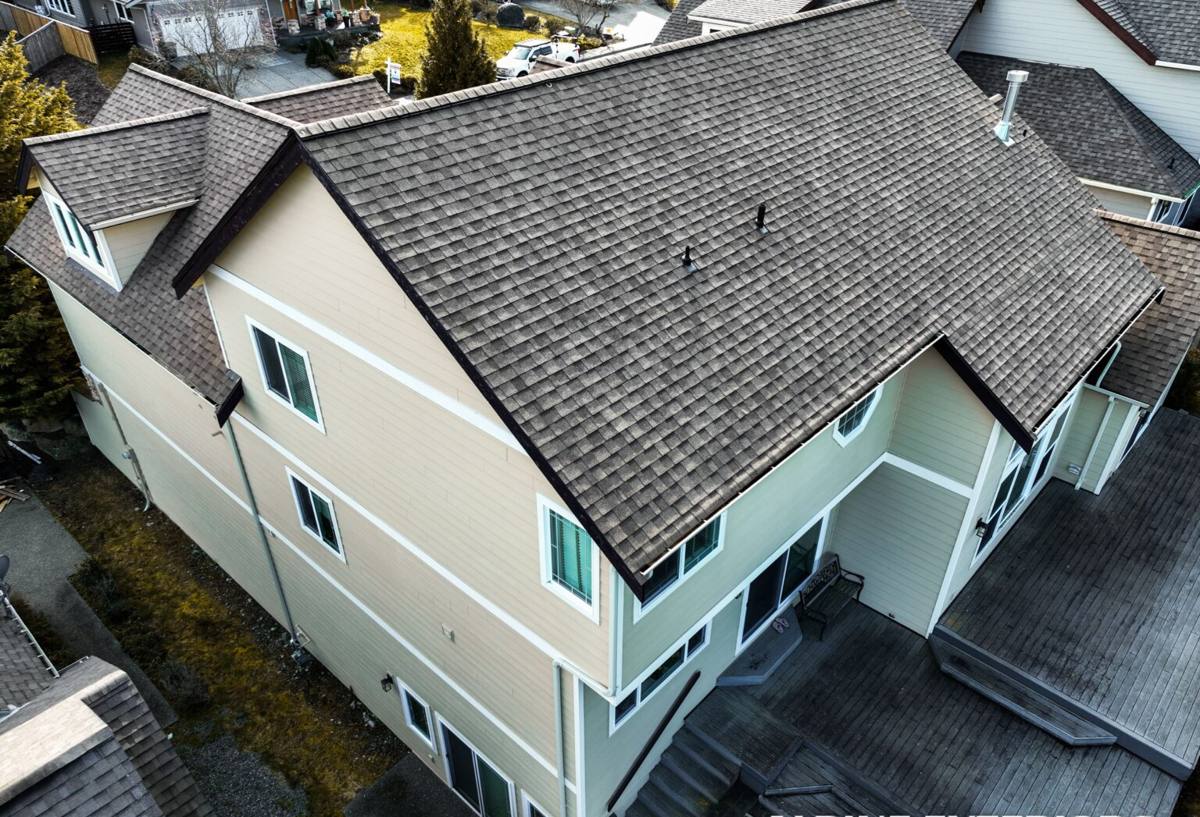
Signs a Deck Needs Replacement, Not Another Repair
Homeowners often call us expecting a board swap and end up needing something more thorough — or the reverse, worried about a full teardown when a targeted repair would do. Here's how we tell the difference.
Repair territory
A handful of cupped or splintering boards, surface graying, loose railing balusters, or a few popped fasteners are normal wear. If the framing underneath is sound and dry, replacing the decking surface alone can add years of life.
Replacement territory
Soft or spongy spots when you walk the deck, joists or beams with visible rot or dark staining, a ledger board pulling away from the house, moss or algae growing in the wood grain itself rather than just on top, and rust streaking from fasteners are all signs the structure — not just the surface — has been compromised. In our climate, once moisture gets past the wood's surface and into end grain or fastener holes, it rarely reverses on its own.
What a Correct Deck Replacement Actually Involves
A deck replacement is a structural project wearing a finish carpentry costume. Getting the visible parts right matters, but most long-term failures trace back to what's underneath.
Ledger connection and flashing
This is where the deck attaches to the house, and it's the single most common source of hidden rot. Correct flashing — installed in the right order relative to the house's water-resistive barrier — keeps rain from tracking behind the siding and into the rim joist. In a region with as much driving rain as ours, this detail alone determines whether the deck stays a deck or becomes a water delivery system for your wall framing.
Framing and footings
Joists, beams, and posts need to be sized for the actual load and span, not just matched to what was there before. Footings should sit below frost depth and bear on undisturbed soil. If the old footings are undersized or were never properly poured, a straight rebuild on top of them just repeats the original mistake.
Fasteners and hardware
Coastal air is hard on standard fasteners. Structural connectors, screws, and hangers rated for corrosive or coastal exposure cost more up front and are worth it — replacing a deck's surface every eight years because the hardware failed underneath is a false economy.
Decking spacing and drainage
Boards installed too tight trap moisture and debris, which is exactly what feeds moss and speeds up rot. Correct gap spacing, and in some cases an under-deck drainage system for the space below, keeps water moving instead of pooling.
Choosing a Decking Material for This Climate
There's no single "best" decking material — there's a best fit for your budget, how much upkeep you're willing to do, and how exposed the deck is to weather and salt air. Here's how the common options actually compare in a Whatcom County coastal climate.
| Material | Moss/Moisture Resistance | Maintenance | Typical Lifespan Here |
|---|---|---|---|
| Pressure-treated lumber | Fair — needs sealing to perform well | Annual cleaning, re-sealing every 1-2 years | 10-15 years |
| Cedar | Good natural resistance, but surface still needs care | Regular cleaning, periodic oiling/sealing | 12-18 years |
| Composite decking | Very good — won't rot, but can still grow surface algae/moss if not cleaned | Periodic washing, no sealing required | 20-25+ years |
| PVC/capped polymer decking | Excellent — fully moisture-sealed surface | Occasional washing | 25-30+ years |
We're generally cautious about installing bare pressure-treated boards as a finished wear surface in this climate without a clear maintenance plan from the homeowner — it performs fine structurally as framing, but as a walking surface it demands more upkeep than most people expect once you factor in near-constant damp weather and a long moss season. Composite and PVC decking cost more per board but shift the ongoing maintenance burden from "annual project" to "occasional wash," which matters a lot for homeowners who don't want a deck as a recurring chore.
Our Deck Replacement Process
- On-site assessment. We check framing, footings, ledger condition, and drainage before quoting anything — not just the decking surface.
- Honest scope. You get a clear picture of what's structural (must-fix) versus cosmetic (optional), with pricing broken out so you can see where the money goes.
- Demolition and disposal. Full removal of old decking, railing, and any compromised framing, hauled off the site.
- Structural rebuild. Correctly sized joists, beams, and footings, with coastal-rated hardware and proper ledger flashing.
- Decking and railing installation. Installed with correct spacing for drainage and airflow underneath.
- Final walkthrough. We go over care and maintenance specific to whatever material you chose, so you know what upkeep to expect before the first rainy season hits.
Permits and Local Code Considerations
Deck replacements that involve structural changes — new footings, altered height, or changes to railing and guard configuration — typically require a permit in Whatcom County and the City of Bellingham, depending on where the property sits. Guard height, baluster spacing, and stair requirements are governed by code, not preference, and they matter most for older decks that were built before current standards. Part of doing this correctly is handling that permitting process rather than treating it as optional paperwork.
Cost Factors Homeowners Should Understand
Deck replacement pricing varies widely based on size, material, and how much structural work is needed — but the factors that move the number are consistent.
| Factor | Why It Affects Price |
|---|---|
| Deck size and shape | Larger footprints and multi-level or angled designs require more material and labor |
| Decking material | Composite and PVC cost more per board than wood, but reduce future maintenance spending |
| Structural condition | Rotted joists, undersized footings, or a failed ledger connection add rebuild scope beyond the surface |
| Height and railing complexity | Elevated decks and custom railing designs require more structural engineering and labor |
| Site access | Steep lots or tight side-yard access can slow demolition and material delivery |
We give straightforward, itemized quotes rather than a single lump number, so you can see whether you're paying for material upgrades, structural repair, or both.
Maintenance That Extends the Life of a New Deck
Even the best-built deck in a wet, salt-influenced climate needs some seasonal attention. A little consistent care goes a lot further than an occasional deep clean.
- Sweep debris off the deck regularly, especially fall leaves and needles that trap moisture against the surface
- Clean moss and algae as soon as it appears rather than waiting for it to spread — it's easier to remove early
- Check and clear gaps between boards so water and debris can keep draining through
- Inspect the ledger board area at the house connection once a year for staining or soft wood
- Re-seal wood decking on the manufacturer's recommended schedule — don't wait until it looks dry and gray
- Keep gutters and downspouts near the deck clear so runoff isn't dumping directly onto or under it
Why a Crew That Already Works the Puget Area Matters
Deck construction methods that work fine in a dry climate can fail quietly here. A crew that builds decks year-round in Whatcom County's driving rain and coastal air already knows which flashing details actually hold up, which fastener grades are worth the extra cost, and how much drainage spacing a deck really needs versus what a generic spec sheet suggests. That local experience shows up years later — in a ledger connection that never lets water in, and hardware that isn't streaked with rust by year three.
If your deck is showing soft spots, moss that won't quit, or fasteners that look worse every year, we're happy to take a look and give you a straight answer — repair, replace, or somewhere in between. Reach out for a free, no-pressure estimate using the form below.