 Bellingham Siding
 Storm Damage Roof Repair Built for Sudden Valley's Conditions
Sudden Valley sits in a pocket of Whatcom County that gets its own version of rough weather. The tree canopy around Lake Whatcom is thick, lots are often sloped or wooded, and the wind that comes through the Bellingham area during fall and winter storms doesn't move through this area the same way it does downtown or along the waterfront. It funnels through gaps in the trees, drops branches and debris onto roofs, and then leaves behind shaded, damp roof sections that take days longer to dry out than a roof out in the open. Add in the driving rain that's normal for this part of Washington, and you get a specific pattern of roof damage that's different from what we see on more exposed properties elsewhere in the county.
This page is about one thing: what it actually takes to repair storm-damaged roofs on homes in and around Sudden Valley, done correctly, by a crew that already understands the terrain and the tree cover here.
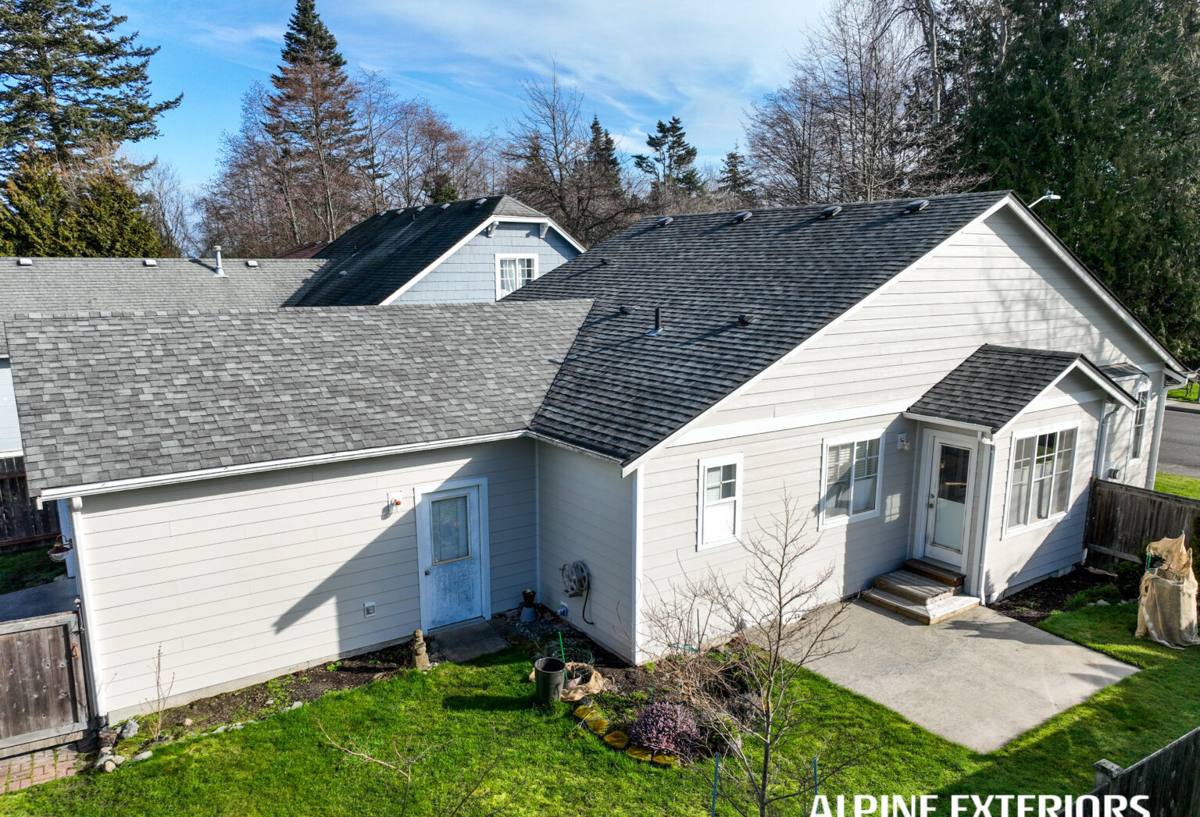
Why Storm Damage Looks Different on a Sudden Valley Roof
Two things separate storm damage here from damage on a roof out in an open subdivision closer to town:
Tree Cover Changes the Type of Damage
Wooded and heavily treed lots mean falling limbs and debris are a much bigger factor than they are on exposed roofs elsewhere in Bellingham. A branch doesn't have to be large to punch through a shingle, crack a ridge cap, or tear loose a section of flashing around a chimney or vent. Debris also collects in valleys and behind chimneys where it holds moisture long after a storm has passed, which is a slower, quieter kind of damage than a single dramatic impact.
Shade Slows Drying and Extends Moss Season
Whatcom County already deals with a long moss season thanks to our wet, mild climate, but tree-shaded roofs in Sudden Valley hold moisture noticeably longer than roofs with more direct sun exposure. That extended dampness is exactly what moss and moisture-loving growth need. Storm damage that opens even a small gap in the shingle or underlayment gives that moisture a path underneath, and on a shaded roof it can sit there working on the decking far longer before anyone notices a stain on a ceiling inside.
Common Storm Damage We Find on Roofs in This Area
- Wind-lifted or torn shingles — usually starting at ridges, hips, or exposed edges where wind gets underneath the shingle tab.
- Limb and debris impact — cracked shingles, dented or torn metal flashing, and punctures that aren't always visible from the ground.
- Clogged valleys and gutters — needles, cones, and leaf debris that back water up under shingles instead of letting it drain off.
- Moss-driven lifting — moss growing under shingle edges physically lifts them, which then lets wind and rain finish the job during the next storm.
- Flashing failures — around chimneys, skylights, and roof-to-wall transitions, often loosened gradually by wind before a storm finally tears it free.
What a Correct Storm Repair Actually Involves
A quick patch over visible damage is the easy way out, and it's also the most common reason storm repairs fail within a year or two. A repair done right starts with figuring out how far the damage actually extends, not just what's obvious from the ground or from a ladder at the edge.
Assessing the Full Scope Before Any Repair
This means checking the decking underneath damaged shingles for soft spots or staining, tracing water paths that may have traveled sideways along the underlayment before showing up somewhere else entirely, and inspecting flashing and valleys near the damaged area even if they look fine on the surface. Storm damage rarely stays contained to exactly the spot where the impact happened.
Matching Materials the Right Way
Shingle color and profile change slightly between production runs, so a patch using the wrong batch or an off-brand substitute stands out and can also create a slightly different water-shedding pattern at the seam. We match shingle type, weight, and profile as closely as the original roof allows, and we replace underlayment and flashing rather than reusing bent or compromised pieces just to save a step.
Sealing Out the Next Storm, Not Just This One
Any repair on a shaded or moss-prone section gets extra attention to ventilation and drainage paths, since the goal isn't just to fix today's leak — it's to make sure the same section isn't back on our schedule after the next wet system rolls through.
Our Process for Storm Damage Repairs in Sudden Valley
- Initial inspection — a full look at the roof, not just the area you noticed damage on, including decking and flashing checks where access allows.
- Documentation — clear notes and photos of the damage, useful whether you're paying out of pocket or working with an insurance adjuster.
- Temporary protection — if there's an active leak or open section, we get it covered and weather-tight before anything else, so the damage stops spreading while repair materials are sourced.
- Repair plan and honest estimate — what needs to be fixed, what it will cost, and whether a repair is the right call versus a larger replacement.
- The repair itself — decking replaced where needed, underlayment and flashing renewed, matching shingles installed, and all work checked against how water actually moves across that section of roof.
- Cleanup — debris, old materials, and anything brought down during the work hauled off, with the site left the way we found it.
Repair or Replace? Weighing the Options Honestly
Not every storm-damaged roof needs a full replacement, and not every damaged roof can be safely patched either. The right call depends on the roof's age, how widespread the damage is, and what condition the rest of the roofing system is in.
| Factor | Targeted Repair | Full Re-Roof |
|---|---|---|
| Best fit for | Isolated impact damage or a single failed section on an otherwise sound roof | Widespread wind damage, an aging roof nearing the end of its service life, or repeated storm hits in the same areas |
| Typical timeline | Often completed in a day or two, weather permitting | Several days to about a week, depending on size and access |
| Underlying materials | Only the affected decking and underlayment are addressed | Full tear-off allows inspection and renewal of decking, underlayment, and ventilation across the entire roof |
| General cost range | Often a few hundred to a couple thousand dollars for contained damage | A larger investment, but resets the roof's full lifespan rather than extending an aging one |
| Longer-term outlook | Good option when the roof still has years of life left | Makes more sense when a roof is old enough that more storm damage is likely to keep showing up |
These ranges are broad on purpose — actual cost depends on roof pitch, access, material choice, and how much decking (if any) needs to be replaced. We'll give you real numbers after we've actually looked at the roof, not before.
Storm Damage and Insurance Claims
Many storm damage repairs in this area do get submitted through homeowners insurance, since wind and impact damage is often a covered event. We're happy to document damage clearly and provide the kind of detail an adjuster needs, but we don't promise coverage outcomes or inflate damage reports to help a claim along — that's between you and your insurer. What we can promise is an honest look at what's actually damaged and what it will take to fix it correctly, whether that repair is paid through a claim or directly.
Reducing the Chance of Repeat Storm Damage
Because of the tree cover and shade common on Sudden Valley lots, ongoing maintenance matters more here than it does on a fully exposed roof. A few habits go a long way between storms:
- Keep gutters and valleys clear of needles and leaf debris, especially heading into fall storm season
- Have overhanging limbs trimmed back from the roofline before they become a problem in high wind
- Address moss growth before it lifts shingle edges rather than after
- Get a roof looked at after any significant windstorm, even if nothing looks obviously wrong from the ground
- Replace worn ridge caps and edge flashing before they're the weak point in the next storm
Why It Matters to Hire a Crew That Already Works in Sudden Valley
Storm repair work in this neighborhood comes with practical realities that a crew unfamiliar with the area has to learn on the fly: private roads and access points, steep or wooded driveways that limit where a ladder or lift can actually go, and roof sections shaded so consistently that moss and moisture issues are the norm rather than the exception. A crew that's already spent time on roofs in this specific community isn't guessing at any of that — we know what a Sudden Valley roof looks like after ten years under that kind of tree cover, and we know which storm damage is a quick fix versus which one is a sign the whole roof section needs attention.
Bellingham and the rest of Whatcom County get plenty of wet, windy weather every year, but Sudden Valley's terrain and tree canopy mean the damage doesn't always show up or behave the way it does elsewhere in the county. That local familiarity is worth something when you're trying to get an honest answer about what's actually wrong with your roof.
Get a Straightforward Look at Your Roof
If a recent storm left you with a leak, missing shingles, or debris damage, or you just want a roof checked out after high wind came through, we're glad to take a look. The estimate is free, there's no pressure to book anything on the spot, and you'll get a plain answer about what's actually going on and what it would take to fix it right. Use the form below to get started.