 Bellingham Siding
 Why Blaine Roofs Take a Different Kind of Beating
Blaine sits right where Whatcom County meets the water, and that location shapes everything about how a roof ages here. Homes near Drayton Harbor and Semiahmoo Bay live with salt-laden air moving off the water almost year-round. That salt air accelerates corrosion on exposed metal — flashing, fasteners, vent stacks, gutter hardware — faster than you'd see on a roof twenty miles inland. Add in wind-driven rain that comes at the roof sideways instead of straight down during winter storms, and you get water finding its way into laps and seams that would stay dry in a calmer climate.
Then there's moss. Whatcom County's damp, mild winters and shaded, tree-lined lots give moss and moisture-loving growth a long season to work with — often eight or nine months out of the year on north-facing slopes and shaded valleys. Moss holds water against the roofing material, works its way under shingle edges, and quietly lifts and loosens the very layers that are supposed to shed water. A roof that looks intact from the ground can already have compromised seals underneath a mat of moss.
None of this means a Blaine roof is doomed to fail early. It means storm damage repair here has to account for conditions a generic roofing crew from outside the area might not think to check.
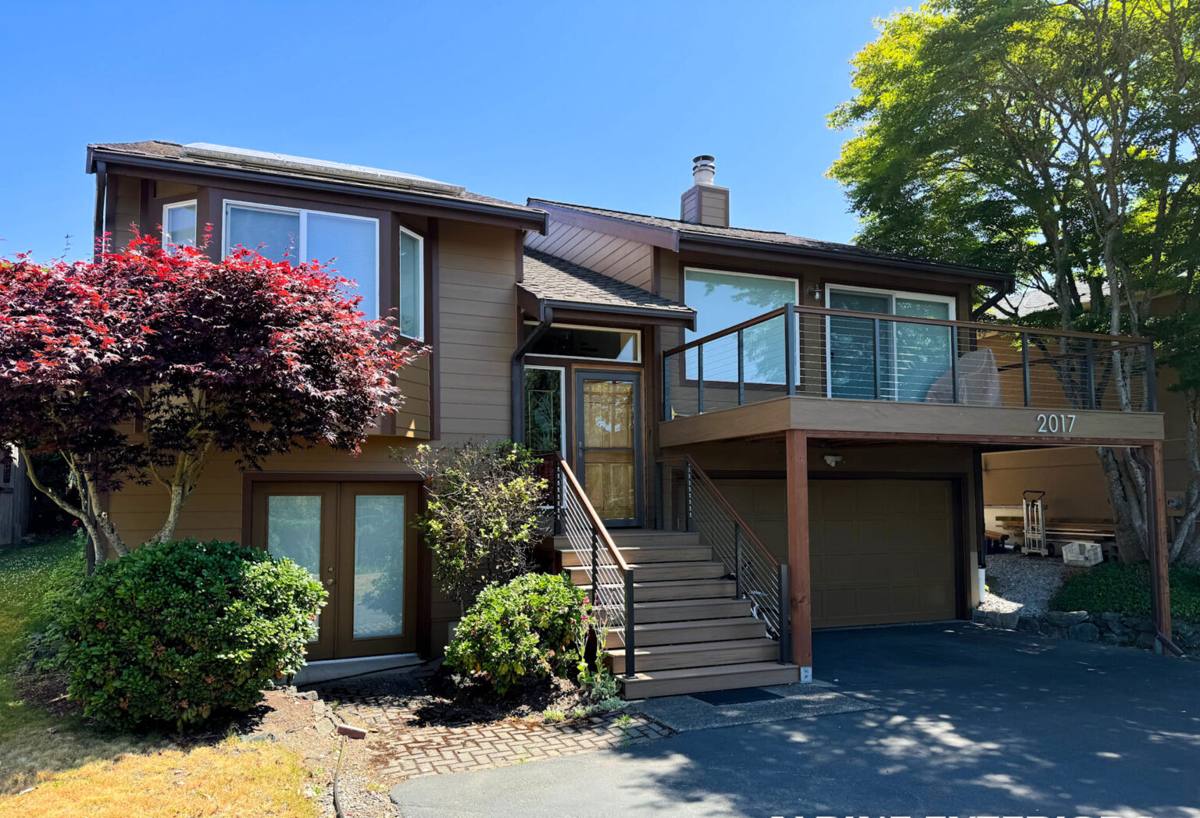
What Storm Damage Actually Looks Like
Storm damage isn't always a dramatic hole in the roof. In our experience, most storm-related repair calls in this area fall into a few categories:
Wind Damage
Gusts off the water can lift shingle tabs, crease them, or tear them off outright, especially along ridge lines, edges, and any spot where a previous repair wasn't sealed correctly. Sometimes shingles blow off cleanly and it's obvious. More often, wind just breaks the seal strip holding a shingle down, and the shingle looks fine until the next rain gets underneath it.
Rain and Water Intrusion
Driving rain finds weak points — cracked or lifted flashing around chimneys, skylights, and vent penetrations; nail pops that have worked loose over time; and valleys where debris has built up. Water intrusion is often the least visible form of storm damage until it shows up as a stain on an interior ceiling, by which point it's usually been happening for a while.
Impact Damage
Branches and debris knocked loose in a windstorm can bruise or puncture shingles, crack ridge caps, or dent metal flashing and gutters. This kind of damage is usually easier to spot, but the full extent often isn't clear until someone gets on the roof and checks the surrounding area, not just the obvious impact point.
Moss-Accelerated Damage
Storms don't create moss problems, but they expose them. A roof with heavy moss buildup is already weaker at the edges and seams, so a storm that a healthy roof would shrug off can be the thing that finally opens up a leak on a moss-compromised roof.
What a Correct Storm Repair Actually Involves
A rushed storm repair — nail down the loose shingle, caulk the obvious gap, call it done — is a common shortcut, and it's how the same roof ends up with a second leak six months later. A correct repair works through the roof system in order:
- Confirm the full extent of damage, not just the spot the homeowner noticed, including areas that look fine from the ground
- Check the decking underneath for soft spots, rot, or delamination before replacing anything on top of it
- Inspect and replace underlayment where it's been compromised, not just the surface shingles
- Correct flashing at every penetration nearby — chimneys, vents, skylights — since flashing failure is a leading cause of repeat leaks
- Match shingle type, weight, and where possible color so the repair doesn't stand out or create a mismatched wear pattern down the road
- Clear moss and debris from the surrounding area so the repaired section isn't immediately re-exposed to the same conditions that caused the damage
Skipping the decking and underlayment check is the most common shortcut we see from repairs done elsewhere. Shingles are the visible layer, but they're not what keeps water out of your home — the layers underneath are doing that job, and storm damage often affects them even when the shingles look repairable.
Our Process for Storm Damage Repair in Blaine
1. Inspection and Documentation
We start with a full roof inspection, not just a look at the area you flagged. We document what we find with photos, which matters both for giving you an honest picture of the work needed and for supporting an insurance claim if you're filing one.
2. A Straight Answer on Repair vs. Replace
We'll tell you plainly whether the damage is a targeted repair or a sign that the roof's remaining life doesn't justify further patching. We're not incentivized to push a full replacement when a repair will hold — our reputation in this area depends on being straight with people, not on selling the biggest job possible.
3. Weather-Appropriate Materials
Given the salt air and rain exposure common to Blaine properties, we use flashing and fasteners rated for coastal, high-moisture conditions rather than standard-grade hardware that corrodes faster here than it would inland.
4. The Repair Itself
Decking repaired or replaced first if needed, underlayment restored, flashing corrected, then matching shingles installed and properly sealed. We check the seal strips by hand before we consider the job finished — that's the detail most likely to fail again in the next windstorm if it's rushed.
5. Cleanup and Final Walkthrough
We clear debris, check gutters and downspouts for anything knocked loose in the same storm, and walk the roof with you (or send you the documentation) so you know exactly what was done.
Repair or Replace? What Actually Drives That Decision
Homeowners often ask this on the phone before we've even seen the roof, and the honest answer is that it depends on a handful of factors, not just the size of the damaged area.
| Factor | Leans Toward Repair | Leans Toward Replacement |
|---|---|---|
| Roof age | Under 10-15 years, otherwise sound | Nearing or past expected material lifespan |
| Extent of damage | Isolated to one section or slope | Spread across multiple slopes or the ridge |
| Decking condition | Solid, no rot found | Soft spots or rot discovered during inspection |
| Moss history | Minor, surface-level growth | Heavy, longstanding moss with visible shingle lift |
| Prior repairs | Few or none | Multiple past patches in different areas |
| Insurance scope | Claim covers a defined repair area | Adjuster's scope already includes broader replacement |
A rough sense of cost: a contained repair — a section of flashing, a run of shingles, a resealed valley — is often in the range of a few hundred to a couple thousand dollars depending on access and materials. Anything involving deck replacement, multiple slopes, or full tear-off runs considerably higher. We won't give you a firm number without seeing the roof, but we'll always explain what's driving the estimate.
Handling Insurance Claims for Storm Damage
Most storm damage repairs in this area involve homeowners insurance. We're not a public adjuster and we don't represent your insurance company — we work for you. What we can do is provide the same kind of documentation adjusters expect: dated photos, a written description of the damage and likely cause, and a repair scope that matches what we actually find on the roof. If an adjuster's initial scope misses something we identified during inspection, we'll point it out so you can raise it, rather than quietly doing extra work that wasn't approved.
What To Do Right After a Storm
The steps you take in the first day or two after a storm can affect both the repair and any insurance claim tied to it.
- Do a visual check from the ground — missing shingles, debris on the roof, damaged gutters — without climbing up yourself
- Photograph anything visible, including debris in the yard that may have come off the roof
- Check attic spaces or top-floor ceilings for new stains, damp spots, or drips
- Avoid tarping or covering damage yourself unless water is actively entering the home — improper tarping can sometimes cause more harm than the original damage
- Call for an inspection before assuming the worst or the least — you want an accurate scope, not a guess
- Keep any receipts if you do need emergency measures, since insurers often reimburse reasonable temporary repairs
Why It Matters That We Already Work in Blaine
A roofing crew that already works Blaine and the surrounding Whatcom County coastline knows what a normal amount of moss growth looks like here versus what signals a bigger problem, knows which flashing and fastener grades actually hold up against the salt air off the bay, and isn't guessing at how local wind patterns off the water tend to lift shingles compared to a more sheltered, inland property. That familiarity shows up in faster, more accurate inspections and repairs that are built for the conditions your roof actually faces year-round, not generic conditions.
It also means we're not driving a long distance for a callback if something needs a second look after the repair. For storm damage work, where the whole point is stopping water intrusion before it becomes a bigger problem, that local proximity is part of doing the job right.
Get a Free, No-Pressure Estimate
If a recent storm has left you with missing shingles, a new leak, or just an unsettled feeling about the roof after a bad windstorm, we're happy to take a look. The estimate is free, there's no pressure to move forward, and you'll get a straight answer about what's actually needed — whether that's a targeted repair or something more.