 Bellingham Siding
 Storm Damage Roof Repair for Birchwood Homes
Birchwood sits close enough to Bellingham Bay that salt-laden air is part of daily life, and far enough into Whatcom County's tree cover that shade, moisture, and moss are a constant fight on any roof. When a storm rolls through and pulls shingles loose, cracks a ridge cap, or drives water under flashing, homeowners in this neighborhood need a repair that accounts for both problems at once — not just a patch that holds until the next front comes in off the Sound.
We've worked enough roofs in Birchwood and the surrounding Bellingham neighborhoods to know what fails first here, why it fails, and what actually needs to happen to fix it correctly. This page walks through what storm damage repair looks like for this specific area, what a correct repair involves, and how our process works from the first call to the final walk-through.
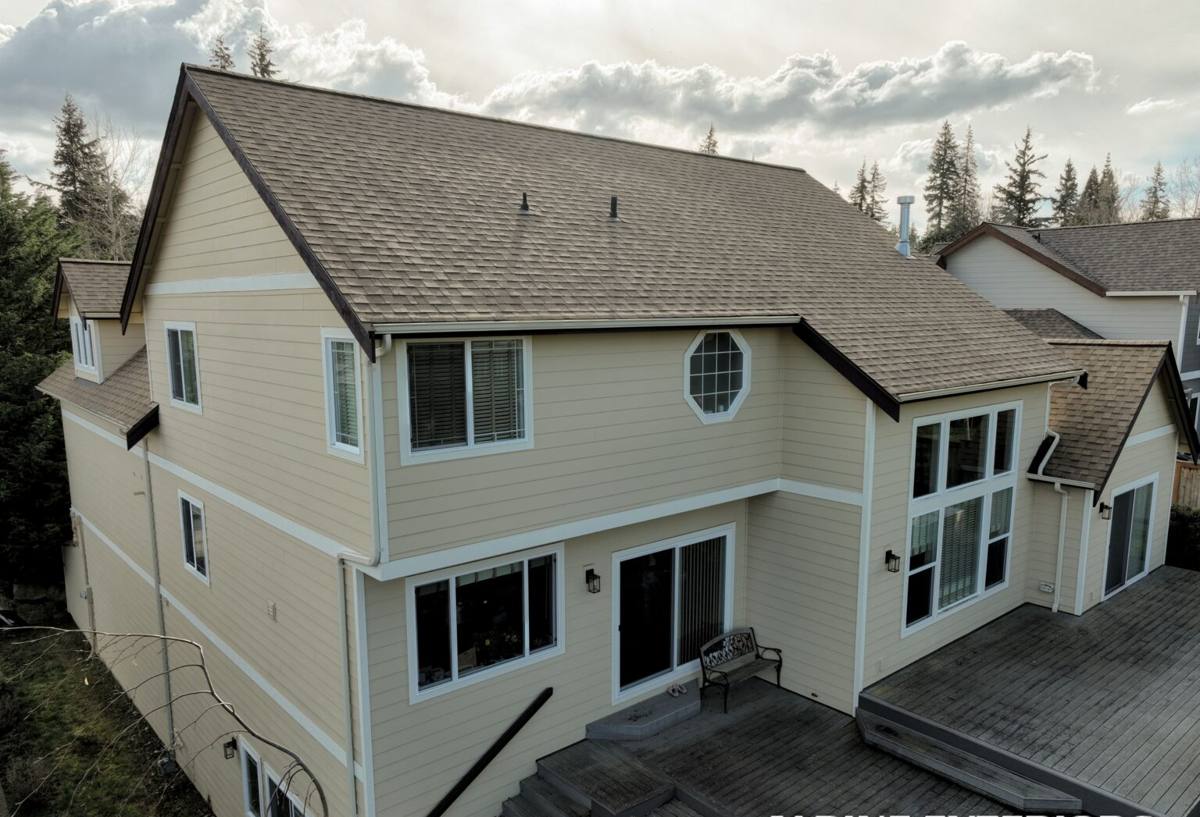
Why Whatcom County Storms Are Hard on Birchwood Roofs
Roof damage around here rarely comes from one dramatic event. It's usually the cumulative effect of a wet climate combined with a handful of harder blows each year:
- Driving rain: Storms moving in off Bellingham Bay often carry enough wind to push rain sideways under shingle tabs and around flashing, rather than letting it run straight off the roof.
- Salt air: Proximity to the water accelerates corrosion on exposed metal — nail heads, flashing, gutter hardware, and vent caps age faster here than they would further inland.
- Outflow wind events: Whatcom County occasionally sees strong east winds funnel down from the Fraser Valley. These events can arrive with little warning and hit roofs from an angle most shingles and flashing details aren't set up to shed.
- Long moss season: Shade, humidity, and mild temperatures give moss and moisture months to work into a roof's weak points every year, softening shingles and holding water against the deck long after a storm has passed.
None of these factors is dramatic on its own. Together, over a few storm seasons, they're exactly why roofs in Birchwood tend to show damage at seams, edges, and penetrations first — the places where wind-driven rain and trapped moisture do their slow work.
What This Means for Repair Work
A repair that only replaces the shingles that are visibly missing or torn, without checking the surrounding area for wind-lifted seals, saturated decking, or corroded flashing, tends to fail again within a season or two in this climate. Storm damage repair here has to treat the storm event as the trigger, not the whole story.
Signs of Storm Damage Worth a Closer Look
Not all storm damage is obvious from the ground. After any significant wind or rain event, it's worth checking for the following:
- Shingles that look lifted, curled, or creased, even if none are missing outright
- Granules collecting in gutters or at downspout outlets
- Bent, lifted, or missing flashing around chimneys, skylights, and vent pipes
- Water stains on interior ceilings or in the attic, especially near exterior walls
- Debris, especially branches, still resting on the roof after a storm
- Soft or spongy spots when the roof is walked, which usually point to saturated decking underneath
- Moss buildup at shingle edges that's begun lifting tabs rather than just discoloring the surface
Any one of these on its own may not be urgent. Several together, especially after a named storm or a stretch of high wind, are a good reason to get a roof looked at before the next rain finds the gap.
What a Correct Storm Damage Repair Involves
Inspection Before Anything Gets Touched
We start on the roof, not just from a ladder or binoculars, because storm damage in this climate is often more extensive than it looks from below. That means checking the decking under damaged shingles, not just the shingles themselves, and tracing water stains back to their actual entry point — which is frequently several feet from where the stain shows up inside.
Matching Materials, Not Just Covering Holes
Shingles fade and wear over time, so a repair patch in the wrong shade stands out for years. We match existing shingle lines as closely as the manufacturer allows, and where an exact match isn't possible, we place repairs in less visible roof planes when the layout allows it.
Flashing Gets the Same Attention as Shingles
Given how much salt air and wind-driven rain this area sees, flashing failure is at least as common a culprit as shingle damage. A repair that replaces shingles but leaves the same compromised flashing underneath is a repair that hasn't actually solved the problem.
Decking Repair When It's Called For
If storm-driven water has been sitting against the deck for any length of time, the plywood or OSB underneath can soften. Shingling over soft decking doesn't hold, so any section that doesn't pass a firm-footing check gets replaced before new roofing goes down.
Our Storm Damage Repair Process
- Initial contact and, if needed, temporary protection. If a storm has left an active leak or exposed decking, we prioritize a tarp or temporary seal to stop further water intrusion while a full repair is scheduled.
- On-roof inspection and documentation. We assess the full extent of damage, not just the obvious spots, and document what we find — useful both for your own records and for an insurance claim if you're filing one.
- Written scope and honest recommendation. You get a clear explanation of what needs repair, what's optional, and — if damage is extensive enough that patchwork repair isn't the better value — an honest recommendation on repair versus replacement.
- The repair itself. Matched materials, proper flashing detail, and any decking replacement the inspection turned up.
- Final walk-through and cleanup. We check the completed work, clear debris and old materials, and make sure gutters and downspouts are clear so the next rain runs off the way it's supposed to.
Repair or Replacement: How We Help You Decide
Storm damage doesn't always mean a full new roof, but sometimes a storm is the event that reveals a roof was already near the end of its useful life. We walk through the honest trade-offs rather than defaulting to the bigger job:
| Factor | Favors Repair | Favors Replacement |
|---|---|---|
| Extent of damage | Isolated to one or two areas | Spread across multiple roof planes |
| Roof age | Well within expected service life | Already near or past typical lifespan |
| Decking condition | Firm, dry, no rot found | Widespread soft spots or rot |
| Shingle match availability | Close match still available | Discontinued or badly mismatched |
| Moss and moisture history | Isolated, addressable with cleaning | Chronic, has already compromised multiple areas |
We'll tell you plainly which side of that table your roof falls on, and why, rather than steering you toward the larger project by default.
Storm Damage and Insurance Claims
Many storm damage repairs in this area involve a homeowner's insurance claim. We can't manage your claim for you, but we can provide clear documentation — photos, a written scope, and a straightforward description of cause and extent of damage — that makes it easier for your adjuster to understand what happened and what it will take to fix it correctly. Being upfront about what's storm-related damage versus what's pre-existing wear is part of doing this honestly, for you and for the claims process.
Why Hiring a Crew That Already Works Birchwood Matters
A roof repair crew that regularly works this part of Bellingham already has a feel for which roof details in the area tend to fail first, how local moss and moisture patterns behave through the seasons, and which flashing and shingle combinations hold up against salt air and driving rain versus which ones need extra attention. That familiarity translates into faster, more accurate inspections and repairs that are built for the conditions your roof actually faces, not a generic checklist.
It also means a shorter response time when storm damage needs a quick temporary fix before a full repair can be scheduled — something that matters more in a wet climate where an open gap can turn into interior damage within a single hard rain.
After the Repair: Keeping Storm Damage From Coming Back
A few simple habits go a long way toward protecting a fresh repair in this climate:
- Keep gutters and downspouts clear so wind-driven rain has somewhere to go
- Trim back branches that overhang the roof, both to reduce debris impact and to cut down shade that feeds moss
- Have the roof checked after any major wind event, even if nothing looks obviously wrong from the ground
- Address moss buildup before it lifts shingle tabs, rather than after
If a recent storm has left your Birchwood roof with missing shingles, active leaks, or damage you're not sure how to assess, we're happy to take a look and give you a straight answer. Reach out for a free, no-pressure estimate using the form below.