 Bellingham Siding
 South Hill's Siding Works Harder Than Most
South Hill sits up above downtown Bellingham, close enough to Bellingham Bay to catch salt-laden air off the water, and high enough to take the full force of wind-driven rain rolling in off the Salish Sea. Add in the mature tree canopy that gives the neighborhood its character, and you get a microclimate that's tougher on exterior siding than a lot of homeowners realize. Shade from that tree cover keeps siding damp longer after every storm, which stretches Whatcom County's already-long moss season out even further.
None of that is a reason to panic about your siding. It's a reason to be deliberate about what goes on the wall and how it's installed. A product that shrugs off salt air and constant moisture, put on correctly by people who understand this specific hillside, will outlast a product or installation that ignores those conditions by decades.
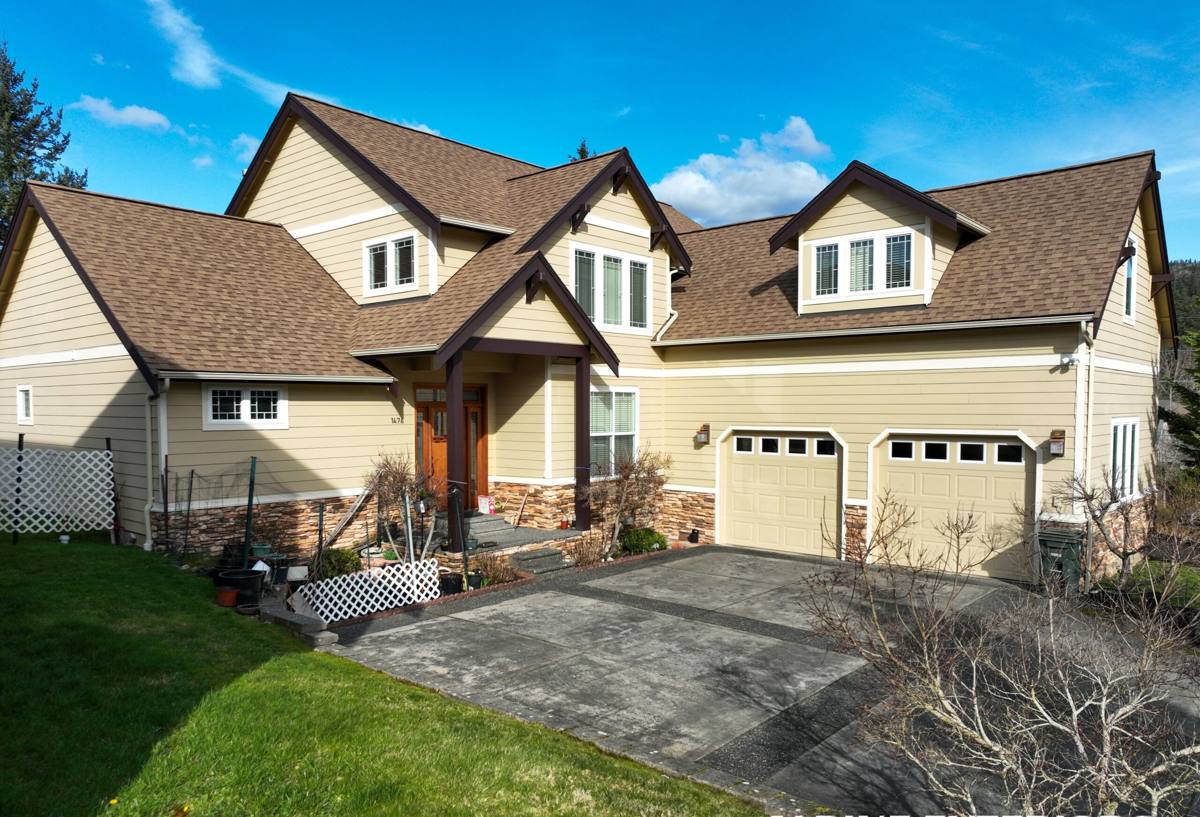
Why Older Siding on South Hill Fails the Way It Does
We see a consistent pattern on South Hill homes: siding failure that starts low, on the north and shaded sides of the house, and works its way up. That's the moss and driving-rain combination at work. Moss holds moisture against the surface, breaks down caulk and paint film, and creates a constant damp layer that wood-based products and poorly flashed seams can't tolerate for long.
What we typically find during an inspection
- Soft or delaminating siding near ground level and under eaves that don't fully shed water
- Moss and algae staining concentrated on shaded, tree-covered elevations
- Caulk failure and gapping at butt joints, letting wind-driven rain track behind the siding
- Paint that's chalking or peeling years ahead of schedule because the substrate underneath stayed wet
- Soft trim boards and window casings where water has been wicking in around poorly flashed openings
Any one of these on its own might be a repair. Several of them together, especially on a home more than 15-20 years old, usually means the siding system itself has reached the end of its useful life and repair is just delaying the real fix.
What a Correct Siding Replacement Actually Involves
Siding replacement is more than pulling off old boards and nailing up new ones. On a South Hill home, where the wall assembly is going to spend years dealing with damp shade and salt air, the details underneath the siding matter as much as the siding itself.
The parts that don't show but decide how long it lasts
- Sheathing inspection and repair — once the old siding is off, we check the wall sheathing for rot or soft spots and replace anything compromised before covering it back up
- A continuous weather-resistive barrier — properly lapped and sealed so any moisture that gets past the siding has a way to drain back out instead of sitting against the wall
- Correct flashing at every penetration — windows, doors, hose bibs, vents, and any other wall penetration get flashed to shed water down and out, not into the wall cavity
- Proper fastening and gapping — fiber cement siding needs specific fastener placement and expansion gaps at butt joints; skipping this is one of the most common causes of premature failure we see
- Rainscreen or drainage gap where the wall assembly calls for it — giving the wall a way to dry out is especially important on shaded, tree-covered lots
Skip any of these steps and it doesn't matter how good the siding product is — you'll be dealing with moisture problems again within a few years.
Why We Only Install James Hardie Fiber Cement
We install one siding product on Bellingham homes: James Hardie fiber cement. We don't install vinyl, LP SmartSide, cedar, primed spruce, or other fiber cement brands, and that's a deliberate standard, not a sales preference.
Fiber cement is non-combustible and dimensionally stable, meaning it doesn't expand and contract with moisture the way wood-based products do — a real advantage in a neighborhood that stays damp under tree cover for long stretches of the year. James Hardie's ColorPlus factory finish is baked on and warranted separately from field-applied paint, which matters a great deal when a home sits in salt air that's hard on ordinary paint jobs. Hardie also engineers specific product lines (HZ5, HZ10) for different climate zones, and their installation requirements are specific and well-documented, which gives us a clear standard to build to rather than guesswork.
Other products have real strengths — vinyl is inexpensive, cedar has genuine character, LP SmartSide is lighter to install. We're not telling homeowners those products don't work anywhere. We're telling South Hill homeowners, specifically, why we've standardized on the one product we've found holds up best against this particular combination of salt air, driving rain, and shade.
Choosing the Right Hardie Product for a South Hill Home
South Hill has a real mix of housing stock — older character homes near the hill's historic core alongside newer construction further out. The right Hardie product depends on the look you're going for and what's already on the house.
| Product | Best Fit | Why It Works Here |
|---|---|---|
| HardiePlank lap siding | Most South Hill homes, traditional and updated styles | Clean horizontal lines, wide range of ColorPlus colors, proven long-term performer in wet coastal climates |
| HardieShingle | Older or character-driven homes wanting a shingle-style look | Gives the look of cedar shingle siding without the moisture maintenance burden |
| HardiePanel with battens | Homes with modern or craftsman accents | Clean vertical detailing for gables, dormers, and accent walls |
| HardieTrim | Paired with any of the above | Matches the siding's moisture resistance at corners, window trim, and fascia — the spots that fail first on old wood trim |
Most South Hill projects end up using HardiePlank for the field of the house with HardieTrim throughout, sometimes with a shingle or panel accent on a gable or entry feature. We'll walk through the options specific to your home's style during the estimate.
Our Process for a South Hill Siding Replacement
- On-site inspection — we look at the existing siding, trim, and any water damage, and check the wall assembly wherever we can access it
- Written estimate — scope of work, product selection, color, and a clear price, no vague allowances
- Tear-off — old siding and damaged trim removed, sheathing exposed and inspected
- Repair — any soft or rotted sheathing and framing replaced before anything goes back on the wall
- Weather barrier and flashing — installed to manufacturer spec at every seam and penetration
- Hardie installation — siding, trim, and accents installed to James Hardie's fastening and gapping requirements
- Final walkthrough — we review the finished work with you before calling the job done
We also plan around South Hill's tighter lots and mature trees — staging materials and equipment takes more thought on a hillside street than it does on a flat, open lot, and we account for that in scheduling rather than treating every job the same.
Cost Factors for South Hill Siding Replacement
Every home is different, but the same handful of factors drive most of the cost variation we see on South Hill projects.
| Factor | Why It Matters |
|---|---|
| Extent of hidden damage | Rotted sheathing or framing found during tear-off adds repair work that can't be accurately quoted until the old siding is off |
| Home size and wall complexity | Dormers, bump-outs, and multiple gables take more time and material than a simple rectangular footprint |
| Product and accent selection | Mixing HardiePlank with HardieShingle accents or upgraded trim profiles costs more than a single straightforward product |
| Access and site conditions | Steep or tree-covered lots can slow staging and require more careful equipment placement |
| Existing trim and window flashing condition | Trim and flashing replacement around openings adds labor beyond the field siding itself |
We'll give you a firm number after seeing the house in person — broad ballpark figures without an inspection tend to be wrong in one direction or the other, and we'd rather be accurate than fast.
Why Hire a Crew That Already Works South Hill
Every Bellingham neighborhood has its own quirks, and South Hill is no exception. A crew that's already worked the hill knows what to expect from the tree canopy, the older housing stock mixed in with newer builds, and the exposure that comes with elevation above the bay. That familiarity shows up in small but real ways: knowing to check under overgrown foliage for moss buildup that's been hidden from view, planning access on narrower streets without disrupting a job, and not being surprised by what's usually found once old siding comes off a home of a certain age in this part of Whatcom County.
It also means we're not learning on your house. We show up with a clear sense of what South Hill's climate does to a wall assembly over time, and we build the replacement to hold up against exactly that.
What to Check Before You Hire
- Are they licensed and insured to do siding work in Washington State?
- Will they inspect and repair sheathing damage, or just cover over whatever is there?
- Do they install to the manufacturer's documented fastening and flashing specifications?
- Is the estimate written and specific, or a vague verbal number?
- Do they have experience with the specific product they're recommending — not just siding in general?
- Will the same crew that quotes the job be the one doing the work?
If your South Hill home's siding is showing moss staining, soft spots, or paint that won't hold anymore, we're happy to take a look and give you a straight answer about whether it's a repair or a replacement. Reach out for a free, no-pressure estimate using the form below.