 Bellingham Siding
 Why Ferndale's Climate Is Hard on Siding
Ferndale sits close enough to Bellingham Bay and the Strait of Georgia that homes here deal with a version of coastal weather many inland Whatcom County properties don't see as intensely. Salt-laden air moves in off the water, driving rain comes in sideways during winter storms, and the combination of marine humidity and tree cover keeps north- and west-facing walls damp for long stretches of the year. That dampness is what drives Ferndale's long moss season — moss and algae don't just grow on roofs here, they colonize siding, especially in shaded side yards and under eaves where sunlight rarely reaches.
None of that is exotic weather. It's steady, unglamorous exposure that adds up year after year. Siding that isn't built and installed for it doesn't fail dramatically — it fails slowly, through swelling, soft spots, streaking, and finish breakdown that homeowners often don't notice until a wall section is already compromised underneath.
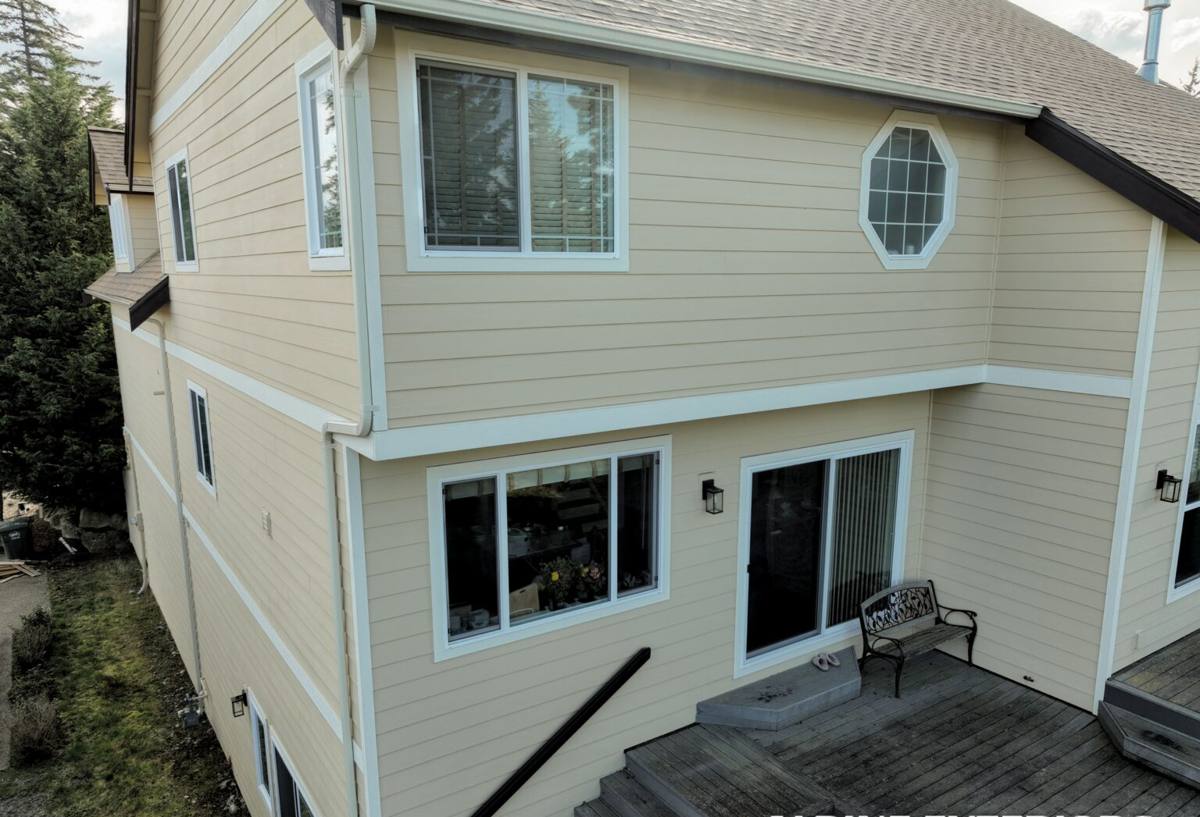
How Salt Air, Rain, and Moss Actually Damage Siding
Salt Air
Airborne salt accelerates corrosion on fasteners, flashing, and trim hardware, and it can degrade certain paint and coating systems faster than manufacturers' standard test conditions assume. Products rated for generic climates don't always account for a marine-influenced air quality profile like Ferndale's.
Driving Rain
Wind-driven rain doesn't just hit a wall — it pushes moisture into every gap, lap joint, and fastener penetration it can find. Siding systems depend on correct lap coverage, flashing, and a functioning drainage plane behind the cladding to manage that water. When any of those details are wrong, water gets behind the siding instead of running off it.
Moss and Sustained Moisture
Moss holds moisture directly against the siding surface for extended periods. On wood-based products, that constant dampness is exactly the condition that leads to rot, swelling, and delamination. On any siding, trapped moisture behind a moss mat also keeps the wall assembly wetter for longer after each rain event, slowing the drying cycle the whole system depends on.
Signs a Ferndale Home Needs Siding Replacement
Because damage in this climate tends to be gradual, it helps to know what to look for before a small problem becomes a structural one.
- Soft or spongy spots when you press on the siding, especially near the bottom courses and around windows
- Persistent moss or algae growth that returns quickly after cleaning
- Paint that's peeling, bubbling, or chalking faster than expected, particularly on shaded or north-facing walls
- Visible warping, buckling, or cupping of individual boards or panels
- Gaps opening up at seams, corners, or trim joints
- Rusty streaking around fasteners or flashing
- A musty smell or signs of moisture inside near exterior walls
- Siding that's more than 20–25 years old and hasn't been reassessed recently
Any one of these on its own might be minor. Several together, especially on the weather-facing sides of the house, usually mean the siding is no longer doing its job as a water management system.
What a Correct Siding Replacement Job Involves
Replacing siding is not just swapping old boards for new ones. In a climate like Ferndale's, the details behind the siding matter as much as the siding itself.
Tear-Off and Sheathing Check
Full removal of the old siding lets us actually see the wall — sheathing condition, existing water damage, and any rot that's been hidden for years. Skipping this step and installing over old siding is how new siding ends up covering an already-compromised wall.
Weather-Resistive Barrier and Flashing
A correctly lapped weather-resistive barrier, proper window and door flashing, and flashing at every horizontal transition (roof lines, decks, trim) are what actually keep driving rain out of the wall assembly. The siding itself is the second line of defense, not the only one.
Fastening and Clearances
Manufacturer-specified fastener type, spacing, and penetration depth matter for wind and water performance — and for warranty coverage. Correct ground clearance and gaps at trim keep splash-back and standing moisture away from the siding's bottom edge, which is where most rot starts.
Trim, Caulking, and Finish Details
Caulking is a supplement to good flashing, not a substitute for it. We seal the joints that are supposed to be sealed and leave drainage paths open where the system is designed to shed water, rather than caulking everything shut and trapping moisture inside the wall.
Why We Install Only James Hardie Fiber Cement
We don't install vinyl, LP SmartSide, primed spruce, cedar, or other fiber cement brands. That's a deliberate standard, not a limitation in what we're capable of installing.
James Hardie fiber cement is non-combustible, holds a factory-applied ColorPlus finish that's formulated to resist fading and doesn't rely on field-applied paint for its primary weather protection, and is engineered in climate-specific HZ product lines — the version installed in the Pacific Northwest is formulated for our wet, moderate-temperature conditions rather than a generic national spec. It also carries a strong transferable warranty when installed to Hardie's requirements, which matters to a future buyer as much as to you.
That doesn't mean every other product on the market is a bad product. Vinyl is inexpensive and low-maintenance in mild climates but can warp under heat and doesn't offer the impact or fire resistance of fiber cement. Wood and engineered-wood products like LP SmartSide have real advantages in appearance and workability, but they depend heavily on consistent maintenance and correct field sealing to perform well in a wet marine climate — exactly the condition Ferndale sits in most of the year. Cedar is a beautiful, traditional Pacific Northwest material, but it requires ongoing refinishing and is more vulnerable to the sustained moisture and moss exposure this area produces. We made the call to standardize on one product system so that every job we do gets our full attention to installing it correctly, rather than splitting expertise across several.
Comparing Siding Options for a Ferndale Home
| Factor | James Hardie Fiber Cement | Vinyl | Wood / Engineered Wood |
|---|---|---|---|
| Moisture resistance | High — fiber cement doesn't rot or swell | Good, but can trap moisture behind panels if installed poorly | Depends on maintenance and sealing |
| Moss/algae resistance | Good; factory finish resists staining better than field paint | Moderate; can stain and is hard to fully clean | Lower; moisture retention encourages growth |
| Salt air performance | Strong; non-combustible material, durable factory coating | Can become brittle over time in coastal exposure | Requires more frequent refinishing near salt air |
| Maintenance | Occasional wash and repaint of trim, per Hardie schedule | Low, but limited repair options if damaged | Regular refinishing/sealing needed |
| Fire resistance | Non-combustible | Combustible | Combustible |
| Typical lifespan | 30+ years with correct installation | 20–40 years, varies by product grade | 15–30 years depending on maintenance |
Our Siding Replacement Process
Inspection and Estimate
We start by walking the exterior with you, checking for the moisture, moss, and wear patterns typical of Ferndale properties, and identifying anything that suggests hidden sheathing damage before we quote the job.
Tear-Off and Wall Prep
Old siding comes off, the sheathing gets inspected and repaired where needed, and the weather-resistive barrier and flashing get installed correctly around every window, door, and penetration.
Hardie Installation to Spec
Siding goes on following James Hardie's fastening, clearance, and finishing requirements — not shortcuts that might look fine on install day but show up as problems in year three or four.
Final Walkthrough
We go over the finished job with you, confirm trim and caulking details, and make sure you understand the maintenance schedule that keeps your warranty valid.
Cost Factors for Ferndale Siding Replacement
Every home is different, but a few factors consistently drive cost on Ferndale projects specifically:
- How much hidden sheathing repair is needed once old siding comes off
- The complexity of the home's shape — corners, dormers, and multiple roof lines all add labor
- Trim and finish level, including the number of window and door openings to flash and detail
- Siding profile choice (lap width, panel vs. lap, shingle-style accents)
- Access — tree cover, fencing, and slope can affect setup and staging time
We'd rather give you a real number after seeing the house than a broad estimate that doesn't hold up once tear-off starts.
Why a Crew That Already Works in Ferndale Matters
Whatcom County's coastal microclimates aren't uniform — a wall that stays damp and mossy in Ferndale's marine air doesn't always behave the same as a similar wall further inland in Bellingham. A crew that regularly works this specific area has already seen how local moisture, moss, and salt exposure play out over time on real homes, not just in a manufacturer's general climate guidance. That familiarity shows up in the small decisions — where extra flashing attention matters, which wall orientations need the most care — that a generic installation approach can miss.
If your siding is showing wear, or you'd just like an honest read on whether it's a repair situation or a full replacement, we're happy to take a look. Request a free, no-pressure estimate using the form below.