 Bellingham Siding
 Fairhaven's Climate Is Harder on Siding Than Most Homeowners Realize
Fairhaven sits close enough to the water that homes here deal with a different set of stresses than siding a few miles inland in Bellingham has to handle. Salt-laden air off Bellingham Bay accelerates corrosion on fasteners and metal trim, driving rain off the Strait pushes moisture sideways into wall assemblies rather than just down, and the long, gray moss season that Whatcom County is known for keeps north-facing walls damp for weeks at a stretch. None of this is exotic — it's just the normal cost of living somewhere this beautiful. But it means siding installation in Fairhaven has to be treated as a system, not a cosmetic upgrade.
A lot of siding failures we get called out to inspect weren't caused by bad material. They were caused by installation choices that didn't account for how much water this area actually sees and how persistently it sits against exterior walls. Getting it right the first time matters more here than it does in a drier climate.
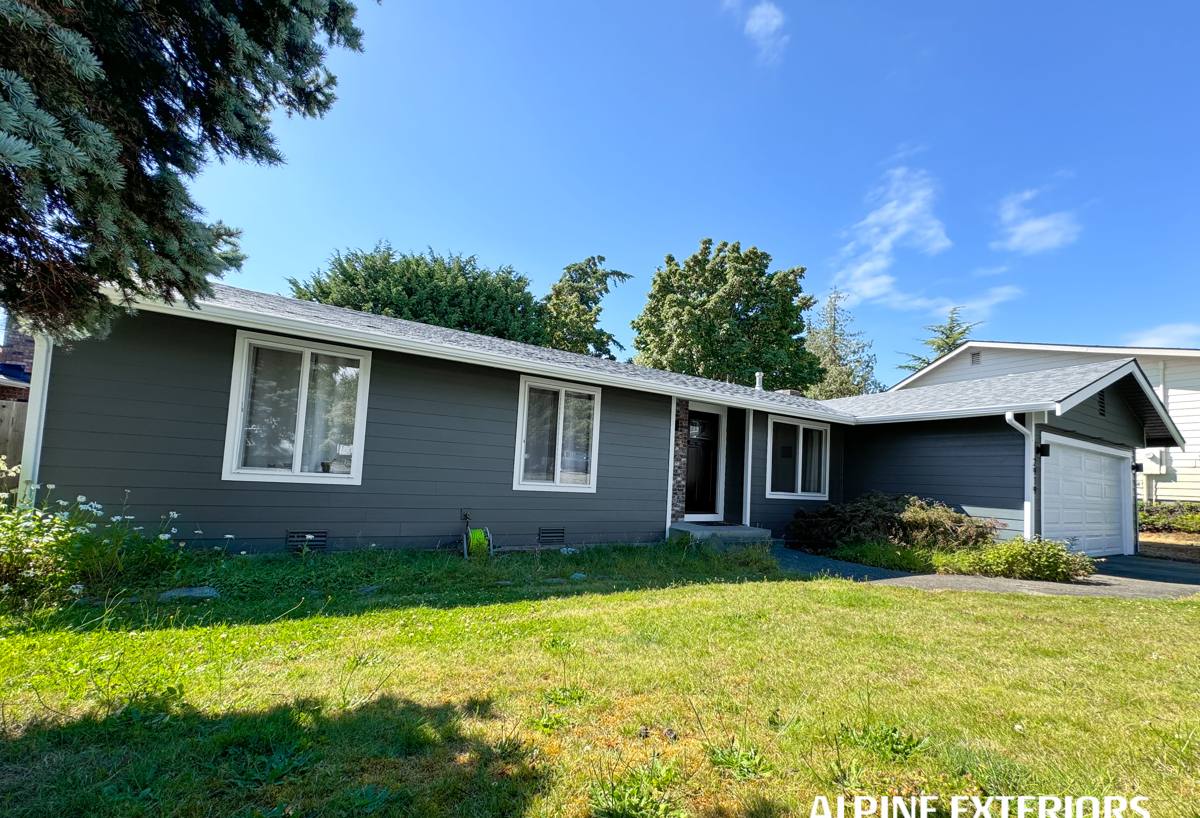
What Fairhaven Homes Actually Need From Their Siding
Moisture Management Comes First
Before color or style, the real question is how water gets managed once it hits the wall. That means a properly detailed weather-resistive barrier, correctly lapped flashing at every window and door, and a rainscreen gap where the siding profile and wall condition call for one. Fairhaven's driving rain patterns mean water doesn't just run down a wall — it gets pushed and pooled at horizontal transitions, so those details can't be an afterthought.
Resistance to Moss, Mildew, and Organic Growth
Shaded, north- and west-facing walls near mature trees hold moisture longer, and that's exactly the environment moss and mildew need. Siding material that absorbs water swells, softens, and gives organic growth something to hold onto. Material that doesn't absorb water starves it out.
Corrosion-Resistant Hardware
Salt air isn't just a coastal cliché — it measurably shortens the life of standard fasteners and trim on homes within a few miles of the water. Every component in a Fairhaven siding job, down to the nails, needs to be selected with that in mind.
Why We Install Only James Hardie Fiber Cement Siding
We standardized on James Hardie across every job we take, including here in Fairhaven, and we don't install vinyl, LP SmartSide, Cemplank, Allura, primed spruce, or cedar. That's not a marketing position — it's a decision built around what actually holds up in this climate over decades, not just years.
Fiber cement is dimensionally stable and doesn't absorb water the way wood-based or engineered-wood siding can, which matters directly for moss resistance in a place with as much shaded moisture as Fairhaven gets. It's non-combustible, which is a real advantage during Whatcom County's dry summer wildfire-smoke stretches even though this isn't a high-fire-risk area in the way eastern Washington is. And James Hardie's ColorPlus factory finish is baked on and warrantied against fading in a way field-applied paint jobs on other materials generally aren't, which matters on a home that gets direct afternoon sun off the water.
To be fair to the alternatives: vinyl is inexpensive and low-maintenance in mild conditions, and cedar has a natural look a lot of homeowners genuinely love. We're not claiming those products are junk. We simply won't put our name on an installation where we know the maintenance burden, moisture sensitivity, or long-term appearance is going to disappoint a Fairhaven homeowner five or ten years down the road. James Hardie's HZ product lines are engineered specifically for high-moisture, marine-influenced climates like this one, and that's the standard we hold every job to.
What a Correct Siding Installation Involves
The material is only part of the equation. Installation quality determines whether that material performs for 30-50 years or fails early. A correct James Hardie installation in Fairhaven includes:
- Full removal of old siding and inspection of the sheathing underneath for rot, soft spots, or prior water damage
- Repair or replacement of any compromised sheathing before new material goes up
- A continuous, properly lapped weather-resistive barrier
- Correct flashing at every window, door, and roofline transition
- A rainscreen gap where wall assembly and exposure call for one, to let incidental moisture drain and dry
- Fastening per James Hardie's published specifications — not generic nailing patterns
- Corrosion-resistant fasteners and trim appropriate for near-coastal exposure
- Proper clearance between siding and grade, decks, and roof lines to prevent wicking
Skipping any one of these doesn't necessarily show up right away. It shows up in year three or four as a soft spot, a moss line, or a stain that won't scrub off — usually right around the time it's expensive to fix.
Our Installation Process
1. On-Site Assessment
We walk the exterior, check the condition of the existing siding and sheathing where accessible, and look specifically at drainage, shading, and exposure — the factors that matter most for a home in Fairhaven's microclimate.
2. Scope and Estimate
We put together a written scope covering material, trim, flashing details, and any sheathing repair we anticipate, so there are no surprises once the walls are open.
3. Tear-Off and Inspection
Old siding comes off in sections so we can actually see the sheathing condition before covering it back up, rather than guessing.
4. Weather Barrier and Flashing
This is the step that determines how the house performs in a rainstorm ten years from now. We don't rush it.
5. James Hardie Installation
Panels, lap siding, or shingle-style product goes up per manufacturer specification, with attention to fastening, gapping, and caulking at the points James Hardie's own installation guide flags as critical.
6. Final Walkthrough
We review the finished job with the homeowner and point out anything they should know for long-term care.
Signs a Fairhaven Home May Need New Siding
- Persistent moss or dark streaking on north- or west-facing walls that returns after cleaning
- Soft, spongy sections when pressed, especially near the bottom courses or under windows
- Paint that's peeling or bubbling rather than just fading evenly
- Visible gaps, warping, or cupping in individual boards
- Rust staining running down from nail heads or trim
- A musty smell in an adjacent interior wall or closet
- Siding that's original to a home built more than 25-30 years ago
Any one of these on its own isn't necessarily an emergency, but a couple together usually mean it's worth having someone look at what's happening behind the siding, not just on top of it.
What Affects the Cost of a Siding Installation
| Factor | Why It Matters |
|---|---|
| Home size and wall complexity | More corners, dormers, and trim details mean more cutting, flashing, and labor time |
| Sheathing condition | Rot or water damage found during tear-off adds repair scope before new siding can go up |
| Siding profile chosen | Lap, panel, and shingle-style James Hardie products differ in material and install labor |
| Trim and accessory scope | Corner boards, window trim, and fascia work are often bundled with a siding job |
| Access and site conditions | Slopes, tight setbacks, and landscaping near the foundation affect staging and labor |
| Existing moisture damage | Homes with a history of moss or leaks may need extra flashing or drainage detailing |
We give a written, itemized estimate after the on-site assessment rather than a ballpark figure over the phone, because on older Fairhaven homes especially, what we find once the old siding comes off can change the scope more than a size-based rule of thumb ever could.
Why Local Experience in Fairhaven Matters
A crew that's worked houses in Fairhaven and elsewhere around Bellingham already knows which walls typically hold moisture, which exposures need extra flashing attention, and how Whatcom County's building department wants details handled. That's not something you can fully substitute with a generic install crew that mainly works drier inland climates. Local experience shows up in the small decisions — where to add a rainscreen gap, how much clearance to leave at grade, which corners to detail more carefully — that don't show up on a proposal but do show up in how the house performs a decade later.
It also matters for accountability. A company that's based in this area and plans to keep working here has every reason to get the details right the first time, because a callback isn't a one-time inconvenience — it's a reputation issue in a community where word travels.
Maintenance After Installation
James Hardie siding is genuinely low-maintenance compared to wood-based products, but "low-maintenance" isn't "no-maintenance," especially in this climate. A rinse-down once or twice a year keeps salt residue and organic buildup from accumulating, particularly on shaded walls prone to moss. Caulking at trim joints should be checked periodically, since caulk fails well before the siding itself does. Keeping gutters clear and downspouts directed away from the foundation protects the bottom courses, which see the most consistent moisture exposure on any home near the water.
If you're weighing a siding installation for a home in Fairhaven, we're glad to come take a look and give you a straightforward, no-pressure estimate — no upsell script, just an honest read on what your home actually needs.