 Bellingham Siding
 Roofing in Sehome: A Neighborhood With Its Own Weather Habits
Sehome sits on rising ground near Western Washington University, wrapped in mature trees and close enough to Bellingham Bay to catch the salt-laden air that rolls in off the water. That combination — tree cover, elevation changes, and marine exposure — creates roofing conditions that are a little different from what you'd deal with further inland in Whatcom County. Shaded slopes hold moisture longer. Overhanging branches drop needles and leaf litter into valleys and behind chimneys. And the salt air, while subtle, slowly works on exposed metal fasteners and flashing over the years.
None of this means Sehome homes need exotic roofing solutions. It means the install has to account for how water and moss actually behave on this kind of lot, not just follow a generic spec sheet. A roof that would hold up fine on an open, sun-exposed property in a drier part of the state can fail early here if the underlayment, ventilation, and moss-resistance details aren't right from day one.
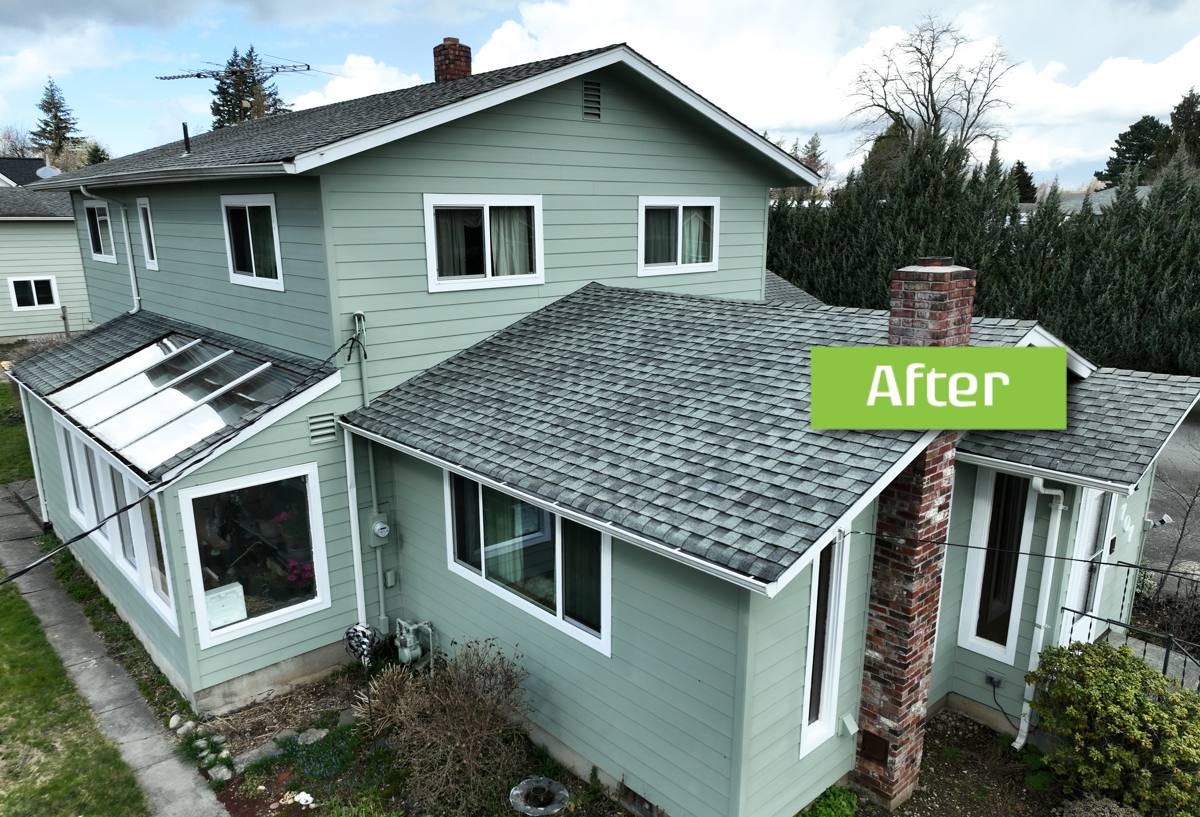
Why Asphalt Shingles Still Make Sense Here
Asphalt shingles remain the most practical roofing choice for the vast majority of homes in Sehome and the surrounding Bellingham area, and for good reason. They're proven in wet marine climates, they're the most cost-effective option for full tear-off and replacement, and modern architectural shingles hold up well against wind and driving rain when installed correctly. They're also the easiest roofing product to source, repair, and match later if a section ever gets damaged.
The trade-off is that asphalt shingles are only as good as the moisture-management system underneath them. In a climate with a long wet season and heavy moss pressure, the underlayment, ice-and-water membrane placement, and attic ventilation matter as much as the shingle brand on top. We treat those layers as the actual roofing system — the shingles are the visible finish coat, not the whole story.
Where Asphalt Isn't the Right Call
There are situations — very low-slope sections, roofs with a history of ice damming, or homes where an owner wants a 50-year material — where we'll say so plainly and talk through metal or other alternatives instead of pushing asphalt just because it's what we install most often. An honest recommendation matters more to us than moving one product line.
What a Correct Asphalt Shingle Roof Actually Involves
A lot of roofing problems in this region trace back to shortcuts taken during a previous install, not the shingle itself. Here's what we consider non-negotiable on every asphalt shingle job:
1. Full Tear-Off and Deck Inspection
We don't install a second layer over old shingles. A full tear-off lets us see the actual roof deck — sheathing that's soft, delaminated, or stained from a slow leak gets replaced before anything new goes down. Skipping this step is the single most common reason a "new roof" fails within a few years.
2. Ice-and-Water Shield at the Vulnerable Points
Eaves, valleys, and any low-slope transitions get a self-adhering waterproof membrane underneath the shingles, not just standard felt. In a climate where wind-driven rain can push water uphill under shingles, this membrane is what actually keeps water out of the deck at the points where it's most likely to get in.
3. Synthetic Underlayment Across the Field
The rest of the roof gets a synthetic underlayment rather than old-style felt paper, which tears and wrinkles when it sits exposed on a wet job site — a real concern given how often work here gets interrupted by rain.
4. Balanced Attic Ventilation
Intake at the eaves and exhaust at the ridge, sized to actually move air through the attic. Poor ventilation traps moisture from inside the house against the underside of the roof deck, which shortens shingle life from below regardless of how good the top layer is. This is one of the most overlooked factors in shaded, tree-covered lots like much of Sehome.
5. Metal Flashing, Not Caulk
Chimneys, sidewalls, skylights, and roof-to-wall transitions get properly bent and step-flashed metal. Caulk and roofing cement are a temporary patch, not a flashing detail, and they fail well before the shingles around them do.
6. Correct Nailing and Exposure
Manufacturer-specified nail placement and shingle exposure, in the nailing zone the shingle is designed for — not high-nailed to save time. High-nailing is invisible from the ground and is one of the most common causes of shingles blowing off in a wind event years later.
Moss, Moisture, and the Long Wet Season
Whatcom County's moss season runs long — realistically much of the year on shaded, north-facing, or tree-covered roof sections — and Sehome's tree canopy makes this more relevant than in more open parts of Bellingham. Moss isn't just cosmetic. It holds moisture against the shingle surface, lifts shingle edges as it grows, and accelerates granule loss over time.
We address this two ways. First, at install, with algae-resistant shingles (most quality architectural lines now include copper or zinc granules built in for this purpose) and, where the roof design allows it, zinc or copper strips at the ridge that slowly inhibit moss growth as rain washes over them. Second, with maintenance: gentle, low-pressure moss removal and gutter clearing on a schedule that matches how fast growth actually happens on a given roof, not a generic annual visit that misses a bad season.
What We Recommend Homeowners Watch For
- Moss buildup concentrated on north-facing or heavily shaded slopes
- Granules collecting in gutters or at downspout outlets after storms
- Dark streaking on shingles, which is usually algae rather than dirt
- Standing debris in valleys from overhanging trees
- Any soft spots or sagging felt underfoot on the roof deck
- Daylight visible through the roof deck from inside the attic
Choosing the Right Shingle for a Sehome Roof
Most homeowners are choosing between a handful of tiers. Here's how we walk clients through the decision:
| Shingle Type | Typical Lifespan | Best Fit For |
|---|---|---|
| 3-tab asphalt | 15–20 years | Budget-driven projects, simple roof lines, rental properties |
| Architectural (laminate) asphalt | 25–30+ years | Most Sehome homes — better wind resistance, dimensional look, algae-resistant granule options |
| Impact-resistant architectural | 25–30+ years | Homes with significant tree exposure or a history of storm damage from falling branches |
| Premium/designer laminate | 30–50 years | Homes where roofline is a major visual feature, or owners planning to stay long-term |
For a typical Sehome property with tree cover and a mix of sun and shade across the roof, we most often recommend a mid-to-upper architectural shingle with built-in algae resistance. It's the tier where cost, durability, and moss resistance line up best for this specific climate, though every roof and budget is different and we'll lay out the real trade-offs rather than steer you toward the most expensive option by default.
Our Process, Start to Finish
- Roof assessment — We walk the roof (not just look from the ground), check the attic for ventilation and moisture signs, and photograph anything that affects the scope.
- Written estimate — A clear breakdown of materials, tear-off scope, deck repair allowance, and underlayment/flashing details — no vague "roofing package" line items.
- Material selection — We go over shingle tiers and colors together, factoring in your home's sun/shade exposure and how much moss pressure that section of roof actually sees.
- Scheduling around weather — We plan tear-off days with the forecast in mind and use dry-in materials so an exposed deck is never left unprotected overnight.
- Tear-off and deck repair — Old roofing removed, deck inspected, any damaged sheathing replaced and documented.
- Underlayment, flashing, and ventilation install — The parts that matter most for long-term performance, done before a single shingle goes down.
- Shingle installation — Correct exposure, nailing pattern, and detail work at valleys, penetrations, and edges.
- Cleanup and magnetic nail sweep — Full site cleanup, including gutters and landscaping, before we consider the job done.
- Final walkthrough — We go over the finished roof with you and answer any questions before wrapping up.
Signs a Sehome Roof Needs Attention Now
- Shingles that are curling, cupping, or losing granules faster on one slope than the rest of the roof
- Heavy moss growth that's been scraped off before but keeps returning within a season
- Any visible sagging along the roofline or in the gutters
- Water stains on interior ceilings, especially near chimneys or skylights
- A roof approaching or past the 20–25 year mark with no major work done
- Missing or lifted shingles after a windstorm, even if no leak has shown up yet
- Consistently clogged gutters from granule loss or debris buildup
What Affects the Cost of a Sehome Roof Replacement
| Factor | Why It Matters |
|---|---|
| Roof size and number of planes | More area and more valleys/hips mean more material and labor time |
| Current deck condition | Rotted sheathing found during tear-off adds material and labor not visible in a ground-level estimate |
| Shingle tier chosen | Architectural and impact-resistant lines cost more per square than 3-tab, but last longer |
| Roof pitch and access | Steep roofs or homes with limited access (tight lots, tree cover) take longer and require more safety setup |
| Ventilation upgrades needed | Adding proper intake/exhaust venting where none existed is a worthwhile add-on, not just an expense |
| Chimneys, skylights, and penetrations | Each one needs custom flashing work, which adds time regardless of roof size |
We give real, itemized numbers during the estimate rather than a single lump figure, so you can see exactly where the cost is coming from and where there's flexibility.
Why a Crew That Already Works Sehome Matters
Roofing crews that work across a wide, varied territory tend to treat every job the same way. A crew based in and around Bellingham, working Sehome and the neighboring areas regularly, already knows how the tree canopy on a given block affects moss pressure, how the City of Bellingham's permitting and inspection process works for a re-roof, and what kind of access challenges show up on Sehome's older, closer-set lots. That local familiarity shows up in small but real ways — showing up with the right ladder setup for a tight side yard, knowing which slopes on a similar home nearby needed extra ventilation, or already having a relationship with the local supply house so material delays don't stall your project.
It also means we're not disappearing after the job. If a question comes up two years later about a warranty claim or a section that's holding moss more than expected, we're a short drive away, not a company that worked the area once and moved on.
Ready for a Straightforward Estimate?
If your roof is showing its age, holding onto moss it shouldn't, or you're just planning ahead, we're happy to take a look and walk you through exactly what your home needs — no pressure, no inflated scope. Fill out the form below for a free estimate and we'll get back to you with a clear, honest assessment.