 Bellingham Siding
 Edgemoor's Waterfront Exposure Puts Extra Wear on Siding
Edgemoor sits close to Bellingham Bay, and that proximity to open water shapes everything about how siding ages here. Salt-laden air moves inland with the marine breeze, settling on exterior surfaces day after day. Combine that with Whatcom County's long wet season — months of driving rain blown sideways off the water — and you have an exterior environment that is genuinely harder on a home than most inland Bellingham neighborhoods face.
Then there's shade. Mature trees and the general moisture load in this part of Bellingham keep north- and west-facing walls damp far longer after a storm than they'd stay in a drier climate. That extended dampness is exactly what moss, algae, and mildew need to take hold. Add it all up — salt exposure, wind-driven rain, and a moss season that can run eight months of the year — and siding repair in Edgemoor isn't a cosmetic afterthought. It's routine maintenance for anyone who wants their exterior to actually last.
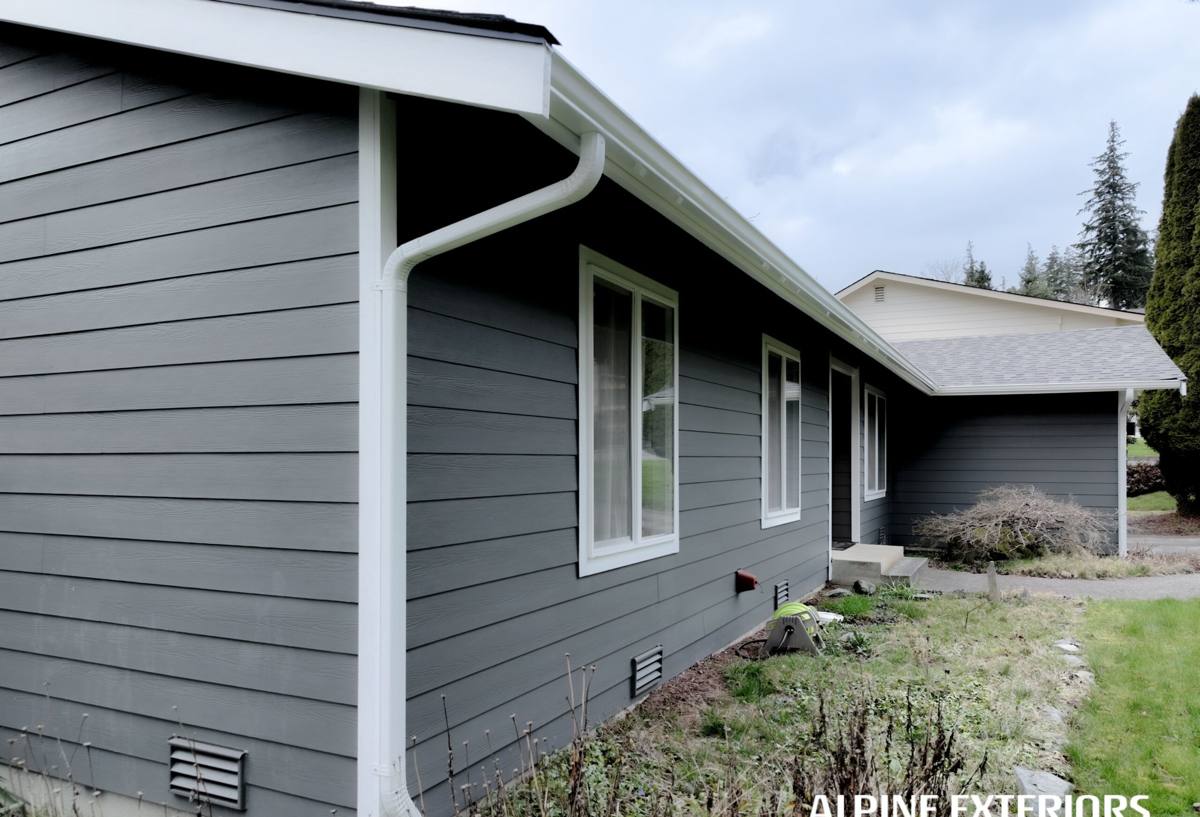
What Siding Repair Actually Covers
"Siding repair" gets used loosely, so it's worth being precise about what it means and doesn't mean.
Spot Repair
This is targeted work: replacing a cracked or split board, resealing a joint that's opened up, fixing a section where a fastener has backed out and let water behind the cladding. Spot repair addresses a specific, contained problem without touching the rest of the wall.
Section Replacement
When damage spans a larger area — a whole run of boards near a downspout, a corner that's taken years of runoff, a wall section where moisture has clearly traveled beyond one board — the right fix is replacing that entire section rather than patching board by board. Patch jobs on a spreading problem tend to fail again within a season or two.
When Repair Isn't the Right Answer
Sometimes an inspection turns up damage that's no longer a repair situation — sheathing rot, siding that's failed across most of the home, or a product (like old vinyl or degraded engineered wood) that's simply reached the end of its useful life everywhere, not just in the spot that prompted the call. Part of doing this job honestly is telling a homeowner when repair would just be an expensive delay of a replacement they're going to need anyway.
The Damage You Don't See Yet
The visible problem — a cracked board, a stain, a gap at a seam — is rarely the whole story. Water that's found its way behind siding doesn't stop there. It travels down the wall plane, soaks into house wrap or sheathing, and can sit against framing for months before it shows up as a soft spot or a musty smell inside. In a climate as wet as Bellingham's, that timeline moves faster than homeowners expect.
This is why a competent repair starts with more than looking at the damaged board. It means checking behind it — probing the sheathing, looking at how water has actually been moving, and confirming that flashing and house wrap are doing their job before new siding goes back up. Repairing the surface over an unresolved moisture problem just buys a year or two before the same call comes in again.
Signs an Edgemoor Home Needs Siding Repair
- Cracked, split, or visibly warped boards, especially on walls facing the water or prevailing wind
- Persistent green or black staining that returns soon after cleaning
- Soft or spongy siding when pressed near the bottom edge of a wall or below windows
- Gaps opening up at butt joints, corners, or trim where caulking has failed
- Peeling or bubbling paint on painted siding, which usually signals moisture trapped underneath
- Fastener heads popping out or streaking with rust down the face of a board
- Visible daylight or drafts at penetrations — vents, hose bibs, light fixtures — where siding meets an opening
- A musty smell in an adjacent interior room with no obvious plumbing cause
Why We Repair With James Hardie, Not Whatever's Already There
A lot of repair calls come in on homes sided in something other than fiber cement — old vinyl, LP SmartSide, cedar, or a primed wood product. We understand the instinct to match what's there. But matching a failing product with more of the same product usually just schedules the next repair call, and in some cases — vinyl especially — the exact original color or profile isn't reliably available years after installation anyway.
Where a repair calls for new material, we use James Hardie fiber cement, factory-finished with ColorPlus. It's non-combustible, dimensionally stable in wet-dry cycling, and resists the moisture absorption that causes engineered wood and cedar to swell, delaminate, or rot at the edges. When a repair section is going to face the same salt air and rain as the rest of the wall for the next twenty-plus years, we'd rather install something engineered to take it than something that's already shown us it can't.
For homes with existing Hardie siding, repair is much more straightforward — matching boards, profiles, and ColorPlus finishes is a known process, and a well-done repair section is close to invisible against the original wall.
Repair Material Comparison
| Material | Behavior in Repair Situations | Long-Term Outlook Here |
|---|---|---|
| Vinyl | Brittle with age; exact color/profile match often unavailable | Prone to cracking in cold snaps; repeated patchwork |
| Cedar | Absorbs moisture at cut edges; needs ongoing finish maintenance | Higher upkeep in a wet climate; rot risk at repairs |
| LP SmartSide / engineered wood | Vulnerable at unsealed cuts and damaged edges | Swelling and edge failure if moisture gets in again |
| James Hardie fiber cement | Stable, factory-finished, matches cleanly to existing Hardie walls | Built for wet, salt-air climates when installed to spec |
How Our Repair Process Works
1. On-Site Assessment
We inspect the visible damage and the surrounding wall area, checking flashing, trim, and adjacent siding for signs the problem has already spread further than the obvious spot.
2. Checking Behind the Surface
Where there's any sign of moisture intrusion, we open up the affected area to check sheathing and house wrap condition before deciding on scope. This is the step that separates a lasting repair from a cosmetic one.
3. Scoping the Fix
We tell you plainly whether this is a spot repair, a section replacement, or a case where repair isn't the responsible recommendation — and why.
4. Matching and Installing
New material is cut, flashed, and fastened to manufacturer spec, with attention to the same drainage and clearance details that matter on a full installation — repair work done carelessly just creates the next failure point.
5. Cleanup and Walkthrough
We clear debris, walk the repair with you, and point out anything else on the exterior worth keeping an eye on.
Repair vs. Replacement: How to Think About the Decision
| Factor | Favors Repair | Favors Replacement |
|---|---|---|
| Extent of damage | Isolated to one board or small section | Spread across multiple walls or elevations |
| Underlying material | Existing Hardie in good condition elsewhere | Vinyl, aging cedar, or engineered wood nearing end of life |
| Moisture findings | Sheathing dry and sound behind the damage | Rot or sustained moisture found behind the surface |
| Home's age and history | Siding installed within the last 10-15 years | Original siding is 20+ years old with recurring issues |
| Cost over time | Lower upfront cost for a contained fix | Fewer repeat service calls over the long run |
We'll give you a straight answer based on what we actually find, not the answer that happens to be more profitable for us that day.
Why It Matters That We Already Work in Edgemoor
A crew that's worked this neighborhood before isn't guessing at what caused the damage. We already know which elevations take the brunt of wind-driven rain off the bay, how fast moss reestablishes on shaded walls here, and what a normal maintenance interval looks like for a home this close to salt water versus one further inland in Bellingham. That local pattern recognition shortens the diagnostic part of the job and helps us scope a repair accurately the first visit, rather than coming back once the "quick fix" turns out to be bigger than expected.
It also means we're realistic about scheduling around this area's weather windows. Repair work goes faster and holds up better when it's done during a stretch of dry weather, and we plan around that rather than rushing a patch into damp conditions.
Keeping Repaired Siding in Good Shape Afterward
A good repair is only half the equation — a little upkeep keeps it from becoming a repeat visit.
- Keep gutters and downspouts clear so runoff doesn't sheet down the wall face near the repair
- Trim back vegetation that shades a wall and keeps it damp longer after rain
- Rinse moss and algae growth off siding before it establishes a heavy footprint, especially on north-facing walls
- Recheck caulking at trim, windows, and penetrations every couple of years — it's cheap insurance against the next moisture problem
- Have any new staining or soft spots looked at early, before it turns into a bigger repair
If you're seeing any of the warning signs above on an Edgemoor home, we're happy to take a look and give you a straight assessment. Reach out for a free, no-pressure estimate using the form below — we'll tell you exactly what we find and what it would take to fix it right.