 Bellingham Siding
 Why Columbia Roofs Wear Out the Way They Do
Columbia sits close enough to Bellingham Bay that salt-laden air is a constant factor on any exposed roof surface, and that air doesn't work alone. Pair it with Whatcom County's long, wet fall-through-spring stretch and a moss season that can run half the year, and you get a specific pattern of wear: granule loss on asphalt shingles happens faster than manufacturers' national averages assume, fasteners and flashing corrode sooner, and moss gets a foothold in shaded, north-facing sections before homeowners ever notice a leak. None of this means Columbia roofs fail early because of bad luck — it means they need a replacement built for this exact climate, not a generic install that would hold up fine in a drier part of the country.
A roof that's engineered around driving rain, persistent humidity, and moss pressure looks almost identical to a standard roof from the curb. The differences are in the underlayment, the ventilation, the flashing details, and the material choice — the parts that determine whether the roof is still doing its job in year fifteen, not just year one.
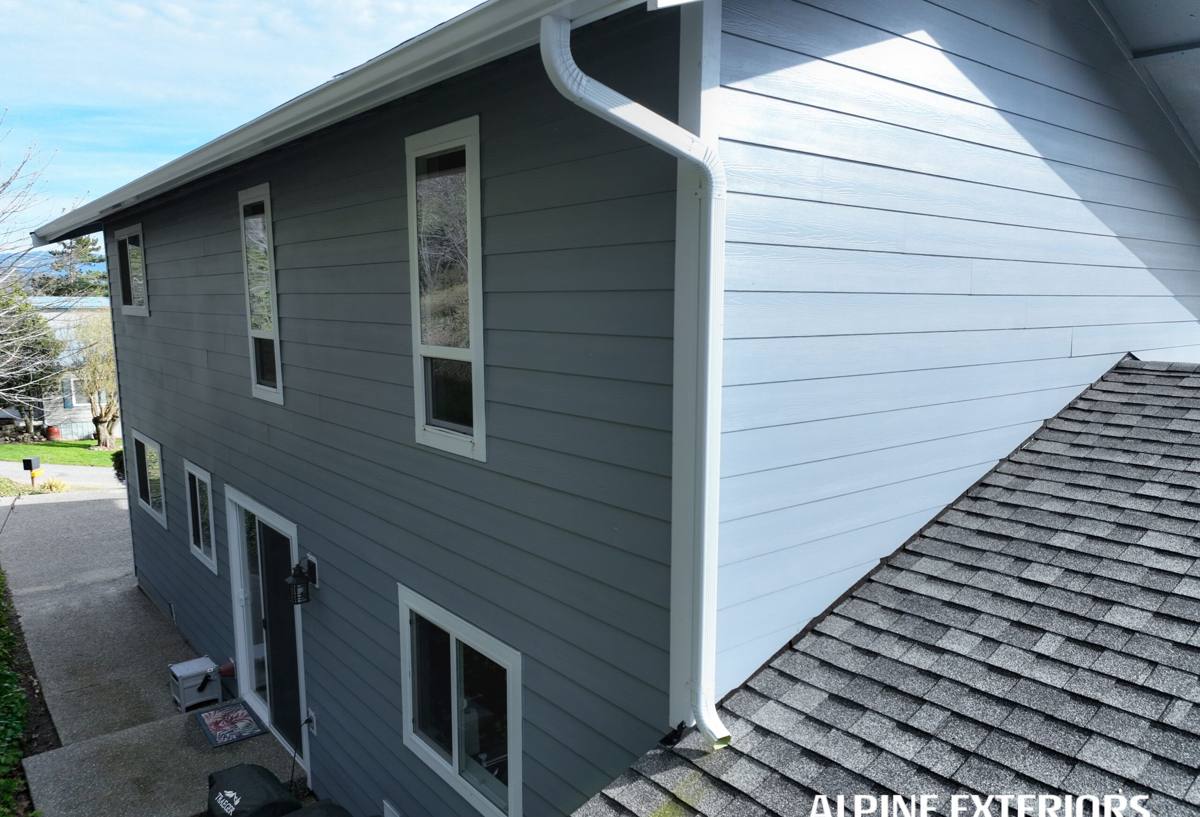
Signs a Columbia Home Needs Replacement, Not Another Repair
Repairs make sense when a roof is otherwise sound and the problem is isolated. Replacement becomes the honest recommendation once the damage is systemic. Here's what we look for during an inspection:
- Granules collecting in gutters or at downspout outlets, especially on south- and west-facing slopes
- Shingles that are curling, cupping, or losing their tab lines when viewed from the ground
- Moss or algae streaking that keeps returning within a season or two of cleaning
- Soft or spongy decking felt underfoot during an inspection walk
- Daylight visible through the attic at roof penetrations or ridge lines
- Flashing around chimneys, skylights, or valleys that's rusted, lifted, or was never properly step-flashed
- A roof already past 20-25 years old on standard asphalt shingles, regardless of visible condition
Any one of these on its own might be a repair. Two or three together, especially on a roof already in its second or third decade, usually means the cost of chasing repairs will outpace a replacement within a few years anyway.
What a Correct Roof Replacement Actually Involves
A roof replacement is a system, not a single product laid over the old one. Doing it right in a climate like Bellingham's means every layer earns its place:
Tear-Off and Deck Inspection
We remove the existing roofing down to the deck rather than layering over it. That's the only way to actually see the plywood or planking underneath — moisture damage, soft spots, and rot from long-term leaks hide under old shingles and only show up once they're gone. Any compromised decking gets replaced before anything new goes down; skipping this step is the single most common corner cut in this trade.
Underlayment and Water Protection
Given how much rain Whatcom County sees, the underlayment layer matters as much as the shingles themselves. Self-adhered ice-and-water membrane belongs at eaves, valleys, and around every penetration, backed by a synthetic underlayment across the field of the roof. This is the layer that keeps wind-driven rain from finding its way under the shingles during a hard coastal storm.
Flashing
Chimneys, skylights, sidewalls, and valleys fail more often at the flashing than at the shingles. Step flashing, counter flashing, and valley metal need to be installed correctly and integrated with the underlayment, not just caulked over an old piece that looked fine from the ground.
Ventilation
A roof that can't breathe traps moisture in the attic, which shortens the life of the decking and feeds moss and algae growth from underneath. Balanced intake at the soffits and exhaust at the ridge is part of a correct install, not an upsell.
Field Material
Whatever shingle, metal panel, or other product goes down last is the layer everyone sees — but it's only as good as the four layers underneath it.
Choosing a Roofing Material for a Columbia Home
There's no single "best" material — the right choice depends on your roof's exposure, your home's style, and how much moss and moisture resistance you want to pay for up front versus over time.
| Material | Moss/Moisture Resistance | Maintenance | Typical Lifespan |
|---|---|---|---|
| Architectural asphalt shingle | Good, especially with algae-resistant granules | Periodic moss removal on shaded slopes | 25-30 years |
| Standing seam metal | Excellent — sheds moisture, moss struggles to root | Minimal; occasional fastener/sealant check | 40-60 years |
| Synthetic/composite shingle | Very good, consistent performance in wet climates | Low | 30-50 years |
| Cedar shake | Requires ongoing care in a moss-heavy climate | High — regular treatment and moss control | 20-30 years with upkeep |
For most Columbia homes, we lean toward architectural asphalt with algae-resistant granules or standing seam metal, simply because both hold up against this specific combination of salt air, driving rain, and shade-driven moss without demanding constant upkeep from the homeowner. We'll walk your roof's actual exposure with you before recommending one over the other — a heavily shaded north slope and a sun-exposed south slope on the same house sometimes warrant different thinking.
Ventilation and Moisture — The Part You Don't See
Most moss and algae problems don't start on the surface — they start with trapped moisture underneath. An attic that's under-ventilated stays warmer and more humid than it should, which condenses on the underside of the decking and creates exactly the conditions moss spores and algae need to take hold on the roof above. A new roof without a ventilation review is only solving half the problem. We check soffit intake, ridge exhaust, and insulation baffles as part of every replacement, and we'll tell you plainly if your attic setup is working against your new roof before we close it up.
Our Process, Start to Finish
- Inspection and estimate — a full walk of the roof, attic, and flashing points, with photos and a written scope, not a verbal guess
- Material selection — we go over options suited to your home's exposure and your budget, with honest trade-offs for each
- Scheduling around the weather — we plan tear-off days to minimize how long your deck is exposed, which matters more here than in drier climates
- Tear-off and deck repair — old material removed, deck inspected, any rot or soft spots addressed before moving forward
- Underlayment, flashing, and ventilation install — the layers that determine long-term performance
- Field material installation — shingles or panels installed to manufacturer spec, with attention to nailing pattern and exposure lines
- Cleanup and walk-through — magnetic sweep for nails, debris hauled off, and a final walk so you know what was done and why
Why a Crew That Already Works Columbia Matters
Roofing knowledge that's specific to this stretch of Whatcom County isn't something you get from a national playbook. A crew that already works in and around Columbia knows which slopes in the neighborhood tend to hold moss longest, how to plan a tear-off around a marine-layer forecast instead of a generic weather app, and what permitting looks like with the City of Bellingham. That local familiarity shows up in small decisions — how a valley is flashed, which vents get prioritized, how a schedule gets adjusted when rain moves in a day early — that add up to a roof that performs the way it's supposed to for its full lifespan, not just on install day.
It also means accountability doesn't disappear once the crew packs up. A local company answers the phone if something needs a look two years down the road, because the reputation that brought you the job in the first place is the same reputation on the line for the next one.
What Drives the Cost of a Columbia Roof Replacement
Every roof is different, so we don't quote a number until we've actually seen yours. But the variables that move the price are consistent:
| Factor | Why It Matters |
|---|---|
| Roof size and pitch | Steeper roofs take longer and require more safety setup |
| Number of layers to remove | Tear-off labor scales with how much old material is coming off |
| Deck condition | Rot or soft decking found during tear-off adds material and labor |
| Material choice | Asphalt, metal, and composite products carry different upfront costs |
| Roof complexity | Valleys, dormers, chimneys, and skylights each add flashing detail |
| Ventilation upgrades | Adding or correcting intake/exhaust vents is a smaller add-on, not a full re-quote |
Most full roof replacements land somewhere in a broad mid-range depending on those factors — we'll break down exactly where your home falls once we've walked the roof, so you're pricing your actual project, not a national average.
Living With a New Roof Through Moss Season
A correctly installed roof with the right material and ventilation will handle Bellingham's wet season on its own for the most part, but a little homeowner maintenance stretches its life further. Keep gutters clear so water isn't backing up under the eaves, do a visual check after major storms for lifted shingles or debris buildup in valleys, and address any moss growth early with gentle removal methods rather than pressure washing, which can strip granules and shorten shingle life. If you're ever unsure whether something you're seeing is normal wear or a real problem, a quick call is easier than waiting until it's a leak.
If your Columbia roof is showing its age, or you just want an honest read on where it stands, we're happy to come take a look. The estimate is free, there's no pressure attached to it, and you'll walk away with a clear picture of your roof's actual condition — fill out the form below to get started.