 Bellingham Siding
 Roof Repair Built for Sehome's Climate, Not a National Average
Sehome is one of Bellingham's established central neighborhoods, and a lot of its housing stock has already been through at least one round of roof replacement or repair, sometimes more than one. That history matters when something starts leaking or a shingle goes missing. A roof repair here isn't just patching a hole; it's understanding what the roof has already been through, what condition the layers underneath are actually in, and what Whatcom County's marine climate is going to keep doing to it. Salt air moving in off the Salish Sea, wind-driven rain that hits roof planes sideways rather than straight down, and a moss season that can run most of the year on shaded slopes all combine to put steady, cumulative stress on a roof that a drier inland climate simply doesn't produce.
This page is specifically about roof repair for Sehome homes: diagnosing what's actually wrong, fixing it correctly the first time, and being straightforward about when a repair is the right call versus when it isn't. We treat roof repair as its own discipline, not a smaller, rushed version of a full roof replacement.
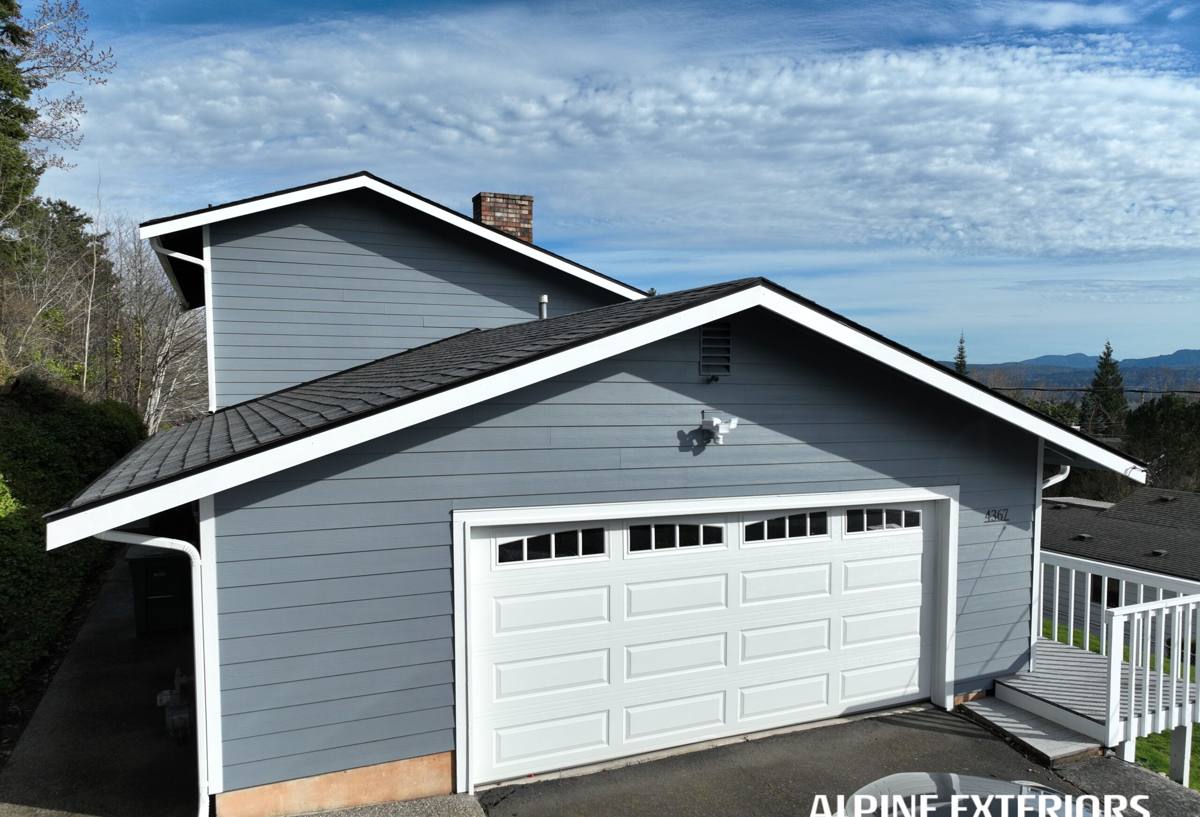
What Bellingham's Climate Does to a Sehome Roof
Salt Air and Metal Fatigue
Sehome sits inland of the immediate waterfront but is still well within reach of the salt-laden air that moves through Bellingham off the Sound. Salt accelerates corrosion on flashing, fasteners, vent boots, and any exposed metal trim on a roof. A repair that reuses corroded fasteners or patches around already-failing flashing without replacing it tends to fail again within a season or two, which is why we treat metal condition as part of every repair diagnosis, not an afterthought.
Wind-Driven Rain and Roof Transitions
Rain in this part of Washington usually arrives on a wind, which pushes moisture up under shingle edges and into roof-to-wall transitions, chimney flashing, and valleys rather than simply running off a sloped surface. Most of the leaks we trace on Sehome roofs start at one of those transition points, not out in the open field of the roof, because that's where wind-driven water actually gets pushed against a seam.
A Long Moss Season
Mature tree cover and mild, moist temperatures give Bellingham a moss and algae season that runs far longer than most regions see. Sehome's tree-lined streets and shaded lots are no exception. Moss holds moisture directly against the roofing material, works its way under shingle tabs as it spreads, and can physically lift shingles enough to let water underneath. Left unaddressed, a mossy roof section ages faster than a clean, sun-exposed one on the same house.
Sloped Lots and Drainage
Some homes in Sehome sit on lots with real grade change as the neighborhood rises toward Sehome Hill. That slope affects how water sheds off a roof and how quickly gutters and downspouts can become overwhelmed during a heavy storm. A repair on a sloped-lot home sometimes needs to account for drainage capacity, not just the immediate leak, or the same problem shows up again the next time it rains hard.
Signs a Sehome Roof Needs Repair
Most roof repairs start small and are easy to miss until they've been going on for a while. These are the signs worth acting on quickly, before a wet season turns a repair into a much bigger job:
- Water staining on interior ceilings or walls, especially near chimneys or where a roofline meets a wall
- Moss buildup in valleys or on shaded slopes that comes back quickly after cleaning
- Missing, curling, or lifted shingles, particularly after a windstorm
- Granules collecting in gutters or at the base of downspouts
- Flashing that looks lifted, rusted, cracked, or missing sealant around chimneys, vents, or skylights
- Daylight visible through the roof deck when viewed from inside the attic
- A soft or spongy feel to the roof surface in a specific area when walked on
- Gutters or downspouts overflowing or pulling away from the fascia during heavy rain
Any one of these on its own is worth a professional look. Left through another wet season, several of them together usually mean the damage has already spread past the original spot.
Repair or Replace? How We Actually Decide
We don't default to recommending a full roof replacement just because a homeowner called about a leak. We look at the roof's age, how much surface area is actually affected, whether the deck underneath has moisture damage, and how many prior repairs the roof has already had. A localized leak on an otherwise sound roof is usually a straightforward repair. A roof nearing the end of its rated life, with moss damage spread across multiple slopes or a deck that's already soft in more than one spot, is more honestly addressed with a replacement than another round of patchwork that won't hold.
| Situation | Repair Usually Makes Sense | Replacement Usually Makes Sense |
|---|---|---|
| Age of roof | Well within its expected service life | At or past its expected service life |
| Damage location | Isolated to one flashing point, valley, or section | Spread across multiple slopes or planes |
| Roof deck condition | Solid, no soft spots found on inspection | Soft, spongy, or showing rot in more than one area |
| Repair history | First or second repair on this roof | Repeated patch jobs in the same general area |
| Shingle condition overall | Surrounding shingles still sealing and flexible | Widespread granule loss, brittleness, or curling |
We'll walk the roof, explain what we actually find, and give you the honest trade-offs rather than pushing whichever option happens to be more profitable for us.
What a Correct Roof Repair Actually Involves
A roof repair that holds up in this climate goes beyond swapping out the shingles you can see from the ground. On every repair, our process includes:
- Tracing the leak or damage back to its actual source, which is often several feet away from where water is showing up inside the house
- Removing enough surrounding material to inspect the underlayment and roof deck, not just the surface layer
- Replacing corroded or failing flashing rather than sealing over it, since sealant on top of failing metal is a short-term fix at best
- Matching shingle type, profile, and color as closely as the original product allows
- Confirming ventilation at the repaired section isn't trapping moisture underneath the new material
- Checking nearby gutters and downspouts, since a repair next to a clogged or damaged gutter tends to fail again quickly
Skipping any of these steps is exactly what turns a repair that should last years into one that needs redoing the following wet season.
Common Repair Issues on Sehome's Housing Stock
Because a lot of Sehome homes have already had at least one prior roof repair or replacement, we regularly find a few recurring issues on inspection:
Flashing Details That Predate Current Standards
Older roofs, or roofs repaired years ago under looser standards, often have flashing at chimneys and roof-to-wall transitions that doesn't meet what we'd install today. It may have held for years without an obvious problem, but it's frequently the first thing to fail once it does.
Layered or Rushed Prior Repairs
We sometimes find a repair patched directly over an earlier one, with new shingles or sealant layered on top of a problem that was never actually fixed underneath. That approach buys a little time but doesn't address the real cause, and it usually means more material has to come off before a proper repair can go back on.
Moss-Related Granule Loss
Long-term moss growth doesn't just look bad, it wears down the protective granule layer on asphalt shingles faster than sun and rain alone would. A repair in a moss-heavy area often needs both the immediate damage addressed and a plan for keeping moss from returning to the same spot.
Our Roof Repair Process in Sehome
We keep the process straightforward because most homeowners calling about a roof repair are already dealing with enough uncertainty from a leak or storm damage:
- Inspection: We get on the roof, and in the attic where accessible, to find the actual source of the problem rather than guessing from the ground.
- Honest diagnosis: We explain what we found, what caused it, and whether repair or replacement is the more honest recommendation for your specific roof.
- Clear estimate: You get a written scope and price before any work starts, no surprise add-ons once the job is underway.
- The repair itself: We fix the actual cause, not just the visible symptom, using materials matched to your existing roof where possible.
- Cleanup and walkthrough: We clear debris and old material from the site and walk you through what was done and why.
Cost Factors for Roof Repair in Sehome
| Factor | Why It Affects Price |
|---|---|
| Size and location of the damaged area | Larger or harder-to-access sections take more time and material |
| Roof pitch and height | Steeper or taller roofs require more safety setup and slower work |
| Flashing replacement scope | Full flashing replacement at a transition costs more than resealing but lasts longer |
| Deck condition underneath | Soft or rotted decking found during the repair adds material and labor |
| Shingle availability and match | Older or discontinued shingle colors can be harder to match exactly |
| Moss remediation needed | Heavier moss growth may need treatment and cleaning alongside the physical repair |
We won't know exact numbers until we've actually inspected the roof, which is why we walk every property before giving a real estimate instead of quoting from a generic price list over the phone.
Why a Local Crew Matters for a Sehome Roof Repair
A crew that works roofs across Bellingham through every season sees how salt air, wind-driven rain, and moss actually behave on real houses over years, not just how a shingle performs on a spec sheet. That shows up in practical decisions on a Sehome repair: which flashing details are worth the extra attention given how many homes here have already had prior repair work, how a sloped lot changes where water actually collects, and which shortcuts to avoid so you're not calling about the same leak again in two winters. A contractor who only occasionally works this specific climate is more likely to apply generic fixes that don't quite hold up against what Whatcom County actually throws at a roof year-round.
Get a Free, No-Pressure Estimate
If your Sehome home has a leak, storm damage, missing shingles, or a roof section you're not sure about, we're glad to take a look and give you a straightforward, honest read on what it actually needs. Reach out using the form below to schedule a free estimate, no pressure, no upsell script.