 Bellingham Siding
 Roof Repair in Puget: A Different Set of Problems Than Inland Bellingham
Puget sits close enough to the water that its roofs age differently than roofs a few miles inland. The combination of salt-laden air, wind-driven rain off Bellingham Bay, and a moss season that can run eight months out of the year puts a specific kind of wear on shingles, flashing, and fasteners. A roof repair crew that mainly works dry, inland subdivisions can still do competent work here, but they're often solving the wrong problem first — patching a leak without addressing the moss colony or corroded flashing that caused it. Repair work in Puget has to start from what the local climate actually does to a roof, not from a generic checklist.
Why "Just Patch It" Rarely Works Here
A single missing shingle or a small flashing gap in a drier climate might sit for years without causing damage. In Puget, the same gap is exposed to near-constant moisture for months at a stretch, plus salt air that speeds up corrosion on any exposed metal. A patch that would hold up fine in eastern Whatcom County can fail within a season here if it doesn't account for how much water actually moves across this roof and how corrosive the air is on fasteners and flashing.
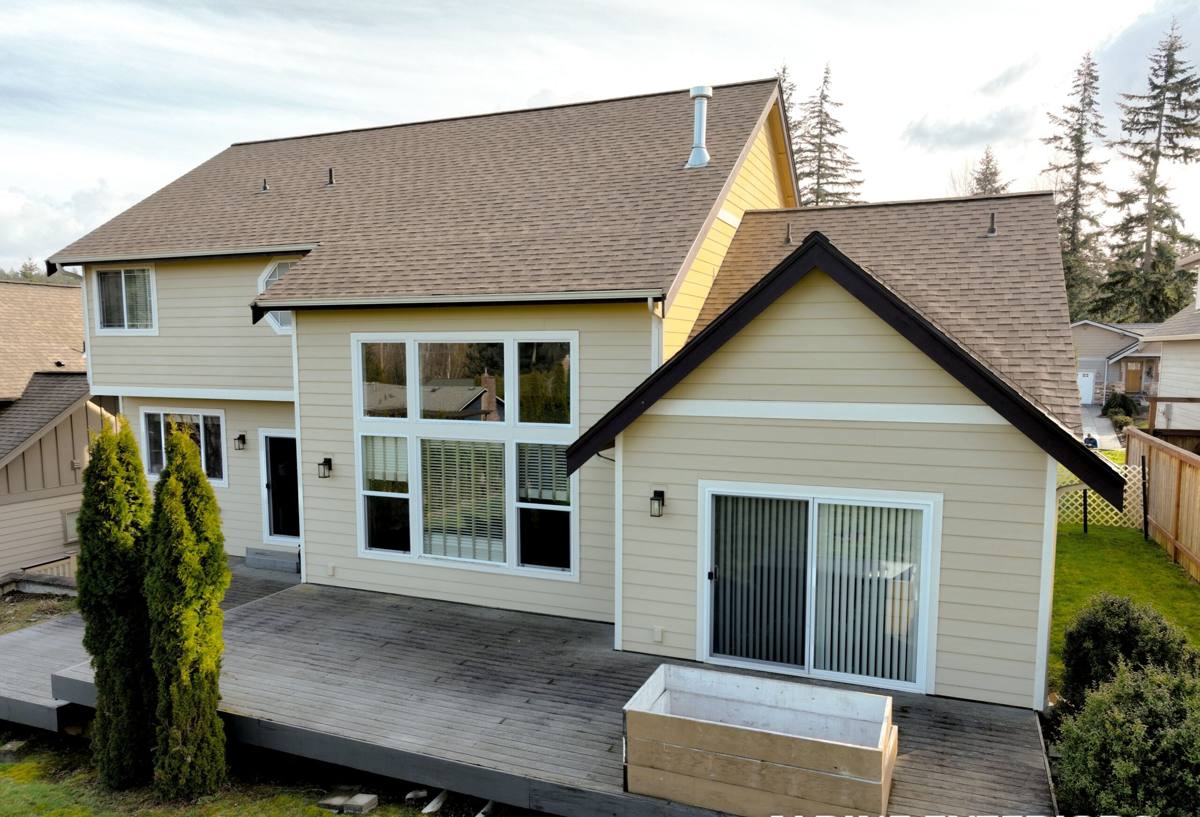
What Salt Air, Driving Rain, and Moss Actually Do to a Roof
Salt Air and Metal Fatigue
Salt air accelerates corrosion on anything metal: nail heads, flashing, gutter fasteners, and the metal components inside ridge vents. Once corrosion starts, fasteners lose their grip and flashing seams open up slightly — not enough to be visible from the ground, but enough for water to start working its way underneath shingles during a hard rain. This is one reason we lean toward corrosion-resistant fastener and flashing specs on repairs closer to the water, even when it costs a little more up front.
Driving Rain and Wind-Driven Water
Bellingham gets a lot of rain, but it's the wind-driven rain off the water that causes the real damage in Puget. Rain that comes in at an angle gets pushed sideways and upward under shingle edges, around vent boots, and along step flashing at wall intersections — areas that stay bone dry in a straight-down rain. A repair that only addresses the visible leak point and ignores how water moves sideways under wind pressure is likely to leak again in the next storm from a slightly different spot.
Moss: More Than a Cosmetic Problem
Moss thrives in the shade, moisture, and mild temperatures that describe most of the year here. Left alone, moss does two things that matter structurally: it holds moisture against the shingle surface far longer than bare shingle would, and its root-like structures work into shingle granules and seams, lifting edges just enough for water to get underneath. By the time moss is visibly thick on a roof, it's usually already caused some granule loss and possibly some minor lifting at shingle edges — which is exactly where small leaks start.
Signs a Puget Roof Needs Repair Now, Not Later
- Dark streaking or thick moss growth concentrated on the north-facing or shaded slopes
- Granules collecting in gutters or at downspout outlets after a hard rain
- Rust staining below flashing points, nail heads, or metal vents
- Soft spots, sagging, or discoloration on interior ceilings near exterior walls
- Shingle edges that look lifted, curled, or cupped rather than lying flat
- Visible daylight or gaps around chimney, skylight, or plumbing vent flashing from the attic
- Water stains on attic sheathing or insulation, even without an active drip indoors
Any one of these on its own doesn't always mean a major problem. Two or three together, especially on a roof more than 10-15 years old, usually mean it's worth having someone look before the next big storm rolls in off the water.
What a Correct Repair Actually Involves
Diagnosis Before Patching
The first step on any repair is figuring out where water is actually entering, which is often not directly above where the stain shows up inside. Water can travel along rafters or sheathing before dripping down, so a repair that just patches the ceiling-adjacent roof area without tracing the real entry point often misses the mark. We check the attic side when accessible, look at flashing points first, and only then move to the shingle field itself.
Matching Materials, Not Just Covering the Spot
A repair patch that doesn't match the existing shingle's granule color, profile, and age will stand out and, more importantly, may not seal properly against the surrounding material. Where an exact match isn't available — which happens on older roofs — we talk through the realistic options with the homeowner rather than installing something that will look obviously mismatched.
Flashing and Underlayment Get Priority
Given how much of Puget's roof damage traces back to flashing and water intrusion at transitions (chimneys, walls, valleys, vent penetrations), a proper repair usually involves re-flashing the failure point rather than just sealing over it with roofing cement. Sealant is a short-term fix; correctly lapped flashing and underlayment is the actual repair.
Moss Treatment as Part of the Repair, Not an Afterthought
If moss contributed to the failure, removing it and treating the roof to slow regrowth is part of doing the job right — not a separate upsell. This typically means gentle manual removal (never aggressive pressure washing, which strips granules and shortens shingle life) followed by a zinc or copper-based treatment strip or application that discourages regrowth in future wet seasons.
Repair vs. Replacement: How We Help Homeowners Decide
| Factor | Leans Toward Repair | Leans Toward Replacement |
|---|---|---|
| Roof age | Under 15 years, single localized issue | Approaching or past 20-25 years, multiple problem areas |
| Moss/staining extent | Isolated to one or two slopes | Widespread across most of the roof |
| Granule loss | Minor, confined to the repair area | Heavy, visible bare patches in the shingle mat |
| Flashing condition | One or two failed points | Corrosion or gaps at most flashing locations |
| Decking condition | Sound, dry sheathing under the leak | Soft, delaminating, or water-damaged sheathing found |
This isn't a strict formula — a 12-year-old roof with rotted decking under one bad valley might still need targeted replacement in that section rather than a whole new roof. We walk through what we actually find with the homeowner and lay out the honest trade-offs rather than defaulting to the bigger job.
How Our Puget Repair Process Works
- Inspection: We walk the roof and check the attic where accessible, focusing on flashing, valleys, and any areas with visible staining or moss.
- Diagnosis and estimate: We identify the actual entry point(s), explain what we found in plain terms, and give a written estimate before any work starts.
- Repair: We remove and replace damaged materials, re-flash as needed, match shingles as closely as possible, and treat moss where relevant.
- Cleanup and check: Debris and old materials are cleared from the property and gutters, and we do a final walk-through of the repaired area.
We don't push repairs that are really just delaying an inevitable replacement, and we don't push replacement when a well-done repair will genuinely hold up. Being honest about which situation we're in is part of the job.
Why a Crew That Already Works Puget Matters
A roofing crew that regularly works this part of Bellingham already knows which flashing details tend to fail first in this climate, which moss treatments actually hold up through a wet Whatcom County winter, and roughly how a given roof's age and exposure translate into real-world wear. That familiarity shows up in faster, more accurate diagnosis — less time spent chasing a leak, more time spent fixing the actual cause. It also means we're not guessing at how the salt air and wind patterns off the water affect a specific roof; we've seen the pattern before on other roofs nearby.
Maintenance That Extends the Life of a Repair
- Clear moss buildup at the first sign of growth rather than waiting for it to thicken
- Keep gutters and downspouts clear so water isn't backing up under the roof edge
- Trim back overhanging branches that keep shaded areas of the roof damp longer
- Have flashing and vent boots checked every few years, since these fail well before the shingle field usually does
- Address small leaks quickly — the cost of a small repair is almost always less than the cost of the water damage that follows a delayed one
None of this requires a large annual maintenance contract. A homeowner who keeps an eye on moss and gutters and calls when something looks off will usually get significantly more life out of a repaired roof than one left completely alone until the next visible leak.
Getting a Straight Answer on Your Roof
If you're seeing moss buildup, granule loss, staining, or an actual leak on a Puget-area roof, it's worth getting a second set of eyes on it before the next storm off the water finds the weak spot for you. We're happy to come take a look, explain honestly what we find, and lay out a free, no-pressure estimate — whether that ends up being a targeted repair or something more involved. Use the form below to get started.