 Bellingham Siding
 Roofing in Puget: Built for Bellingham's Wet, Salty, Mossy Climate
Puget sits close enough to the water that salt air is a daily fact of life for roofs here, not an occasional nuisance. Add Bellingham's driving winter rain, the wind that comes off Puget Sound and Bellingham Bay, and a moss season that can run eight months or longer in shaded, north-facing yards, and you get a climate that is genuinely tough on roofing systems. A roof that would hold up fine in a drier inland climate can start failing early in Puget if it wasn't installed with this specific combination of moisture, salt, and shade in mind.
New roof installation is not just about swapping old shingles for new ones. It's about building a system — decking, underlayment, flashing, ventilation, and the finish material — that's matched to what a Puget roof actually has to survive year after year. That's the standard we hold every install to, whether it's a straightforward re-roof or a full tear-off on an older home.
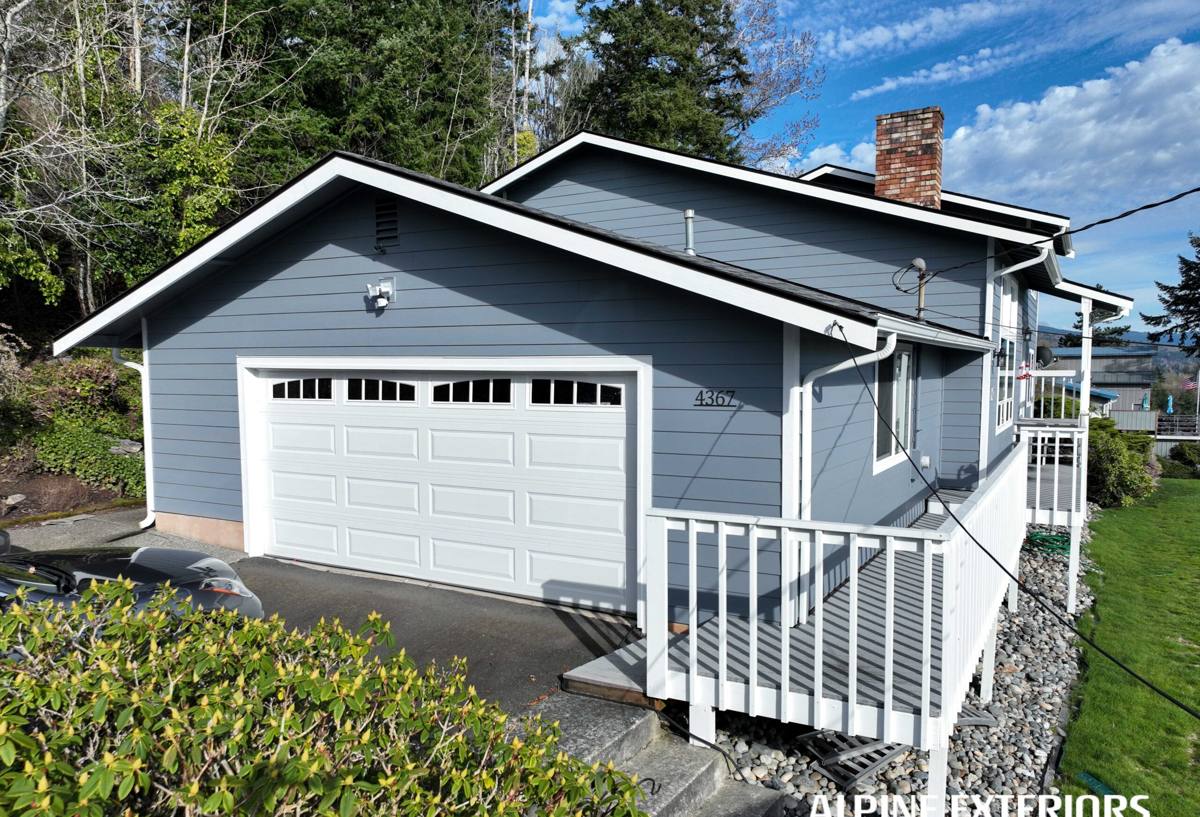
Signs Your Puget Home Is Due for a New Roof, Not Another Repair
Whatcom County homeowners often ask whether a problem area can just be patched. Sometimes it can. But there's a point where repeated repairs stop making financial sense and a full replacement becomes the honest recommendation. Common signs we look for on Puget homes include:
- Granule loss heavy enough that you can see bare asphalt on multiple slopes, not just one worn spot
- Shingles that are cupping, curling, or cracking, especially on the south and west-facing slopes that see the most sun and wind
- Moss establishing itself under the shingle tabs rather than just sitting on the surface — this lifts material and holds moisture against the roof deck
- Soft or spongy spots when walked, which usually means the decking underneath has taken on water
- Daylight visible through the roof deck from inside the attic, or water staining on rafters and sheathing
- A roof that's already had two or more repair visits for leaks in different spots within a few years
- Metal flashing around chimneys, vents, or valleys that's rusted, pulled loose, or was never properly stepped in the first place
If a roof is showing one or two of these on an otherwise sound system, repair is often still reasonable. Once several of these stack up together, a new installation is usually the more cost-effective path — you stop paying for repeat service calls on a roof that's past the point of patching.
What a Correct New Roof Installation Actually Involves
Tear-Off and Deck Inspection
A proper install starts with full tear-off down to the decking, not a layover on top of old material. This is the only point where we can actually see the condition of the roof deck itself. In a climate like Puget's, it's common to find sections of plywood or plank decking that have softened from long-term moisture intrusion, particularly around old flashing points that were never sealed correctly. Any soft or delaminated decking gets replaced before anything new goes down — installing new roofing over a compromised deck just hides the problem for a future homeowner to deal with.
Underlayment and Water-Resistant Barriers
Underlayment is the roof's backup line of defense, and it matters more here than in drier climates because Bellingham's rain doesn't just fall straight down — wind off the Sound drives it sideways and up under shingle edges. We use synthetic underlayment across the full roof and self-adhering ice-and-water membrane at the vulnerable points: eaves, valleys, and around every roof penetration. That membrane seals around fastener holes and gives the roof a second layer of protection exactly where wind-driven rain is most likely to find a way in.
Flashing Points That Actually Fail First
Most roof leaks don't start in the open field of shingles — they start at flashing: chimneys, skylights, sidewall intersections, and valleys. These are metal-to-roof transitions, and they have to be layered correctly with the underlayment and shingle courses so water is always directed downhill and out, never trapped behind a joint. This is also where corrosion shows up first in a salt-air environment, so material choice and installation sequence at these points matters as much as the shingles themselves.
Ventilation Built In From the Start
A new roof is the right time to correct ventilation, not an afterthought. Balanced intake at the soffits and exhaust at the ridge keeps the attic close to outdoor temperature and moisture levels, which protects the new decking and shingles from the inside out. We size ventilation to the attic itself rather than assuming the old setup was adequate.
Choosing a Roofing Material for Puget's Conditions
There's no single "best" roofing material for every home — it depends on budget, roof pitch, exposure, and how much long-term maintenance a homeowner wants to take on. Here's how the common options stack up specifically against Puget's salt air, rain, and moss pressure:
| Material | Typical Lifespan | Moss & Algae Resistance | Wind-Driven Rain Performance | Ongoing Maintenance |
|---|---|---|---|---|
| Architectural asphalt shingle | 25–30 years | Good with algae-resistant granules; still benefits from periodic moss removal | Strong when installed with proper underlayment and flashing | Low to moderate — occasional cleaning in shaded areas |
| Standing seam metal | 40-plus years | Very good — smooth surface gives moss little to grip | Excellent; sheds water and wind well on steep and low-slope sections alike | Low |
| Cedar shake | 20–30 years with upkeep | Poor without regular treatment — shakes hold moisture and are prone to moss and rot in shaded, damp settings | Good when installed correctly, but seams are more sensitive to wind-driven rain over time | High — regular treatment and inspection required |
| Synthetic/composite shingle | 30–50 years | Good; resists moisture absorption better than wood | Strong | Low to moderate |
We don't install cedar shake as a standard offering. It's not that it's a bad-looking product — it's that in a persistently damp, moss-favoring climate like Puget's, it demands a level of ongoing maintenance and treatment that most homeowners underestimate when they choose it, and the moisture retention that comes with irregular upkeep shortens its real-world lifespan here. We'd rather steer a homeowner toward a material that performs well with realistic, low-maintenance care than sell a look that comes with a maintenance schedule most people won't keep up with.
Moss, Salt Air, and Driving Rain: Why Puget Needs Specific Detailing
Three climate factors shape almost every decision on a Puget roof. Salt air, carried in off Bellingham Bay and Puget Sound, accelerates corrosion on exposed metal — fasteners, flashing, and vent stacks need to be rated for a marine-influenced environment, not just a generic Pacific Northwest one. Driving rain means water doesn't just land on a roof, it gets pushed sideways under laps and around penetrations, which is why underlayment coverage and flashing sequencing matter more here than in a sheltered inland setting. And moss season — realistically running from fall through spring in shaded, north-facing, and tree-covered sections of Puget — means algae-resistant materials and a roof design that limits standing moisture do real, measurable work over the life of the roof.
None of these factors are dealt with by upgrading one component alone. It's the combination of the right underlayment, the right flashing details, the right fastener and vent metal, and a material with decent moss resistance that adds up to a roof that actually holds up to a full Whatcom County winter, year after year.
Our New Roof Installation Process
- Roof inspection and estimate. We walk the roof (or inspect from the eaves/attic if walking isn't safe), check the deck condition where accessible, note flashing and ventilation issues, and put together a written estimate with material options.
- Material selection. We go over the trade-offs above in plain terms so the decision fits the budget and the home, not just the sales pitch.
- Scheduling around Bellingham weather. Roofing needs a dry work window. We plan installs around forecasted dry stretches and protect the home with tarps if weather shifts mid-project.
- Full tear-off. Old material comes off down to the deck so it can be properly inspected and repaired where needed.
- Deck repair. Any soft, delaminated, or damaged sheathing is replaced before underlayment goes down.
- Underlayment and ice-and-water membrane. Installed across the full roof, with extra coverage at eaves, valleys, and penetrations.
- Flashing installation. New flashing at chimneys, valleys, sidewalls, and penetrations, sequenced correctly with the shingle courses.
- Shingle or panel installation. Installed to manufacturer specification, which is also what keeps the material warranty valid.
- Ventilation and final details. Ridge and soffit ventilation confirmed and corrected, vents and boots installed, site cleaned and inspected before we call it complete.
Ventilation and Moisture: The Part Homeowners Don't See
Attic ventilation doesn't show up in curb appeal, but it has more to do with how long a roof actually lasts than almost any other single factor in a climate like this one. Building code guidance generally calls for roughly one square foot of net free vent area for every 150 square feet of attic floor space, split between intake at the soffits and exhaust at the ridge. When that balance is off — blocked soffits, insufficient ridge venting, or a mismatched combination of the two — moist air gets trapped in the attic. In Bellingham's climate, trapped moisture condenses on the underside of the decking, which is exactly the kind of slow, hidden damage that shortens a roof's real lifespan regardless of how good the shingles on top are. Correcting ventilation during a new roof install is one of the most effective, and most overlooked, ways to protect the investment.
Why a Crew That Already Works in Puget Matters
A roofing crew that regularly works Puget and the surrounding Bellingham neighborhoods has already seen how homes in this specific area age — which slopes collect the most moss, which flashing details tend to fail first in this exposure, and what kind of wind and rain pattern a given roof orientation actually deals with. That's different from general Pacific Northwest roofing experience; it's familiarity with this particular stretch of Whatcom County's coastline and weather pattern.
It also matters for the practical side of the job — knowing the local permitting process, working efficiently with the area's typical roof pitches and access constraints, and being a crew that's still local and reachable if a question comes up after the job is done, not a traveling crew that's moved on to the next region.
What to Expect Before You Sign
A new roof is a major investment, and it's reasonable to want clarity before committing. Here's what a homeowner should expect from a straightforward, honest process:
- A written estimate that itemizes tear-off, materials, flashing, and ventilation work — not just a single lump-sum number
- A clear explanation of what condition the deck is in, and what happens (and what it costs) if repair is needed
- Manufacturer specifications followed closely enough that the material warranty stays valid
- A realistic timeline that accounts for Bellingham's weather rather than promising a fixed date regardless of forecast
- Cleanup and magnetic nail sweep of the property when the job is finished
- A straight answer about ventilation and whether the current attic setup needs correcting
If a contractor can't walk you through these points clearly, that's worth treating as a warning sign before you sign anything.
If your roof in Puget is showing its age or you're just trying to plan ahead, we're happy to take a look and put together a free, no-pressure estimate — use the form below to get started.