 Bellingham Siding
 Sudden Valley's Roofs Work Harder Than Most
Sudden Valley sits in a wooded, lake-adjacent setting in Whatcom County, and that setting is exactly what makes roofing here different from a typical in-town job. Heavy tree canopy keeps roofs shaded and damp for long stretches of the year, moisture off Lake Whatcom and the surrounding hills lingers in the air, and driving rain off Bellingham Bay and the greater Puget Sound region pushes water sideways into laps, valleys, and flashing that a calmer climate would never stress-test. Add in a moss season that can run most of the year in the shadier lots, and you've got a roof system that needs to be built — and maintained — differently than one going up in a dry, open subdivision.
None of that means a roof in Sudden Valley has to fail early. It means the installation has to account for shade, moisture, and wind-driven rain from day one, instead of treating them as an afterthought.
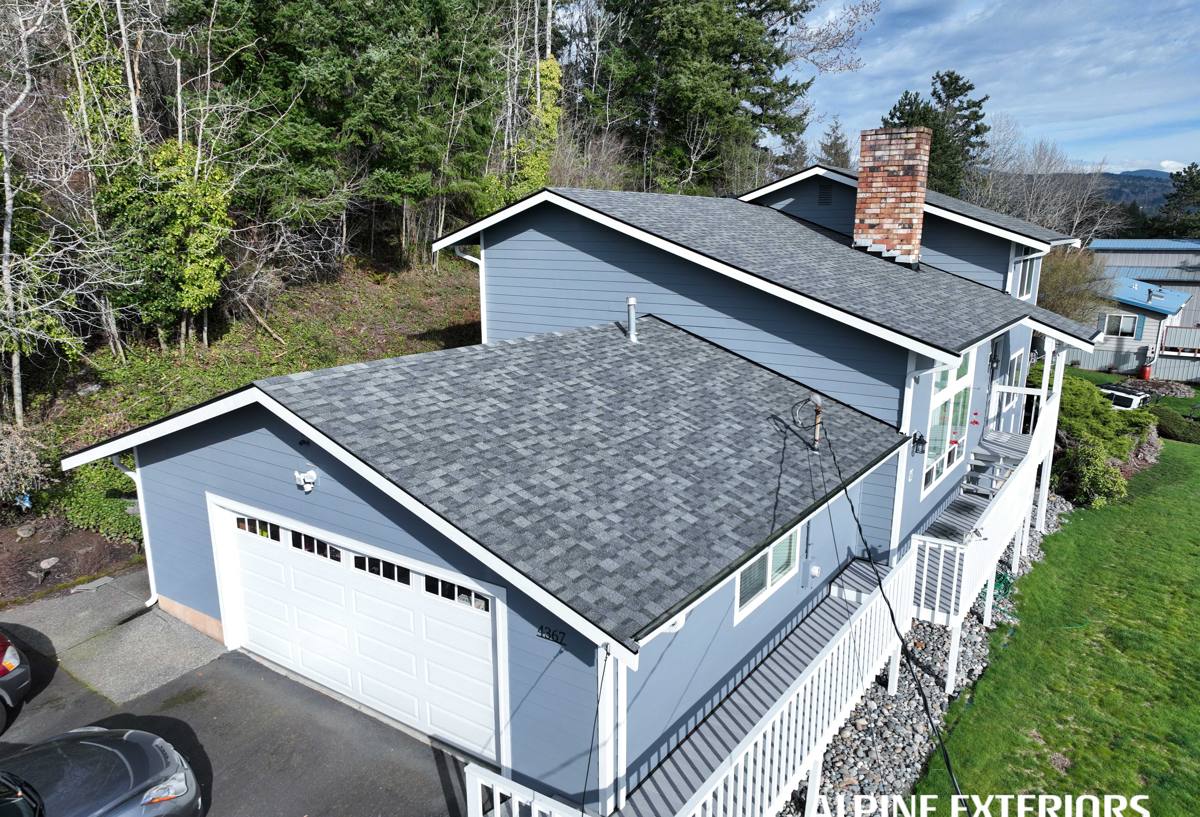
What the Climate Actually Does to a Roof Here
Moss and Organic Growth
Shade from surrounding trees keeps roof decks from drying out between rain events. Moss and algae take hold in that lingering moisture, and once established, moss doesn't just sit on top of shingles — it lifts tabs, holds water against the roofing material, and works its way under the surface over time. Left unaddressed for years, that constant moisture exposure shortens the life of almost any roofing material.
Driving Rain and Wind
Storms coming off the water don't just drop rain straight down — they push it at an angle, which means water finds its way under poorly lapped shingles, around undersized flashing, and into valleys that weren't detailed correctly. A roof built for a drier climate, or installed without attention to wind-driven rain, will leak here even if it would hold up fine somewhere else in the state.
Salt and Moisture in the Air
Western Washington's marine air carries a low but steady load of salt and moisture inland, and over years that air accelerates corrosion on exposed metal — fasteners, flashing, and vents in particular. It's a slower factor than moss or wind-driven rain, but it matters for material choice and for how a roof is detailed at every metal-to-shingle transition.
Signs a Sudden Valley Roof Needs Full Replacement
Not every roofing issue calls for a full tear-off. But in a climate this demanding, waiting too long on the wrong signs turns a roof job into a roof-and-deck-repair job. Watch for:
- Moss buildup that comes back within a season or two of cleaning, especially on shaded slopes
- Granules collecting in gutters or at downspouts, a sign shingles are wearing thin
- Curling, cracking, or cupped shingles, particularly on the roof's north or heavily shaded faces
- Soft spots or sagging when walked, which usually points to deck moisture damage underneath
- Daylight visible through the attic roof deck, or damp insulation after storms
- Flashing that's rusted, lifted, or was sealed with visible caulk rather than properly formed metal
- A roof that's already 20+ years old and has never been fully replaced, only patched
If a few of these apply, it's usually more cost-effective over time to plan a replacement on your terms than to keep chasing leaks after storms.
What a Correct Installation Involves
Tear-Off and Deck Inspection
We don't install a new roof over an old one, and we don't recommend it in this climate — trapped moisture between layers is exactly the kind of problem Sudden Valley's damp conditions create. A full tear-off lets us inspect the deck itself, replace any sheathing that's soft, delaminated, or water-stained, and confirm the structure underneath is sound before anything new goes down.
Underlayment Built for Wind-Driven Rain
Given how often rain here comes in sideways, underlayment isn't a place to cut corners. We use synthetic underlayment across the field for its water resistance and durability, with self-adhering ice-and-water membrane at valleys, eaves, and any other spot where water concentrates or wind can drive rain up under the shingle edge.
Ventilation and Moisture Control
A roof that can't breathe traps moisture in the attic, which speeds up deck rot and, in cold snaps, contributes to ice damming at the eaves. Balanced intake and exhaust ventilation is part of every replacement we do — it protects the new roof from the inside as much as the underlayment protects it from the outside.
Flashing and Valleys
Most leaks we're called out to trace back to flashing, not the shingles themselves. Chimneys, skylights, sidewalls, and valleys all get properly formed and lapped metal flashing, not caulk-and-hope repairs. In a wooded setting like Sudden Valley, valleys also tend to collect debris, so we detail them to shed both water and needles efficiently.
Roofing Material Options for Sudden Valley
There's no single "right" material for every home — it depends on your roof's shade exposure, your budget, and how much upkeep you want to take on. Here's how the common options stack up for this specific climate:
| Material | Moss/Moisture Resistance | Typical Lifespan | Maintenance |
|---|---|---|---|
| Architectural asphalt shingle | Good, with proper ventilation and periodic cleaning | 25–30 years | Occasional moss removal on shaded slopes |
| Standing seam metal | Very good — sheds moisture, resists moss growth | 40–50+ years | Low; check fasteners and coatings over time |
| Synthetic/composite shake | Good; more moisture-resistant than natural wood | 30–40 years | Low to moderate |
| Cedar shake (natural wood) | Requires the most upkeep in shaded, damp settings | 20–30 years with diligent maintenance | High — regular treatment and moss control needed |
For heavily shaded lots common around Sudden Valley, we generally steer homeowners toward architectural asphalt or metal, since both hold up better against sustained moisture with less ongoing maintenance. Natural cedar can look great, but it's an honest trade-off: it demands more consistent upkeep in a climate that stays damp as long as this one does, and we'll say so plainly if that's what your roof calls for.
Our Installation Process
- On-site inspection of the current roof, deck, ventilation, and any trouble spots specific to your lot's shade and drainage
- A written estimate that spells out material options, scope of work, and timeline before anything is scheduled
- Tear-off of the existing roofing down to the deck, with disposal handled as part of the job
- Deck repair where needed, followed by underlayment and ice-and-water membrane installation
- New roofing material installed to manufacturer specifications, with attention to valleys, flashing, and penetrations
- Ventilation check and adjustment to make sure intake and exhaust are balanced for the finished roof
- Final walkthrough and cleanup, including a magnetic sweep for stray fasteners around the property
Why a Crew That Already Works Sudden Valley Matters
Sudden Valley's roads, lot layouts, and tree cover aren't quite like working in central Bellingham — narrower access in places, more overhead branch clearance to plan around, and a private community setting that comes with its own community association. A crew that's already worked in the area knows how to plan equipment staging and material delivery without it becoming a headache for you or your neighbors, and understands that a lot of homes here were built or re-roofed under similar shade and moisture conditions, which shapes what actually holds up long-term.
If your property falls under the Sudden Valley community association's design guidelines, we're glad to work within whatever review process applies — just let us know up front so it's accounted for in the timeline, since we don't assume the specifics of every HOA's requirements without confirming them with you first.
Cost Factors for a New Roof in Sudden Valley
Roofing costs vary enough by home that we won't quote a number without seeing the roof, but the main factors that move the price are consistent:
| Factor | Why It Matters |
|---|---|
| Roof size and pitch | More square footage and steeper slopes mean more material, time, and safety setup |
| Number of existing layers | Extra tear-off layers add labor and disposal cost |
| Deck condition | Rot or soft sheathing found during tear-off adds repair cost, but skipping it isn't an option |
| Material choice | Asphalt, metal, and synthetic/cedar shake sit at different price tiers, shown above |
| Access and tree cover | Limited access or heavy overhead branches can add setup time |
| Valleys, penetrations, and flashing detail | More complex roof geometry means more flashing work |
We break all of this out in the estimate itself, so you're seeing what's driving the number rather than a flat lump sum.
Keeping a New Roof Healthy in This Climate
A correctly installed roof still benefits from a little seasonal attention here. Keep gutters clear so water isn't backing up under the roof edge, especially with the amount of tree debris common around Sudden Valley. Have moss addressed before it spreads rather than after, since early removal is far gentler on the shingles than scraping off years of buildup. And if branches overhang the roof, trimming them back reduces both shade-driven moss growth and the risk of physical damage during wind events. None of this is complicated, but it's the difference between a roof that reaches its full lifespan and one that needs attention years earlier than it should.
If you're weighing repair versus replacement, or just want an honest read on where your roof stands, we're happy to come take a look. Reach out for a free, no-pressure estimate — we'll walk the roof, explain what we find, and give you options, not a sales pitch.