 Bellingham Siding
 Energy-Efficient Windows in Lynden: Why This Corner of Whatcom County Changes the Math
Lynden sits inland in the Nooksack River valley, away from the direct salt spray of our waterfront service areas, but it still sits inside the same marine-influenced weather system that shapes exterior work across Whatcom County. That means a long heating season with mild but persistent cold, humid air moving through most months of the year, and driving rain that comes in sideways more often than it falls straight down. Windows are the single leakiest part of most building envelopes for heat, air, and sometimes water, so when a Lynden homeowner asks about energy-efficient windows, the honest answer involves more than picking a product off a spec sheet. It involves matching the glass and frame to a climate that's damp far more than it's hot or freezing, and installing it in a way that actually delivers the performance the label promises. Whatcom County's heating season runs long by national standards, even though extreme cold snaps are rare, so a window's ability to hold heat in matters more here, day after day, than its ability to block hot summer sun.
Bellingham Siding Company works on windows, siding, roofing, and decks across Whatcom County, and salt air, driving rain, and a long moss season all show up in how we approach every one of those trades. For window upgrades specifically, that regional reality shapes which products make sense here and which installation details we treat as non-negotiable.
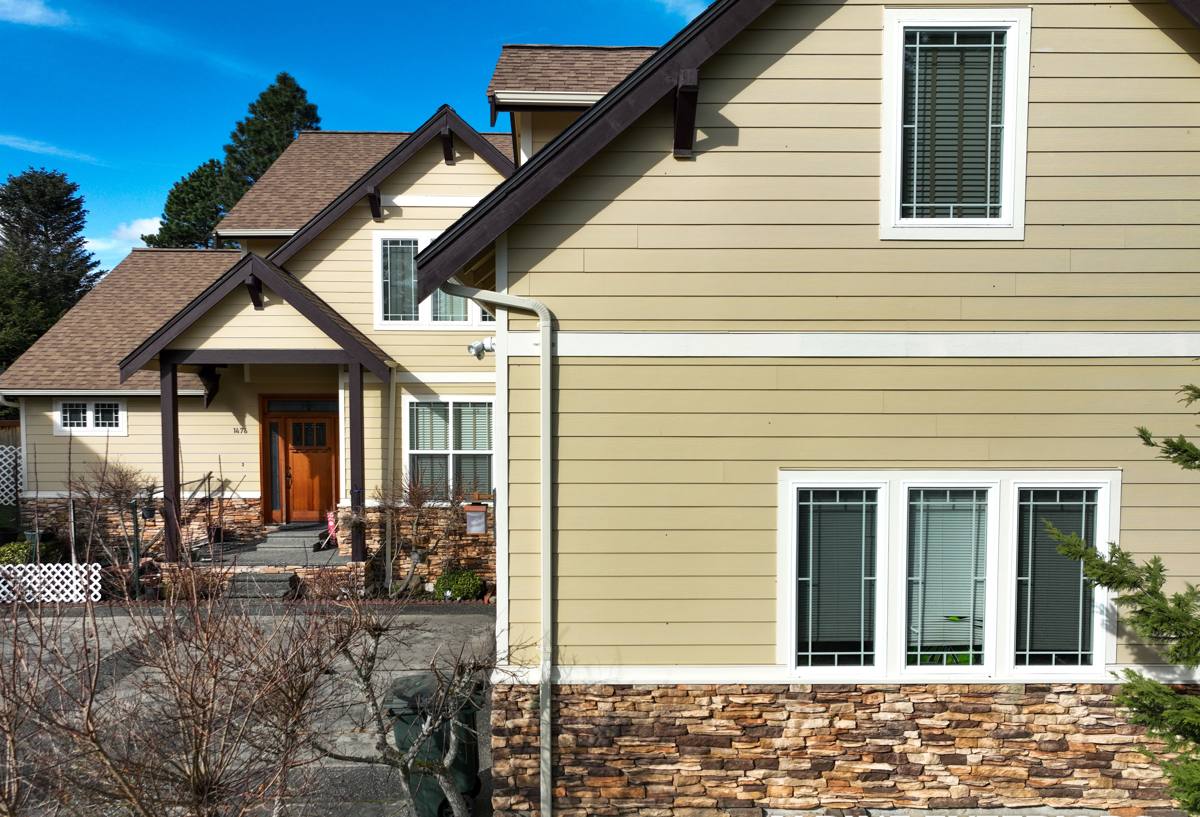
What "Energy-Efficient" Actually Means for a Window
"Energy-efficient" isn't a single number, and window marketing often leans on the term without explaining what's actually being measured. Three ratings matter most, and they're printed on the National Fenestration Rating Council (NFRC) label that should be attached to any legitimate replacement window:
- U-Factor — how well the window resists heat flow. Lower is better. This is the number that matters most in a heating-dominated climate like ours, since it directly relates to how much heat escapes through the window during the long stretch of cool, wet months.
- Solar Heat Gain Coefficient (SHGC) — how much solar heat passes through the glass. In a climate with as little intense summer sun as this one gets, SHGC matters less than it would in a hot, sunny region, though a south- or west-facing wall with a lot of glass can still benefit from a lower SHGC to avoid overheating a room on the rare hot day.
- Air Leakage (AL) — how much air passes through the window assembly itself. Lower is better, and this number is heavily influenced by installation quality, not just the window unit.
ENERGY STAR certification is a useful shorthand, but the specific U-Factor and AL numbers on the NFRC label tell you more about how a given window will actually perform on a specific wall of your house than the certification badge alone.
Double-Pane vs. Triple-Pane vs. Low-E Coatings: What's Worth Paying For Here
This is the question we get asked most often on efficiency-focused window projects, and the honest answer is that it depends on the wall, the budget, and how long you plan to stay in the home. The table below lays out the real trade-offs rather than defaulting to whichever option carries the higher price tag.
| Option | Typical U-Factor Range | What It Actually Buys You | Where It Makes the Most Sense in Lynden |
|---|---|---|---|
| Double-pane, standard Low-E coating | 0.27 - 0.32 | Solid baseline efficiency and condensation resistance at a moderate price | Most walls and most budgets; a reasonable default for a typical Lynden home |
| Double-pane, argon-filled with upgraded Low-E | 0.22 - 0.28 | Meaningfully better heat retention without the cost or weight jump of a third pane | Rooms with higher heating demand or drafty original windows |
| Triple-pane, argon or krypton-filled | 0.15 - 0.22 | The lowest heat loss and the warmest interior glass surface, which cuts condensation risk further | North-facing walls, homes with persistent condensation problems, or owners planning to stay long-term |
| Warm-edge spacer upgrade (any pane count) | Modest U-Factor improvement | Reduces heat loss and condensation right at the edge of the glass, where failures usually start first | Worth adding on almost any project in a climate this consistently damp |
Triple-pane windows are often marketed as the automatic best choice, but in a climate with mild winters and cool summers, the added cost doesn't always pay back as quickly as it would in a region with harsher temperature swings. For most Lynden homes, a well-installed double-pane window with a good Low-E coating and a warm-edge spacer delivers most of the real-world benefit at a lower cost. Triple-pane earns its keep on north-facing rooms, homes with a documented condensation problem, or when a homeowner plans to be in the house long enough for the extra upfront cost to matter less.
Frame Material Still Matters for Efficiency, Not Just Durability
Frame material affects thermal performance as much as the glass package does. Vinyl and fiberglass frames insulate better than aluminum, which conducts cold straight through unless it has a thermal break built in. Wood frames insulate well but require more upkeep to keep performing as designed in a climate this consistently wet. On a home with mixed sun and shade exposure across different walls, it's common to see one frame material work well overall while a specific elevation calls for extra attention to sealing details regardless of the material chosen. We'll walk through which frame material fits your home's exposure and budget rather than assuming one answer fits every wall.
Installation Is Where Efficiency Is Won or Lost
A window's NFRC rating is measured in a lab, under ideal installation conditions. In the field, sloppy installation can erode a meaningful share of that rated performance before the window is ever put to use. A few details determine whether a Lynden homeowner actually gets what they paid for:
- Continuous insulation and air sealing around the full perimeter of the frame, with no gaps that let conditioned air leak out or cold, damp air leak in
- Flashing integrated correctly with the housewrap or building paper, so wind-driven rain doesn't find its way behind the window and defeat the insulation around it
- A properly pitched sill pan, since trapped moisture at the sill doesn't just rot the frame over time — it also degrades the insulation's effectiveness
- Low-expansion foam or backer rod and sealant used correctly around the frame, instead of gaps stuffed with fiberglass batting that does little to stop air movement
- Correct reinstallation of interior and exterior trim so the air barrier isn't broken after the window itself is in place
Skip any of these and a triple-pane window with an excellent U-Factor can perform worse in practice than a properly installed double-pane unit. This is also where salt air and driving rain matter most — an air gap or flashing shortcut that would be a minor issue in a drier, calmer climate becomes a real energy and moisture problem here, where wind-driven rain tests every seam multiple times a month for most of the year.
The Moisture Side of Efficiency: Condensation Control in a Damp Climate
Efficiency and moisture control are more connected than most homeowners expect. A poorly insulated window has a cold interior glass surface, and cold glass in a humid house is exactly where condensation forms. That condensation runs down to the sill, and a sill that stays damp through a long moss season is a sill that eventually rots, whether the frame is wood or not. Upgrading to a window with a better U-Factor and a warm-edge spacer raises the interior glass temperature, which reduces condensation risk — meaning a genuinely efficient window installed correctly is also doing real work to protect the wall around it from moisture damage. This is one of the clearest examples in exterior work of how "efficient" and "durable" aren't separate goals; in this climate, they're largely the same goal approached from two directions.
Signs Your Current Lynden Windows Are Costing You Money
Not every inefficient window is obviously broken. Some of the clearest signs are subtle and easy to write off as normal for an older house:
- Noticeable cold spots or drafts near closed windows, especially on windy days
- Condensation or fogging that forms on the inside of the glass regularly through fall and winter
- Rooms near older or single-pane windows that are harder to keep comfortable than the rest of the house
- Visible daylight, gaps, or failed caulk around the frame from inside
- Higher heating bills than a similarly sized, similarly insulated home nearby
- Sills or trim that feel soft, stay damp longer than the rest of the wall, or show early mildew growth
Any one of these is worth a look. Several together usually mean the windows are actively working against your heating bill and, in a climate this wet, potentially against the wall assembly around them too.
Our Process: How We Evaluate and Recommend Efficiency Upgrades
We start by looking at the actual condition of your existing windows, not just their age, since a well-maintained twenty-year-old window can sometimes outperform a poorly installed new one. We check for drafts, condensation patterns, visible frame or sill damage, and how each wall's orientation and exposure affects what upgrade actually makes sense there. From that assessment, we'll walk you through realistic options — full-frame replacement where the existing flashing or frame is compromised, insert replacement where the opening is still sound, and which glass and frame package fits the wall in question, room by room if needed rather than a single blanket recommendation for the whole house. For homeowners weighing a full-house upgrade against tackling the worst-performing windows first, we'll lay out both paths honestly, including how a phased approach affects overall comfort and where the diminishing returns tend to show up. Some utility providers offer rebates or incentives for qualifying efficiency upgrades; it's worth checking with your provider before finalizing a decision, since availability and requirements change and we don't want to promise a program we can't confirm is currently active.
Why a Local Whatcom County Crew Matters for Efficiency-Focused Window Work
Energy performance on paper and energy performance in a real Lynden wall aren't always the same thing, and the gap between them usually comes down to installation experience with this specific climate. A crew that works across Whatcom County through every season has a feel for how much a given wall orientation actually suffers from wind-driven rain, how long moss season really runs on a shaded elevation, and which flashing and air-sealing habits are worth the extra time on install day. It also means fewer surprises mid-project, since a crew that has already solved these problems on other Lynden homes isn't learning the climate for the first time on your house. That local pattern recognition is hard to replace with a generic installation checklist, and it's a meaningful part of whether an efficient window actually stays efficient five or ten years after installation.
Beyond Windows: The Rest of the Building Envelope
Windows are one piece of a home's overall efficiency, and a window upgrade sometimes turns up related issues in the surrounding wall — soft trim, gaps in the housewrap, or insulation that settled or was never installed correctly. We also handle siding, roofing, and decks, so if an efficiency-focused window project uncovers a broader envelope issue, we can address it directly instead of sending you to track down a second contractor for a problem we already found.
If you're curious whether your Lynden home's windows are actually working for you or quietly working against your heating bill, we're glad to take a look. Reach out using the form below to schedule a free, no-pressure estimate — we'll give you a straightforward read on what your windows need and what a realistic upgrade would look like.