 Bellingham Siding
 What Sunnyland's Climate Does to Siding Over Time
Sunnyland sits close enough to Bellingham Bay that salt-laden air is a real factor in how exterior materials age here, and it's paired with the two things that define a Whatcom County winter: driving rain that comes in sideways off the water, and long stretches of gray, damp weather that never quite lets a house dry out. Add in the mature tree canopy that gives many Sunnyland streets their shade, and you get a moss season that can run from October well into spring on north- and east-facing walls.
None of that is unusual for Bellingham. But it does mean siding here is doing more work than siding in a drier climate, and the materials and installation details that would be fine somewhere else start to matter a lot more on a house a few blocks from the bay. Salt air accelerates corrosion on unprotected fasteners and trim. Wind-driven rain finds any gap in flashing or caulking that a calmer climate would never expose. Shade and moisture together are exactly what moss and mildew need to take hold.
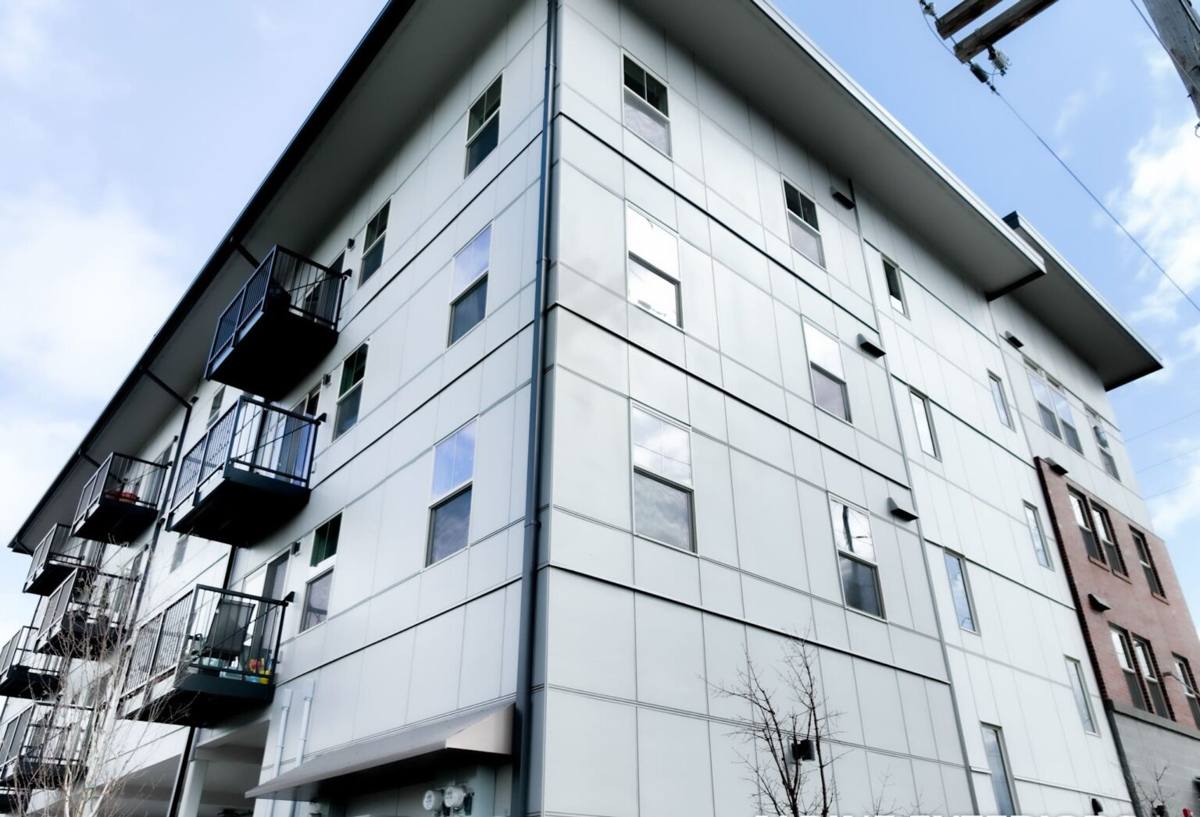
Why We Only Install James Hardie Fiber Cement
We standardized on James Hardie siding for every job we take on, including the ones in Sunnyland, and we don't install vinyl, LP SmartSide, Cemplank, Allura, or raw wood siding. Fiber cement doesn't absorb moisture the way wood-based products can, it's non-combustible, and it holds its shape and finish through the wet-dry cycling that a coastal Pacific Northwest climate puts a wall through year after year. Hardie's ColorPlus factory finish is baked on under controlled conditions rather than field-painted, which matters when you're trying to get consistent color and adhesion in a climate that doesn't offer many dry, low-humidity days for painting.
We're not going to tell you every other product is unusable — plenty of homes around here have vinyl or wood siding that's held up fine with regular upkeep. What we will say is that after years of doing this work in Whatcom County, fiber cement is the product we're willing to put our name behind, and it's the one we'd choose for our own house on a shaded, salt-exposed street like the ones in Sunnyland.
The Right Hardie Products for This Neighborhood
Sunnyland's housing stock is a mix — older bungalows and ramblers alongside newer infill construction — and the right Hardie specification depends on the home, not just the neighborhood. That said, a few things are consistent across most of the jobs we do in this area:
HZ5 Climate Zone Engineering
James Hardie makes region-specific formulations, and homes in our part of Washington get the HZ5 product line, engineered for freeze-thaw cycling and sustained moisture exposure. It's not a marketing distinction — the composition is different from the version sold in dry, hot climates, and it's the version we spec by default for anything in Bellingham.
Lap, Panel, and Trim
HardiePlank lap siding covers most wall area and comes in a range of exposures and textures, from smooth to a cedar-grain look for homes that want the traditional Pacific Northwest look without the maintenance of real wood. HardiePanel works well for accent areas, gable ends, or a more modern vertical look on newer builds. HardieTrim finishes out corners, window and door casings, and fascia in a material that won't rot the way dimensional lumber trim can once it's holding moisture against a wall for months at a time.
What a Correct Installation Actually Involves
Fiber cement siding is only as good as the installation behind it. In a climate that gets sustained wind-driven rain, the details that don't show up in a photo are the ones that determine whether a wall stays dry for the next 30 years or starts showing problems in five.
Water Management Comes First
Correct installation starts with a properly lapped weather-resistant barrier behind the siding, flashing integrated at every window, door, and horizontal trim transition, and a drainage plane that lets any moisture that does get past the siding find its way back out rather than sitting against the sheathing. This is the step that gets skipped most often on rushed jobs, and it's invisible once the siding goes up — which is exactly why it has to be done right the first time.
Fastening and Clearances
Hardie specifies exact fastener types, spacing, and clearances from grade, roof lines, and other siding — including a minimum gap where the siding meets decks, patios, and roofing so it isn't sitting in standing water or snow. Butt joints need to be caulked with a manufacturer-approved sealant or backed with H-molding, and every cut edge should get factory-matched touch-up paint so bare fiber cement isn't left exposed to the weather.
Caulking and Joint Detailing
In a climate with this much sustained rain, the sealant used at joints and penetrations matters as much as the siding itself. We use products rated for the movement and moisture exposure this region sees, and we don't rely on caulk to compensate for a flashing detail that should have handled the water in the first place.
Our Process From Estimate to Finished Job
The work follows the same sequence on every Sunnyland job, adjusted for the specifics of the house:
- On-site assessment of the existing siding, trim, and any visible moisture damage or ventilation issues
- Removal of old siding and inspection of the sheathing underneath, since this is often the first real look anyone's had at the wall in decades
- Repair of any damaged sheathing or framing found during tear-off, documented and discussed with you before we move forward
- Installation of the water-resistant barrier, flashing, and Hardie siding system to manufacturer spec
- Final trim, caulking, and touch-up paint at all cut edges and joints
- Walkthrough and punch list before we consider the job finished
Finding out what's actually under the old siding is one of the most valuable parts of this process for a homeowner. It's common in older Bellingham neighborhoods to find sheathing that's been quietly absorbing moisture for years without any visible sign from the outside.
Comparing Your Siding Options
Homeowners in Sunnyland often ask us to explain, in plain terms, how the material options actually compare for a climate like this one. Here's an honest breakdown:
| Material | Moisture & Moss Resistance | Salt Air Durability | Typical Maintenance |
|---|---|---|---|
| James Hardie fiber cement | Strong — doesn't absorb water or swell | Good with proper fastener and trim treatment | Occasional wash, minimal repainting for ColorPlus finish |
| Vinyl siding | Doesn't rot but can trap moisture behind it; prone to warping | Fasteners and trim more exposed to corrosion | Low, but limited repair options if damaged |
| LP SmartSide (engineered wood) | Vulnerable at cut edges and joints if not sealed correctly | Moderate — depends heavily on installation quality | Regular inspection of seams and caulking |
| Cedar / primed wood | Absorbs moisture, most susceptible to moss and rot in shade | Lower without diligent upkeep | Highest — periodic refinishing and sealing required |
This isn't a knock on every other product on this list — it's simply why, when we weighed the trade-offs against what a shaded, salt-exposed Bellingham lot demands, fiber cement is what we chose to build our business around.
Keeping Moss and Mildew From Taking Over
No siding material is completely moss-proof in a climate this wet and shaded, but the maintenance burden on correctly installed Hardie siding is low. A few habits go a long way toward keeping a Sunnyland home's siding looking clean year-round:
- Trim back tree branches and shrubs that keep siding shaded and damp longer than necessary
- Keep gutters clear so overflow isn't running down the wall during heavy rain events
- Rinse siding with a garden hose or low-pressure wash once or twice a year, focusing on north-facing and shaded walls
- Check caulk lines at joints and trim annually and have any cracked or missing sealant replaced before winter rains set in
- Avoid high-pressure washing directly at seams and joints, which can force water behind the siding
Why Hiring a Crew That Already Works in Sunnyland Matters
Siding installation isn't one-size-fits-all across Bellingham. A house a few blocks from the bay deals with more salt exposure than one further inland, and a lot under mature trees needs different moss and drainage planning than one in open sun. A crew that's done this work throughout Whatcom County brings that judgment to your specific lot instead of applying a generic spec sheet.
Local experience also means fewer surprises with permitting and inspection through the City of Bellingham, a better read on how older homes in established neighborhoods like this one were originally built and where problems tend to hide, and a realistic sense of how the local weather patterns should shape scheduling and sequencing on the job.
What Affects the Cost of a Sunnyland Siding Job
Every estimate is specific to the house, but the factors that move the price are consistent:
- Total square footage of wall area and the home's overall complexity (number of corners, gables, and trim details)
- Whether it's a full tear-off or, in limited cases, an install over existing siding
- Condition of the sheathing once old siding comes off — repairs are priced once they're found, not guessed at up front
- Accessibility of the site, including tree cover, slope, and how close the house sits to property lines
- Choice of HardiePlank profile, trim package, and ColorPlus color versus field-painted finish
We'd rather walk your property and give you real numbers than throw out a broad range that doesn't mean much until we've seen the house. If you're weighing options for your Sunnyland home, we're happy to take a look and put together a free, no-pressure estimate using the form below.