 Bellingham Siding
 Why Birchwood Homes Need Siding Built for This Climate
Birchwood is a well-established residential pocket of Bellingham, and like most of Whatcom County, it sits inside a marine climate that never really lets a house's exterior rest. Winters bring long stretches of driving rain pushed sideways by wind off the water. Summers stay mild and damp under tree cover. Between those two extremes, homes here spend most of the year holding onto moisture in one form or another — and salt-laden air moving inland off Bellingham Bay adds a corrosive edge that inland Washington towns don't deal with. Ordinary siding wasn't engineered with any of that in mind. James Hardie fiber cement was, which is the entire reason we've standardized on it for every Birchwood project we take on.
This page is about one thing specifically: what a correct James Hardie installation looks like on a Birchwood home, why the standard install steps matter more here than in a drier climate, and how our process is built around the realities of this neighborhood rather than a generic national playbook.
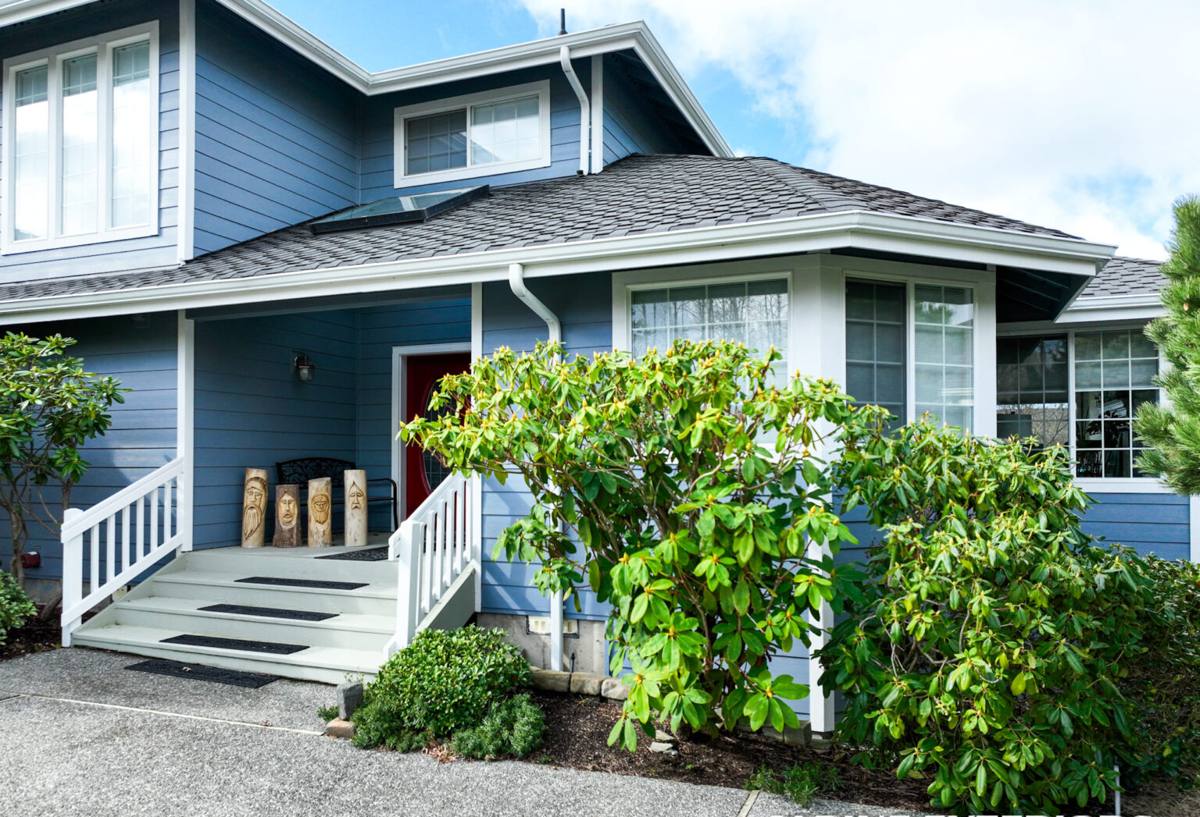
What Salt Air, Driving Rain, and Moss Actually Do to Siding
Salt Air and Corrosion
Airborne salt doesn't just affect homes sitting right on the water. It travels on wind and settles on exterior surfaces across the wider Bellingham area, including inland neighborhoods like Birchwood, especially during winter storm patterns. On siding materials with exposed metal fasteners, uncoated trim, or thin factory finishes, that salt accelerates corrosion and finish breakdown over years of exposure. Fiber cement itself is inert to salt — it's a cement-based product, not a metal or wood-based one — but the fasteners, flashing, and caulking used to install it still need to be chosen and detailed correctly, or the salt problem just moves to the weak points instead of the field of the siding.
Driving Rain and Wind-Driven Moisture
Whatcom County rain rarely falls straight down. Storms off the Strait of Georgia and Puget Sound tend to arrive with wind behind them, which drives water sideways into wall assemblies — under laps, around trim, and into any gap that wasn't sealed with intention. A siding product that can't shed wind-driven rain, or that swells and softens when it stays wet, turns small water intrusion into rot, mold, and sheathing damage that homeowners don't discover until it's expensive.
Moss and Prolonged Dampness
Between the tree cover common in Birchwood's older residential blocks and Bellingham's long, mild, wet stretches from fall through spring, moss and algae get a real head start on any siding surface that stays damp and shaded. Wood-based products absorb that moisture and can encourage rot underneath the growth. Fiber cement doesn't feed moss the way wood does, and a factory-baked finish resists the staining and biological growth that plague field-painted surfaces — but only if the siding was installed with the clearances and drainage details that let it actually dry out between rain events.
Why We Install Only James Hardie Fiber Cement
We don't install vinyl, LP SmartSide, other fiber cement brands, primed spruce, or cedar. That's not a marketing position — it's a standard we settled on after weighing how each of those products actually performs against a climate like this one. Vinyl expands, contracts, and can crack in cold snaps; it also doesn't hold up structurally to wind-driven rain the way a rigid product does. Wood and wood-composite sidings need more diligent maintenance to resist rot and moss in a climate this wet, and that maintenance burden gets passed straight to the homeowner. James Hardie is the one product line we've found holds its finish, its shape, and its water resistance in exactly the conditions Birchwood deals with every winter.
HardiePlank Lap Siding
HardiePlank is the workhorse most Birchwood homes end up with — a traditional lap profile available in several exposure widths and textures, from smooth to cedar-grain. It's non-combustible, doesn't support moss growth the way wood does, and holds a straight, tight reveal line for decades when installed to spec.
ColorPlus Technology
Rather than being painted on site, ColorPlus color is baked onto the panel at the factory in multiple coats. That finish resists fading, chipping, and the streaking that field-applied paint shows after a few wet seasons here. It also means touch-up paint isn't guesswork — it's matched to the factory formulation.
HZ5 Climate-Engineered Formulation
James Hardie makes region-specific formulations, and the HZ5 line is engineered for cold, wet climates like the Pacific Northwest. It's built to resist moisture-related damage and freeze-thaw stress better than a generic, one-size-fits-all fiber cement product — which matters in a county that sees both heavy winter rain and periodic hard frosts.
What a Correct Installation Involves — Not Just the Siding Itself
Most siding failures we get called to inspect aren't a product failure. They're an installation shortcut — usually in the water management details that never show up in a finished photo. On a Birchwood home, we treat these as non-negotiable:
Water Management Behind the Panel
- A continuous, correctly lapped weather-resistant barrier installed before any siding goes up
- Proper flashing at every window, door, and roofline intersection, integrated with the barrier so water sheds outward instead of behind the wall
- Minimum required clearance between siding and grade, decks, patios, and roof lines so splash-back and standing water don't sit against the bottom course
- Rainscreen or furring strategy where conditions call for it, giving the wall assembly an air gap to dry out between storms
Fastening and Manufacturer Specifications
James Hardie publishes specific fastener types, spacing, and placement requirements, and those specs exist for a reason — improper fastening is one of the most common causes of buckling, cracking, and premature finish failure. We install to those published specs, not to whatever's fastest, including in coastal-influenced areas where corrosion-resistant fastener selection matters more than it would inland.
Joints, Caulking, and Trim
Butt joints, trim intersections, and penetrations are where water finds its way in on a poorly built job. We use manufacturer-approved sealants at the right joints — and just as importantly, we know which joints Hardie's own details call for backer rod and sealant versus a flashed, self-draining approach that shouldn't be caulked shut at all.
How Our Process Works for Birchwood Homeowners
- On-site assessment. We walk the home, check the current siding and sheathing condition, note moss and moisture patterns specific to the lot's shade and exposure, and identify any rot or water damage that needs addressing before new siding goes on.
- Product and profile selection. We help homeowners choose the HardiePlank exposure, texture, and ColorPlus color that fits the home and holds up to this climate — not just what looks good in a sample chip.
- Tear-off and substrate prep. Old siding comes off, sheathing is inspected and repaired as needed, and any hidden moisture damage gets addressed rather than covered over.
- Weather barrier and flashing installation. This is the step that determines whether the job survives its first few winters, and we don't rush it.
- Siding installation to manufacturer spec. Correct fastening, clearances, and joint treatment throughout.
- Final inspection and walkthrough. We review the finished work with the homeowner before calling the job done.
Siding Materials in This Climate: A Practical Comparison
| Factor | James Hardie Fiber Cement | Vinyl | Wood / Wood Composite |
|---|---|---|---|
| Resistance to moss and algae staining | High, especially with ColorPlus finish | Moderate, but can trap moisture behind panels | Low — wood is an organic surface moss and algae readily colonize |
| Performance in wind-driven rain | Rigid, dense panel resists deformation and water intrusion when properly flashed | Can flex, buckle, or blow off in high wind; seams are vulnerable | Absorbs moisture at joints and end grain, leading to rot over time |
| Behavior near salt-influenced air | Inert to salt; fasteners/trim chosen for corrosion resistance | Panel itself is inert, but can become brittle and discolor over time | Fasteners and exposed grain are vulnerable to salt-accelerated wear |
| Finish longevity | Factory-baked ColorPlus finish holds color for years | Color is through-body but can fade and chalk | Requires repainting or restaining on a recurring cycle |
| Fire resistance | Non-combustible | Combustible, can melt or warp near heat sources | Combustible |
Maintaining Your Siding After Installation
Hardie siding is low-maintenance, not no-maintenance. In a climate that grows moss on anything shaded and damp, a little seasonal attention goes a long way toward protecting the investment.
- Rinse the exterior with a garden hose once or twice a year to clear pollen, dust, and early moss spores before they take hold
- Trim back vegetation and tree branches that keep any wall section in constant shade and dampness
- Check gutters and downspouts each fall so overflow doesn't run down the wall face all winter
- Inspect caulking at trim and penetrations annually and have gaps resealed before the wet season sets in
- Avoid pressure washing directly into joints or at close range, which can force water behind the panel
Why a Crew That Already Works in Birchwood Matters
A siding crew that's worked Birchwood and the surrounding Bellingham neighborhoods repeatedly has already seen how the lot orientation, tree cover, and exposure patterns common to this area affect a wall assembly over time. That's not something a crew coming from a drier region, or one that mainly installs vinyl, picks up quickly. We know which sides of a house in this neighborhood tend to hold moss the longest, which flashing details matter most given the wind-driven rain pattern here, and how to sequence a tear-off and re-side around Whatcom County's wet season instead of fighting it. That local pattern recognition shows up in fewer callbacks and a wall assembly that's actually built for where it stands.
Get a Straight Answer About Your Home
If your Birchwood home's siding is showing moss buildup, cracked or warped panels, or paint that won't hold anymore, it's worth getting a professional look before those problems reach the sheathing underneath. We'd be glad to walk your property, answer questions honestly, and put together a free, no-pressure estimate using the form below.