 Bellingham Siding
 Siding Replacement Built for Happy Valley's Weather
Happy Valley sits close enough to Bellingham Bay that homes here take on a specific combination of punishment: salt-laden air drifting off the water, driving rain that comes in sideways during winter storms, and a moss season that can stretch from fall through spring under the neighborhood's mature tree canopy. Individually, any one of those is manageable. Together, over ten or fifteen years, they wear down siding faster than homeowners expect — especially siding that wasn't engineered for a coastal Pacific Northwest climate in the first place.
This page is about one thing: full siding replacement for Happy Valley homes, done in a way that actually accounts for what this specific location does to a house. Not a generic overview of siding — a straight answer on what your home needs, what a correct job looks like, and what our process involves when we're working in this neighborhood.
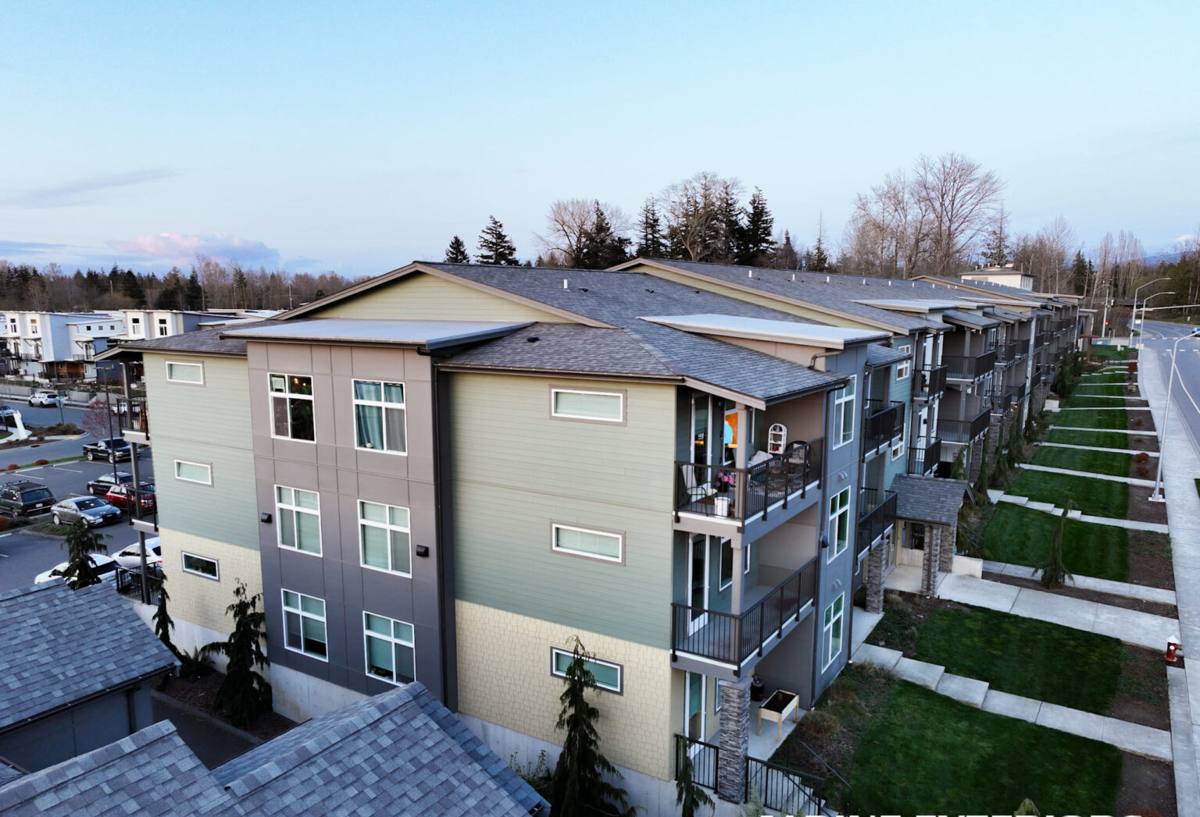
What Salt Air, Rain, and Moss Actually Do to Siding
It helps to understand the mechanism, not just the symptom, because it explains why some siding materials hold up here and others don't.
Salt Air
Airborne salt is hygroscopic — it pulls moisture out of the air and holds it against whatever surface it settles on. On painted wood or lower-grade composite siding, that means the surface stays damp longer than it would a few miles inland, which accelerates paint failure, swelling, and rot at seams and fastener points.
Driving Rain
Wind-driven rain off the bay doesn't just wet the face of a wall — it gets pushed sideways and upward, finding its way behind poorly lapped siding, undersized flashing, and gaps around trim and penetrations. Once water gets behind the siding, the problem stops being cosmetic and becomes structural: sheathing rot, framing damage, and mold inside the wall cavity.
Moss and Mildew
Shaded, tree-covered lots — common throughout Happy Valley — stay damp longer after every rain event. That extended dampness is exactly what moss and mildew need to establish on siding, trim, and especially north-facing walls that get little direct sun. Beyond the appearance issue, moss holds moisture against the siding surface around the clock, which compounds everything above.
Signs a Happy Valley Home Needs Siding Replacement, Not Just Repair
Repair makes sense when damage is isolated. Replacement becomes the right call when the damage is systemic — when the material itself is failing, not just one board or one section. Signs worth taking seriously:
- Soft or spongy spots when you press on the siding, especially near the bottom courses and around window and door trim
- Paint that won't hold — repeated peeling or bubbling within a few years of repainting
- Persistent moss or dark staining that returns quickly after cleaning, particularly on shaded walls
- Visible warping, cupping, or delamination in the siding panels or boards
- Gaps opening up at seams, corners, or where siding meets trim
- Rising heating or cooling bills that don't match recent usage — often a sign moisture has degraded the wall assembly behind the siding
- Interior signs: musty smell, discoloration, or soft drywall on exterior-facing walls
If you're seeing two or more of these, it's worth having someone look at the whole wall system rather than patching individual spots.
Why We Install Only James Hardie Fiber Cement
We don't install vinyl, LP SmartSide, primed spruce, cedar, or other fiber cement brands. That's a deliberate standard, not an oversight, and in a climate like Happy Valley's the reasoning holds up especially well.
James Hardie fiber cement is engineered specifically for regional moisture conditions — the HZ5 product line used in Western Washington is formulated for wetter, cooler climates, which matters when you're dealing with driving rain and extended damp periods rather than dry heat. It's non-combustible, which is a real advantage during wildfire season smoke and ember exposure that has become more common across Western Washington summers. The factory-applied ColorPlus finish is baked on under controlled conditions and holds color and resists moisture intrusion far better than field-applied paint, which means fewer repaint cycles and less opportunity for water to get behind a failing paint layer.
None of that makes fiber cement magic — installation quality still determines most of the outcome, which is why the next section matters as much as the material choice.
What a Correct Installation Involves in This Climate
In a low-moisture climate, installation mistakes can go unnoticed for years. In Happy Valley, they show up fast. The details that matter most here:
Weather-Resistive Barrier
A continuous, properly lapped weather barrier behind the siding is the last line of defense if wind-driven rain gets past the exterior surface. Every seam, penetration, and transition needs to be sealed and shingled correctly — water always needs a path down and out, never a path in.
Flashing
Windows, doors, and any horizontal trim need flashing that directs water outward, not just caulk. Caulk fails; properly lapped flashing doesn't rely on a seal staying intact for twenty years.
Clearances
Hardie siding needs proper clearance from the roofline, decks, and grade — generally a minimum gap to avoid wicking moisture up from below or trapping water where the siding meets another surface. This is one of the most commonly skipped details on rushed installs, and it's often the first place rot shows up.
Fastening
Fastener spacing, type, and placement affect how the panels perform through wind and moisture cycles. Manufacturer fastening specs exist for a reason, and following them is part of keeping the warranty valid.
Caulking and Joint Treatment
Butt joints and trim intersections need the right sealant, applied correctly, not just enough to look finished. In a high-rain environment, a bad joint is where water intrusion starts.
Our Process for a Happy Valley Siding Replacement
- On-site assessment. We walk the exterior, check for moisture damage behind the current siding where accessible, and look at how the house's orientation and tree cover affect sun and shade exposure — that shapes where moss and mildew are likely to keep coming back.
- Removal and inspection. Old siding comes off and we inspect the sheathing and framing underneath for rot or damage before anything new goes up. This step catches problems that aren't visible from outside.
- Repair and prep. Any damaged sheathing or framing gets addressed before the weather barrier goes on. Skipping this step and covering damage with new siding is how future problems get built into the wall.
- Weather barrier and flashing installation. This is the layer that does the real work of keeping driving rain out, and it's installed to manufacturer and code specifications, not shortcuts.
- Hardie siding installation. Panels or lap siding go up with correct fastening, clearances, and joint treatment throughout.
- Trim, caulking, and final detailing. Every seam and transition gets finished properly, since these are the spots most likely to leak if rushed.
- Walkthrough and cleanup. We review the finished work with you and clear the site.
Cost Factors for Siding Replacement
Every home is different, but the main variables that move the price on a Happy Valley siding replacement are consistent:
| Factor | Why It Matters |
|---|---|
| Home size and wall complexity | More corners, gables, and dormers mean more cutting, flashing, and labor time |
| Extent of hidden damage | Rot found in sheathing or framing during tear-off adds repair scope before new siding can go on |
| Siding profile chosen | Lap siding, shingle-style panels, and board-and-batten have different material and labor costs |
| Tree cover and access | Heavily shaded, tightly landscaped lots common in Happy Valley can slow staging and cleanup |
| Trim and detail work | Window and door trim, corner boards, and fascia detailing add finish-level labor |
| Existing siding removal | Multiple layers of old material or difficult removal (e.g., embedded fasteners) adds time |
We give firm, itemized estimates after an in-person assessment rather than ballpark numbers over the phone — hidden damage is common enough in this climate that a phone quote isn't a responsible number to give you.
Why It Matters That We Already Work in This Neighborhood
A crew that's worked in Happy Valley before isn't guessing at how the local conditions affect the job. We know what tree cover and shade patterns tend to mean for moss return, how driving rain off the bay behaves against different wall orientations, and what to look for when we open up an older wall in this part of Bellingham. That translates into fewer surprises mid-project and a more accurate estimate up front.
It also means familiarity with Bellingham and Whatcom County permitting requirements, so paperwork doesn't stall the schedule, and a realistic sense of how weather windows work here — timing tear-off and weather barrier installation around rain rather than hoping it holds off.
Get a Straight Answer About Your Siding
If your Happy Valley home is showing signs of moisture damage, recurring moss, or siding that's simply past its service life, it's worth getting an honest, in-person assessment before deciding between repair and replacement. We'll walk the exterior with you, explain what we find, and give you a clear, no-pressure estimate — free of charge, with no obligation to move forward. Use the form below to get started.