 Bellingham Siding
 Why Siding in the Puget Area Has to Work Harder
Homes near Bellingham Bay and the surrounding Puget Sound shoreline deal with a combination of stressors that inland Whatcom County houses don't see nearly as much: salt-laden air off the water, wind-driven rain that hits siding sideways instead of straight down, and a moss and algae season that can run from fall through spring given how little the north and shaded sides of a house dry out. Any one of these is manageable. Together, over years, they expose the difference between siding that was installed correctly and siding that was just installed fast.
This page is about one job in one area: putting James Hardie fiber cement siding on a Puget-area home the right way, with the flashing, fastening, and gapping details that matter here specifically — not a generic rundown of what fiber cement is.
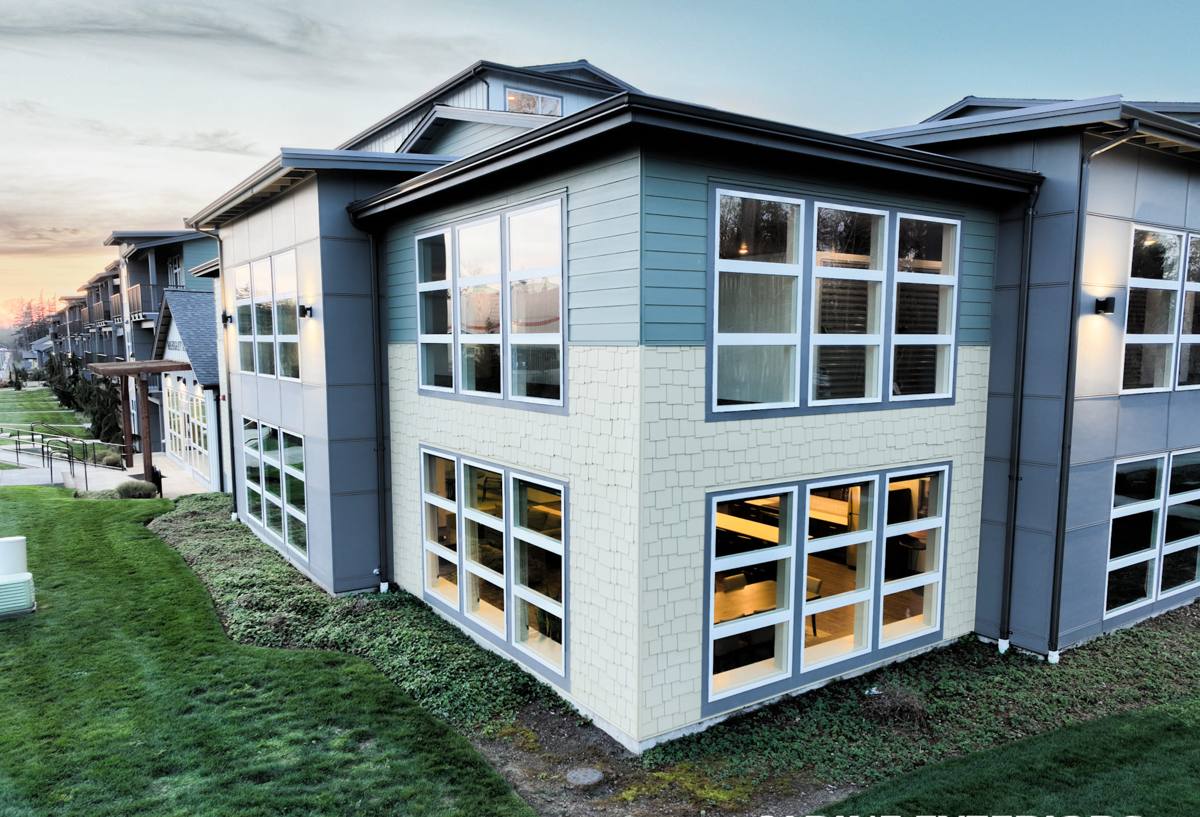
The Three Things Local Siding Actually Has to Resist
Salt Air
Proximity to the Sound means airborne salt settles on exterior surfaces and, more importantly, on fasteners and flashing. Standard fasteners can corrode faster near the water than they would ten or fifteen miles inland. This is a hardware and detailing issue as much as a siding issue — the board can be fine while the fastener holding it fails underneath.
Driving Rain
Storms coming off the Sound don't just fall on a house, they push against it. That means water finds its way sideways and upward at laps, corners, and trim joints that would stay dry in a calmer climate. Siding that relies on caulk alone to stay sealed in these conditions is a maintenance problem waiting to happen; siding that's lapped, flashed, and gapped correctly sheds that water by design.
Moss and Algae
Bellingham's wet season keeps shaded walls, north-facing elevations, and anything near overhanging trees damp for long stretches. Painted wood and some engineered wood products give moss and algae organic material to grow on and hold moisture against. It's less about whether a surface gets wet — everything here does — and more about whether it dries back out and whether the finish resists growth in the meantime.
What a Correct Fiber Cement Install Involves
Fiber cement itself is not the whole story — how it goes on the wall is what determines whether a home actually gets the protection the product is capable of. For this climate, that means:
- A drainage gap (rainscreen) behind the siding so any water that does get past the surface has somewhere to go instead of sitting against the sheathing
- Corrosion-resistant fasteners appropriate for the coastal exposure, driven to the manufacturer's pattern and depth — not overdriven, which cracks the board's edge and opens a path for water
- Factory-cut and field-cut edges sealed before installation, since a raw cut edge is the most water-absorbent part of any fiber cement board
- Proper lap and clearance dimensions — minimum overlap between courses, and correct clearance from grade, roof lines, decks, and horizontal surfaces
- Flashing at every horizontal trim piece, window head, and roof-to-wall intersection, installed to shed water outward rather than relying on sealant to do that job
- Kick-out flashing anywhere a roofline meets a wall, so runoff is directed into the gutter instead of behind the siding at that corner
None of this is unique to Puget or to Hardie board specifically — it's just that skipping it costs more here, faster, because of how much water this area actually sees.
Why We Only Install James Hardie
We install James Hardie fiber cement exclusively. We don't install vinyl, LP SmartSide, primed spruce, cedar, or other fiber cement brands like Allura or Cemplank. That's a deliberate standard, not a sales pitch — after years of installing and repairing siding in this climate, Hardie's combination of non-combustible material, factory-applied ColorPlus finish, and climate-specific engineering held up to scrutiny in a way the alternatives didn't for us. Vinyl can warp and doesn't hold color well under UV and salt exposure over decades. Wood and wood-based composite products need more diligent maintenance to keep moisture and organic growth from taking hold in a climate that stays damp this much of the year. We'd rather stand behind one product system we trust completely than offer several and let cost be the deciding factor.
The Right Product Line for This Climate
James Hardie engineers its siding by climate zone, and homes in Whatcom County fall into the HZ5 zone — built for regions with sustained wet weather and freeze-thaw cycles, as opposed to the HZ10 formulation made for hot, humid southern climates. HZ5 boards are engineered for moisture performance in exactly the conditions the Puget area produces. Layered on top of that, ColorPlus Technology bakes the finish onto the board at the factory under controlled conditions, which gives it better resistance to fading, chipping, and the kind of surface breakdown that gives moss and algae something to grip. Field-painted siding never quite matches that consistency, no matter how good the paint job.
Comparing the Options for a Coastal Whatcom County Home
| Factor | James Hardie Fiber Cement | Vinyl | Cedar / Primed Wood |
|---|---|---|---|
| Moisture behavior in driving rain | Strong when laps, flashing, and gaps are done correctly | Can flex and gap at seams under wind-driven rain | Absorbs moisture; needs sealed, maintained finish |
| Salt air exposure | Material itself is inert; hardware/detailing must match exposure | Can become brittle and discolor faster near salt air | Finish breaks down faster; more frequent recoating |
| Moss/algae resistance | ColorPlus finish resists organic growth better than field paint | Resists growth but shows dirt and staining over time | Organic material is more prone to hosting growth |
| Fire rating | Non-combustible | Combustible | Combustible |
| Typical maintenance | Occasional wash; repaint only if ever desired | Occasional wash; no repainting but can't be refinished well | Regular inspection and recoating on a multi-year cycle |
Cost Factors for a Puget-Area Job
Every home is different, but a few things move the price more here than they would on a simpler inland job:
| Cost Factor | Why It Matters Locally |
|---|---|
| Existing siding removal and sheathing condition | Long-term moisture exposure sometimes means sheathing repair is needed before new siding goes on |
| Flashing and rainscreen detailing | More flashing points and full rainscreen coverage take more labor than a bare minimum install |
| House orientation and exposure to the water | Elevations facing the Sound or prevailing weather may warrant extra attention at laps and corners |
| Trim and corner treatment | Custom trim work versus standard corner boards affects both material and labor |
| Color and accessory selection | ColorPlus color choice and trim coordination are priced into the material package |
We give a written, itemized estimate before any work starts so you can see exactly where the cost is going rather than a single lump number.
Our Process on a Puget-Area Home
We start with a walk-around of the whole exterior, not just the elevation that prompted the call — moisture issues on a Puget-area home often show up on one wall while the actual cause is drainage or flashing somewhere else. From there:
- We inspect the existing siding, sheathing, and trim for hidden moisture damage before quoting the job
- We confirm the rainscreen and flashing plan for the specific elevations that take the most wind and rain
- We install per James Hardie's published fastening, clearance, and lap specifications for the HZ5 product line
- We seal every cut edge and finish every corner and penetration with proper flashing rather than relying on caulk alone
- We do a final walkthrough with you before calling the job complete
What to Check Before You Sign With Any Crew
Whether you go with us or someone else, these are the details worth asking about on a Puget-area fiber cement job:
- Do they install a rainscreen gap, or nail the boards straight to the sheathing?
- What fastener type are they using, and is it rated for coastal/salt-air exposure?
- Will they seal every field-cut edge, or only the factory edges?
- Do they install kick-out flashing at roof-to-wall intersections?
- Are they a James Hardie-recognized installer familiar with HZ5 specifications?
- What does the written warranty actually cover — material only, or workmanship too?
A crew that already works the Puget area and Bellingham generally has usually already seen how a particular elevation or lot handles moisture, because they've been back to similar homes for follow-up work, referrals, or repairs. That familiarity shows up in fewer callbacks, not in the sales pitch.
Get a Straight Answer for Your Home
If you're weighing a siding replacement on a Puget-area home in Bellingham, we're happy to take a look and tell you honestly what your house needs — no pressure, no inflated scope. Fill out the form below for a free estimate.