 Bellingham Siding
 Deck Replacement for York-Area Homes
York is one of the older, established neighborhoods in Bellingham, and a lot of the decks in this part of town were built years or decades ago, often with materials and fastening methods that simply weren't built for the amount of moisture Whatcom County throws at an outdoor structure. A deck has no roof over it and no siding to shed water away from its structure. It sits exposed to salt-tinged marine air, wind-driven rain, and a moss season that can run most of the year, absorbing that punishment directly on every board, joist, and fastener.
Replacement is a different job than a first-time deck build. There's usually an existing structure to remove, a ledger connection into the house that may or may not have been flashed correctly the first time, and often hidden damage that only becomes visible once the old decking comes off. This page covers what deck replacement actually involves for a York home, how to tell when replacement is the right call instead of repair, and what our process looks like from first visit to finished deck.
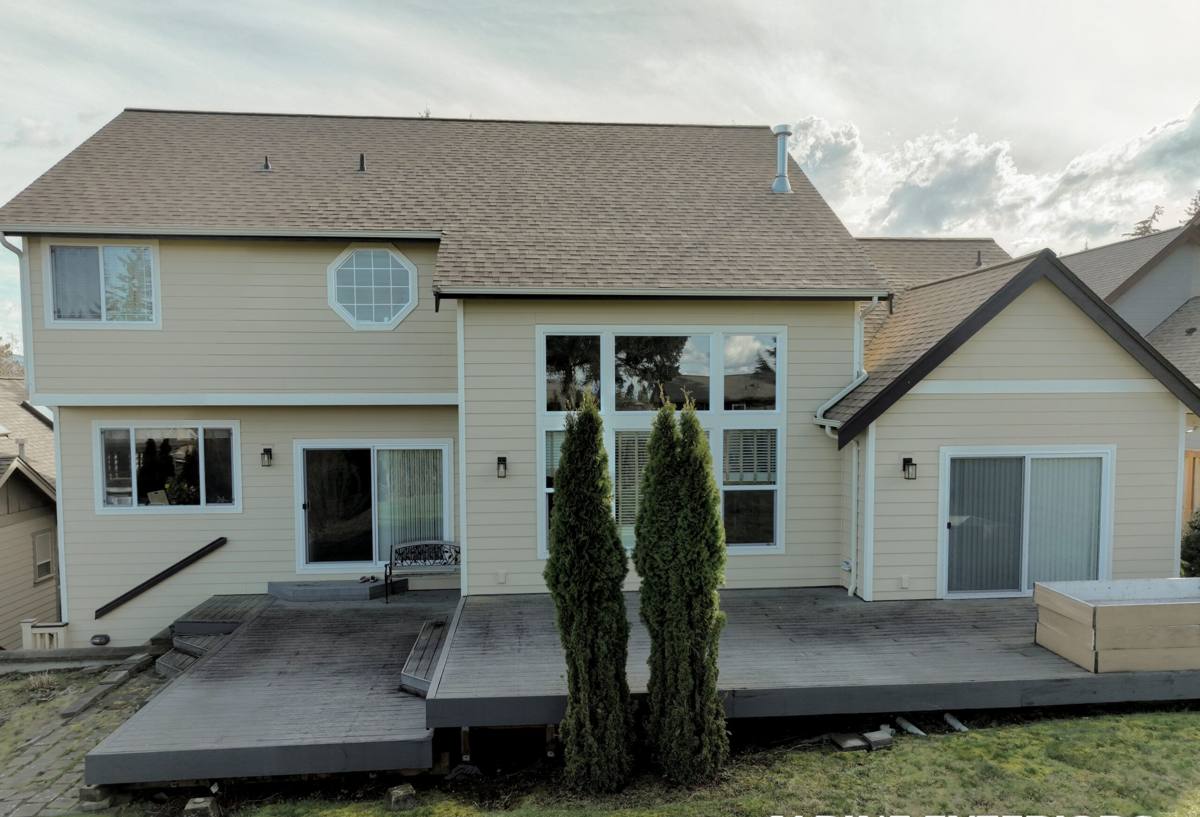
What This Climate Does to an Aging Deck
Marine Air and Salt Exposure
Bellingham's proximity to the bay means a steady flow of salt-tinged, moisture-heavy air moves through York and the surrounding neighborhoods year-round, not just during obvious storms. On a deck, that exposure accelerates corrosion in fasteners, brackets, and post hardware. A fastener that's quietly corroding loses holding strength well before it looks obviously bad from the surface, which is part of what makes an aging deck riskier than it looks.
Driving Rain
Rain in this part of Whatcom County regularly comes in at an angle instead of falling straight down, and that matters on a horizontal surface like a deck. Wind-driven rain gets pushed up under railings, into ledger connections, and between boards that have closed up over time as older wood swells and shifts. A deck that drained fine when it was first built can develop trapped moisture pockets years later simply because the gaps and grading have changed.
A Long Moss Season
Mild temperatures and near-constant dampness give moss and mildew an extended growing season here, and a horizontal deck surface holds water longer between rain events than a vertical wall ever does. Shaded decks, and decks under tree cover common in older York yards, are usually first to show it. On an aging deck, moss buildup often signals more than a cosmetic problem — it points to a surface that's staying wet longer than it should.
Signs Your Deck Has Reached the End of Its Useful Life
Not every deck problem means full replacement, but certain signs point away from a simple repair and toward starting over. Before assuming the worst, it's worth having someone actually get underneath the deck and check the framing, not just look at the surface boards.
- Soft, spongy, or springy decking boards, especially near the house or in shaded areas
- Visible rot, splitting, or crumbling wood at the ledger board, posts, or joists
- A railing or post that wiggles or feels loose when pushed
- Rust staining running down from fasteners, or fastener heads that have corroded and lost their grip
- Gaps that have widened or closed unevenly across the deck surface, a sign of framing movement
- Standing water or damp soil underneath the deck that never fully dries out between rain events
- A ledger connection with no visible flashing, or flashing that's cracked, rusted, or pulling away from the house
- A deck that's simply reached 20-plus years old on original wood framing without major upgrades along the way
Repair or Replace: How We Make That Call
An isolated problem — a few soft boards, a loose railing section, a single damaged post — can often be repaired without touching the rest of the structure, and we'll say so plainly if that's what a deck actually needs. Full replacement makes sense when the framing itself has been compromised, when rot has reached the ledger or main support posts, or when the deck was built to a standard that doesn't hold up structurally or safely anymore. Patching a deck with failing framing underneath usually just delays a bigger job and adds cost on top of the eventual replacement, without solving the actual problem.
We walk the structure from underneath whenever it's accessible, probe suspect framing members, and check the ledger connection before making a recommendation either way. That inspection is what the decision should be based on, not the age of the deck alone or how the surface boards happen to look on a given day.
What a Correct Deck Replacement Involves
Tearing off an old deck and building a new one in its place is an opportunity to fix problems the original build never addressed, and in this climate, that matters more than it might elsewhere. A replacement done right for a York home includes:
- Full removal of the old structure, including framing and posts if they show any sign of rot or corrosion damage, not just the visible decking boards
- Inspection of the ledger area on the house once the old deck is off, since that's often where hidden moisture damage has been developing unseen for years
- Proper ledger flashing at the house connection, a detail that's frequently missing or done incorrectly on older decks and is one of the most common points where water gets behind the wall assembly
- Framing sized and fastened correctly for the new decking product's span rating and the site's actual load requirements
- Corrosion-resistant fasteners and hardware throughout, suited to this climate's sustained moisture and salt exposure rather than standard hardware that starts corroding within a few seasons
- Correct board gapping for drainage and material movement, so the new deck can actually shed wind-driven rain instead of trapping it
- Grading and ventilation underneath the new structure so moisture doesn't sit against the framing between storms
- Footings evaluated and reused only if they're still structurally sound and set to current code depth, not assumed good just because they were there before
Skipping any of those steps to save time on a replacement usually means the new deck looks great on day one and starts showing the same problems as the old one within a few wet seasons.
Choosing Decking Material for a Replacement
Because a replacement is a clean start, it's a natural point to reconsider decking material rather than automatically matching what was there before. The right choice depends on budget, how much upkeep you want to take on, and how exposed the specific site is to sun, shade, and moisture.
| Material | Moisture & Salt Air Handling | Moss Resistance | Ongoing Upkeep |
|---|---|---|---|
| Cellular PVC | Excellent — no wood fiber to absorb moisture | Strong; smooth, non-porous surface | Occasional washing |
| Capped composite | Strong — cap layer resists moisture and staining | Good on most product lines | Occasional washing |
| Uncapped composite | Moderate — some absorption at exposed fiber edges | Fair; more prone to buildup over time | Periodic cleaning |
| Cedar | Moderate — natural resistance, but needs sealing | Fair when sealed and maintained | Regular oiling or sealing |
| Pressure-treated wood | Weak against sustained salt exposure over time | Poor without regular treatment | Regular sealing or staining |
Homeowners replacing an old wood deck often move to capped composite or PVC specifically to get out of the sealing and staining cycle that a York deck's moss-prone shade and rain exposure makes especially demanding. Others prefer the look and lower material cost of wood and accept the maintenance schedule that comes with it. Either is a legitimate choice — what matters is going in with a clear picture of what each material actually asks of you over the next 15 to 25 years.
Permitting for Deck Replacement
Most deck replacement work in the City of Bellingham requires a permit, particularly when the structure is being rebuilt rather than just having boards swapped on an otherwise sound frame, since permitting is generally tied to structural work rather than surface materials alone. Requirements typically touch on setback from property lines, guardrail height and spacing if the deck is elevated, footing depth, and ledger attachment method. We handle the permitting process as part of the job rather than leaving a homeowner to sort out the paperwork on their own, and we build to the standard the permit requires rather than treating it as a formality to get past.
Cost Factors for a York Deck Replacement
| Factor | What It Affects | Why It Matters Here |
|---|---|---|
| Deck size and layout | Total material and labor | Multi-level or wraparound decks common on older York homes add framing complexity |
| Extent of hidden damage | Framing and ledger repair costs | Older decks often hide moisture damage that isn't visible until tear-off begins |
| Decking material selected | Material cost and long-term upkeep | Composite and PVC cost more upfront but reduce the maintenance this climate demands |
| Footing condition | Whether footings are reused or replaced | Sustained ground moisture around older footings can affect their long-term soundness |
| Railing and stair scope | Labor and material for guardrails, stairs | Code requirements for guardrail height and spacing apply on most elevated replacements |
An accurate number comes from actually seeing the site and, ideally, getting a look underneath the existing deck before old boards come off, which is part of why we walk the property before quoting rather than pricing from square footage alone.
How Our Replacement Process Works
We start with a site visit to look at the existing deck, both the visible surface and, wherever we can access it, the framing and ledger connection underneath. That tells us realistically whether we're dealing with a full replacement or something less. From there we walk through decking material options against your budget and how the space actually gets used, and we handle the Bellingham permit application as part of the job.
Once permitted, tear-off comes first, which is also when hidden framing or ledger damage typically becomes visible for the first time. We address whatever that reveals before building anything new on top of it. Framing and ledger flashing go in next, sized and fastened for the site's actual exposure, followed by the decking surface, railings, and any stairs. We finish with a walkthrough covering what your specific material actually needs going forward — for most modern decking that's minimal, but it isn't nothing.
Why a Crew That Already Works York Matters
A contractor who mostly builds decks in drier, more sheltered parts of the state can still frame a deck competently, but a York replacement carries variables that don't come up everywhere: corrosion-grade fastener requirements from sustained marine air, older lot grading and drainage patterns common to Bellingham's established neighborhoods, and a moss season long enough that decking material choice genuinely changes how much upkeep a homeowner is signing up for. Working this area regularly means we're not guessing at those requirements on your project — we've seen which decking lines actually hold up against this specific combination of salt air, driving rain, and moss, and which framing and flashing details are worth the extra time rather than an upsell.
That familiarity also shows up in smaller judgment calls on-site: how to read an old ledger connection that was never flashed correctly, where a York lot's grading tends to hold water underneath a deck, and being straightforward with a homeowner about what their specific deck actually needs versus what's just an extra line item.
If your York-area deck is showing its age, or you just want an honest read on whether it needs repair or full replacement, we're glad to take a look and walk you through the options. Reach out using the form below to schedule a free, no-pressure estimate.