 Bellingham Siding
 Why Decks in Sehome Wear Out Ahead of Schedule
Sehome is one of Bellingham's older, more established neighborhoods, which means a lot of the decks we get called out to are original construction or a first-generation replacement that's now pushing twenty-plus years old. That's not unusual for the age of the housing stock, but it does mean a lot of decks in the neighborhood are quietly reaching the end of their safe service life at roughly the same time.
Whatcom County's marine climate doesn't help. Bellingham sits right on Bellingham Bay, and that proximity to salt water means airborne salt makes its way into neighborhoods well inland, including Sehome. Salt-laden moisture accelerates corrosion on fasteners, joist hangers, and any exposed metal hardware — often well before the visible wood shows serious damage. By the time a homeowner notices soft boards or a spongy step, the structural hardware underneath has frequently been corroding for years.
Add in our long wet season — driving rain that comes in sideways during fall and winter storms, plus a moss season that can run from October through May in shaded or north-facing yards — and you've got a climate that stresses every part of a deck at once: the decking surface, the framing underneath, and the fasteners holding it all together. Sloped lots and mature tree canopy, both common around Sehome, add extra shade and debris that keep decking surfaces damp longer after every rain.
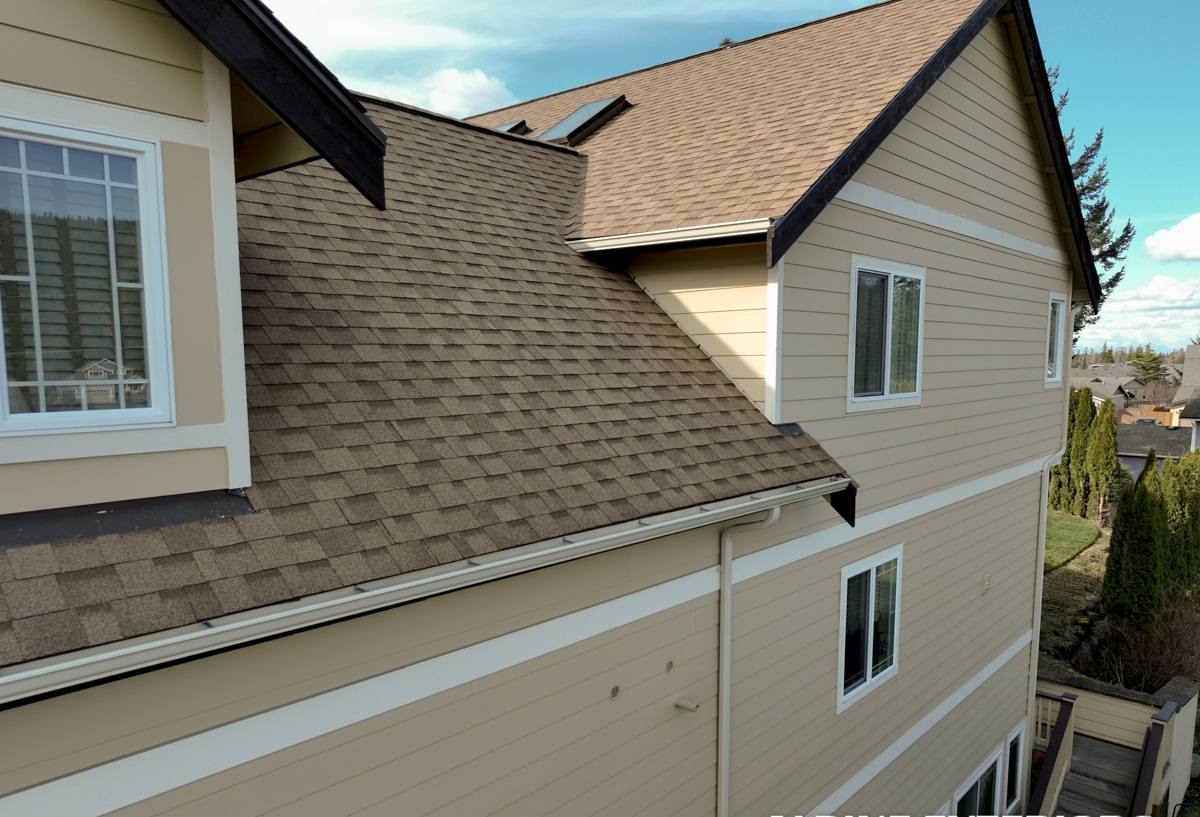
Repair or Replace? How to Tell the Difference
Not every tired-looking deck needs a full teardown. But there's a point where patching individual boards is just delaying an inevitable — and more expensive — full replacement. Here's how we help homeowners think through it during an on-site assessment.
- Surface rot on a few boards, structure is solid: Usually a repair candidate — replace the affected boards and address the moisture source.
- Soft or spongy feel across multiple areas, especially near the house: Often points to ledger board or framing issues underneath, which usually means it's time to open things up and look deeper.
- Visible rust streaks below joist hangers or fastener heads: A sign that hardware corrosion has been happening for a while — worth a structural inspection even if the decking looks fine on top.
- Railings that flex or wiggle under normal pressure: A safety issue on its own, and often a symptom of post rot below grade.
- Persistent moss or algae film that returns within weeks of cleaning: Points to a drainage or airflow problem that a surface cleaning won't fix long-term.
- Deck is nearing or past 20 years old and has never had structural components replaced: Worth a full assessment even if it "looks okay," since fastener and framing lifespan often runs shorter than the visible decking.
When two or three of these show up together, replacement is usually the more honest recommendation — not because repair isn't possible, but because piecemeal fixes on an aging structure tend to just move the next failure point somewhere else.
What a Correct Deck Replacement Actually Involves
A deck replacement done right isn't just pulling up old boards and screwing down new ones. The decking surface is the part everyone sees, but it's the least likely part to fail catastrophically. The framing, flashing, and connections underneath are what actually determine whether the deck is safe and how long it will last in our climate.
Structural Framing and Footings
We inspect and, where needed, replace the joists, beams, and posts, and we check that footings meet current frost depth and bearing requirements for our area. On older Sehome homes, it's common to find footings that were adequate by the standards of their era but wouldn't pass inspection today. Sloped lots also mean post heights and bracing need to be engineered for the actual grade, not just built to match whatever was there before.
Ledger Board Attachment and Flashing
The ledger board — where the deck attaches to the house — is one of the most common failure points on any deck, anywhere, but it's especially important here given how much rain the region gets. Correct flashing keeps water from working its way behind the ledger and into the house's rim joist or siding. We treat this connection as a critical waterproofing detail, not just a structural attachment, because a poorly flashed ledger can lead to hidden rot in the house framing itself, not just the deck.
Decking Material Selection
Material choice matters more here than in drier climates, because everything on the deck surface is dealing with near-constant moisture cycling for months at a time. We'll walk through the honest trade-offs of each option rather than push whatever has the best margin — what matters is what you're willing to maintain and what fits your budget over the deck's full lifespan, not just at installation.
| Material | Moisture Behavior | Maintenance | Typical Lifespan |
|---|---|---|---|
| Pressure-treated wood | Resists rot when sealed regularly; can cup or check if left untreated | Annual cleaning and re-sealing recommended | 10–15 years with upkeep |
| Cedar | Naturally rot-resistant, ages to gray without sealant | Occasional cleaning; sealing optional but extends life | 15–20 years with care |
| Composite decking | Resists rot and moss growth better than wood; can trap moisture if drainage below is poor | Periodic washing to prevent surface algae film | 20–25+ years, varies by product warranty |
| PVC/capped polymer | Fully moisture-resistant surface layer | Low — mainly surface cleaning | 25+ years, product-dependent |
Whatever material you choose, the framing underneath should be built to outlast at least one decking replacement cycle. That's part of why we don't cut corners on the structure even when a homeowner is working with a tighter decking-material budget.
Railings, Stairs, and Code Compliance
Railing height, baluster spacing, and stair geometry are governed by building code for a reason — these are the parts of a deck most directly tied to fall prevention. On replacement projects we bring these up to current code even if the original deck predates it, since a permit-pulled replacement is inspected against today's requirements, not the standards from whenever the original was built. This is also where we most often catch issues on older Sehome decks: railing posts anchored into rotted framing, baluster gaps wider than current code allows, or stair stringers undersized for the run.
Our Deck Replacement Process, Start to Finish
Site Visit and Honest Assessment
We start by actually getting under the deck where possible — not just walking the surface. That's where the real condition of the framing, ledger, and footings shows up. You get a straight answer on whether you're looking at repair or full replacement, and why.
Design, Materials, and Permitting
We help you choose decking, railing, and structural details that fit your budget and how you actually use the space, then handle the permitting through the City of Bellingham where required. Permitted work means the finished deck is inspected against current code, which matters both for safety and for resale down the line.
Demolition and Rebuild
Old decking, railings, and any compromised framing come out. We rebuild the structure to spec, correct the ledger flashing, set or replace footings as needed, and install the new decking and railing system. We keep the work area contained and clean up debris daily rather than leaving a job site in disarray for the duration of the project.
Final Walkthrough and Care Guidance
Before we call the job done, we walk the finished deck with you, point out anything you should know about the specific material you chose, and give straightforward guidance on seasonal maintenance — particularly moss and moisture management, which matters more here than almost anywhere else in the state.
Living With Moss, Mildew, and Wet-Weather Wear After Installation
No deck material is fully maintenance-free in Whatcom County's climate — that's an honest fact, not a sales pitch for one product over another. What changes by material is how much maintenance you're signing up for. A few practical habits go a long way regardless of what you install:
- Sweep leaves and debris off the deck regularly in fall, especially in shaded or tree-covered yards — trapped organic matter is what feeds moss growth.
- Clean the surface at least once a year, ideally before the wet season sets in, to remove the algae film that forms during our long damp stretches.
- Check that gaps between boards stay clear so water can drain through rather than pool on the surface.
- Inspect railings and stair connections annually for looseness — a quick tightening now beats a structural repair later.
- If you chose wood, plan on re-sealing on the schedule appropriate to that species; skipping it is the single most common reason wood decks fail early here.
None of this is complicated, but it does need to actually happen. A deck that's built correctly and maintained on a basic schedule will outlast one that's neglected by a wide margin, regardless of material.
Why Hiring a Crew That Already Works in Sehome Matters
Deck replacement in this neighborhood isn't quite the same job as deck replacement in a drier inland town. Crews who don't regularly work in Bellingham's marine climate sometimes under-spec fastener corrosion resistance, skip the extra flashing detail a wet climate demands, or don't think about drainage the way they should on a shaded, sloped lot. Those shortcuts don't usually show up as a problem in year one — they show up in year five or six, as premature rot or hardware failure.
Working regularly in and around Sehome and the broader Bellingham area also means we're familiar with the City's permitting process for residential deck work, which keeps projects moving instead of stalling on paperwork. It's a smaller thing, but it adds up over the course of a project.
Questions Worth Asking Before You Hire
Whoever you choose for a deck replacement, these are worth asking upfront — the answers tell you a lot about how the job will actually go:
- Will you pull a permit for this scope of work, and what does that include?
- What fastener and hardware grade do you use, and is it rated for coastal/marine exposure?
- How do you handle ledger board flashing specifically?
- What's your plan if you find rot or corrosion once the old decking comes off?
- What's the expected timeline, and how do you handle weather delays during the wet season?
- What does your warranty cover, and for how long?
A contractor who answers these clearly and specifically, without hedging, is generally one who does this kind of work often enough to have real answers ready.
Get a Straightforward Estimate
If your Sehome deck is showing its age — or you just want an honest opinion on whether repair or replacement makes more sense — we're happy to take a look. There's a free, no-pressure estimate form below; reach out and we'll walk you through what we find and what it would take to get it done right.