 Bellingham Siding
 Building Decks for the Puget Area's Particular Climate
Homes in the Puget area, close to Bellingham Bay and the open water of Whatcom County, take a different kind of weather beating than decks built inland. Salt-laden air off the Sound accelerates corrosion on anything metal. Driving rain, pushed sideways by wind off the water, gets up under railings and into end grain that a calmer climate would never touch. And the long wet season here, often stretching from October well into May, keeps wood surfaces damp long enough for moss and algae to take hold and stay there. A deck built without those three factors in mind will look fine for a season or two, then start showing soft spots, rust streaks, and green film in all the low, shaded corners.
We've built and repaired decks throughout the Bellingham area long enough to know which shortcuts cause problems here specifically. This page covers what a correctly built custom deck for a Puget-area home actually requires, not a generic checklist copied from a drier climate.
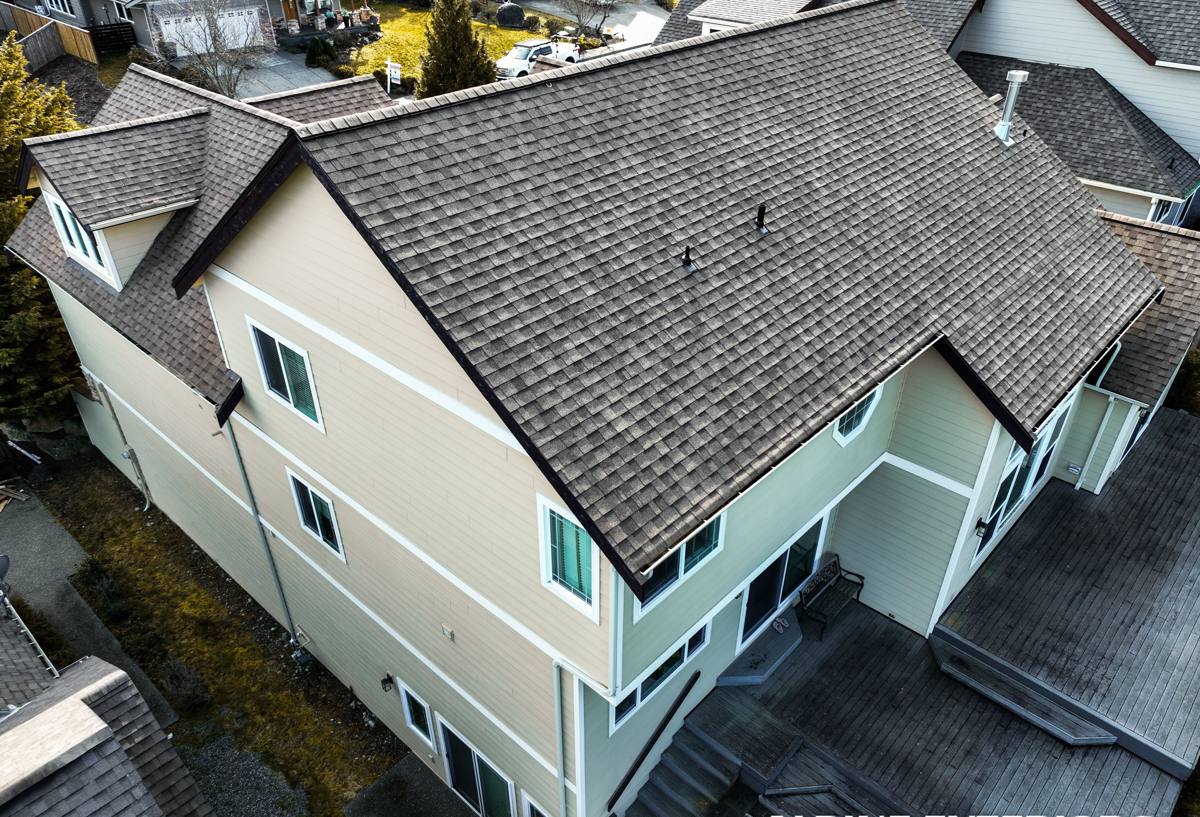
What Local Homes Need From a Deck
Most of the deck failures we get called out to inspect in this area trace back to the same handful of causes: fasteners that weren't rated for coastal exposure, framing that trapped water instead of shedding it, and decking material chosen for looks rather than how it behaves wet. A correct build addresses all three before a single board goes down.
Salt Air and Metal Fatigue
Standard galvanized fasteners hold up fine in a lot of the country. Close to the Sound, that same coating can start breaking down within a few years, leaving rust bleed on decking and, worse, weakened connections you can't see from the top. We spec stainless or heavy-duty coated fasteners rated for coastal and treated-lumber exposure on every Puget-area build, along with connectors and brackets sized for the same conditions.
Driving Rain and Water Path
Rain that falls straight down is easy to manage. Rain that comes in sideways off open water finds every gap in flashing, every unsealed ledger connection, and every spot where a board butts up against the house. The ledger board attachment — where the deck ties into the structure — is the single most important water-management detail on the whole project, and it's the one most likely to be rushed on a lower-cost build.
Moss, Algae, and Shade
Many lots in this part of Whatcom County carry mature evergreen cover, which means dappled shade and constant leaf and needle drop onto deck surfaces. Combined with our wet season, that's a recipe for moss and slick algae film, especially on the north side of a house or under overhangs. Board spacing, airflow underneath the deck, and material choice all affect how much of a problem this becomes.
Choosing the Right Decking Material
There's no single "best" decking material — there's the right material for how a given homeowner wants to spend their maintenance time versus their upfront budget. Here's how the common options actually perform in a Puget-area climate specifically.
| Material | Moisture Behavior | Moss/Algae Resistance | Maintenance |
|---|---|---|---|
| Pressure-treated fir/hem-fir | Prone to cupping and checking if not sealed regularly | Low — needs regular cleaning | Annual wash, re-seal every 1-2 years |
| Cedar | Naturally moisture-resistant, still needs sealing at end grain | Moderate — natural oils help early on | Wash and oil every 1-2 years |
| Composite decking | Doesn't absorb water, won't rot | Moderate to good depending on board texture; still needs periodic cleaning | Occasional wash, no sealing |
| PVC/capped composite | Fully sealed surface, best moisture resistance | Good — smoother caps shed algae more easily | Lowest — wash as needed |
We don't push one material over another as "the only right choice." What we will tell you honestly: in a shaded, damp Puget-area yard, a wood deck that isn't washed and sealed on schedule will lose that battle to moss faster than most homeowners expect. If low maintenance matters more to you than the traditional wood look, composite or capped composite earns its higher upfront cost back in time you're not spending pressure-washing and re-oiling every spring.
Framing Lumber and Fasteners
Whatever decking material sits on top, the framing underneath should always be pressure-treated lumber rated for ground contact where it's within a few inches of soil or consistently damp, plus coastal-rated fasteners and joist hangers throughout — not just at the ledger. This is the part of the job nobody sees once it's finished, which is exactly why it's where corners get cut on lower-bid work.
Framing and Drainage Details That Matter Here
A deck that's structurally sound but drains poorly will still fail early in this climate. We build in a few details as standard practice on Puget-area decks:
- Proper slope away from the house on any solid or partially enclosed decking surface
- Flashing integrated behind the ledger board, not just caulked over it
- Board spacing sized to let water and debris pass through rather than pool
- Adequate clearance and airflow underneath low decks to prevent trapped moisture
- Stainless or coated structural screws and joist hangers rated for treated lumber and salt exposure
- Post bases that keep wood off grade contact and standing water
None of these add much to the cost of a project when they're planned from the start. Retrofitting them after a deck has already started rotting costs considerably more.
Railings and Finish Work
Railings take the worst of the driving rain and salt air because they're the most exposed part of the structure and often the first thing to show wear. Metal balusters and cable rail systems need corrosion-resistant hardware for this environment; wood railings need the same sealing discipline as the decking itself, arguably more, since end grain on a top rail sheds water slowly. We also pay attention to how fascia boards and stair stringers are fastened and finished, since these are common spots where water gets trapped against end grain and rot starts before it's visible from the top.
How Our Process Works
1. On-Site Assessment
We walk the property, look at sun and shade exposure, existing drainage patterns, and how exposed the site is to wind off the water. That shapes our material and framing recommendations for your specific lot.
2. Design and Material Selection
We talk through decking material, railing style, and layout based on how you'll actually use the space and how much maintenance you want to take on long-term — not just what looks best in a catalog photo.
3. Permitting and Structural Planning
Deck permitting requirements vary depending on height, attachment to the house, and local jurisdiction rules in Whatcom County. We handle that process rather than leaving it to the homeowner to sort out.
4. Construction
Framing first, with every water-management detail built in before decking goes down — not added afterward. We don't cover framing mistakes with decking; if something's off, we fix it before moving forward.
5. Final Walkthrough
We walk the finished deck with you, cover basic care for whatever material you chose, and make sure everything meets what we discussed at the start.
Maintenance Checklist for Puget-Area Decks
Whatever material you choose, a little seasonal attention goes a long way in this climate. A basic yearly routine:
- Sweep off leaves, needles, and debris regularly through fall and winter so they don't trap moisture against the boards
- Wash the deck surface at least once a year to remove early moss and algae growth before it gets a foothold
- Check and re-seal wood decking and railings every 1-2 years, sooner in heavily shaded areas
- Inspect fastener heads and hardware annually for rust streaking, which signals it's time to replace them
- Confirm gutters and downspouts near the deck are directing water away, not onto the structure
- Look underneath the deck once a year for standing water or signs of rot at post bases
Why Hire a Crew That Already Works in Puget
A contractor who mostly works drier, inland areas can still frame a deck that looks correct. Whether it stays correct after three or four Puget-area winters is a different question. We've seen what happens when standard-spec fasteners get used this close to the water, when ledger flashing gets skipped to save a day of labor, and when decking gets chosen without accounting for how much shade a lot actually gets. Building here regularly means those lessons are already built into how we spec and frame every project, instead of being something a homeowner discovers the hard way five years in.
If you're planning a new deck or replacing one that's showing its age, we're happy to come take a look and talk through options honestly — including what will and won't hold up on your specific lot. Reach out for a free, no-pressure estimate using the form below.