 Bellingham Siding
 A roof in Cordata doesn't fail the way a roof does in a drier part of the country. Bellingham's marine climate keeps things damp for long stretches, wind off Bellingham Bay pushes rain sideways into places a straight-down rain would never reach, and the tree cover common through this part of north Bellingham keeps whole roof slopes shaded and slow to dry for months at a time. Roof repair here isn't just patching a hole and moving on — it's figuring out why that specific spot failed in a climate that gives a roof very little time to dry out between storms. This page covers what Cordata homes typically need from a roof repair, what a correct repair actually involves, and how our process works from the first look to the final walk-through.
Why Cordata Roofs Need Repair Sooner Than You'd Expect
Three conditions drive most of the repair calls we get in this part of Whatcom County, and they rarely act alone — they compound each other.
Salt Air
Bellingham sits close enough to the water that marine air reaches every neighborhood, Cordata included. That air is harder on metal than most homeowners expect — fasteners, flashing, vent stacks, and gutter hardware corrode faster here than they would forty miles inland. A rusted fastener head or a corroded flashing seam is one of the most common root causes we find when we're called out for "a leak that just started," and it's usually been building for a while before it shows up indoors.
Driving Rain
Rain here doesn't always fall straight down. Wind pushes it sideways into laps, seams, and flashing details that would stay dry in a calmer storm. That's why the same leak location can behave differently depending on wind direction — a repair that only addresses the spot where water is dripping inside, without tracing the path water actually traveled to get there, tends to come back after the next windy front.
A Long Moss Season
Shaded, moisture-holding conditions support moss and algae growth across most of the year here, not just a few months. Moss isn't just cosmetic — it holds water against the roofing material, lifts shingle edges, and can work its way under laps that were sealed correctly when the roof was new. A repair that patches the visible symptom but leaves moss undisturbed nearby is treating one problem while ignoring the one that caused it.
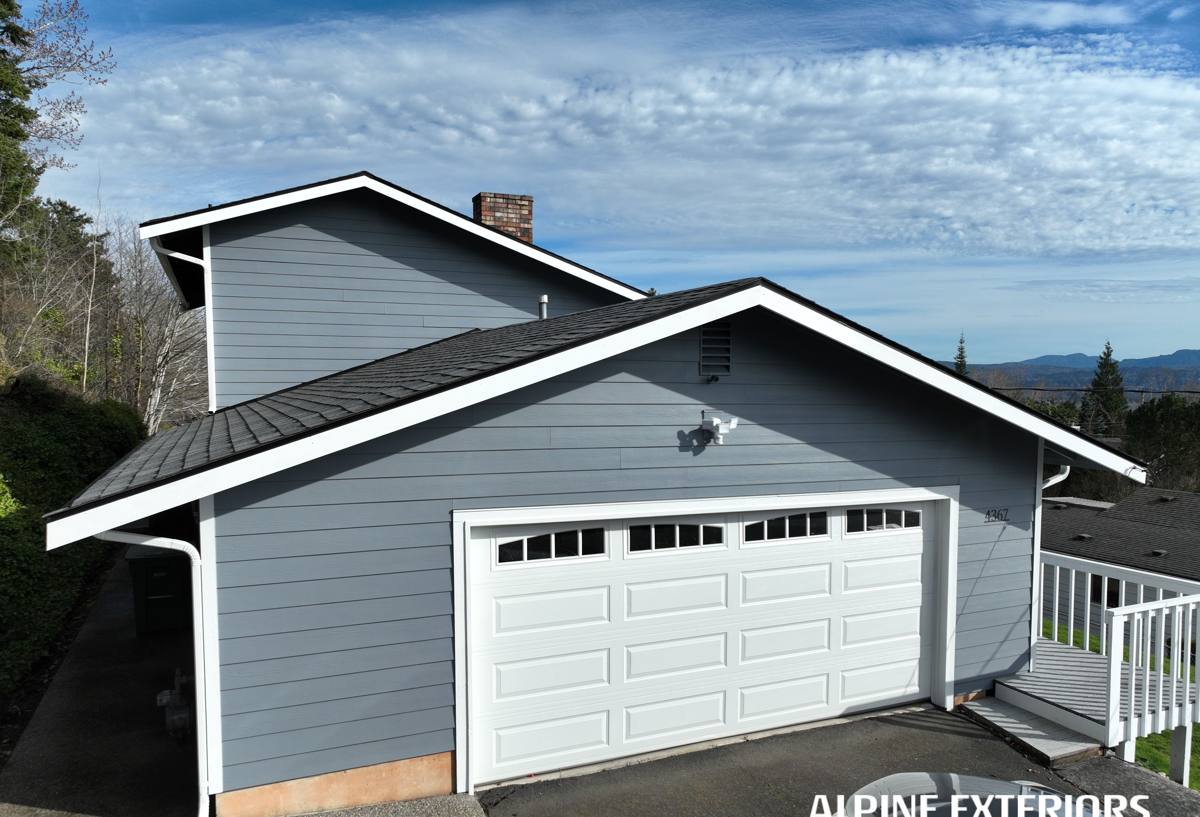
Signs Your Cordata Roof Needs Repair, Not Replacement
Most roofs don't need to come off entirely — they need the specific failure points addressed. These are the signals that usually point to a repair being the right call:
- A leak that appears in one or two locations rather than scattered across multiple areas of the roof
- Isolated missing, cracked, or lifted shingles in an otherwise sound roof
- Flashing that has pulled away, corroded, or was never sealed correctly at a chimney, skylight, or vent
- Moss buildup concentrated on one shaded slope rather than across the whole roof
- Minor sagging or soft decking limited to a small section, such as under a poorly flashed penetration
- Visible daylight or water staining in the attic traced to a specific point rather than widespread
- Storm damage — a lifted section of shingles or a punctured spot from falling debris — on a roof that's otherwise within its useful life
Repair or Replace? How We Make That Call
We don't default to recommending a full replacement when a repair will genuinely solve the problem, and we don't recommend patching a roof that's failing broadly just to avoid a harder conversation. The table below is a general guide — every roof gets an honest, specific answer during the estimate.
| Situation | Usually Points To |
|---|---|
| One leak source, roof under 15–20 years old, granule loss limited to that area | Repair |
| Leaks appearing in multiple, unrelated locations across the roof | Replacement |
| Flashing failure at a single chimney or vent, shingles elsewhere intact | Repair |
| Widespread curling, cupping, or granule loss across most slopes | Replacement |
| Moss confined to one shaded slope, deck sound underneath | Repair plus moss treatment |
| Soft or spongy decking found in more than one area during inspection | Replacement |
| Roof is well past its rated service life regardless of current symptoms | Replacement |
What a Correct Roof Repair Actually Involves
A repair that only addresses the point where water is visible indoors is often treating a symptom, not the cause. A correct repair traces the problem to its actual source before anything gets patched.
Finding the Actual Source
Water travels along the underside of roofing material before it drips somewhere visible, so the interior stain and the actual entry point are often several feet apart. We trace the path — checking flashing, laps, and penetrations upslope of the visible damage — before deciding what needs to be opened up and repaired.
Matching Materials
A patch that doesn't match the surrounding roofing in profile, color, or granule blend stands out and can also perform differently than the original material. Where an exact match isn't available because the existing roof has weathered or the product has been discontinued, we'll talk through the closest reasonable match and set honest expectations about visible blending before the work starts.
Flashing Repair
Flashing at chimneys, skylights, vent penetrations, and roof-to-wall transitions is where the majority of repair calls actually originate. We use corrosion-resistant flashing suited to this climate and integrate it properly with the surrounding roofing and underlayment, rather than relying on sealant alone to hold water out.
Moss and Debris Removal
When moss is contributing to the failure, we remove it as part of the repair rather than leaving it to keep holding moisture against the material after the patch goes in. That includes clearing debris from valleys and gutter lines nearby, since trapped debris backs water up under roof edges during heavy rain.
Common Roof Repairs We Handle in Cordata
Shingle and Flashing Patch Repairs
Isolated missing or damaged shingles, and flashing that's corroded or come loose at a penetration — the most common repair call, and often the most straightforward when caught before water damage spreads to the decking.
Valley and Ridge Repairs
Valleys carry a disproportionate amount of water off a roof, and ridge caps take direct wind exposure. Both are common failure points in a climate with sustained wind-driven rain, and both require careful attention to underlayment, not just surface material.
Storm and Wind Damage Repairs
Winter windstorms here can lift shingles, drive debris into a roof surface, or work flashing loose without causing an obvious, immediate leak. We assess the full extent of storm damage rather than just fixing the one spot a homeowner noticed, since wind damage often affects more than what's visible from the ground.
Skylight and Vent Boot Leaks
Rubber vent boots degrade with age and UV exposure, and skylight flashing is a common weak point on older installations. Both are repairable without touching the surrounding roof when caught before the surrounding material is damaged by prolonged moisture.
Our Repair Process
- On-site inspection. We assess the roof, trace any leak to its actual source, and check for related issues nearby rather than looking only at the reported problem area.
- Honest scope and estimate. We explain what we found, whether repair or replacement is the right call, and provide a written estimate before any work begins.
- Material matching. Where possible, we match existing roofing material; where an exact match isn't available, we discuss the closest option with the homeowner first.
- Repair work. Damaged material is removed, decking is checked and repaired if needed, and new material and flashing are installed to manufacturer specification.
- Moss and debris clearing. Any contributing moss or debris is cleared as part of the job, not left for a separate future visit.
- Final walk-through. We review the completed repair with the homeowner and go over what to watch for going forward.
What Roof Repair Costs Depend On
Repair costs vary more than replacement costs because the scope depends entirely on what's actually wrong. These are the main factors that move a repair estimate:
| Factor | Why It Matters |
|---|---|
| Extent of hidden damage | Decking damage found once shingles are pulled back adds cost not visible before the roof is opened up |
| Roof access and pitch | Steep or hard-to-reach areas take longer and require more safety setup |
| Number of failure points | One flashing repair costs less than multiple unrelated leak sources across the roof |
| Material availability | Matching an older or discontinued shingle profile can take more sourcing time than a common current product |
| Moss and debris removal | Adds labor but reduces the chance of the same failure recurring nearby |
We don't quote repair costs without seeing the roof, since the difference between a simple flashing fix and a repair that requires opening up decking can be significant.
Why Hire a Crew That Already Works Cordata
A roofer who mostly works drier, inland jobs isn't wrong about roofing in general — they're working from a different set of defaults. Fastener specs, flashing choices, and underlayment coverage that hold up fine on a typical inland roof are often undersized for what a Bellingham winter throws at a roof year after year. A crew that already works in Cordata and around Whatcom County has seen which repairs actually hold up out here and which ones come back after the next storm.
There's also a practical side to local familiarity: knowing how moss behaves on the shaded, tree-lined lots common through this part of town, and how wind off the bay tends to find the same weak points across similar roof styles in the neighborhood. That's the kind of pattern recognition that comes from doing the work locally, not from a general roofing background alone.
After the Repair: Keeping It From Happening Again
A correctly done repair still benefits from some basic upkeep given the conditions here:
- Keep gutters and valleys clear so water isn't backing up under roof edges during heavy rain
- Address new moss growth early, before it spreads across a full slope again
- Trim back tree cover that keeps a section of roof shaded and slow to dry
- Have flashing points checked periodically, especially after major windstorms
- Report small leak signs right away rather than waiting to see if they get worse
If you're dealing with a leak, storm damage, or a roof that just needs an honest look, we're happy to take a look and talk through real options for your home. Reach out for a free, no-pressure estimate using the form below.