 Bellingham Siding
 Deck Replacement in Cordata: Built for This Climate, Not Just a New Deck
Cordata sits on the north side of Bellingham, in a part of Whatcom County that's grown steadily over the last couple of decades — newer residential streets mixed in among older lots, and a lot of decks that are now reaching the age where problems stop being cosmetic. Replacing a deck here is a chance to correct whatever the original build got wrong, or whatever the original material simply wasn't built to survive this climate long-term, rather than just swapping tired boards for new ones in the same layout.
Cordata sits back from Bellingham Bay itself, but that distance doesn't remove a property from the region's marine climate — it just changes the intensity a little. Salt-carrying air off the Sound still reaches this far inland, driving rain still comes through sideways more often than it falls straight down, and Whatcom County's moss season runs long enough that almost every deck in the area deals with it at some point. A deck replacement done right for Cordata accounts for all of that from the framing up, instead of treating the job as a generic rebuild that happens to be located here.
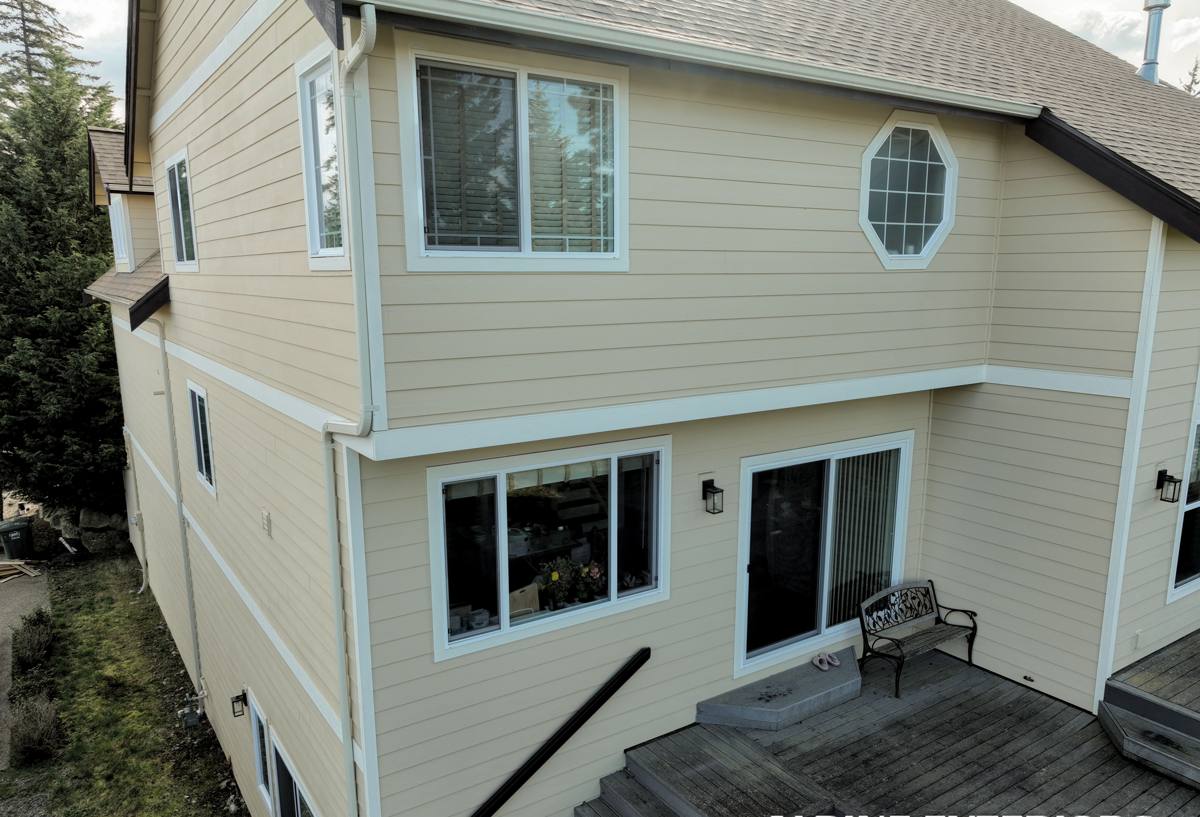
Why So Many Cordata Decks Reach Replacement Around the Same Age
Marine Air and Corroding Hardware
Even set back from the water, homes in this part of Bellingham still get a steady dose of salt-influenced air moving in off the Sound. It's less severe than what a bayfront property takes on, but it's persistent, and persistence is what matters for metal. Fasteners, joist hangers, and post hardware corrode gradually under that exposure, and a corroding fastener loses holding strength well before it looks obviously bad from the top of the deck.
Driving Rain and Ledger Connections
Storms in this part of Whatcom County don't always fall straight down — wind pushes rain sideways and drives it into ledger connections, railing posts, and gaps between boards that weren't spaced correctly to begin with. That's a bigger factor in how a deck ages than most homeowners expect, because the ledger board — where the deck ties into the house — is one of the most common places a poorly flashed original build lets water in for years before it's noticed.
A Moss Season That Outlasts Most Maintenance Schedules
Mild, damp conditions give moss and mildew a long growing season here, and a horizontal deck surface is one of the first places it takes hold, since it holds water longer than a vertical wall and stays damp between rain events. Shaded decks and north-facing surfaces usually show it first, and any decking material with even a little surface porosity gives moss something to grip. Over enough seasons, that steady dampness against wood-based decking is as much a durability issue as it is a cosmetic one.
Repair or Replace? How to Tell Which One a Deck Actually Needs
Not every aging deck in Cordata needs a full replacement, and not every problem is worth chasing with patch repairs either. The honest way to sort it out is by looking at where the damage actually is and how far it's gone.
| What You're Seeing | Usually Repairable | Usually Points to Replacement |
|---|---|---|
| Faded or grayed surface boards, otherwise solid | Yes — cleaning, sealing, or resurfacing | No, unless paired with other issues below |
| A few soft or rotted boards | Yes, if framing underneath is sound | Only if the same pattern shows up throughout |
| Widespread soft or spongy decking | Rarely cost-effective | Yes — usually cheaper than board-by-board repair |
| Corroded or failing ledger connection | Sometimes, if caught early | Often — this is a structural safety issue |
| Undersized or rotted framing/posts | No | Yes — this is the deck's actual structure |
| Deck doesn't meet current railing or guardrail code | Partial fixes possible | Often more sensible to rebuild to current code |
A deck that's structurally sound with a tired surface is a reasonable repair candidate. A deck with framing, ledger, or post problems usually isn't — patching around a structural issue tends to cost real money without buying much extra life, and it leaves the actual safety concern in place. We'll give a straight read on which category a given deck falls into rather than defaulting to whichever job is bigger.
Choosing a Decking Material for the Rebuild
Once replacement is the right call, material choice is the next real decision, and it matters more in this climate than it would somewhere drier and more sheltered. The three categories most Cordata homeowners weigh are pressure-treated or cedar wood, capped composite, and cellular PVC.
Wood
Pressure-treated lumber and cedar are the traditional choice and look good when new, but both need regular sealing or staining to hold up against sustained moisture, and both are more vulnerable to fastener corrosion over time. Left unmaintained even a season or two, wood is usually the first material in this climate to show moss, graying, and soft spots.
Capped Composite
Capped composite boards have a plastic shell around a wood-fiber composite core, which resists moisture absorption, staining, and UV fade far better than uncapped composite or wood. In a moisture-heavy climate like this one, that cap layer does real work — it's the difference between a deck that needs occasional washing and one that needs ongoing sealing to keep performing.
Cellular PVC
PVC decking contains no wood fiber at all, so it doesn't absorb moisture the way even capped composite can at cut edges or fastener holes. It typically costs more than composite and can flex a bit more under heavy point loads, but for a shaded lot or a spot that stays damp longer than the rest of the yard, some homeowners find the added moisture resistance worth it.
| Material | Moisture & Marine Air Handling | Moss Resistance | Typical Upkeep |
|---|---|---|---|
| Cellular PVC | Excellent — no wood fiber to absorb moisture | Strong, smooth non-porous surface | Occasional washing |
| Capped composite | Strong — cap layer resists moisture and staining | Good on most product lines | Occasional washing |
| Uncapped composite | Moderate — some absorption at exposed fiber | Fair; more prone to buildup over time | Periodic cleaning |
| Cedar | Moderate — natural resistance, but needs sealing | Fair when sealed and maintained | Regular oiling or sealing |
| Pressure-treated wood | Weakens under sustained damp exposure over time | Poor without regular treatment | Regular sealing or staining |
What a Correct Deck Replacement Involves
The old surface coming off gets most of the attention, but in Cordata's climate, what happens with the framing, fasteners, and drainage underneath is what actually determines how long the new deck lasts. A replacement done right includes:
- Full removal of the old decking, framing, and any compromised posts or footings — not a partial tear-out that leaves questionable structure in place
- Inspection of the ledger connection and correction of any flashing that let water in on the original build
- Framing sized correctly for the span and load, using lumber rated for sustained moisture exposure
- Corrosion-resistant fasteners and hardware throughout, not standard-grade hardware that starts corroding in this climate within a few seasons
- Hidden fastener systems on the deck surface where the chosen product allows, reducing exposed metal on the walking surface
- Correct board gapping for drainage and material movement, so wind-driven rain and standing moisture can actually drain and dry
- Railing and guardrail construction that meets current code, since older decks were often built before today's requirements
- Grading and ventilation underneath the new deck so moisture doesn't sit against the framing between storms
Skip any one of those and the new deck can still look good on day one. The shortcuts usually surface a few winters later, as a soft joist, a loosening railing post, or fastener corrosion staining the boards around it — the same failure pattern the old deck went through, just delayed.
Permitting and the Replacement Process in Bellingham
Most deck replacement work in Bellingham and the surrounding county falls under standard building permit requirements, particularly when framing, footings, or ledger connections are being rebuilt rather than left untouched. Requirements can vary depending on the deck's size, height off grade, and whether the footprint is changing from the original. We handle that permitting as part of the job rather than leaving it for the homeowner to sort out, and we'll walk through what applies to a specific property before work starts.
How Our Replacement Process Works
We start with an on-site look at the existing deck — what's actually failed, what's still sound, how the site drains, and how much sun or shade the location gets through the day. From there we talk through decking material options that fit the budget and how the space gets used, and settle on a scope before anything gets torn out.
Once permitted where required, the old deck comes out and the substructure gets inspected and rebuilt to current standards — framing, ledger flashing, footings, and hardware all sized and fastened for what this climate actually puts a deck through, not a generic spec. The new decking surface, railing, and any stairs or trim go on last. We finish with a walkthrough covering what the specific material chosen actually needs going forward, which for most modern decking materials is minimal, but not nothing.
Keeping a New Deck Performing Once It's In
Even a well-built replacement in the right material needs some routine attention in this climate to reach its full lifespan. Worth keeping on a seasonal checklist:
- Rinse or wash the deck surface periodically to clear residue, pollen, and organic buildup before it works into the surface or cap layer
- Keep gaps between boards clear of leaves and debris so water and airflow can move through the way the design intends
- Check railing posts and visible hardware once a year for early corrosion or loosening, especially heading into the wet season
- Trim back overhanging branches or plants that hold moisture against the deck or block sun and airflow across the surface
- Address any soft framing or standing water underneath right away — that's a structural issue, not a cosmetic one, and it doesn't improve with time
Why It Matters That We Already Work Cordata
A crew that mostly replaces decks elsewhere in the county can still do competent work here, but a Cordata job has a few variables that come up less often in other parts of Whatcom County — a mix of older and newer construction on the same street, ledger and flashing details from a range of build eras, and the specific way marine air and moss pressure show up on a property that's set back from the water rather than sitting right on it. Working this neighborhood regularly means we're not guessing at those details on your project. We've seen which decking materials actually hold up to Cordata's particular combination of driving rain, moss, and Bellingham's damp stretch of the year, and which fastener grades and framing details are worth the extra time rather than an upsell.
That familiarity also shows up in the smaller judgment calls — being straightforward about whether a deck genuinely needs full replacement or just a targeted repair, and what a rebuilt deck realistically needs from a homeowner to hold up here.
Get a Straight Read on Your Deck
Whether your deck has an obvious structural problem, is just showing its age, or you're not sure which category it falls into, we're happy to walk the site and lay out the options plainly, including if repair is genuinely the better answer. Reach out below for a free, no-pressure estimate.