 Bellingham Siding
 Why Puget's Marine Climate Is Hard on a Deck
Homes in the Puget neighborhood sit close enough to the water that salt air is part of daily life, not an occasional nuisance. Salt-laden moisture works into fasteners, corrodes exposed metal, and speeds up the breakdown of anything not built to handle it. Add Bellingham's long stretch of driving rain each fall and winter, plus the shaded, damp conditions that let moss and algae take hold on north-facing and tree-covered decks, and you've got a climate that's genuinely tough on outdoor structures — tougher than most manufacturers' warranty language assumes.
None of this means a deck in Puget is doomed to rot or fail early. It means the material choice and the installation details matter more here than they would in a dry inland climate. A deck built the same way you'd build one in eastern Washington will not hold up the same way in Whatcom County.
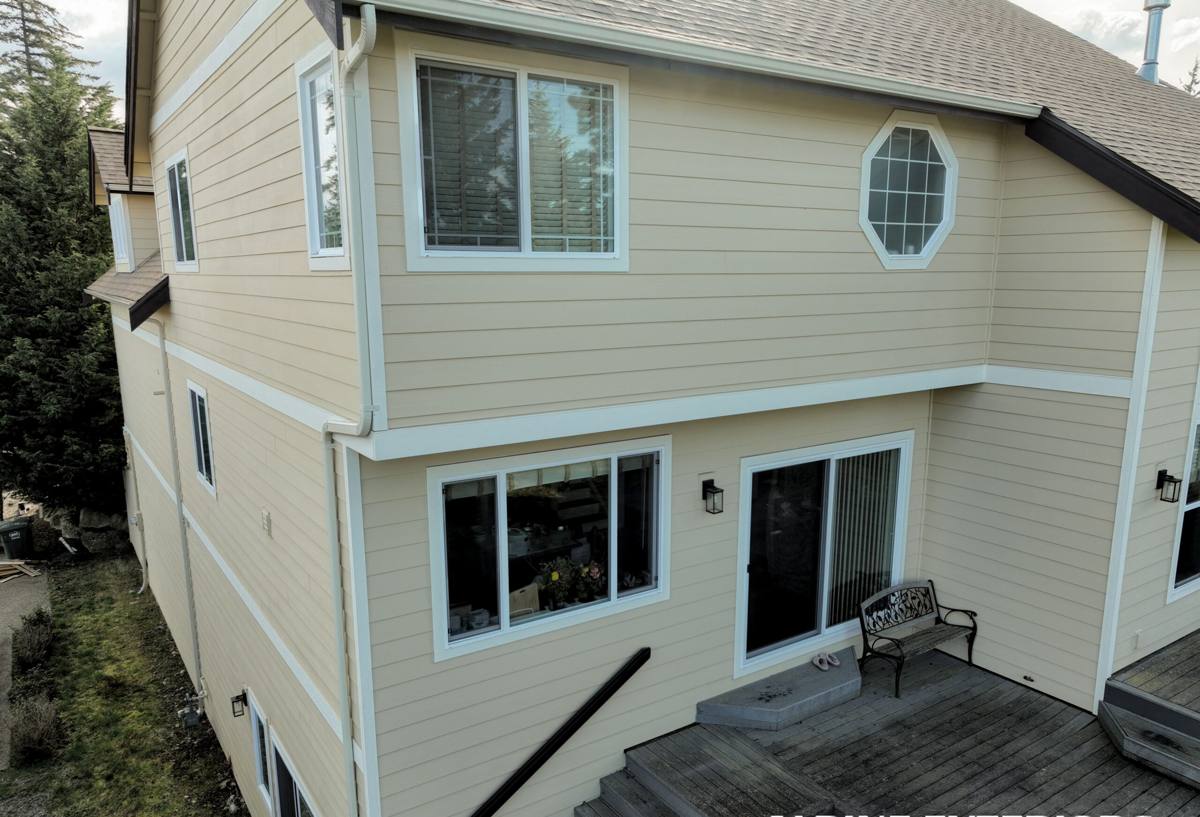
Composite Decking vs. What Puget Homes Have Traditionally Used
Most older decks in this area were built with pressure-treated lumber or cedar. Both can look good for a few years, but both are wood — they absorb moisture, and wet wood in a shaded, humid spot is exactly what moss, algae, and soft rot need to get started. Cedar in particular tends to gray unevenly and can splinter as it weathers, especially on stair treads and handrails that get the most foot traffic and the most rain exposure.
Composite decking, when it's a quality capped product, doesn't absorb water the way wood does, so it doesn't feed rot the same way and won't splinter. That's the real advantage in a place like Puget: less of the surface-level decay that shows up here faster than it would somewhere drier.
Where Composite Still Needs Respect
Composite boards aren't maintenance-free, and they aren't immune to this climate — they're just better suited to it when installed correctly. Algae and moss can still grow on the surface of any decking material in a shaded, damp spot, composite included. The board itself resists rot, but a poorly ventilated substructure underneath a composite deck can still trap moisture, and that's where problems actually start on composite installations that fail early.
Choosing a Composite Board for a Puget Deck
Not all composite is built the same, and the differences matter more in a wet, coastal climate than they do in a catalog photo. Here's how the common options compare for a home in this area:
| Material | Moisture behavior | Shade/algae resistance | Typical maintenance |
|---|---|---|---|
| Capped composite | Water-resistant core with a protective shell; won't swell or rot | Good, but surface can still host algae in deep shade without airflow | Occasional wash; no sealing or staining |
| PVC decking | Fully synthetic, essentially waterproof | Very good; smoother, harder surface holds less growth | Low; wash as needed |
| Pressure-treated wood | Absorbs and releases moisture constantly | Prone to moss and algae in shaded, damp spots | Regular sealing/staining, periodic replacement of damaged boards |
| Cedar | Absorbs moisture; weathers and can cup or split | Prone to graying and biological growth without upkeep | Sealing, sanding, staining on a recurring schedule |
For most Puget homes, a capped composite board is the practical middle ground — better moisture performance than wood, without the higher cost of full PVC. Homes with heavier shade from mature trees or a north-facing exposure are the ones where we lean toward PVC or a composite line with stronger algae-resistant additives, because that's where growth shows up first.
What a Correct Installation Involves in This Climate
The board is only part of the job. Most early composite deck failures we see trace back to substructure and drainage decisions, not the decking material itself. In a climate like Bellingham's, a few details aren't optional:
- Joist spacing built for the board — composite typically needs tighter joist spacing than wood, especially for boards run at an angle or in a picture-frame pattern, or it will visibly deflect over time.
- Real flashing at the ledger board — where the deck attaches to the house is the single most common point of hidden water damage; it needs proper flashing, not just fasteners and caulk.
- Clearance and airflow underneath — decks built too close to grade or without ventilation trap moisture below the boards, which is what actually causes mold and premature substructure rot on composite decks.
- Correct slope for drainage — a deck that doesn't shed water off the surface holds standing moisture, which encourages algae growth even on resistant materials.
- Fasteners and hardware rated for a coastal, salt-air environment — standard fasteners corrode faster here than in a dry climate; the hardware needs to match the exposure.
Our Process, Start to Finish
We keep the process straightforward and honest about what your site actually needs:
- On-site assessment. We look at sun exposure, shade patterns, existing drainage, and the condition of any structure we're replacing or building against.
- Material and layout selection. We walk through board options and layout with you based on your budget, the shade level of your yard, and how the deck will actually be used.
- Permitting. Most attached decks in Whatcom County require a permit; we handle that paperwork and the required inspections.
- Substructure build. Footings, framing, flashing, and joist spacing are set up for the specific board being installed — this step gets more attention from us than the visible decking.
- Decking, railing, and finish work. Boards, fascia, and railing go in with fastening systems appropriate for a coastal climate.
- Final walkthrough. We check the deck with you before we consider the job done, including drainage and any trim details.
Keeping a Composite Deck Clean Through Moss Season
Composite cuts down on maintenance, but "low-maintenance" isn't "no-maintenance" in a place with as long a wet season as Bellingham has. A simple seasonal routine keeps a composite deck looking like new for years:
- Rinse the deck and sweep away leaves and debris regularly through fall, since trapped organic matter is what feeds moss and algae growth.
- Wash with a mild soap and soft-bristle brush a couple of times a year — a pressure washer on too high a setting can damage the board's surface, so keep pressure moderate and the nozzle moving.
- Keep nearby shrubs and tree limbs trimmed back so sunlight and airflow can reach shaded sections of the deck.
- Check gutters and downspouts near the deck — overflow onto the deck surface accelerates both algae growth and wear on fasteners.
- Inspect fasteners and railing hardware annually for early signs of corrosion from salt air.
What Influences the Cost of a Composite Deck in Puget
Every deck is different, but the factors that move the price up or down are consistent. Broadly, installed composite decking in this region tends to run in the range of roughly $40 to $80 per square foot, depending on the variables below — that's a wide range on purpose, since site conditions here vary a lot from one lot to the next.
| Factor | Why it matters |
|---|---|
| Size and shape of the deck | Complex shapes, angles, and picture-framing use more material and labor than a simple rectangle |
| Existing substructure condition | A deck built on a sound, correctly sized frame costs less than one needing new footings or framing |
| Board tier | Entry-level capped composite costs less than premium composite or PVC lines |
| Railing type | Composite or metal railing systems cost more than basic wood railing |
| Height and stairs | Elevated decks need more structural work, guardrails, and stair framing |
| Site access | Tight lots or sloped yards common around Puget can add labor time for material handling |
Permits and Local Requirements
Most attached decks in Bellingham and unincorporated Whatcom County require a building permit, and taller decks or those near property lines may also involve setback review. Ledger attachment to the house typically needs to meet current structural standards, and guardrails are required once a deck reaches a certain height off grade. We handle the permit application and inspection scheduling as part of the job rather than leaving that step to the homeowner.
Why a Crew That Already Works in Puget Matters
A lot of what makes a deck last here isn't visible once the project is finished — it's in the flashing detail behind the ledger board, the joist spacing under the boards, and the hardware choice that resists salt air instead of rusting in a couple of years. A crew that regularly works in this neighborhood already knows how the local drainage patterns behave, how much shade a given lot typically gets through the year, and which details get skipped on decks that fail early. That familiarity shows up in fewer surprises during the build and a deck that's actually built for the conditions it will sit in, not a generic install pulled from a national playbook.
If you're weighing options for a new deck or replacing one that's showing its age, we're happy to take a look and talk through what your specific lot needs. Reach out for a free, no-pressure estimate using the form below.