 Bellingham Siding
 Metal Roofing in Columbia: Built for What This Climate Actually Does to a Roof
Columbia sits close enough to Bellingham Bay that salt-laden air is a daily fact of life for anything on a rooftop, and far enough into the Pacific Northwest's wet season that a roof here spends more months damp than dry. Add in driving rain that comes sideways off Puget Sound during winter storms, and a moss season that can stretch from October through May in shaded, north-facing yards, and you've got a climate that is genuinely tough on roofing materials — not in a dramatic, sudden way, but in a slow, grinding way that shows up as granule loss, moss colonies, rust streaking, and soft spots years before a homeowner expects to need a new roof.
Metal roofing holds up differently than asphalt shingles under these specific conditions. It doesn't give moss the same foothold, it sheds driving rain instead of absorbing it, and when it's installed and finished correctly, it resists the corrosion that salt air causes in lesser-grade metals and hardware. That last part — "installed and finished correctly" — is where most of the real differences between a good metal roof and a disappointing one actually live, and it's what the rest of this page is about.
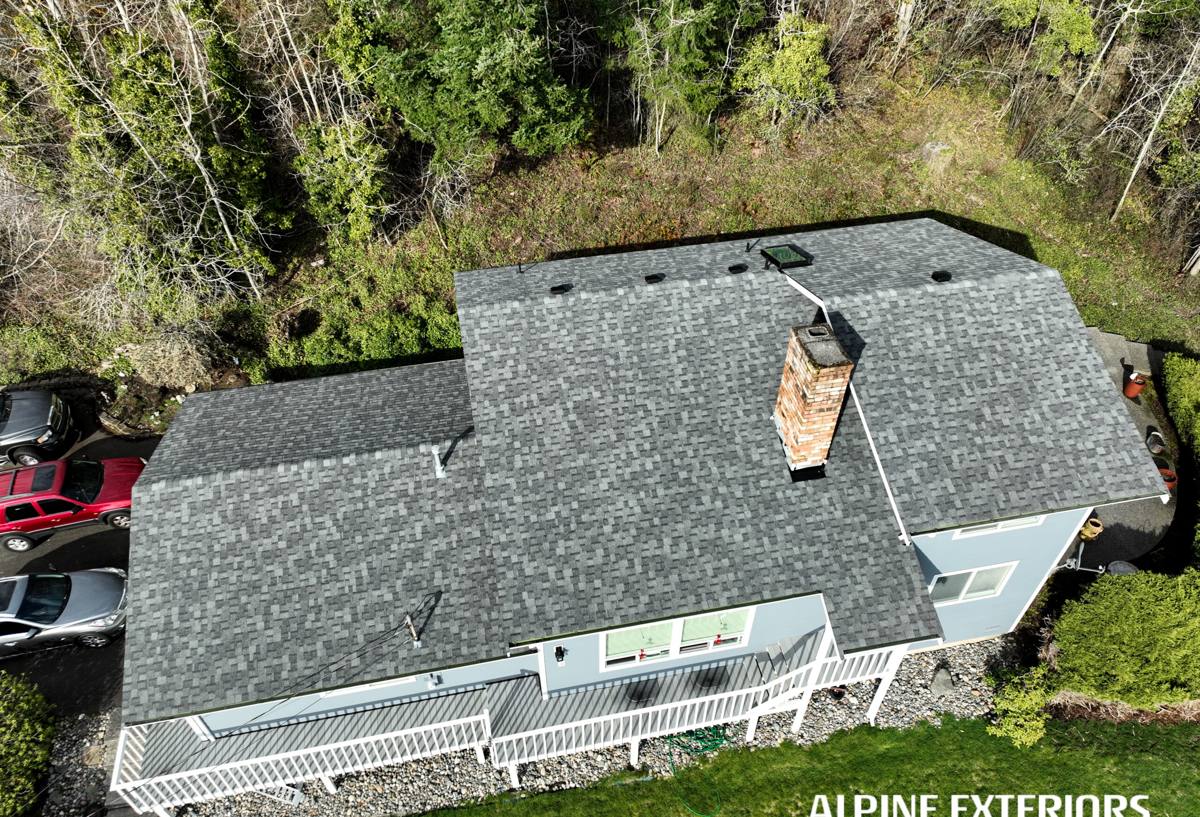
Why More Columbia Homeowners Are Looking at Metal
We don't push metal roofing as the right answer for every home — it isn't, and a straightforward asphalt re-roof is still the correct call for plenty of Columbia properties. But for homeowners dealing with recurring moss growth, heavy tree cover, a north-facing roof plane that never fully dries out, or a house close enough to the water that salt air has already started pitting gutters and flashing, metal solves problems that shingles structurally can't.
- Steep water shed: A properly seamed metal roof moves driving rain off the surface fast, which matters when Whatcom County storms come in sideways rather than straight down.
- Poor moss habitat: Moss needs a rough, porous surface and organic debris to establish itself. Smooth-finish metal panels give it far less to grab onto than shingle granules.
- Longevity under UV and moisture cycling: Quality coated steel or aluminum doesn't crack, curl, or lose granules the way aging asphalt does after repeated wet-dry cycles.
- Lower long-term maintenance for homes in shaded lots or close to the bay, where shingle roofs often need moss treatment and gutter cleaning multiple times a year.
None of that means metal is maintenance-free — no roofing material is, especially here — but it shifts the maintenance burden from constant to occasional.
What a Correct Metal Roof Installation Actually Involves
Metal roofing is unforgiving of shortcuts in a way asphalt isn't. A shingle roof with a slightly imperfect nailing pattern often still performs adequately for years. A metal roof with the wrong fastener spacing, mismatched metals, or a flashing detail done wrong will fail early and visibly — usually as a leak at a penetration, a rust streak below a fastener, or a panel that's buckled from being fastened too tightly to allow for thermal movement.
Deck and Underlayment
Before any metal goes down, the roof deck has to be sound — no soft spots, no trapped moisture from a prior leak. In this climate we favor a high-temperature synthetic or self-adhered underlayment rather than older felt products, because it holds up better to the freeze-thaw and wet-dry cycling that's normal for a Whatcom County winter, and it gives a second line of defense if wind-driven rain ever gets past a seam.
Panel Types and Profiles
Not all "metal roofing" is the same product. The panel type changes how the roof performs and how it looks on the house.
- Standing seam: Concealed fasteners, raised interlocking seams, and the cleanest water-shedding path. This is generally the strongest choice for coastal exposure because there are no exposed screw heads for salt air to attack.
- Exposed-fastener panels: Lower material cost, but the screws are exposed to weather and need washers that will eventually age and need attention. We're candid with Columbia clients about this trade-off rather than glossing over it.
- Stone-coated steel: Mimics shingle or shake profiles while keeping steel's strength and water-shedding behavior — a good middle option for homeowners who want a traditional look with metal's durability.
Fasteners, Flashing, and Sealing Details
This is where salt air becomes the deciding factor. Mixing incompatible metals — for example, ordinary steel fasteners against aluminum panels — sets up galvanic corrosion that eats away hardware from the inside out, faster near the water than it would inland. We match fastener and flashing material to the panel system, and we detail valleys, chimney flashing, and roof-to-wall transitions with closure strips and sealants rated for the movement and moisture this region puts a roof through.
Comparing Metal Roofing Options for a Columbia Home
| Panel Type | Best For | Coastal Durability | Relative Cost |
|---|---|---|---|
| Standing seam steel/aluminum | Homes wanting the longest service life and cleanest lines | Excellent — concealed fasteners resist salt corrosion | Higher |
| Exposed-fastener steel | Budget-conscious projects, secondary structures | Good, but fasteners need periodic inspection | Moderate |
| Stone-coated steel | Homeowners wanting a shingle or shake look with metal's performance | Very good | Moderate to higher |
| Aluminum standing seam | Homes closest to the bay or exposed to direct salt spray | Excellent — naturally corrosion-resistant base metal | Higher |
For most Columbia properties, standing seam in steel or aluminum is the option we recommend first, simply because it removes the two biggest long-term risk factors — exposed fasteners and rough surface texture — that this specific climate is hardest on.
Moss, Algae, and Salt Air: What Ongoing Maintenance Looks Like
A well-installed metal roof in Columbia is genuinely low-maintenance, but "low" isn't "none." Homeowners should still expect a short list of seasonal checks, especially on shaded lots where the long moss season leaves debris and organic buildup even on a surface moss can't root into.
- Clear leaves, needles, and branches from valleys and gutter lines each fall, before the wet season sets in.
- Rinse off surface algae or organic film on shaded roof planes once a year — a garden hose is usually enough; pressure washing is not recommended and can damage finishes or seams.
- Walk the perimeter after major windstorms to check for lifted flashing or debris impact, particularly after the kind of driving rain and wind events that come through the Sound in winter.
- Inspect exposed fasteners (if that panel type was used) every couple of years for early rust or backed-out screws, and re-tighten or replace washers as needed.
- Keep gutters and downspouts clear so water actually leaves the roof system instead of backing up against fascia and eaves.
Our Process for Columbia Metal Roofing Projects
1. On-Site Assessment
We start by walking the roof and attic, checking deck condition, existing ventilation, and how the current roof has handled moisture and moss over time. This tells us whether a full tear-off is needed or whether the deck is sound enough to build on.
2. System Selection
Based on the home's exposure — how close it sits to the bay, how much shade and tree cover it has, roof pitch, and budget — we walk through panel type, gauge, and finish options so the homeowner understands the trade-offs before committing to anything.
3. Tear-Off and Deck Repair
Old roofing comes off, the deck gets inspected board by board, and any soft or water-damaged sections are replaced before underlayment goes down. Skipping this step is one of the most common shortcuts in the industry, and it's the one most likely to cause problems years later.
4. Installation
Underlayment, flashing, and panels go on in sequence, with valleys, penetrations, and roof-to-wall details handled first since those are the highest-risk leak points on any roof, metal or otherwise.
5. Final Walkthrough
We walk the finished roof with the homeowner, review what was done, and go over the basic maintenance items above so there are no surprises in year two or three.
What Affects the Cost of a Metal Roof in Columbia
Every home is different, so we don't quote broad numbers without seeing the roof, but these are the factors that move the price up or down on most Columbia projects:
- Panel type and material: exposed-fastener steel costs less than standing seam; aluminum typically costs more than steel.
- Roof complexity: a simple gable roof is far less labor-intensive than one with multiple valleys, dormers, or a steep pitch.
- Tear-off scope: whether existing shingles and any damaged decking need to come off and be rebuilt before installation.
- Ventilation and insulation needs: older Columbia homes sometimes need attic ventilation upgrades alongside a re-roof to prevent condensation under a new metal surface.
- Access and site conditions: tree cover, roof height, and how easily materials can be staged on the property.
Metal roofing carries a higher upfront cost than asphalt shingles, typically running from moderately more to significantly more depending on panel type and roof complexity. The trade-off homeowners are usually weighing is that upfront cost against a longer service life and less recurring maintenance — a fair trade for some Columbia properties and not necessary for others, which is exactly what we help sort out during an on-site visit.
Why Hiring a Crew That Already Works in Columbia Matters
Metal roofing installation isn't something a crew should be learning on your house. The seam quality, fastener spacing, and flashing details that make the difference between a 40-year roof and a leaking one after five winters come from repetition, not from a manufacturer's install guide alone. A crew that already works in and around Bellingham and Whatcom County also knows the practical realities specific to this area — how local permitting works, what inspectors here look for, how much wind exposure a given roof plane typically sees, and how aggressively moss and salt air actually behave on real roofs nearby, not just in a manufacturer's climate chart.
That local track record also means faster response if something needs a look after a storm, and a contractor who's still around — and still local — years down the line if a warranty question comes up. We're straightforward about what metal roofing can and can't do for a given house, and we won't recommend a system that doesn't fit your roof, your budget, or how long you plan to stay in the home.
Get a Straightforward Estimate
If you're weighing metal roofing for a home in Columbia, we're glad to take a look, walk you through what your specific roof needs, and give you honest options — no pressure, no sales script. Use the form below to request a free estimate.