 Bellingham Siding
 Why Blaine Windows Wear Out Faster Than the Manual Says
Blaine sits right on the water along Semiahmoo Bay, at the northwest corner of Whatcom County, which means homes here take on a combination of weather that inland siding and window jobs never have to deal with. Salt-laden air off the Strait moves through window seals and hardware year-round, wind-driven rain comes in sideways off the water during winter storms, and the long gray stretch from fall through spring keeps humidity high enough that moss and algae get a foothold on anything that stays damp. None of that is dramatic on its own, but stacked together over years it's exactly the kind of slow attrition that eats window seals, corrodes hardware, and rots frame material that wasn't built or installed for it.
A window that performs fine in a dry inland climate can fail early in Blaine if it isn't rated for coastal exposure, or if the flashing and sealant work around it wasn't done with marine air in mind. That's the gap we focus on closing — not just swapping old windows for new ones, but installing them in a way that actually holds up to this specific stretch of Whatcom County coastline.
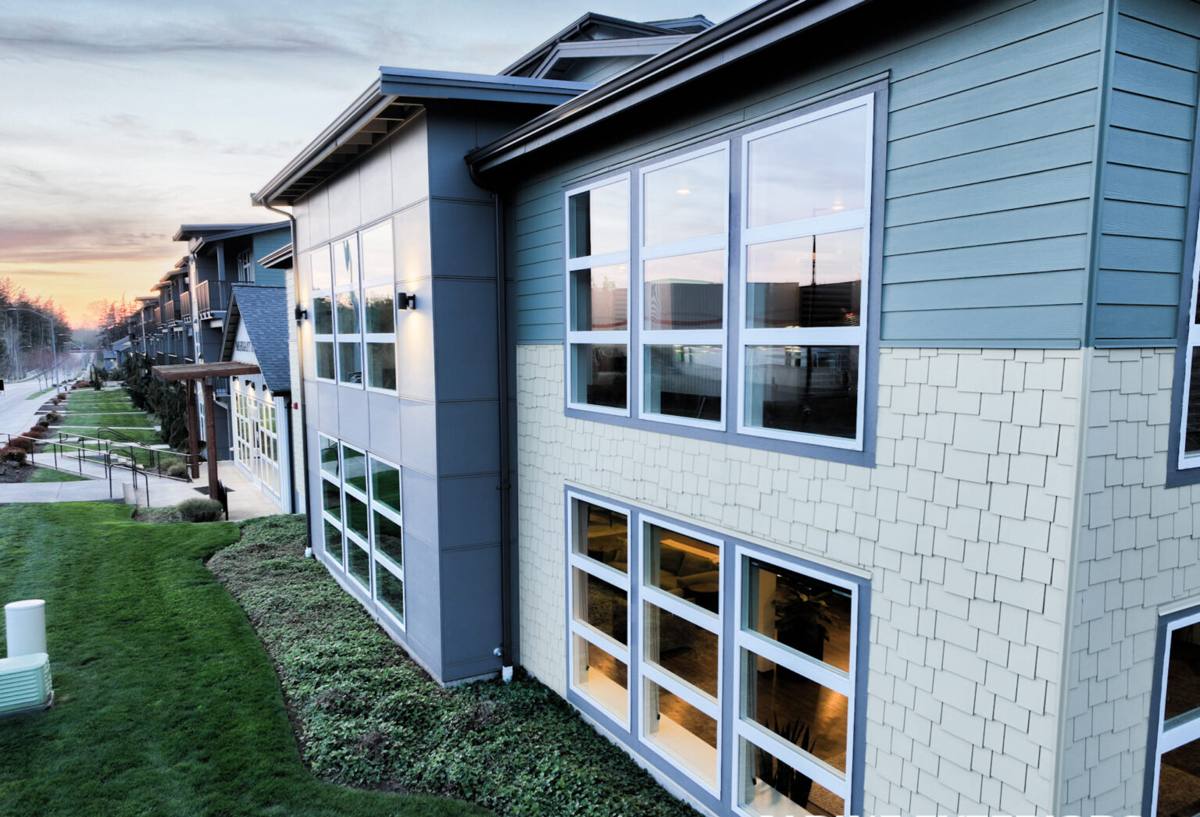
Signs a Blaine Home Needs Window Attention
Window failure is usually gradual, which is why a lot of homeowners live with a problem for a year or two before they call anyone. In a marine climate like Blaine's, watch for these signs specifically:
- Fogging or a permanent haze between glass panes — the seal on the insulated glass unit has failed and moist air has gotten inside
- Drafts you can feel near the frame even when the window is fully latched
- Wood trim or sills that feel soft, or paint that's bubbling and peeling around the frame
- Hardware — locks, cranks, hinges — that's stiff, corroded, or won't fully latch anymore
- Visible green or black growth on the frame or sill that keeps coming back after cleaning
- Condensation forming on the inside of the glass regularly, even in mild weather
- A noticeable jump in heating costs without any other explanation
Any one of these can be a minor fix. Several at once, or a window that's showing them earlier than you'd expect for its age, usually points to a frame or flashing problem rather than just a worn-out window — worth having someone look at before you replace anything.
What a Correct Window Installation Actually Involves
Replacing a window sounds simple — pull the old one, set the new one, caulk the edges. Done that way, it'll look fine for a season and then start letting water in behind the trim, which is a harder problem to fix than the original one. A correct installation in a wet, salt-exposed area like Blaine has a few non-negotiable steps.
Flashing and Weather Barrier
The window opening needs a proper flashing sequence — sill pan flashing at the bottom, side flashing that overlaps it, and head flashing at the top that sheds water down and out, not into the wall cavity. This is the part that's invisible once the trim goes back on, and it's also the part that determines whether the wall behind the window stays dry for the next twenty years. We tie the flashing into the existing weather-resistant barrier correctly rather than just taping over gaps.
Frame Prep, Shimming, and Insulation
The rough opening has to be square, level, and properly shimmed so the window operates smoothly and doesn't rack over time. Gaps around the frame get filled with low-expansion foam or batt insulation rated for window use — not just caulk — so there's no thermal gap and no path for moist air to work its way in.
Sealant and Hardware Suited for Marine Air
Standard caulk breaks down faster in salt air and constant moisture cycling. We use sealants and fasteners rated for coastal exposure, and we pay attention to hardware finish — some finishes corrode and stick within a few seasons this close to the water, others hold up for the long run.
Choosing a Frame Material for a Coastal Whatcom County Home
There's no single "best" window material — it depends on your home's exposure, your budget, and how much upkeep you want to take on. Here's how the common options actually compare under Blaine's conditions.
| Frame Material | Moisture & Salt Air Behavior | Maintenance | General Cost |
|---|---|---|---|
| Vinyl | Won't rot or corrode; performs consistently in salt air | Low — occasional cleaning | Lower |
| Fiberglass | Very stable in moisture and temperature swings; strong seal retention | Low | Mid to higher |
| Aluminum | Durable but can corrode over time without a marine-grade finish | Moderate | Mid |
| Wood / Wood-clad | Handsome, but exterior wood needs real upkeep in constant damp air | High | Higher |
For most Blaine homes, we lean toward vinyl or fiberglass for anything with direct water or wind exposure, simply because they don't give salt air and moisture anything to work on. That's our professional standard for this climate — it's a maintenance and moisture-behavior call, not a knock on wood windows as a product; they're a fine choice for a homeowner who wants that look and is willing to keep up with exterior painting and sealing on a shorter cycle.
Our Installation Process
- On-site assessment — We look at your existing windows, frame condition, and exposure to wind and water on your specific lot, not just the general neighborhood.
- Product selection — We walk through frame material, glass package, and hardware options based on that exposure and your budget, with honest tradeoffs explained.
- Old window removal — Removed carefully to check the condition of the framing and sheathing underneath before anything new goes in.
- Repair if needed — Any rot, soft framing, or water damage found during removal gets addressed before the new window goes in — installing a new window over a wet frame just hides the problem.
- Flashing and weatherproofing — Sill pan, side, and head flashing installed and tied into the existing weather barrier.
- Window setting and shimming — Squared, leveled, and shimmed so it operates correctly and won't rack or bind over time.
- Insulation and sealing — Gaps filled properly, sealant rated for coastal exposure applied at all joints.
- Trim and finish — Interior and exterior trim reset or replaced, hardware installed and tested.
- Walkthrough — We test every window with you before we consider the job done.
Why a Crew That Already Works Blaine Matters
A lot of window problems in this area aren't caused by a bad window — they're caused by an installation that was done the same way it would be done in a dry inland town. A crew that regularly works Blaine and the surrounding Whatcom County coastline already knows which sides of a house take the worst wind-driven rain, how much flashing overlap is actually needed here versus the bare minimum in a manual, and which hardware finishes hold up against salt air instead of seizing up in a couple of years.
There's also the practical side: local crews know the permitting process for the jurisdiction, are familiar with typical framing conditions in homes of this area's common ages and construction styles, and aren't learning the local climate on your project. That familiarity shows up less in the sales pitch and more in the parts of the job you can't see once the trim goes back on.
What Affects the Cost of a Window Installation in Blaine
Every home is different, so we won't quote a number without seeing the job, but the main factors that move the price are consistent:
| Factor | Why It Matters |
|---|---|
| Number and size of windows | More openings and larger units mean more material and labor |
| Frame material | Vinyl, fiberglass, aluminum, and wood-clad all carry different material costs |
| Condition of existing framing | Rot or water damage found during removal adds repair scope |
| Access and exposure | Upper-story or hard-to-access windows take more time and equipment |
| Glass package | Low-E coatings, gas fills, and impact-rated glass all change unit cost |
Broadly, homeowners in this area should expect a range from a few hundred dollars per window for a straightforward vinyl replacement up to well over a thousand per opening for larger units, premium frame materials, or jobs that turn up hidden repair work. The only way to get a real number is a walk-through of your specific windows.
Keeping New Windows Performing in a Salt-Air Climate
A correctly installed window in Blaine still benefits from a little seasonal attention. Rinse salt residue off exterior frames and glass a few times a year, especially after winter storms. Keep weep holes and drainage tracks clear of debris and moss so water can actually exit the frame instead of sitting in it. Check hardware operation each fall before the wet season sets in, and address any new drafts or sticking early rather than waiting — in this climate, small gaps let in moisture faster than they would somewhere drier, and moisture problems compound quickly once they start.
If your windows in Blaine are drafty, fogged, hard to operate, or just older than you'd like them to be, we're happy to take a look and give you a straightforward, no-pressure estimate — no upsell, just an honest read on what your home actually needs. The form below is the easiest way to get started.