 Bellingham Siding
 Siding Repair in Blaine Has Its Own Set of Problems
Blaine sits right on the water, tucked against Semiahmoo Bay and Drayton Harbor, a few miles from the Canadian border. That location is part of what makes it a great place to live, and it's also exactly why siding here takes a different kind of beating than siding twenty miles inland. Salt-laden air off the bay, near-constant onshore moisture, and a shady, wet stretch of the calendar that can run from October well into spring all work on a home's exterior at the same time. A repair approach that works fine in a drier, more sheltered part of Whatcom County can fall short on a house that faces the water in Blaine.
We work throughout Bellingham and Whatcom County, and Blaine siding repair calls are a regular part of that work. The patterns we see are consistent enough that we can usually tell, before we even get a ladder up, roughly what we're going to find and why.
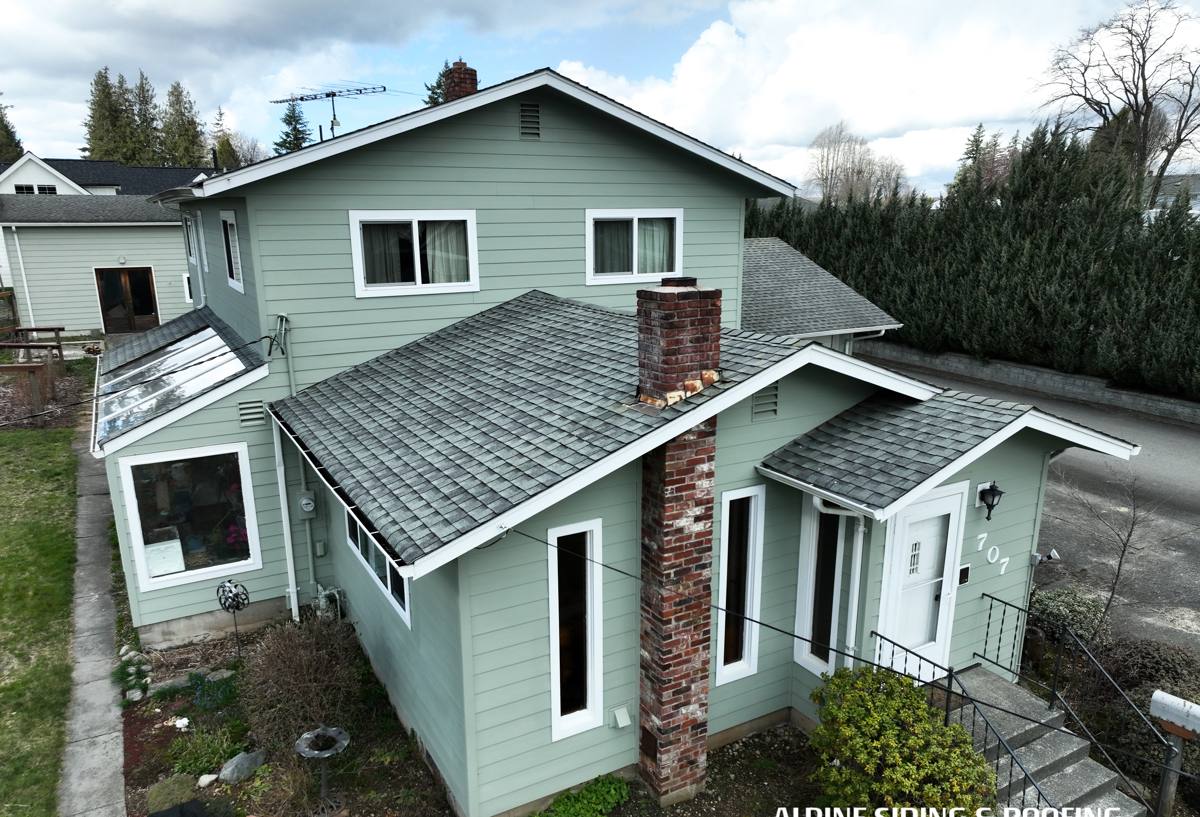
What Blaine's Climate Actually Does to Siding
Salt Air and Corrosion
Airborne salt from the bay settles on exterior surfaces and accelerates corrosion of anything metal: nail heads, flashing, trim fasteners, and the edges of siding panels where cut ends are exposed. On wood-based and composite sidings, that corrosion often shows up first as rust streaking below fastener points or along butt joints, and it's frequently the first visible sign that moisture is getting past the surface, not just sitting on top of it.
Driving Rain and Wind-Driven Moisture
Blaine's exposure to weather coming off the Strait of Georgia means rain doesn't just fall straight down here, it gets pushed sideways into wall assemblies, especially on gable ends and the water-facing side of a house. Wind-driven rain finds every gap in flashing, every under-caulked joint, and every spot where trim meets siding without proper clearance. Repeated cycles of that kind of moisture intrusion are what turn a small installation flaw into a soft spot, a stain, or a section of siding that needs to come off entirely.
Moss, Shade, and a Long Wet Season
Whatcom County's wet season runs long, and many Blaine lots have mature trees or neighboring structures that keep siding shaded and slow to dry. Moss and algae take hold in those conditions, and once established they hold moisture directly against the siding surface for weeks at a time. That's a different failure mode than storm damage — it's slow, it's easy to miss because it starts small and green, and by the time it's obviously discolored the substrate underneath may already be compromised.
Common Siding Problems We See in Blaine Homes
Not every siding issue needs the same fix. Here's how the symptoms we're commonly called out for tend to map to their underlying cause, and what that generally means for the repair.
| What You Notice | Likely Cause | Typical Fix |
|---|---|---|
| Rust streaks near fasteners or joints | Salt-accelerated corrosion of nails or flashing | Remove affected panel section, replace corroded fasteners/flashing, reinstall to spec |
| Soft or spongy siding near the base of walls | Wind-driven rain intrusion, poor drainage plane | Cut back to sound material, correct flashing/drainage, patch with matching material |
| Persistent green or black staining | Moss/algae growth in shaded, slow-drying areas | Clean, assess substrate, repair or replace as needed, address shading/airflow where possible |
| Cracked or lifted caulk joints | Sun/moisture cycling, movement at trim transitions | Remove old sealant, inspect substrate, reseal with appropriate joint prep |
| Bubbling or peeling paint film | Trapped moisture behind an older paint system | Identify source, repair water path, refinish or replace panel |
Repair or Replace? How We Make That Call
Homeowners calling about siding repair in Blaine often aren't sure whether they need a patch job or something bigger, and that's a fair question — it's not always obvious from the outside. We walk through the same checklist on every visit:
- Is the damage isolated to one section, or does it show up in multiple spots facing the same direction (usually the water- or weather-facing side)?
- Has moisture reached the sheathing or framing behind the siding, or is it contained to the siding material itself?
- Is the underlying product still available or matchable, or would a repair leave an obvious patch?
- Is this the first repair on this wall, or the second or third — a pattern that usually points to a systemic flashing or drainage issue rather than a one-off spot to fix?
- What's the age and condition of the siding overall — is a repair extending the life of a system with years left, or delaying an unavoidable replacement?
Most of the time, an honest answer to those questions is enough to point clearly toward a targeted repair or a case for something larger. We'd rather tell you a repair is the right call and save you money than push a bigger job you don't need — and we'll say so plainly if a repair is genuinely all a section needs.
What a Correct Siding Repair Actually Involves
A repair that just covers the visible damage without addressing what let moisture in tends to fail again, often within a season or two, particularly in an exposure like Blaine's. A repair done right includes:
Finding the Real Entry Point
Visible damage is usually downstream of the actual problem — a gap in flashing, a failed sealant joint, or a nailing pattern that doesn't shed water correctly. We trace it back rather than just patching where the stain shows.
Removing All Compromised Material
That means cutting back past the visible damage to sound material, not just the section that looks bad. Any water-softened sheathing underneath gets addressed too — patching over damaged sheathing just relocates the problem.
Correcting Flashing and Drainage Before Re-Siding
If the original installation lacked proper flashing, kick-out flashing, or a drainage gap, we fix that as part of the repair. Reinstalling new siding over an uncorrected water path just resets the clock on the same failure.
Matching Material and Finish
A repair should blend in, not stand out as an obvious patch. This is one of the practical reasons we standardized on one product line — consistent material and factory finish make future repairs, ours or anyone else's, far more likely to match cleanly.
Why We Repair — and Install — With James Hardie Only
We don't install or repair with vinyl, LP SmartSide, Cemplank, Allura, primed spruce, or cedar. That's not a marketing position, it's a standard we hold because of what we've seen play out on homes in exactly this kind of coastal, wet climate. Wood-based products can perform well when detailed and maintained perfectly, but they're unforgiving of the small installation gaps and long wet seasons common here — trapped moisture behind wood-based panels is a slow, hidden problem. Vinyl handles moisture fine on its own but flexes, fades, and can crack in cold snaps, and it isn't a product we stand behind for repair work meant to last.
James Hardie fiber cement is non-combustible, doesn't absorb moisture the way wood-based products do, and holds its factory ColorPlus finish far longer than field-applied paint systems. Hardie also engineers specific product lines for different climate zones (HZ5 and HZ10), which matters in a place with Blaine's combination of salt exposure, rain, and humidity. When we repair a section of Hardie siding, we're matching into a product built for exactly these conditions and backed by a strong transferable warranty — not patching a system we'd need to caveat.
Our Process for a Blaine Siding Repair Call
- Inspection. We look at the damaged area and the surrounding wall, checking for moisture beyond what's visible and identifying the likely entry point.
- Honest assessment. We tell you plainly whether this is a contained repair, a larger section, or a sign of a broader issue worth planning for.
- Scope and estimate. You get a clear explanation of what needs to happen and why, before any work starts.
- Correct the cause, then the cosmetic damage. Flashing, drainage, and sealant issues get fixed as part of the job, not left for next time.
- Match and finish. Repaired sections are matched in material and color as closely as the existing siding allows.
Why a Crew That Already Works in Blaine Makes a Difference
Siding repair in a coastal, high-moisture area rewards familiarity with the local failure patterns. A crew that regularly works Blaine and the surrounding Whatcom County coastline already knows which wall orientations tend to take the worst of the wind-driven rain, how fast moss re-establishes in the shaded, slow-drying spots common to the area, and where salt-air corrosion shows up first. That's the difference between a repair that treats the symptom and one that fixes the reason it happened. It also means faster, more accurate estimates — we're not guessing at how this climate behaves, we're describing what we've already seen on homes nearby.
If you're noticing rust streaking, soft spots, persistent moss staining, or failing caulk joints on your Blaine home's siding, we're happy to take a look. Reach out for a free, no-pressure estimate using the form below, and we'll give you a straight answer about what your siding actually needs.