 Bellingham Siding
 Blaine's Marine Climate Is Harder on Windows Than Most Homeowners Realize
Blaine sits at the far northern edge of Whatcom County, on the water and within sight of the Canadian border. That location is part of what makes it a great place to live, but it's also part of what makes window performance a bigger deal here than it is twenty miles inland. Salt-laden air comes off the bay on a regular basis, driving rain rolls through during winter storms, and the region's long, shaded, wet stretch of fall through spring gives moss and algae months to work on anything that holds moisture.
None of that is a reason to panic about your windows. It's a reason to be deliberate about materials, glass, and installation detail — the same window that would be fine in a drier inland climate can underperform in a few years near the water if it wasn't specified and installed with that exposure in mind.
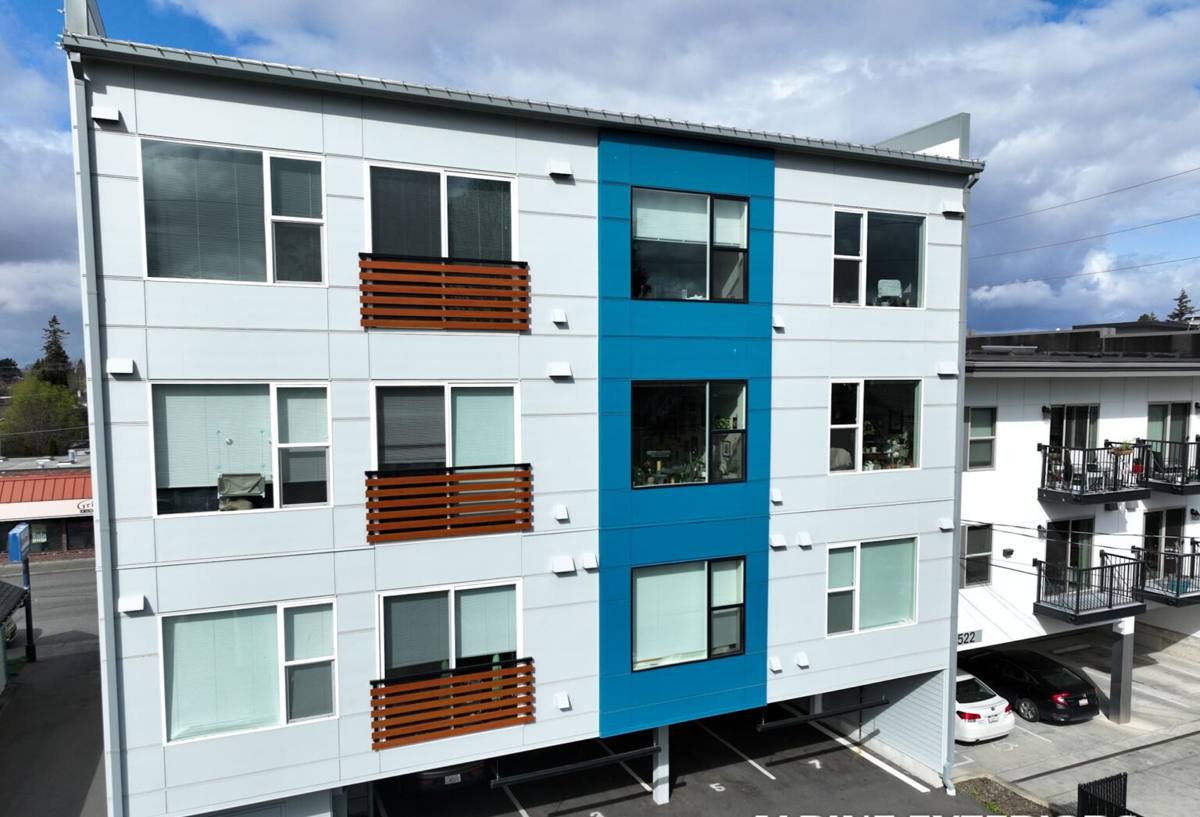
What "Custom" Actually Means for a Blaine Home
Custom doesn't have to mean unusual-looking or expensive. Most of the time it just means the window isn't a stock size or a stock configuration, and that's common in a town with a real mix of housing stock — older waterfront cottages, mid-century houses that have settled over the decades, additions and dormers built at different times than the original structure, and newer construction with taller ceilings or wider openings than older standard sizes.
You're usually looking at a custom window job when one or more of these is true:
- The rough opening is out of square or out of level, which happens as older homes settle
- You're replacing an original wood window that was built to a size no manufacturer stocks anymore
- You want a different configuration than what's there now — a picture window flanked by casements, a taller unit to open up a view, or a change in operating style
- The window sits in an addition, bay, or dormer with framing that doesn't match standard dimensions
- You're combining several smaller openings into one larger one, or the reverse
In all of these cases, the window has to be built or ordered to the actual opening, not the other way around. Forcing a stock size into an opening it wasn't meant for is where a lot of long-term leak problems start.
Frame and Glass Choices That Hold Up Near Salt Water
Every frame material has trade-offs, and those trade-offs shift once salt air and constant moisture are part of the picture. Bare aluminum hardware and fasteners corrode faster near the water. Unprotected exposed wood takes on moisture and needs more upkeep. The goal isn't to chase the fanciest option — it's to match the material to how exposed the specific opening is, since a window facing open water and prevailing wind needs more consideration than one tucked on a sheltered side of the house.
| Frame Material | How It Handles Salt Air & Moisture | Maintenance |
|---|---|---|
| Vinyl | Won't corrode or rust; solid baseline performance near the water | Low — occasional rinse to clear salt film |
| Fiberglass | Very stable through temperature swings and moisture; strong option for larger or custom-sized units | Low |
| Aluminum-clad wood | Weather-resistant exterior with a warmer wood interior; cladding needs to be fully sealed at joints and corners | Moderate — watch cladding seams and interior wood finish |
| Bare wood | Attractive but the least forgiving option in a wet marine climate without diligent upkeep | High — regular repainting/resealing, more exposure to rot |
On the glass side, a standard dual-pane unit with a Low-E coating and argon gas fill is the right baseline for this climate. The priority here is a strong U-factor for heat retention rather than solar heat gain control, since Blaine doesn't deal with the intense summer sun that drives glass selection in hotter parts of the country. A good Low-E package also helps cut down on interior condensation during the cold, wet months — which matters, because condensation left sitting on glass and sills for weeks at a time is one more thing feeding moss and mildew growth around the window.
Hardware Matters More Than People Expect
Locks, hinges, and cranks near the water take more abuse than the glass does. Stainless steel or coated hardware rated for coastal exposure holds up noticeably longer than standard-grade hardware. It's a small line item on an estimate that has an outsized effect on how the window operates five and ten years down the road.
The Installation Details That Actually Prevent Leaks
Most window failures in this climate aren't glass failures — they're installation failures. The window itself can be a good product and still leak if the flashing and sealing around it wasn't done correctly. This is the part of the job that doesn't show once the trim is back on, which is exactly why it has to be done right the first time.
- Sill pan flashing under the window opening so any water that does get past the exterior sheds back out instead of sitting on the sill
- Proper lapping of flashing tape and building paper or house wrap, upper layers over lower layers, so water is always shedding downward and outward
- Correct integration with the siding around the opening, so the window and the wall cladding work as one water-shedding system instead of two separate systems taped together after the fact
- Compatible sealants at every joint — not every caulk or sealant is rated for long-term exposure to driving, wind-blown rain
- Proper shimming and an even reveal so the window isn't racked, which affects both how it operates and how evenly it seals over time
If your window job and a siding project are happening around the same time — which is common, since failing siding and failing windows tend to show up together on the same wall — doing them together lets the flashing and the siding get integrated properly instead of retrofitted around each other later.
How We Approach a Custom Window Job in Blaine
- On-site measure and assessment. We look at the actual opening, check for rot or water damage in the surrounding framing, and note anything, such as settling or non-standard sizing, that affects the recommendation.
- Product and glass selection. We walk through frame material, glass package, and hardware options based on that specific opening's exposure — a window on the water side of the house isn't always spec'd the same as one on a sheltered wall.
- Ordering to the actual opening. Custom units are built or ordered to the measured dimensions, not a rounded-off stock size.
- Removal and inspection. When the old window comes out, we check the framing underneath for hidden rot or moisture damage before anything new goes in — this is often where the problem that caused the original window to fail gets found.
- Correct flashing and installation. Sill pan, flashing lap order, sealant, and siding integration done to hold up to this climate, not a generic install.
- Final walkthrough. We check operation, seal, and finish work with you before calling the job done.
Moss, Algae, and What Ongoing Maintenance Actually Looks Like
Whatcom County's long wet season gives moss and algae a real head start on anything shaded and damp, and window trim, sills, and the siding immediately around a window are common spots for it to take hold. It's rarely a sign anything was installed wrong — it's just what this climate does to exterior surfaces that don't get attention. A few habits keep it from becoming a bigger problem:
- Keep gutters and downspouts above and beside windows clear so water isn't sheeting down across the frame and trim
- Trim back vegetation that's shading a window and keeping it damp longer than the rest of the wall
- Rinse salt film off frames and glass periodically, especially on sides of the house that face open water or prevailing wind
- Do a visual check of caulking and sealant once a year — hairline gaps are easy to catch early and much cheaper to address than a leak that's been running behind the wall for a season
What Custom Windows Typically Cost in Blaine
There's a real range here, and the honest answer is that it depends on the specifics of your opening and your goals more than any single number can capture. Broadly, custom units run higher than an off-the-shelf stock size because of the measuring, ordering, and often the extra care in removal and installation. The main factors that move the number:
| Factor | Why It Affects Cost |
|---|---|
| Size and configuration | Larger units, combined openings, or unusual shapes cost more to build and install than a standard rectangle |
| Frame material | Vinyl is generally the most budget-friendly; fiberglass and clad-wood run higher |
| Glass package | Upgraded Low-E coatings or argon fill add cost but pay back in comfort and durability near the water |
| Condition of the existing opening | Rot or water damage found once the old window is out means repair work before the new one can go in |
| Access and site conditions | Second-story, tight, or hard-to-access openings take more time and equipment |
| Paired with siding work | Doing windows and siding together is often more cost-efficient than two separate mobilizations, even though the combined total is higher |
The only way to get a real number is a site visit — anyone quoting a firm price on custom window work sight unseen is guessing.
Why a Crew That Already Works in Blaine Makes a Real Difference
A lot of window and siding work is genuinely regional. A crew that's used to inland Whatcom County conditions isn't automatically going to make the wrong call on a Blaine job, but a crew that already works this stretch of coastline has already worked through the specific questions that come up here: which hardware finishes actually hold up to salt exposure, which sealants perform in driving, wind-blown rain instead of just straight-down rainfall, and how flashing details need to integrate with the siding types common on this coastline. That's knowledge built from doing the work here repeatedly, not something you can fully substitute with a general install manual.
What to Ask Before You Hire for Custom Window Work
- Are you licensed and insured to do this work in Washington, and can I see proof?
- Will you inspect the framing and sheathing once the old window is out, before installing the new one?
- What flashing and sill pan approach do you use, and how does it tie into the existing siding?
- What's the warranty on the product versus the warranty on your installation labor, and who do I call if something goes wrong in five years?
- Have you done custom window work elsewhere along Whatcom County's coastal areas, and can you explain how that changed your approach?
A contractor who answers these clearly and specifically, without hedging, is a good sign. Vague answers about flashing or warranty coverage are worth pushing on before you sign anything.
If you're weighing custom windows for a home in Blaine, we're glad to come take a look, measure the actual opening, and talk through what makes sense for that specific wall and its exposure. There's no cost and no pressure to move forward — just a straight assessment and a written estimate you can think over.